
Artichokes
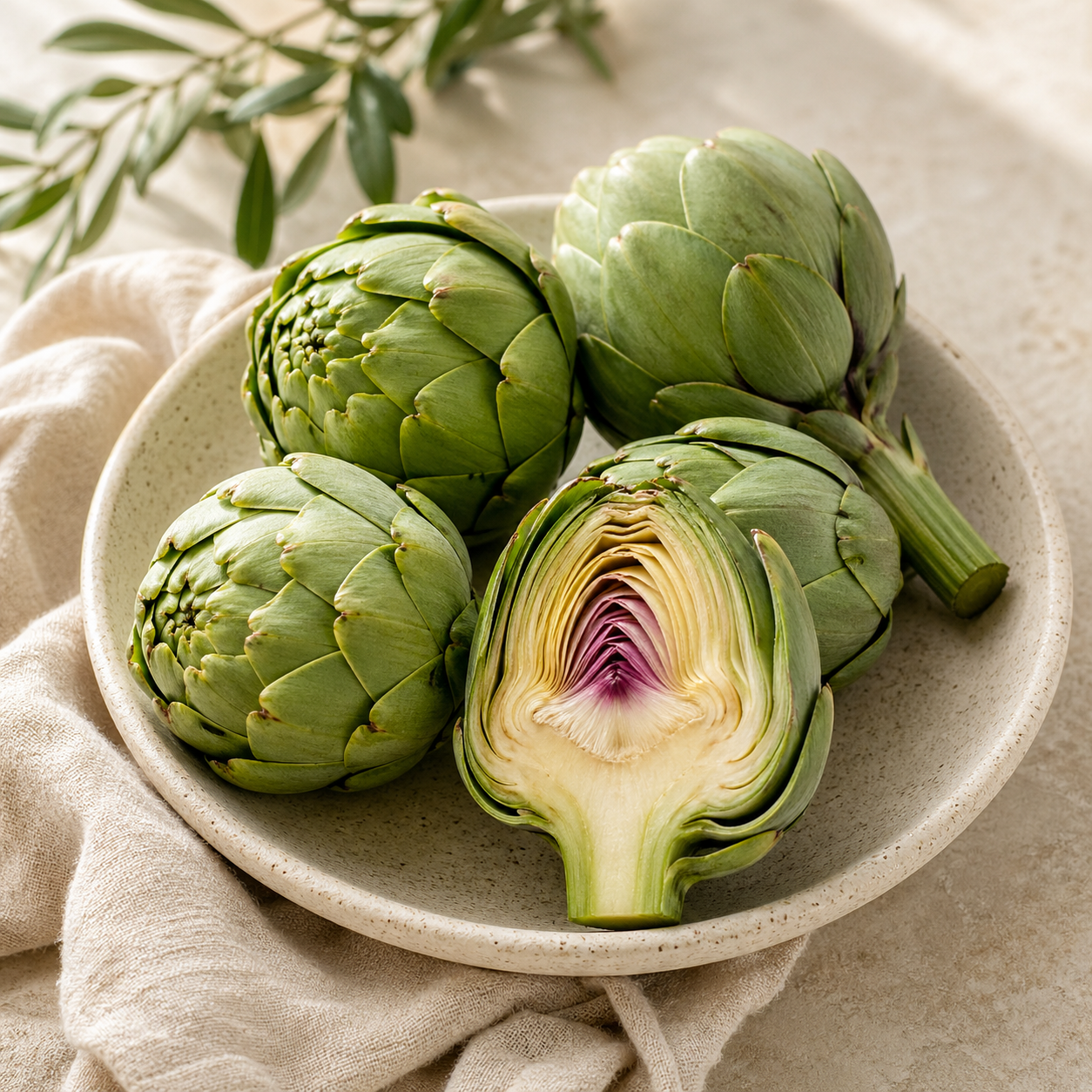
Artichokes: The "Spiny Shield" for Bile Production and Liver Cell Shielding
In the strategic nutritional management of liver cirrhosis, the Artichoke (Cynara cardunculus var. scolymus) is a biological titan. For individuals navigating the complexities of a scarred liver, the primary clinical threats are cholestasis (stagnant bile flow) and the accumulation of environmental toxins that accelerate fibrosis. Artichokes offer a unique concentration of two potent phytochemicals: cynarin and silymarin. These specific compounds act as a biological "pump," stimulating the liver to produce and secrete bile while providing a powerful antioxidant shield that protects remaining healthy hepatocytes from oxidative "rust."
As the liver loses its ability to flush toxins efficiently, incorporating these "Spiny Shields" becomes a critical strategy for organ decongestion. In this 2,000-word deep dive, we explore the ancient mythology, the molecular science, and the culinary strategies that make artichokes a non-negotiable staple for liver restoration.
A Voyage Through Time: The "Language of the Earth" and the Mafia’s Racket
The history of the artichoke is as layered and prickly as its leaves, traveling from the heights of Mount Olympus to the center of an American crime war.
The Myth of Cynara: According to Greek Mythology, Zeus fell in love with a beautiful mortal named Cynara. He transformed her into a goddess so she could live on Mount Olympus, but when she snuck back to Earth to visit her mother, Zeus was so enraged by her "disloyalty" that he transformed her into the first artichoke—a plant with a tender heart protected by a prickly, unyielding exterior.
The "Language of the Earth": The word "artichoke" stems from the Arabic al-kharshûf, which translates to "language of the earth." After the fall of Rome, the plant was nearly lost to Europe but was carefully nurtured by Arab agronomists in North Africa and Sicily. They recognized its medicinal value for "cooling the liver," eventually reintroducing it to the West during the Middle Ages.
Catherine de Medici’s Scandal: In 1533, the 14-year-old Catherine de Medici introduced the artichoke to France. At the time, they were considered a powerful aphrodisiac and were strictly forbidden for women. Catherine’s defiance—eating them openly in massive quantities—caused a royal scandal but ultimately made the vegetable a staple of high French cuisine.
The New York "Artichoke Wars": In the 1930s, the Sicilian Mafia in New York attempted to monopolize the artichoke market. The racket became so violent that Mayor Fiorello La Guardia famously declared a total ban on baby artichokes in 1935 to break the mob’s control, leading to a dramatic "war" in the Bronx Terminal Market.
Marilyn Monroe: The Artichoke Queen: In 1948, a 22-year-old aspiring actress named Norma Jean Baker was crowned the first official "Artichoke Queen" in Castroville, California. She would later become known to the world as Marilyn Monroe.
Why Artichokes are a "Liver-Specific" Superfood
For a patient with cirrhosis, the liver's "metabolic filter" is often congested. Artichokes provide the specific chemical tools needed to improve filtration and reduce internal pressure.
1. Cynarin and the Choleretic Effect
The primary benefit of artichokes is cynarin. Research published in PubMed Central (PMC) demonstrates that cynarin acts as a "choleretic"—a substance that stimulates the liver to produce more bile. Bile is the "river" that carries fat-soluble toxins and waste products out of the liver. By increasing bile flow, artichokes help prevent the buildup of toxins that can further damage a scarred liver.
2. Hepatoprotection via Silymarin
Like its cousin, milk thistle, artichokes contain silymarin. This compound acts as an antioxidant shield, stabilizing liver cell membranes and preventing the entry of toxins. Clinical trials highlighted by Healthline show that artichoke leaf extract can significantly reduce elevated liver enzymes (ALT and AST), markers that indicate the liver is under active stress.
3. Prebiotic Fiber for Ammonia Control
The artichoke is one of the world's best sources of Inulin, a prebiotic fiber. Inulin feeds the healthy bacteria in your gut, which helps break down ammonia before it can enter the bloodstream. According to the American Liver Foundation, this is a critical defense against hepatic encephalopathy (liver-related confusion).
4. Natural Diuretic for Ascites
Artichokes possess natural diuretic properties. They help the kidneys flush out excess sodium and water, which is vital for managing the ascites (abdominal swelling) that frequently complicates advanced cirrhosis.
"Are You an Aspiring Chef?" Winning Combos
Since cirrhosis requires a strict low-sodium diet, the unique chemical cynarine in artichokes—which makes the next thing you eat taste sweeter—is a critical tool for flavoring meals without salt.
The "Liver-Flush" Steam: Steam whole artichokes with halved Lemons and smashed Garlic. The garlic provides sulfur for detox, and the lemon stimulates the bile flow needed to process the artichoke’s cynarin.
The "Andean Muscle-Builder": Combine marinated artichoke hearts with warm Quinoa and fresh Mint. The mint relaxes the bile ducts, allowing the artichoke’s compounds to work more effectively.
The "Omega Shield" Topper: Serve roasted artichoke hearts alongside Baked Salmon. The healthy fats in the salmon aid in the absorption of the fat-soluble Vitamin K and silymarin found in the artichoke.
The "Vibrant Detox" Salad: Mix artichoke hearts with roasted Beets and Extra Virgin Olive Oil. The beets move fat out of the liver, and the artichoke flushes it away through increased bile secretion.
Nifty Prep Tools for the Liver-Friendly Kitchen
To keep your "Spiny Shields" fresh and maximize their medicinal potential, these tools are essential:
OXO Good Grips Stainless Steel Steamer Basket: Steaming is the best way to cook artichokes for liver health as it preserves the water-soluble antioxidants. This basket fits into any pot and keeps the "medicine" away from boiling water.
Wüsthof Classic 3.5-inch Paring Knife: Trimming an artichoke requires precision. This sharp, high-quality knife allows you to easily remove the tough, woody stem and the prickly leaf tips without wasting the nutrient-dense heart.
Ninja Foodi 11-in-1 Pressure Cooker: If you are short on time, pressure cooking can turn a tough artichoke tender in just 10 minutes. This preserves more of the delicate cynarin than long-boiling methods.
Microplane Classic Zester/Grater: Since you must avoid salt, citrus zest is your best friend. Use this to add bright lemon or lime flavor to your artichoke dishes without adding any sodium.
Summary of Benefits for Cirrhosis
Bile Stimulation: Cynarin acts as a natural pump to flush toxins and waste from the liver.
Cellular Protection: Silymarin acts as an antioxidant suit of armor for healthy liver cells.
Ammonia Defense: Inulin fiber prevents the gut from producing brain-fogging toxins.
Fluid Management: Natural diuretic properties help manage sodium and swelling (ascites).
Enzyme Reduction: Clinical data shows artichoke extract can lower stressed liver enzymes.
Credible Sources for Your Journey
National Institutes of Health (PMC): Artichoke Supplementation and Liver Enzymes
American Liver Foundation: 13 Foods Good for the Liver
Healthline: Top 8 Health Benefits of Artichokes
Medical News Today: What to know about artichokes and liver detox
