
Understanding Neuropathy, Nerves & Muscle Cramps in Advanced Liver Disease
One day your foot falls asleep and takes a little longer than usual to wake back up. The next, your calves are cramping in the middle of the night, your toes feel like they're buzzing with electricity, and you're wondering how a liver managed to get involved in your feet in the first place.
Neuropathy, nerve pain, and muscle cramps are surprisingly common in people living with cirrhosis and advanced liver disease. Yet they are also some of the least discussed symptoms. Most people expect liver disease to affect digestion, jaundice, or fluid retention. Few expect it to interfere with the nerves that help them walk, balance, sleep, or simply sit comfortably.
People often assume these symptoms are unrelated aging, a vitamin deficiency, or bad luck. In reality, liver disease can affect the nervous system, circulation, muscles, and electrolytes simultaneously—creating a perfect environment for tingling, burning, numbness, weakness, and painful muscle contractions.
What It Is
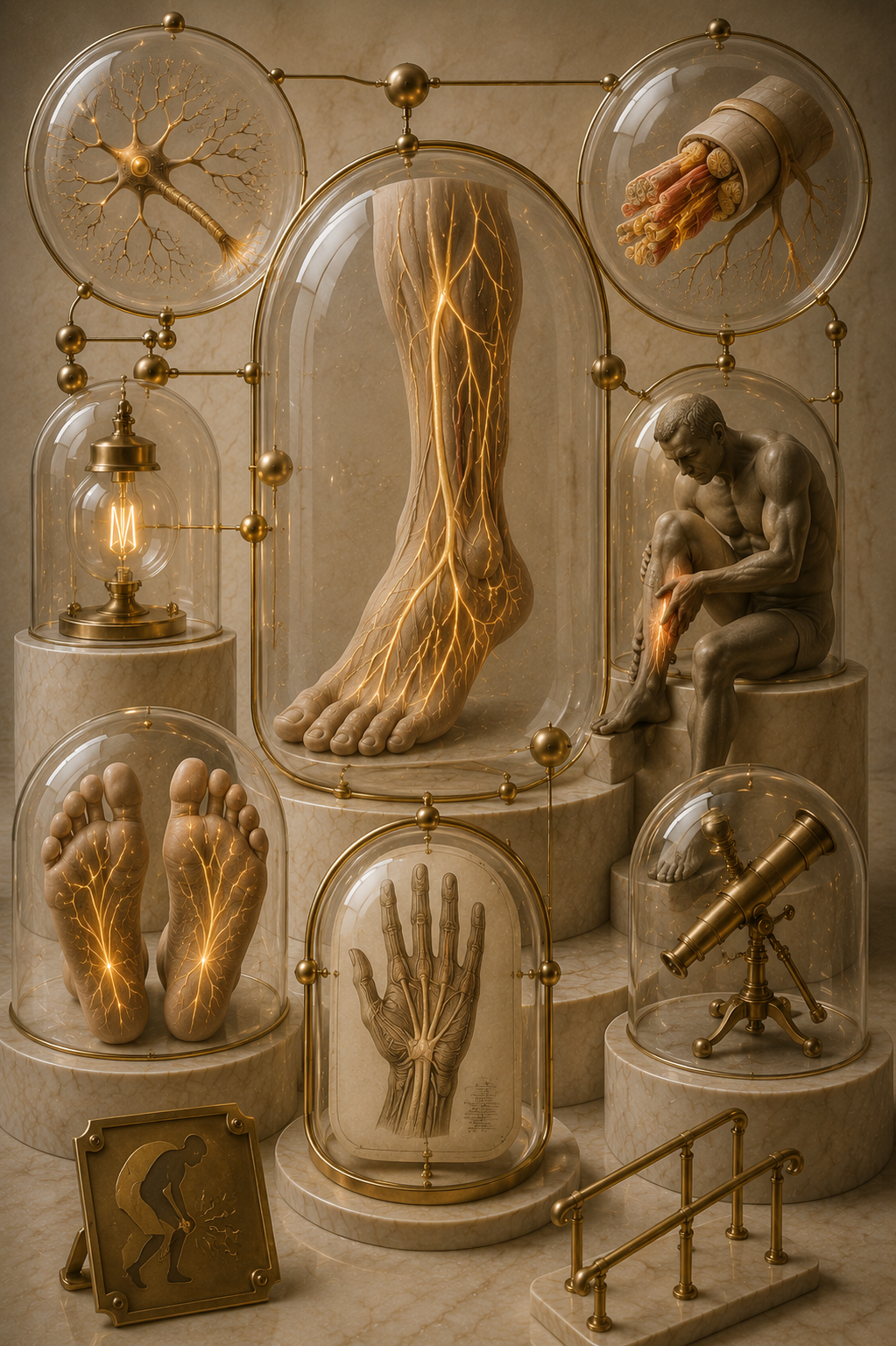
Your nervous system functions like a massive communication network.
Every movement, sensation, temperature change, and muscle contraction depends on tiny electrical signals traveling through nerves.
When cirrhosis develops, several things can begin interfering with that system.
Peripheral Neuropathy
Peripheral neuropathy occurs when nerves outside the brain and spinal cord become damaged.
This damage most commonly affects:
Feet
Toes
Ankles
Lower legs
Hands
Fingers
Symptoms often begin gradually and worsen over time.
Muscle Cramps
Muscle cramps are sudden, painful contractions that commonly affect:
Calves
Feet
Toes
Hands
In cirrhosis, cramps are thought to be related to a combination of altered circulation, electrolyte shifts, muscle loss, and changes in nerve signaling.
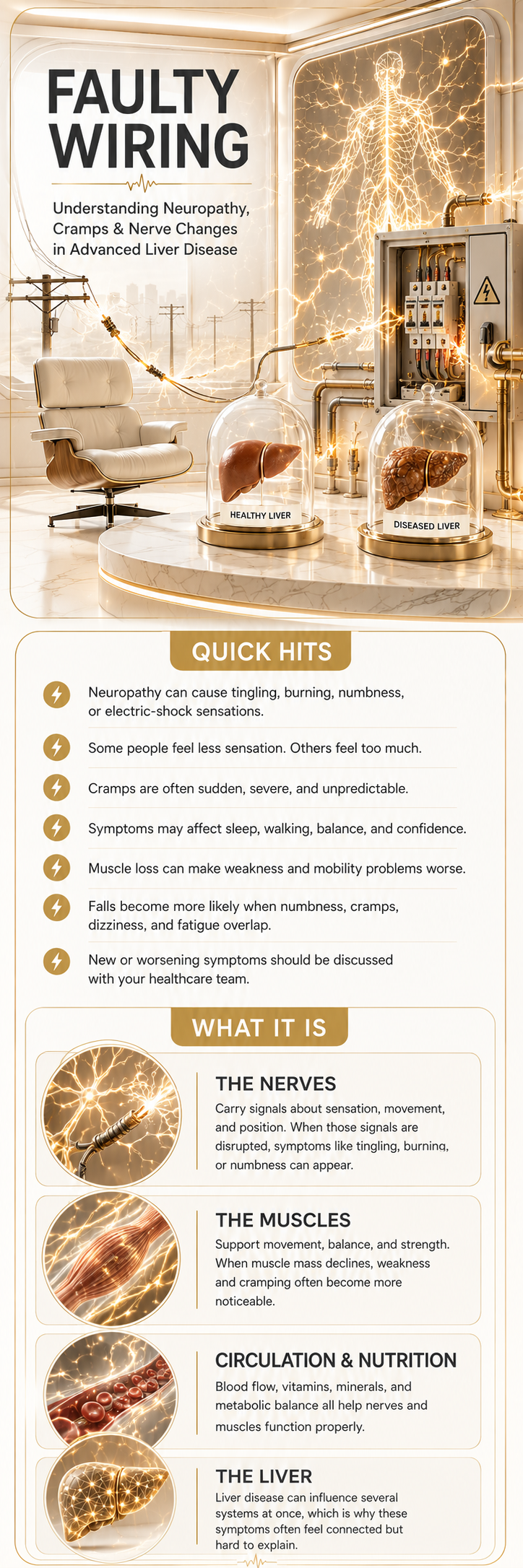
Faulty Wiring
Read More
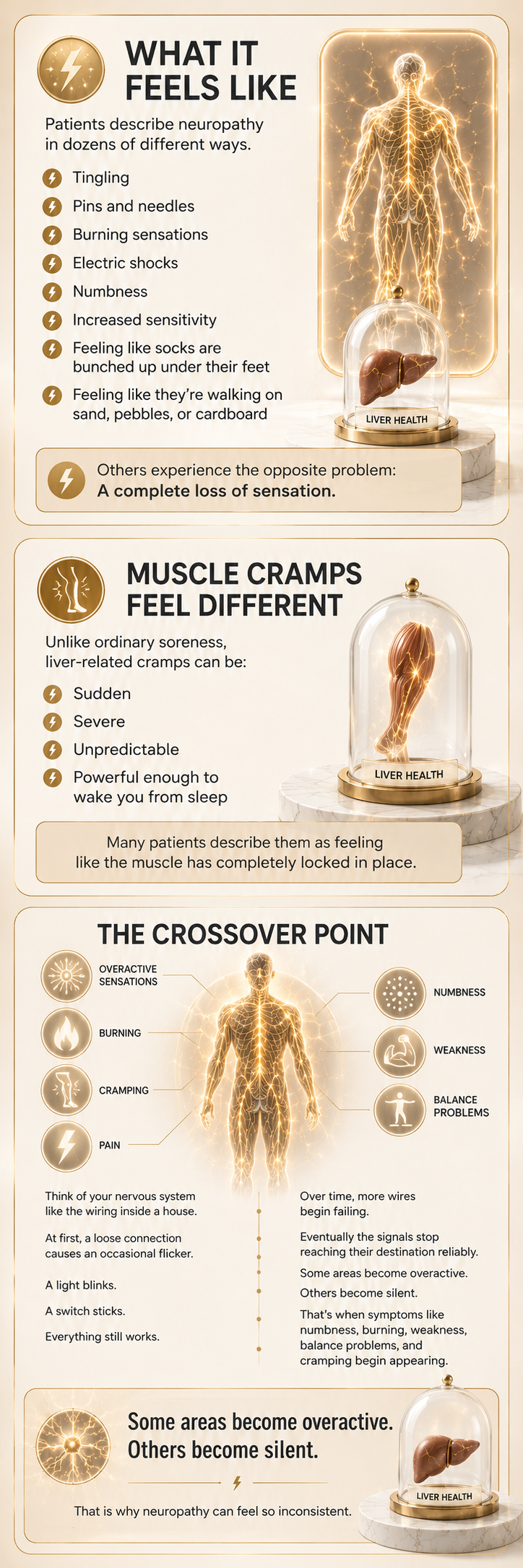
What It Feels Like
Patients describe neuropathy in dozens of different ways.
Some report:
⚡ Tingling
⚡ Pins and needles
⚡ Burning sensations
⚡ Electric shocks
⚡ Numbness
⚡ Increased sensitivity
⚡ Feeling like socks are bunched up under their feet
⚡ Feeling like they're walking on sand, pebbles, or cardboard
Others experience the opposite problem:
A complete loss of sensation.
Muscle Cramps Feel Different
Unlike ordinary soreness, liver-related cramps can be:
Sudden
Severe
Unpredictable
Powerful enough to wake you from sleep
Many patients describe them as feeling like the muscle has completely locked in place.
The Crossover Point
Think of your nervous system like the wiring inside a house.
At first, a loose connection causes an occasional flicker.
A light blinks.
A switch sticks.
Everything still works.
Over time, more wires begin failing.
Eventually the signals stop reaching their destination reliably.
Some areas become overactive.
Others become silent.
That's when symptoms like numbness, burning, weakness, balance problems, and cramping begin appearing.
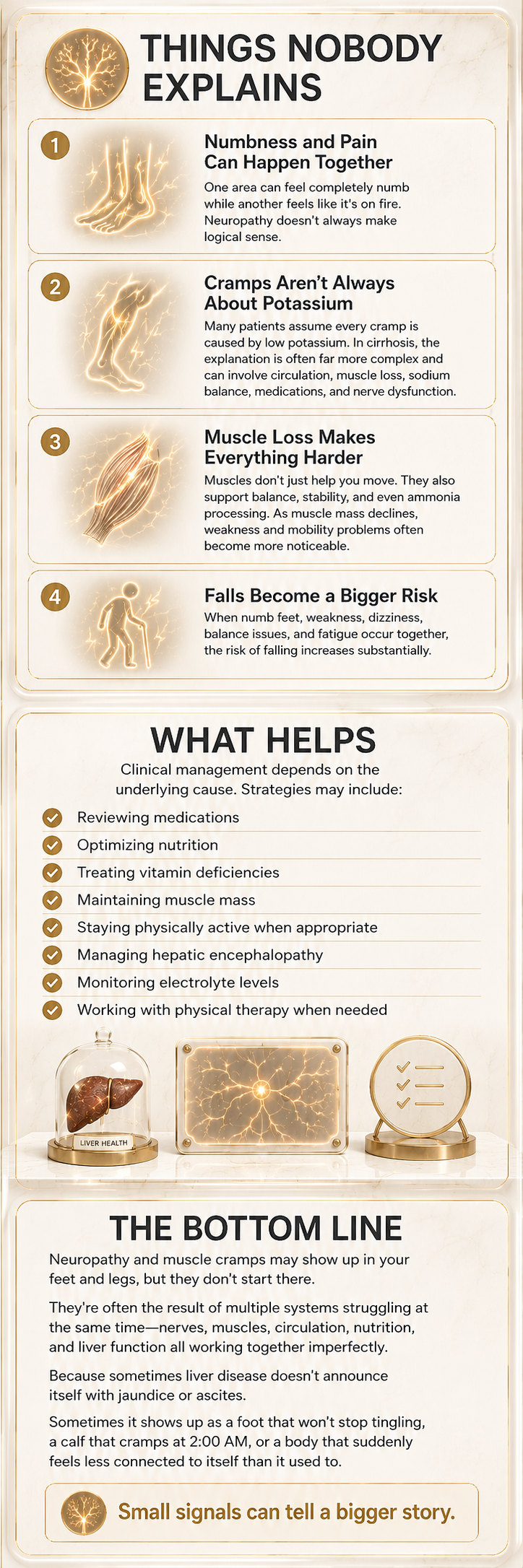
Things Nobody Explains
1. Numbness and Pain Can Happen Together
One area can feel completely numb while another feels like it's on fire.
Neuropathy doesn't always make logical sense.
2. Cramps Aren't Always About Potassium
Many patients assume every cramp is caused by low potassium.
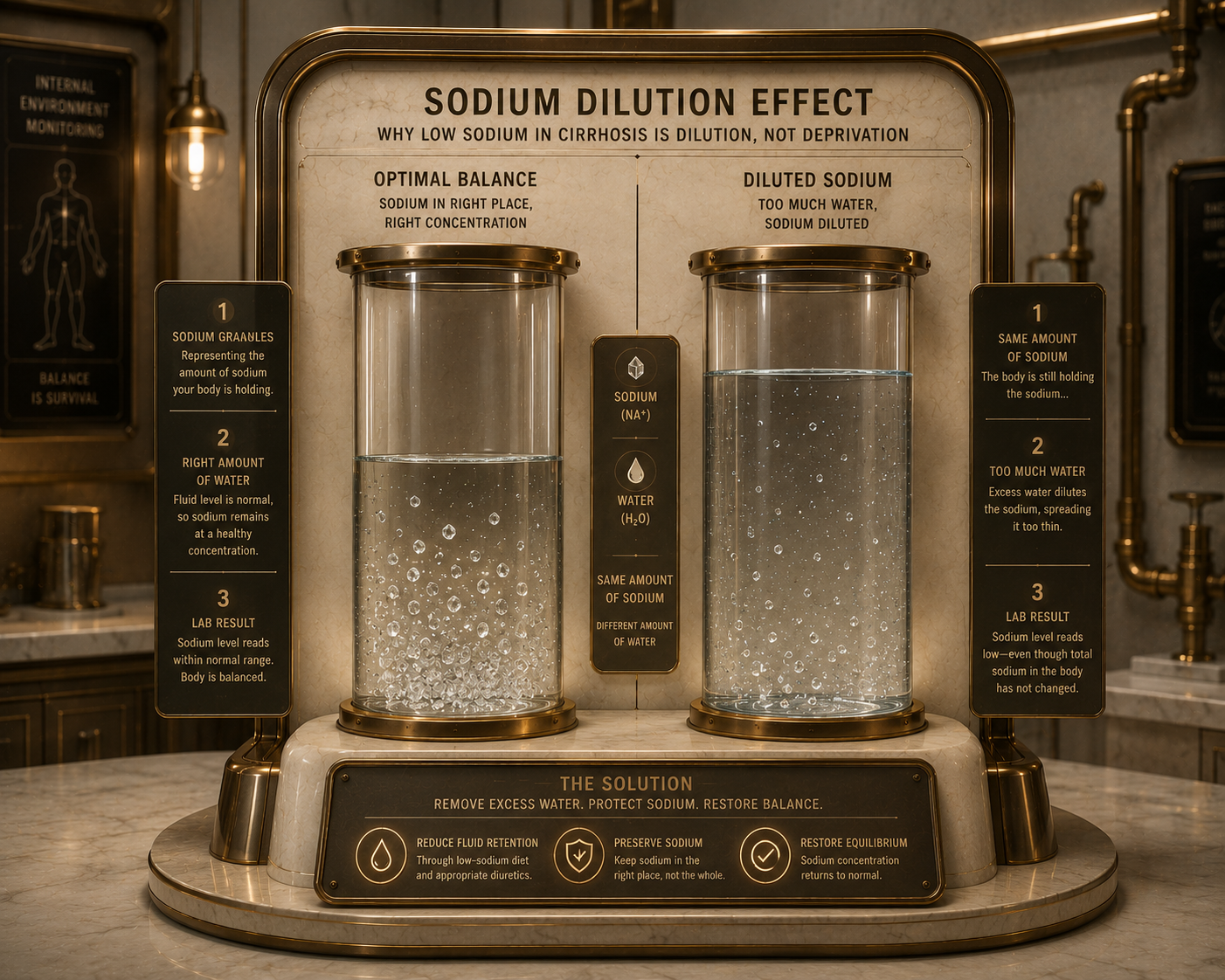
In cirrhosis, the explanation is often far more complex and can involve circulation, muscle loss, sodium balance, medications, and nerve dysfunction.
3. Muscle Loss Makes Everything Harder
Muscles don't just help you move.
They also support balance, stability, and even ammonia processing.
As muscle mass declines, weakness and mobility problems often become more noticeable.
4. Falls Become a Bigger Risk
When numb feet, weakness, dizziness, balance issues, and fatigue occur together, the risk of falling increases substantially.
What Helps
Clinical management depends on the underlying cause.
Strategies may include:
✔️ Reviewing medications
✔️ Optimizing nutrition
✔️Treating vitamin deficiencies
✔️Maintaining muscle mass
✔️ Staying physically active when appropriate
✔️ Managing hepatic encephalopathy
✔️ Monitoring electrolyte levels
✔️ Working with physical therapy when needed
The Bottom Line
Neuropathy and muscle cramps may show up in your feet and legs, but they don't start there.
They're often the result of multiple systems struggling at the same time—nerves, muscles, circulation, nutrition, and liver function all working together imperfectly.
Because sometimes liver disease doesn't announce itself with jaundice or ascites.
Sometimes it shows up as a foot that won't stop tingling, a calf that cramps at 2:00 AM, or a body that suddenly feels less connected to itself than it used to.
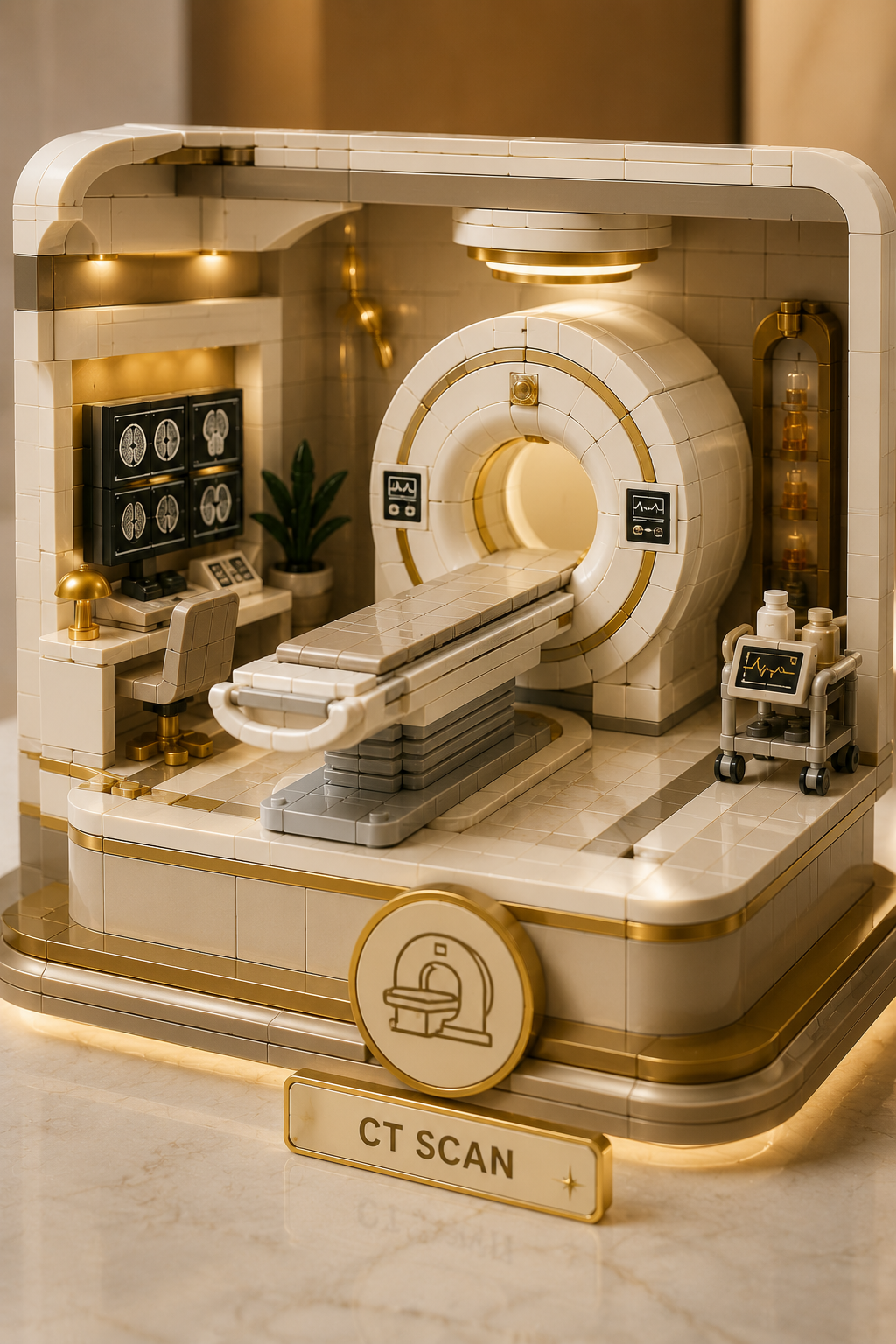



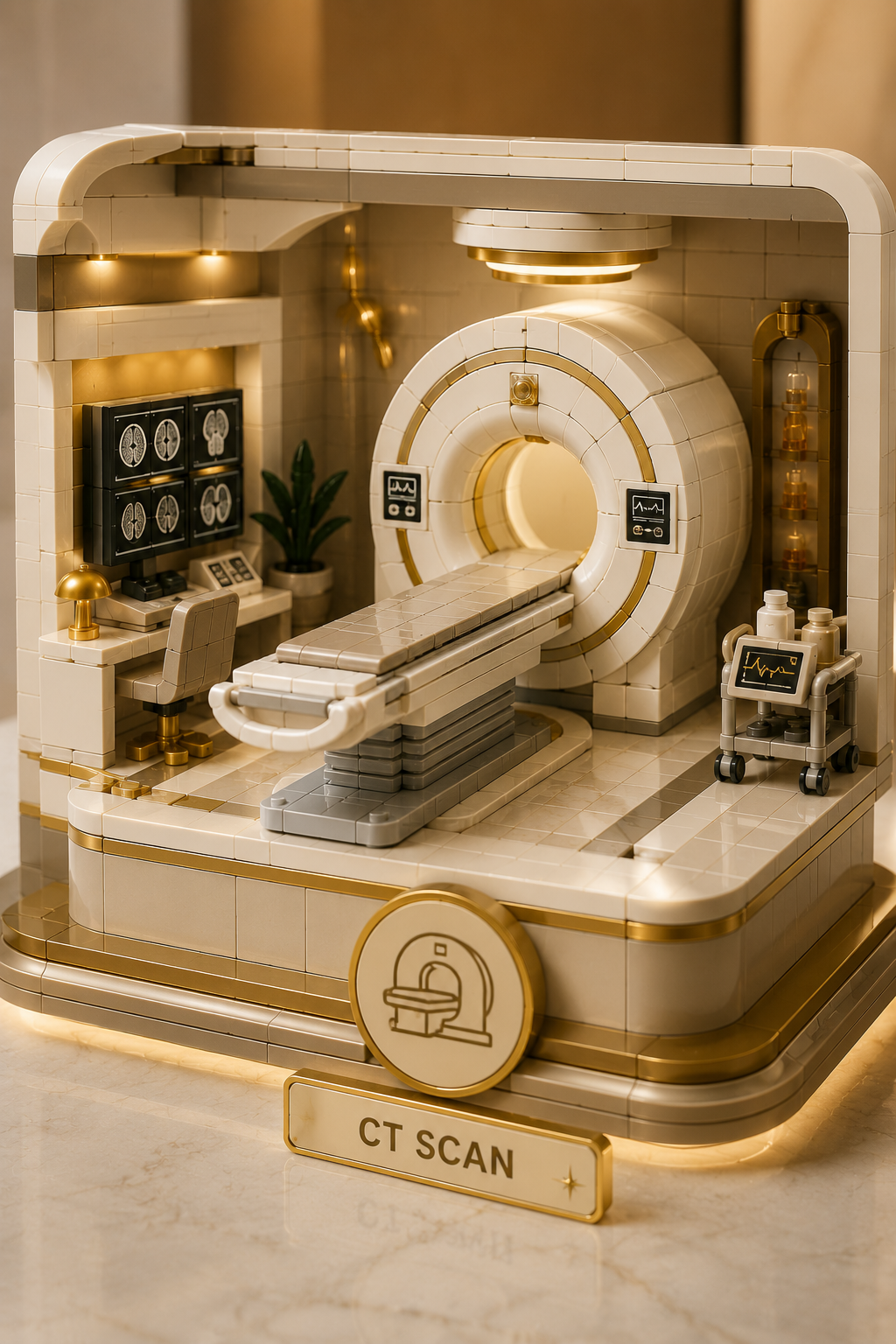










Magnetic Resonance Imaging (MRI) serves as a gold standard for noninvasively evaluating liver cirrhosis, capable of detecting structural liver changes, assessing stiffness, and identifying hepatocellular carcinoma. The imaging technique, which includes advanced methods like Magnetic Resonance Elastography (MRE), allows clinicians to map portal hypertension and evaluate tissue composition.