


playing the long game when you’re short on everything
Some parts of liver disease show up on imaging.
Some show up in labs.
Some show up in swelling, jaundice, fatigue, itching, or brain fog.
And some parts do not show up neatly anywhere. But are everywhere.
The fear. The grief. The anger. The waiting. The shame. The exhaustion of explaining. The loneliness of looking fine while your life has been reorganized around a diagnosis most people do not understand.
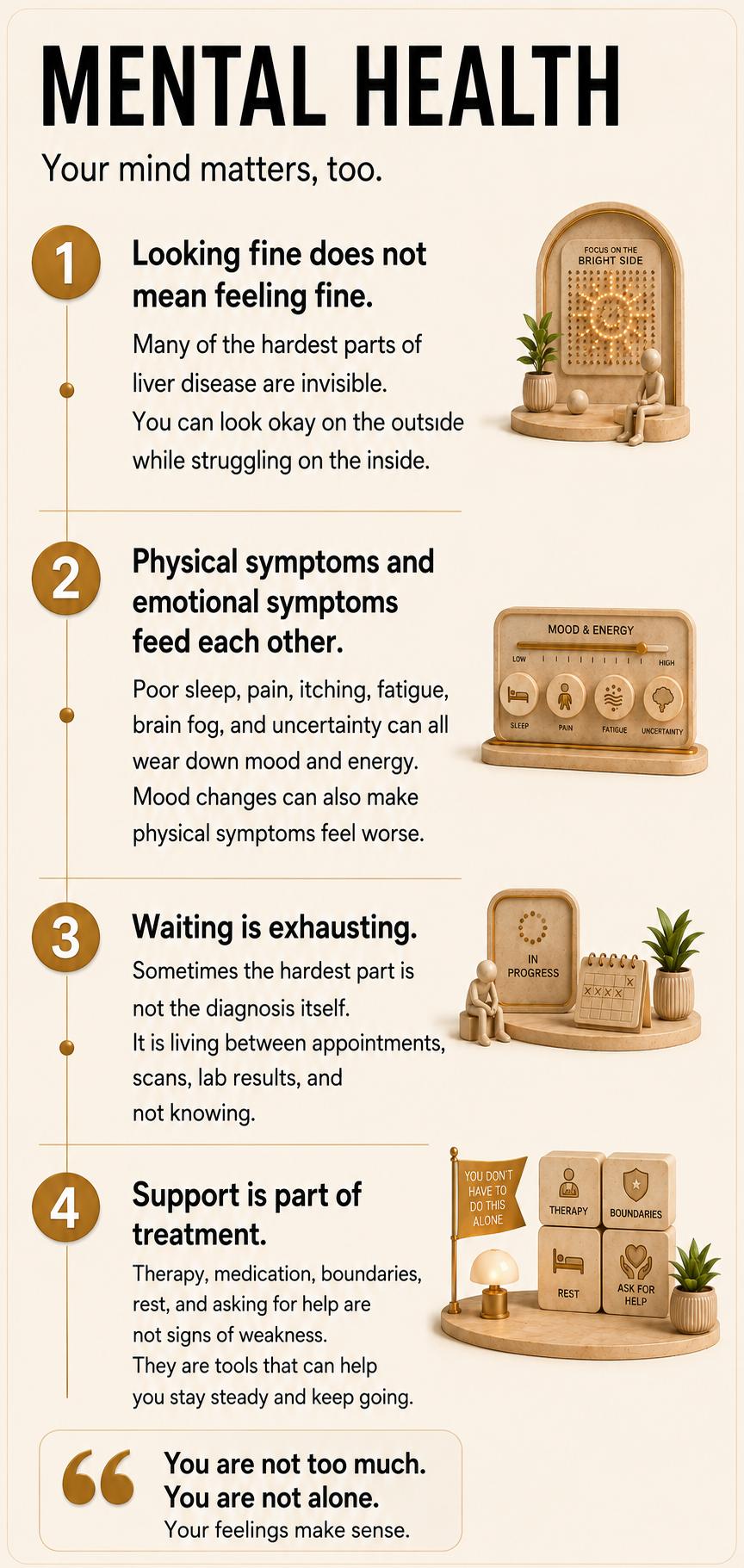
Mental health changes are common in advanced liver disease, but they are often treated like a side note. They are not. Living with cirrhosis can affect your mood, identity, relationships, confidence, sleep, concentration, sense of safety, and ability to imagine the future. Sometimes the distress comes from the diagnosis itself. Sometimes it comes from symptoms. Sometimes it comes from medications, inflammation, hepatic encephalopathy, hormone shifts, poor sleep, pain, fatigue, or the constant uncertainty of what happens next.
The hard part is that people often expect you to be grateful, strong, compliant, hopeful, and calm at the exact same time your body and life are changing in ways you did not choose.
That is not simple.
And it is not just “having a bad attitude.”
It is a real part of living with advanced liver disease.
Explore below to learn more & my experiences
Mental Health
playing the long game when you’re short on everything
Some parts of liver disease show up on imaging. Labs.
Swelling, jaundice, fatigue, itching, or brain fog.
And some parts do not show up neatly anywhere. But are everywhere.
The fear. The grief. The anger. The waiting. The shame. The exhaustion of explaining. The loneliness of looking fine while your life has been reorganized around a diagnosis most people do not understand.
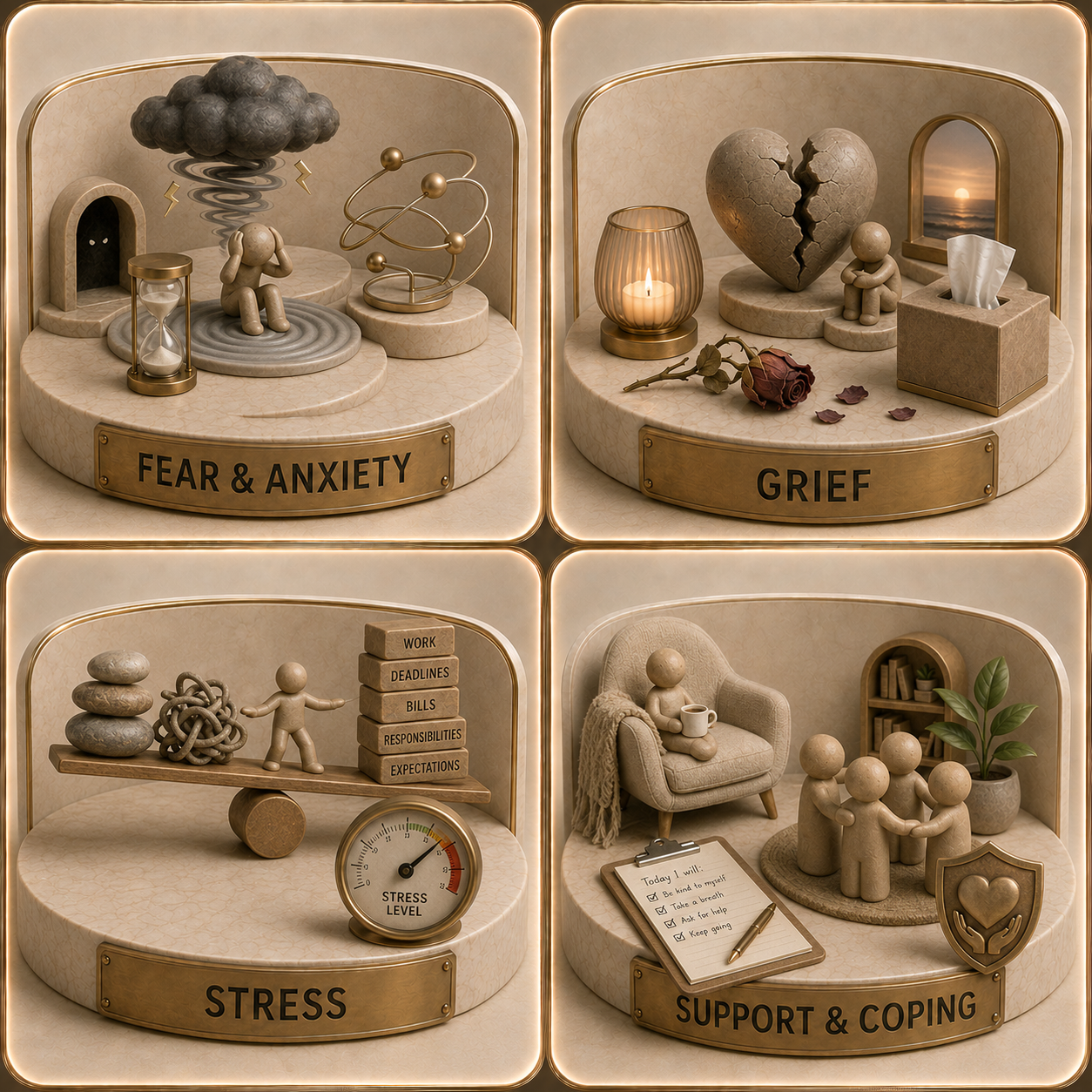
Mental health changes are common in advanced liver disease, but they are often treated like a side note. They are not. Living with cirrhosis can affect your mood, identity, relationships, confidence, sleep, concentration, sense of safety, and ability to imagine the future. Sometimes the distress comes from the diagnosis itself. Sometimes it comes from symptoms. Sometimes it comes from medications, inflammation, HE, hormone shifts, poor sleep, pain, fatigue, or the constant uncertainty of what happens next.
The hard part is that people often expect you to be grateful, strong, compliant, hopeful, and calm at the exact same time your body and life are changing in ways you did not choose.
That is not simple.
And it is not just “having a bad attitude.”
It is a real part of living with advanced liver disease.





Read More
What It Feels Like
Mental health changes can feel different for everyone.
People commonly describe:
🧠 Anxiety
🧠 Depression
🧠 Irritability
🧠 Grief
🧠 Fear about the future
🧠 Medical trauma
🧠 Shame or stigma
🧠 Feeling isolated
🧠 Feeling like a burden
🧠 Loss of identity
🧠 Difficulty explaining
🧠 Emotional exhaustion
🧠 Loss of confidence
🧠 Feeling disconnected from your old life
🧠 Feeling overwhelmed by decisions
🧠 Feeling tired of being strong
Others describe it more simply:
“I am not just scared of dying. I am scared of how much my life has already changed.”
The Crossover Point
Think of mental health like the control room behind the scenes.
Every system sends information there.
Pain.
Fatigue.
Sleep.
Labs.
Appointments.
Fear.
Symptoms.
Relationships.
Money.
Work.
Food.
The future.
At first, you manage one alarm at a time.
A bad lab.
A rough appointment.
A hard conversation.
A strange symptom.
Then the alarms start overlapping.
Your body needs attention.
Your mind needs rest.
Your life needs planning.
Your relationships need explaining.
And the control room never really gets to close.
That is when mental health becomes more than mood.
It becomes load-bearing.
Things Nobody Explains
1. You Can Be Grateful and Devastated
People may expect gratitude to cancel grief.
It does not.
You can be grateful to be alive and still devastated by what has changed.
You can appreciate your doctors and still hate needing them.
You can be hopeful and exhausted.
You can be strong and scared.
Those things can exist at the same time.
2. Stability Does Not Always Feel Safe
Even when your labs are stable or your doctor is reassured, you may still feel anxious.
That does not mean you are being dramatic.
Sometimes the body remembers how quickly things can change.
Stability is good.
But it does not always immediately restore a sense of safety.
3. The Stigma Can Be as Heavy as the Symptoms
Being sick is hard.
Being judged for being sick is another layer.
Many people with liver disease carry shame that does not belong to them. The assumptions, comments, silence, or moralizing can make the disease feel lonelier than it already is.
Stigma does not help people heal.
Support does.
4. You May Miss Who You Were
This does not mean you hate who you are now.
It means something changed.
You may miss the person who did not think about sodium, MELD scores, medication timing, symptom tracking, energy limits, or whether a new symptom means something serious.
Missing that version of yourself is allowed.
5. Mental Health Symptoms Can Be Medical Too
Not every mood change is “just emotional.”
Hepatic encephalopathy, sleep disruption, inflammation, medications, hormones, nutrition, pain, and metabolic changes can all affect mood, attention, and coping.
Mental health deserves medical attention, not dismissal.
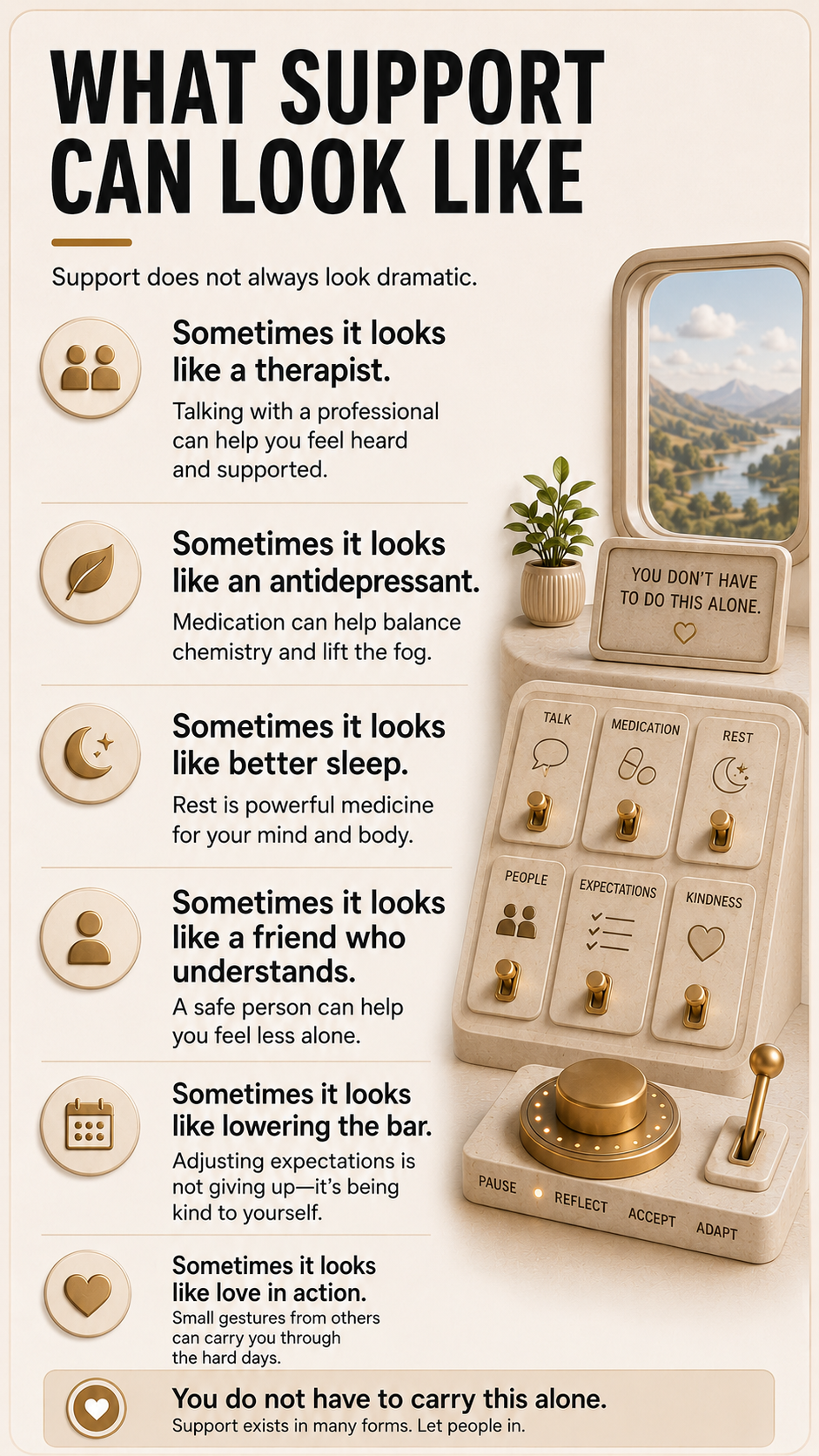
What Helps
Support should be individualized and may include:
✔️ Talking honestly with your healthcare team
✔️Screening for depression and anxiety
✔️ Therapy or counseling
✔️ Support groups or peer community
✔️ Treating hepatic encephalopathy when present
✔️ Improving sleep when possible
✔️ Reviewing medications and side effects
✔️ Managing pain, itching, fatigue, or other symptoms
✔️ Addressing nutrition and deficiencies
✔️ Involving trusted family or caregivers
✔️ Creating a plan for scary symptoms
✔️ Reducing stigma through education
✔️ Asking for help before crisis point
✔️ Emergency support if you feel unsafe
Seek immediate help if you are thinking about hurting yourself, feel unable to stay safe, feel like you may harm someone else, or are experiencing sudden severe confusion, hallucinations, extreme sleepiness, or rapidly worsening mental status.
What It Feels Like
Hepatic encephalopathy can feel different for everyone.
Common experiences include:
🧠 Brain fog
🧠 Forgetfulness
🧠 Difficulty concentrating
🧠 Slower thinking
🧠 Word-finding problems
🧠 Mental fatigue
🧠 Mood changes
🧠 Feeling "off"
Sleep-related symptoms often include:
🌙 Wide awake at 2:00 AM
☀️ Exhausted during the day
😴 Unplanned naps
⏰ Sleep-wake reversal
📅 Feeling disconnected from normal schedules
The Crossover Point
Think of your brain like a switchboard.
At first, a few signals arrive late.
A connection flickers.
A message gets rerouted.
Everything still works.
Then more signals begin crossing wires.
Some messages arrive slowly.
Others never arrive at all.
The switchboard becomes increasingly difficult to manage.
Hepatic encephalopathy is what happens when the brain is forced to work through static.
Things Nobody Explains
1. It Isn't Just Confusion
Many people expect hepatic encephalopathy to look dramatic.
Often it begins with subtle changes that are easy to dismiss.
2. Sleep Problems Can Be an Early Clue
For some patients, a reversed sleep schedule appears long before obvious cognitive symptoms.
3. You May Notice It Last
Friends and family sometimes recognize changes before the patient does.
4. It Can Fluctuate
A person may feel completely normal one day and noticeably foggy the next.
Infections, dehydration, constipation, medications, and other stressors can all contribute.
What Helps
✅ Lactulose when prescribed
✅ Rifaximin when prescribed
✅ Preventing constipation
✅ Staying hydrated when appropriate
✅ Managing infections quickly
✅ Maintaining nutrition and muscle mass
✅ Regular follow-up with your healthcare team
The Bottom Line
Hepatic encephalopathy is not a character flaw, a lack of effort, or a failure to pay attention.
It's a complication of liver disease that affects the brain's ability to process information efficiently.
Sometimes it looks like confusion.
Sometimes it looks like forgetfulness.
And sometimes it looks like lying awake at 3:00 AM wondering why a disease built around fatigue won't let you sleep.
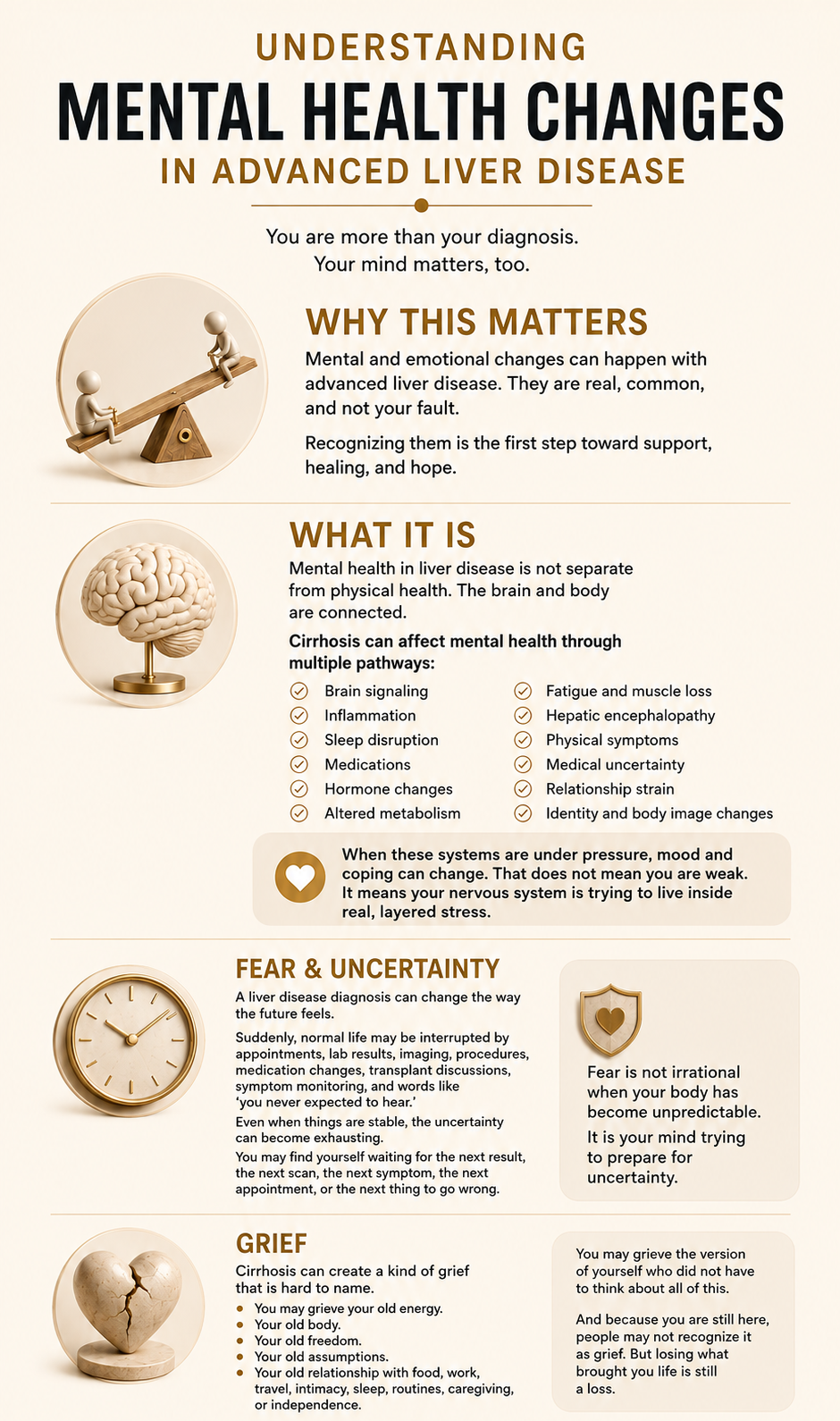
What It Is
Mental health in liver disease is not separate from physical health.
The brain and body are connected.
Cirrhosis can affect mental health through multiple pathways:
🧠 brain signaling
🧪 inflammation
😴 sleep disruption
💊 medications
⚖️ hormone changes
🩸 altered metabolism
💪 fatigue and muscle loss
🧠 hepatic encephalopathy
🫀 physical symptoms
📅 medical uncertainty
🤝 relationship strain
🪞 identity and body image changes
When these systems are under pressure, mood and coping can change.
That does not mean you are weak.
It means your nervous system is trying to live inside a body under stress.
Fear & Uncertainty
A liver disease diagnosis can change the way the future feels.
Suddenly, normal life may be interrupted by appointments, lab results, imaging, procedures, medication changes, transplant discussions, symptom monitoring, and words you never expected to know.
MELD.
Fibrosis.
Ascites.
Varices.
Encephalopathy.
Decompensation.
Transplant evaluation.
Even when things are stable, the uncertainty can become exhausting.
You may find yourself waiting for the next result, the next scan, the next symptom, the next appointment, or the next thing to go wrong.
Fear is not irrational when your body has become unpredictable.
It is your mind trying to prepare for uncertainty.
Grief
Cirrhosis can create a kind of grief that is hard to name.
You may grieve your old energy.
Your old body.
Your old freedom.
Your old assumptions.
Your old relationship with food, work, alcohol, social plans, travel, clothes, intimacy, sleep, independence, or time.
You may grieve the version of yourself who did not have to think about all of this.
And because you are still here, people may not recognize it as grief.
But losing the life you thought you were living is still a loss.
Anxiety
Anxiety in advanced liver disease can come from many directions.
Symptoms can feel frightening.
Labs can feel like verdicts.
Waiting can feel unbearable.
A new pain, new swelling, new itch, new confusion, or new change in your body can send your mind into threat-detection mode.
For some people, anxiety becomes practical and specific:
What if I decompensate?
What if I need a transplant?
What if I get worse?
What if people think I caused this?
What if I cannot work?
What if I become a burden?
What if I miss something important?
Anxiety is not always overreacting.
Sometimes it is the nervous system trying to monitor too many risks at once.
Depression
Depression can also occur with chronic liver disease.
Sometimes it looks like sadness. Sometimes it looks like numbness.
Sometimes it looks like irritability, withdrawal, hopelessness, loss of motivation, loss of pleasure, sleeping too much, sleeping too little, struggling to keep up, or feeling like everything takes more effort than it should.
Depression can be influenced by the emotional weight of illness, but it can also be affected by inflammation, sleep disruption, medications, nutrition, fatigue, hormones, pain, and brain changes.
It is not a personal failure.
It is a health issue that deserves attention.
Shame & Stigma
Liver disease carries a stigma that many other illnesses do not.
People make assumptions.
About alcohol.
About weight.
About choices.
About blame.
About whether you “did this to yourself.”
Even when those assumptions are wrong, they can still hurt. And even when lifestyle factors are part of the story, shame does not treat disease.
It isolates people.
It makes them less likely to ask for help.
It turns a medical diagnosis into a moral trial.
Nobody deserves that.
You deserve care because you are sick, not because you passed someone else’s purity test.
Identity Changes
Advanced liver disease can change the way you see yourself.
You may go from independent to monitored.
Private to medicalized.
Reliable to unpredictable.
Strong to limited.
Social to cautious.
Spontaneous to planned.
You may still be the same person, but your life may require different rules.
That can feel disorienting.
Sometimes the hardest part is not only what the disease does to the body.
It is what it does to your sense of self.
Relationships & Isolation
Illness changes relationships.
Some people show up beautifully.
Some disappear.
Some try, but do not understand.
Some minimize.
Some panic.
Some offer advice when what you needed was company.
You may feel lonely because nobody around you understands the constant calculation: energy, sodium, symptoms, appointments, risk, recovery, and what you can realistically handle.
You may also withdraw because explaining feels exhausting.
Isolation does not always mean nobody cares.
Sometimes it means the disease has become too complicated to translate.
.
The Bottom Line
Mental health changes in liver disease are not separate from the illness.
They are part of it.
Cirrhosis can affect the brain, body, identity, relationships, future planning, and the sense of safety people carry through daily life.
Sometimes the hardest symptom is not the one people can see.
It is the weight of living under constant uncertainty while still trying to look like yourself.

Read More
Tell me.
What are you afraid of?
What is your biggest fear?
And is it still the same?
I’ll tell you mine.