
When someone is diagnosed with advanced liver disease, the diagnosis doesn't just belong to the patient. It reshapes the lives of the people who love them.
In the medical world, you are called a "caregiver." But in reality, you are a partner, a child, a spouse, or a best friend who has suddenly been drafted into a war you didn't see coming.
You are the one holding it all together, navigating the changes, and keeping hope alive… while your own heart is breaking.
No one prepares you for this role.
The caregiver section is designed to change that. Built on raw, real-world experience rather than clinical textbook theories, this space exists to give you the practical blueprint, emotional validation, and structural support you deserve.
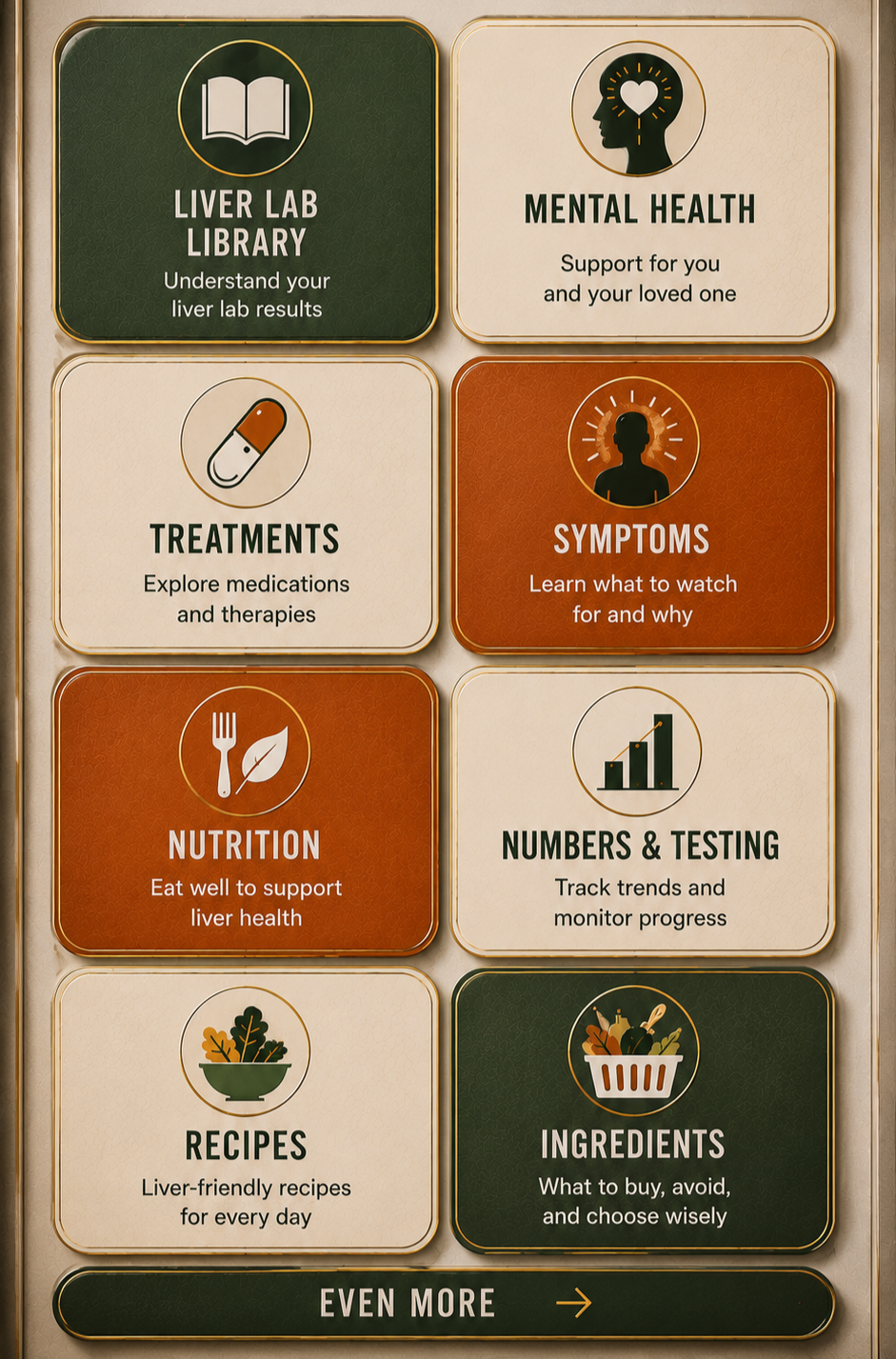

Here, you will find:
The Unfiltered Blueprint: No medical fluff. We break down the absolute daily necessities—like the "2 to 3 soft stools" lactulose rule, spotting hidden muscle wasting beneath ascites fluid, and managing the erratic behavioral shifts of HE.
A Translator for the Chaos: Doctors throw around numbers, acronyms, and high-level concepts. You’ll find what your loved one's healthcare team actually means, giving you the tools and language to advocate fiercely at every appointment.
Radical Compassion & Truth: Caregiver burnout is real, and the emotional toll is heavy. This is a judgment-free zone where we acknowledge the dark days, the exhaustion, and the fear, while reminding you that you are doing an incredible job.
Actionable Survival Tools: From daily symptom-tracking logs to step-by-step home safety adjustments for thinks like low platelet counts, we provide tangible resources to bring a sense of control back to a completely unpredictable situation.
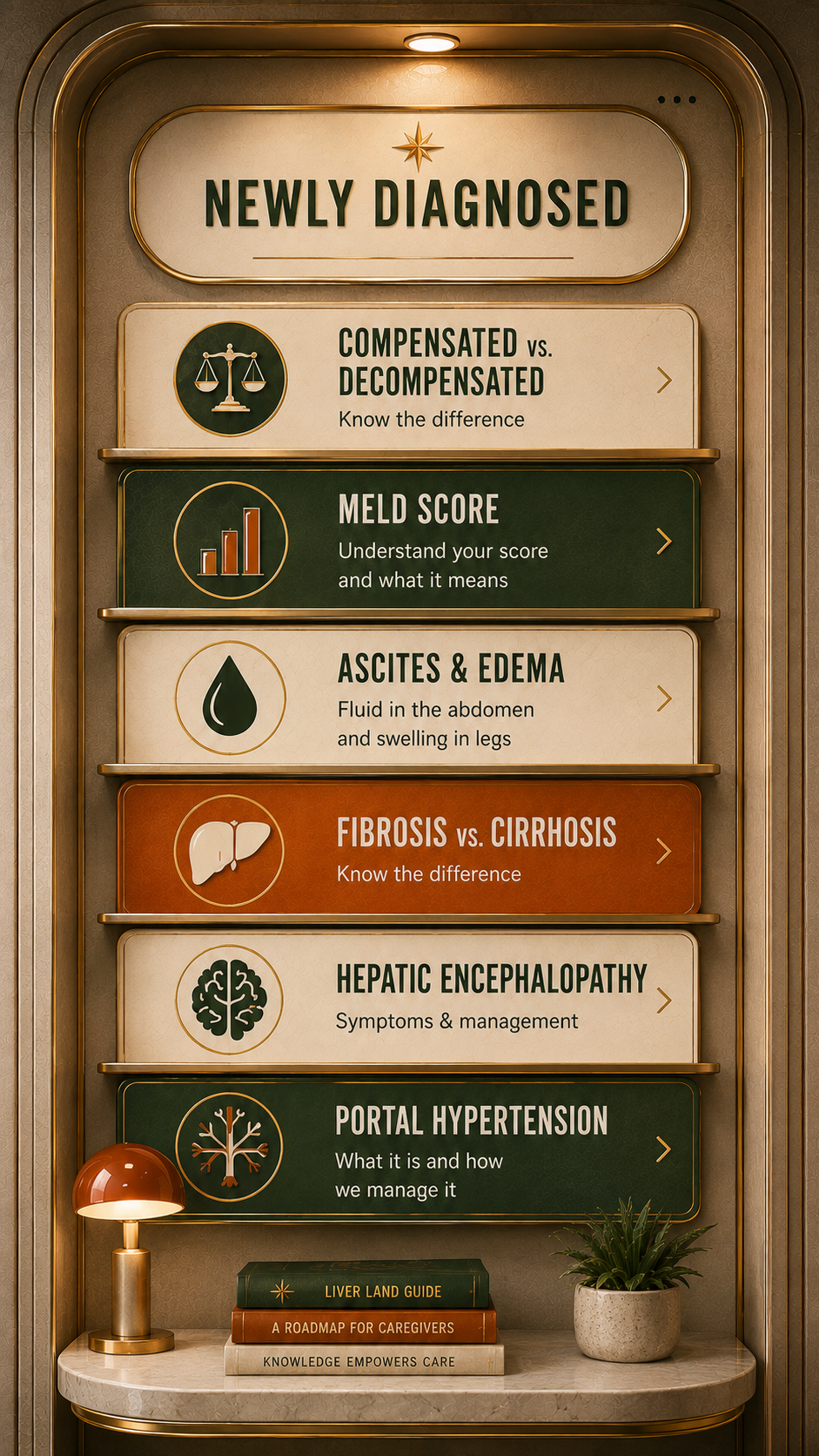
Here, you will find:
The Unfiltered Blueprint:
No medical fluff. We break down the absolute daily necessities—like the "2 to 3 soft stools" lactulose rule, spotting hidden muscle wasting beneath ascites fluid, and managing the erratic behavioral shifts of HE.
A Translator for the Chaos:
Doctors throw around numbers, acronyms, and high-level concepts. You’ll find what your loved one's healthcare team actually means, giving you the tools and language to advocate fiercely at every appointment.
Radical Compassion & Truth:
Caregiver burnout is real, and the emotional toll is heavy. This is a judgment-free zone where we acknowledge the dark days, the exhaustion, and the fear, while reminding you that you are doing an incredible job.
Actionable Survival Tools:
From daily symptom-tracking logs to step-by-step home safety adjustments for low platelet counts, we provide tangible resources to bring a sense of control back to a completely unpredictable situation.
What the Caregiver Section Is For
When someone is diagnosed with advanced liver disease, the diagnosis doesn't just belong to the patient. It reshapes the lives of the people who love them.
In the medical world, you are called a "caregiver." But in reality, you are a partner, a child, a spouse, or a best friend who has suddenly been drafted into a war you didn't see coming. You are the one staying awake at night monitoring sleep reversals, counting daily bowel movements to keep hepatic encephalopathy at bay, tracking sudden fluid weight shifts, and trying to decipher complex medical jargon while your own heart is breaking.
No one prepares you for this role.
The caregiver section of Diagnosis Cirrhosis is designed to change that. Built on raw, real-world experience rather than clinical textbook theories, this space exists to give you the practical blueprint, emotional validation, and structural support you deserve.
You are your loved one's brain, their advocate, and their safe harbor. But you cannot pour lactulose from an empty bottle.

Thank you for loving one of us
🤎
Meet MY Caregiver
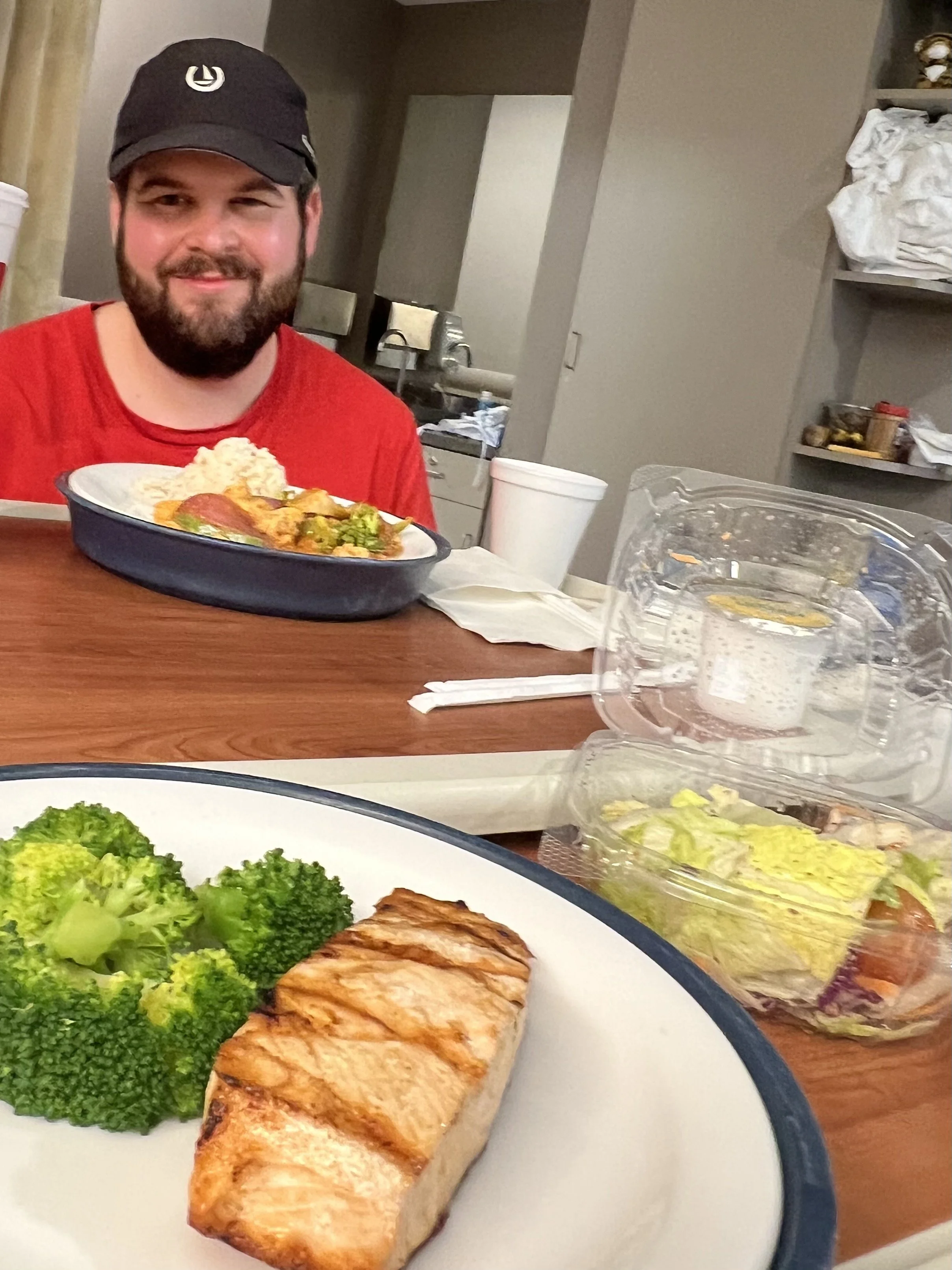
This the love of my life. At 35 years old, he got a title neither of us ever imagined would become part of our story: caregiver.
And there’s something strange about that word.
Because before chronic illness, the titles were: husband, best friend, emergency contact in-a-joking-no-real-emergency-way..
But regardless of the title, he stepped into the role in ways I could have never anticipated.
I joke all the time that he’s a professional panicker. A world-class worrier. Olympic-level catastrophic thinker. But at the end of the day, he became the exact person I needed for reasons neither of us could have understood when we met in our early 20s.
When you’re young, you think compatibility is: chemistry, humor, attraction shared interests
You don’t realize one day you might need someone who: remembers medication schedules, learns lab values, notices confusion before you do, advocates when you’re too exhausted to speak, sits through procedures, tracks symptoms, holds your hand while pretending not to be terrified
There are qualities chronic illness reveals that normal life never asks people to develop.
This section is for him. And for everyone who has someone like him.
The people who quietly step into impossible situations and somehow make them survivable.
I share this picture — even though it’s probably his least favorite picture of himself — because it was the moment the word caregiver really settled into reality for me.
It was my first meal in the hospital. The staff let him order from the menu too. And somehow that tiny detail became enormous.
It felt like our first date inside the world of diagnosed. A strange little dinner reservation inside a life neither of us planned on entering.
And it will forever hold this perfect capsule of a moment in time:
the moment we realized we were both going to have to learn how to survive this together.
A Patient’s Experience
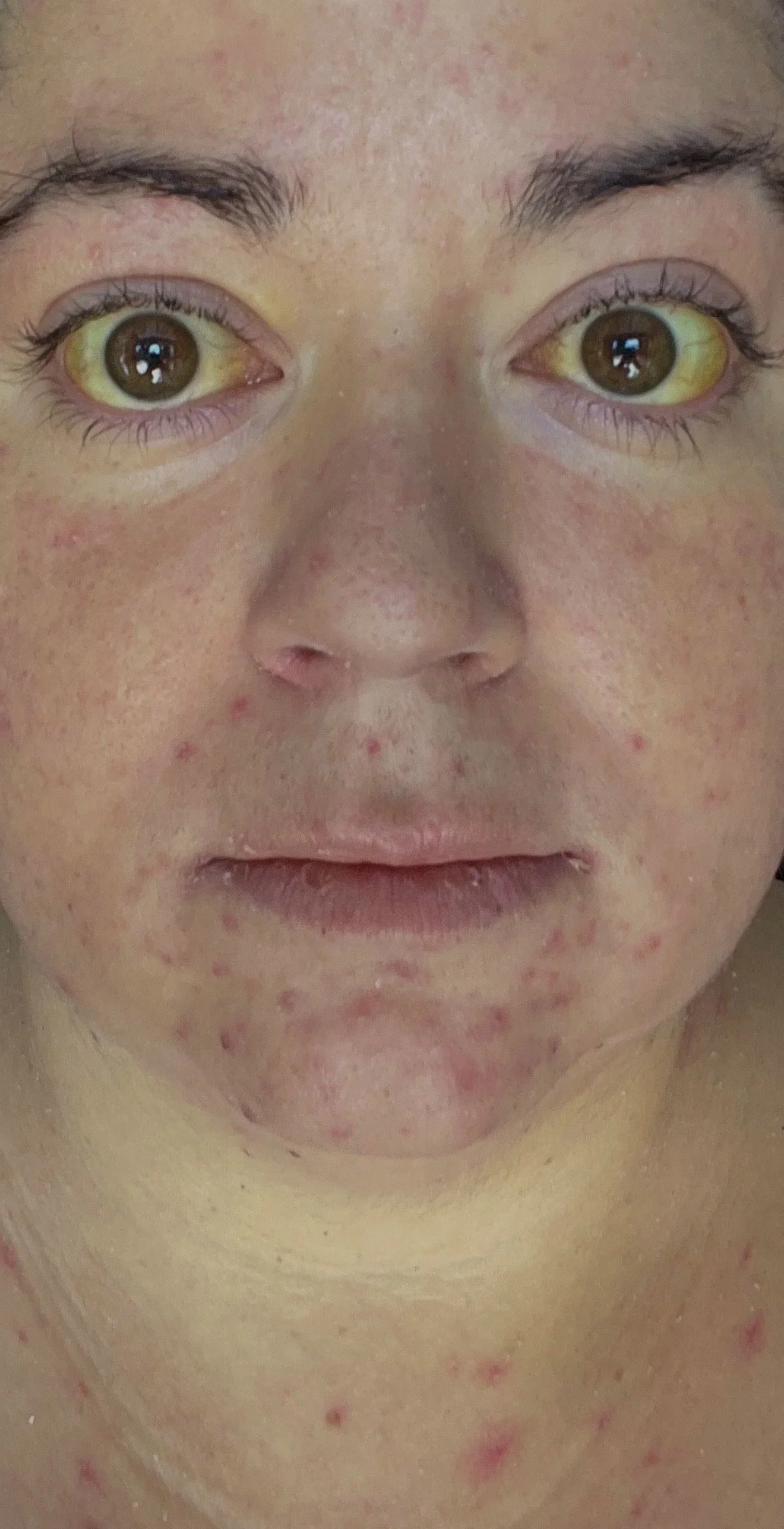
One thing about me is that, believe it or not, I have never been a particularly vain person. Was I in a sorority? Yes. Have I always worn makeup? Also yes. But my hair? Absolutely not. I am, with deep respect to myself, one of the least skilled full heads of hair this side of the Mississippi.
Which makes the hair loss even stranger emotionally. Because it was not about being precious with my blowout routine. There was no blowout routine. There was barely a routine at all. But hair still becomes part of your identity, even when your bad hair days are part of your brand. And when mine started falling out, it felt like the disease had finally learned my name.