
Spider Angiomas
@diagnosis_cirrhosis 🕷️ Why do I have little red spots on my chest? What are red “spider veins” on the skin? 👀🫀 Spider angiomas (also called spider nevi) are small, dilated blood vessels that can appear with chronic liver disease and cirrhosis 🩸 👉 They usually look like: * one bright red center dot * with tiny vessels branching outward like spider legs 🕷️ They’re most commonly found on: * chest * neck * shoulders * upper arms * face — 🫀 why do spider angiomas happen in cirrhosis? When the liver becomes damaged, it can stop metabolizing hormones normally ⚖️ 👉 especially estrogen Higher estrogen levels and vascular signaling changes can cause tiny blood vessels near the skin to dilate and branch outward 🩸 That’s why these red “spiders” appear. — 📊 spider angiomas are COMMON in cirrhosis Studies estimate they affect around 33%–47% of people with cirrhosis 👀 And while a single spider angioma can happen in healthy people too… 👉 having MULTIPLE spider angiomas has been reported to have up to 95% specificity for chronic liver disease 🫀 Especially: * advanced fibrosis * portal hypertension * alcohol-related liver disease * Child-Pugh B/C cirrhosis * worsening liver dysfunction — 🩺 why doctors care about them Spider angiomas themselves are usually: ✅ benign ✅ painless ✅ harmless on their own BUT 👀 They can be a clue that: * liver disease is progressing * hormone regulation is impaired * portal hypertension may be worsening * risk of esophageal varices may be higher Sometimes your skin shows signs of cirrhosis before people realize what’s happening internally 🫀 — ⚠️ are all red spots liver disease? No ❗️ Not every red spot or broken blood vessel means cirrhosis. Spider angiomas can also happen sometimes: * during pregnancy * in healthy people * with hormone changes * thyroid disease * rheumatoid arthritis * or other causes Context matters 🩺 — 🧬 causes of cirrhosis autoimmune hepatitis 🔥 fatty liver disease (MASLD / NAFLD / MASH / NASH) 🍩 alcohol-related liver disease 🚫🍷 hepatitis B 🦠 hepatitis C 🦠 primary biliary cholangitis (PBC) 🧬 primary sclerosing cholangitis (PSC) 🧬 hemochromatosis ⚙️ Wilson’s disease 🪙 alpha-1 antitrypsin deficiency 🧩 drug-induced liver injury 💊 cryptogenic cirrhosis ❓ or other causes 🫀 — 👩⚕️👨⚕️🩺 always talk to your doctor hepatologist 🫀 general doctor or dermatologist 👉 don’t panic over every red spot 👉 but don’t ignore new skin changes either especially if they’re increasing, spreading, or happening alongside: * jaundice 🟡 * swelling * bruising * itching * fatigue — 🔎 why do I have red spots on my chest, spider angioma, what is cirrhosis rash, does cirrhosis cause a rash, what is liver rash, does liver change skin, alcohol and red spots, does alcohol cause red spots, how to get rid of red spots on skin, spider nevus, liver disease skin signs, cirrhosis symptoms, red dots on skin liver disease, portal hypertension signs, spider veins chest, chronic liver disease #symptoms #liverhealth #alcohol #fattyliver #rash ♬ Music Background for Creativity - Ednaldo reis
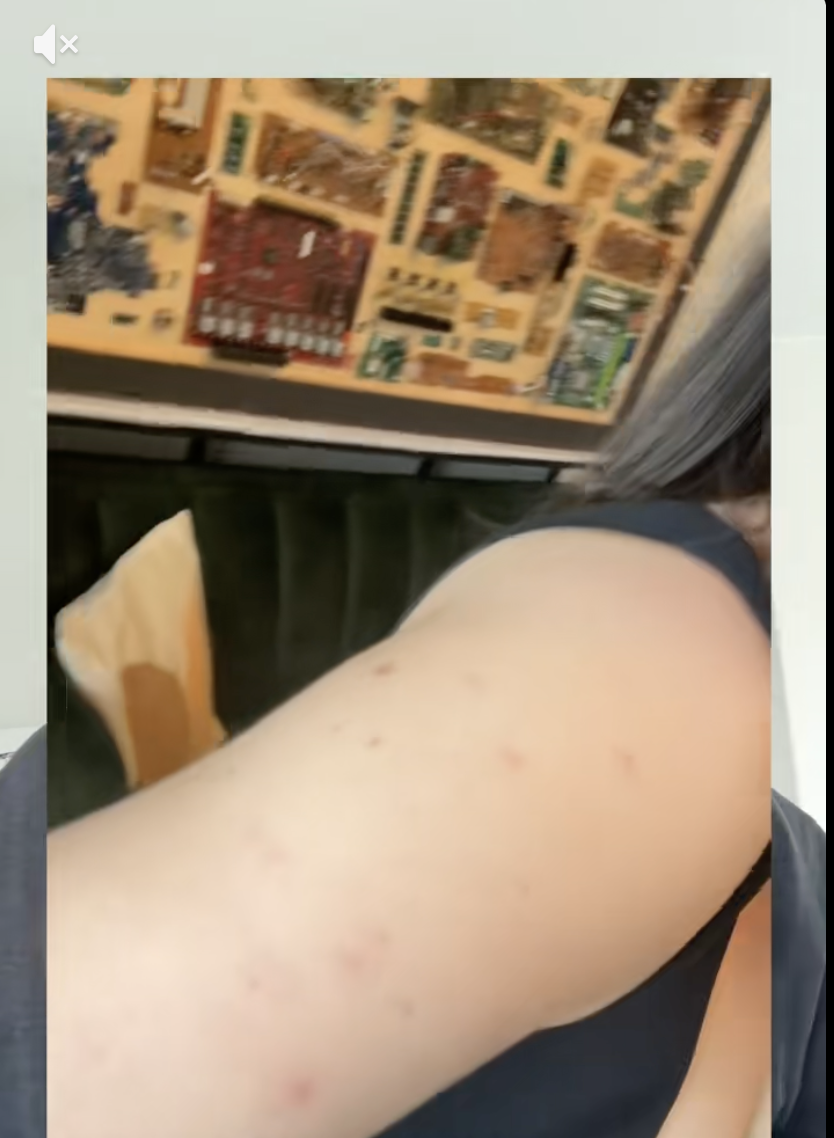
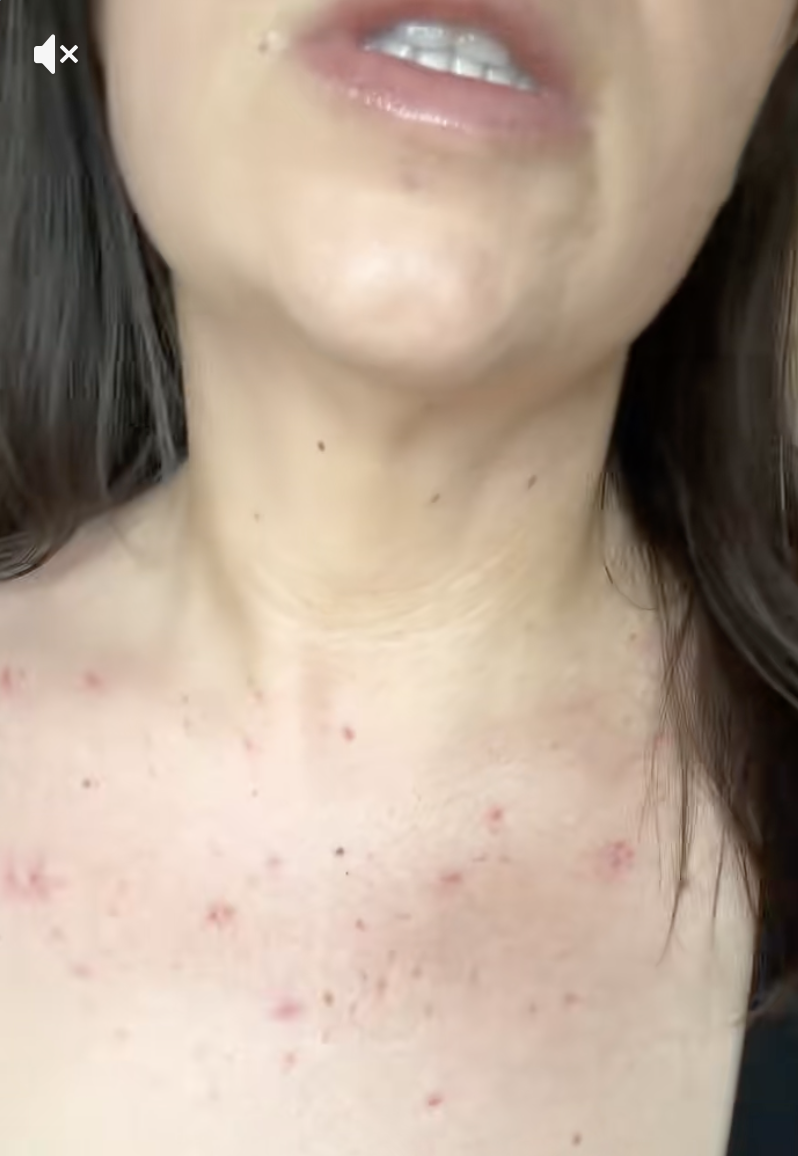
Then another.
Then several.
Little clusters of blood vessels that look almost delicate:
thin red lines branching outward from a central point like tiny spiders or cracks in glass.
Spider angiomas are one of the most recognizable skin findings associated with liver disease.
And for many people, they become one of the first visible reminders that cirrhosis is not just happening internally anymore.
What It Is
Spider angiomas are small dilated blood vessels visible near the surface of the skin.
They typically have:
a central red spot
thin branching vessels radiating outward
When pressed, the center may briefly blanch or fade before refilling with blood.
They are most commonly found on:
the chest
shoulders
neck
face
upper arms
A few spider angiomas can occur in healthy people.
But larger numbers are commonly associated with:
chronic liver disease
cirrhosis
hormonal changes
altered blood vessel regulation
What It Feels Like
Physically:
usually nothing.
Spider angiomas are generally painless.
But emotionally, they can feel like:
visible proof something is wrong
your skin “telling on you”
losing privacy around illness
becoming hyperaware of your appearance
constantly checking mirrors or lighting
wondering whether other people notice them
For many people:
they become psychologically louder than they are medically dangerous.
Why It Happens
The exact mechanism is not fully understood, but spider angiomas are thought to be related to:
altered hormone metabolism
vascular changes
increased estrogen signaling
liver dysfunction affecting blood vessel regulation
The liver normally helps process hormones and regulate many circulating substances in the body.
When liver function changes, blood vessels may dilate abnormally near the skin surface.
Spider angiomas are especially common in:
advanced liver disease
cirrhosis
pregnancy
high-estrogen states
Things Nobody Explains
They are extremely common in cirrhosis.
Many people suddenly notice them appearing:
on the chest
across the shoulders
near the collarbone
on the face
sometimes seemingly overnight.
They can fluctuate.
Some become more noticeable with:
heat
flushing
alcohol use
disease progression
Skin changes become emotionally loaded fast.
Once diagnosed with cirrhosis, many people start scanning their body constantly for:
bruises
rashes
redness
swelling
vascular changes
Every mark suddenly feels medically meaningful.
People may mistake them for unrelated skin issues.
Spider angiomas are often confused with:
acne scars
broken capillaries
rashes
irritation
sun damage
before someone realizes they are related to liver disease.
They are usually harmless themselves.
The angiomas are not dangerous in the way varices or ascites are dangerous.
But they can be clues pointing toward underlying liver dysfunction.
They affect self-image more than people realize.
Especially because they often appear on visible areas like:
the chest
neck
face
making liver disease feel harder to keep private.
What Helps
The angiomas themselves often do not require treatment unless someone wants cosmetic removal.
Management focuses primarily on:
treating the underlying liver disease
monitoring liver function
reducing ongoing liver injury
avoiding alcohol when appropriate
hepatology follow-up
Some spider angiomas may fade if liver function improves.
Others remain.
Cosmetic Treatment Options
Some people choose treatments like:
laser therapy
vascular laser treatment
for cosmetic reasons.
But results vary, and new lesions may still develop if underlying disease persists.
The Emotional Reality
Spider angiomas are tiny.
But emotionally, they can feel enormous.
Because they represent a shift:
from liver disease being something hidden inside the body…
to something visible on the outside.
And once illness becomes visible, many people begin feeling:
observed
exposed
explainable in ways they never wanted to be
That psychological transition is rarely talked about enough.
Related Reading
Cirrhosis Skin Changes
Why You Bruise Easily
Edema and Cirrhosis
Portal Hypertension
What the Liver Actually Does
Jaundice Explained
Itching and Liver Disease
Hormones and Cirrhosis
“You Don’t Look Sick”
Newly Diagnosed With Cirrhosis: Start Here
