
The Faces of Cirrhosis
What I Learned After the Disease Became Human
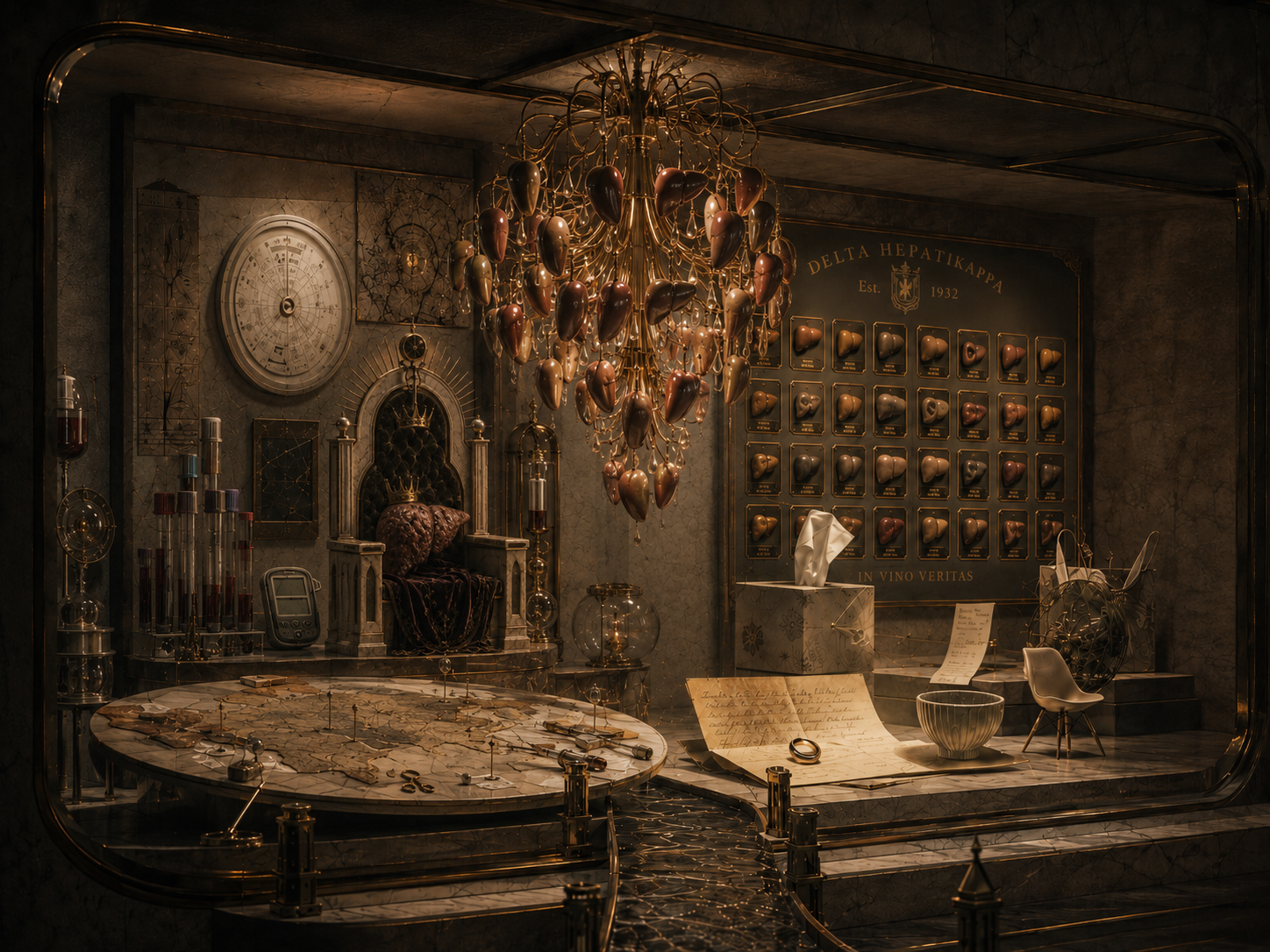
One thing I have been intentional about from the beginning is that I do not really think of anyone here as a “follower.”
You are not following me.
You are my friend.
Or at least, that is the word I prefer.
Maybe because “follower” has always felt strange to me. A little too inflated. A little too pulpit-adjacent. A little too “please gather at the base of the mountain while I pretend to have answers.”
And I do not.
I am nobody special.
I am not the leader of anything.
I am not here because I have figured out cirrhosis, liver disease, fibrosis, transplant evaluation, chronic illness, healing, stabilization, or the emotional gymnastics of having a body that suddenly rewrites the rules.
I am just a person helping stroke the conversation.
That is it.
This week has felt like that.
Stories.
Transplants.
Transformation.
Stabilization.
News.
Reversals.
Hope showing up in places where people were almost afraid to look for it.
But I think the most important line is this:
I thought I knew a lot about cirrhosis until I met the faces of cirrhosis.
And that is the part that changed me.
Not just the science.
Not just the labs.
Not just fibrosis staging, MELD scores, ascites, hepatic encephalopathy, portal hypertension, transplant evaluation, bilirubin, sodium, INR, or the whole awful alphabet soup of trying to understand a disease that can rearrange your life without asking permission.
It was the faces.
The people.
The stories.
The way one diagnosis can hold a thousand different lives inside it.
The way cirrhosis can look like a young mother, a grandfather, a transplant recipient, a caregiver, someone stable, someone declining, someone newly diagnosed, someone waiting, someone healing, someone still trying to understand how they got here.
That dimensionality has forever changed me.
Because science matters.
Of course it does.
Science gives us the language.
The labs.
The scans.
The staging.
The treatments.
The surveillance.
The transplant criteria.
The numbers we watch like weather.
But science without society becomes sterile in the cruelest way.
And society without science leaves people misunderstood, blamed, minimized, or erased.
The separation of the two is not just unjust.
It is uncharacteristically cruel.
Because cirrhosis is not only a disease process.
It is a human experience.
It happens inside friendships, marriages, families, communities, comment sections, quiet messages, hard conversations, and all the complicated places where love and fear usually stand too close together.
And once you see that, you cannot unsee it.
You cannot reduce people back down to numbers after you have learned the shape of their lives.
You cannot hear “ascites” and only think fluid once you know the person who could not bend over to tie their shoes.
You cannot hear “hepatic encephalopathy” and only think ammonia once you know the spouse who watched the person they love become unfamiliar at the kitchen table.
You cannot hear “transplant evaluation” and only think allocation once you know the person waiting beside the phone, trying to live a life around a call that may or may not come.
That is what community does.
It gives disease a face.
And that is also what makes it powerful.
Maybe too powerful sometimes.
Because when people gather around pain, something ancient happens.
We build fire circles.
We build shelters.
We build language.
We build little systems of meaning so the terror does not swallow us whole.
But humans are humans.
And eventually, even around the same fire, people start wondering whose torch is burning brighter.
That is not an accusation.
It is an observation.
A sad little anthropological footnote written in the margins of almost every human gathering that has ever existed.
Give people fear, scarcity, attention, grief, urgency, and a shared wound, and eventually someone will start drawing borders around the camp.
Not always cruelly.
Not always consciously.
Sometimes it happens quietly.
A little gate here.
A little kingdom there.
A little tariff on trust.
A little competition disguised as protection.
A little fracture where there used to be flow.
And I understand it.
I really do.
When you have lived through something terrifying, it is natural for your survival to need a place to land.
But there is a difference between building shelter and building a throne.
There is a difference between holding space and owning space.
There is a difference between saying “come sit with us” and quietly deciding who is allowed near the fire.
Sometimes I think about the old city-states.
All those fortified places, each convinced its walls were the thing keeping it alive.
And sometimes walls do protect.
Sometimes boundaries matter.
Sometimes a gate is not cruelty; it is survival.
But when the water source is shared, when the road is shared, when the danger is shared, walls can become a very expensive way to stay thirsty.
That is the part I keep coming back to.
If the goal is help, the help has to stay whole.
Not identical.
Not obedient.
Not perfectly harmonious.
Whole.
There is room for disagreement. There has to be.
There is room for different experiences, different diagnoses, different causes, different stages, different approaches, different personalities, different levels of openness, different ways of coping, different ways of telling the story.
That is not the problem.
The problem is when difference becomes division.
When advocacy becomes territory.
When community becomes currency.
When the thing that was supposed to make people less alone starts asking them to pick a side.
And no one wins that.
Not really.
It reminds me of the prisoner’s dilemma, except instead of two people in a room, it is a bunch of sick people holding pieces of a map.
If everyone protects only their own corner, maybe they feel safer for a second.
But the map gets torn.
The audience gets split.
The help gets smaller.
The person who needed the whole picture gets fragments.
And what a devastating waste that would be.
Because people with cirrhosis already live with enough fragmentation.
The disease fragments your body.
Your energy from your ambition.
Your appetite from your hunger.
Your labs from your plans.
Your old self from your new one.
Your privacy from your survival.
Your future from your assumptions.
The last thing any of us need is for the community to fracture too.
And I would be fibbing if I said the human part of this is always easy.
It is not.
People are hard.
Dynamics are hard.
Relationships are complicated.
Humans are complicated.
Illness can make everything sharper.
Fear can come out sideways.
Grief can wear a costume.
Support can become control if it is not careful.
Even love, if mishandled, can bruise.
But even with all of that, I keep seeing the same through line.
Love.
Understanding.
Recognition.
We speak a language not everyone understands.
We know a stride not everyone has had to step in.
We know what it means to wait on labs, watch numbers, hear words like cirrhosis or fibrosis or transplant, and feel the entire room change shape.
We know how much can live behind “I’m okay.”
And I think that is why this community means so much to me.
Not because everyone has the same story.
Not because everyone agrees on everything.
Not because it is always simple or clean or easy.
But because underneath all of it, I hope every single person here knows this:
You matter.
Your story matters.
Your heart is appreciated.
You do not have to be perfectly understood by everyone to still be worthy of love.
We do not all have to get along every second.
We do not all have to walk the same path.
But this experience is already hard enough, and nobody should have to feel invisible inside it.
That is the strange thing about cirrhosis.
It seems to find a very specific kind of person.
Not by cause.
Not by stage.
Not by age.
Not by any neat little demographic box that would make this easier to explain.
But somehow, over and over again, I meet people with absolutely lousy livers and astonishing hearts.
I will never be able to fully explain how a disease can find kindness and be so cruel to it.
How it can circle people who are funny, generous, terrified, exhausted, brilliant, stubborn, devastated, hopeful, newly diagnosed, long diagnosed, transplanted, waiting, grieving, rebuilding, trying.
How it can take so much from people who still find ways to give.
That is one of the mindless, mind-boggling things I am mindful of as we go through this.
Together.
And maybe together is the word I care about most.
Not above.
Not below.
Not ahead.
Not behind.
Together.
Because cirrhosis is already a thief.
It steals enough without us handing it the good silver
It steals enough without letting it take the connective tissue too.
So today I am grateful.
For the stories.
For the familiar strangers.
For the people who show up.
For the transplant miracles.
For the stabilization updates.
For the reversals nobody dared to expect.
For the hard conversations.
For the soft landings.
For every person trying to heal, understand, forgive, rebuild, wait, grieve, hope, and keep going.
Living with cirrhosis is not linear.
Healing is not linear.
Relationships are not linear.
Community is not linear either.
But love still finds a way to leave a thread.
And I am grateful for every friend holding onto it.
