
Change of Focus
Understanding Eyesight & Vision Changes in Advanced Liver Disease
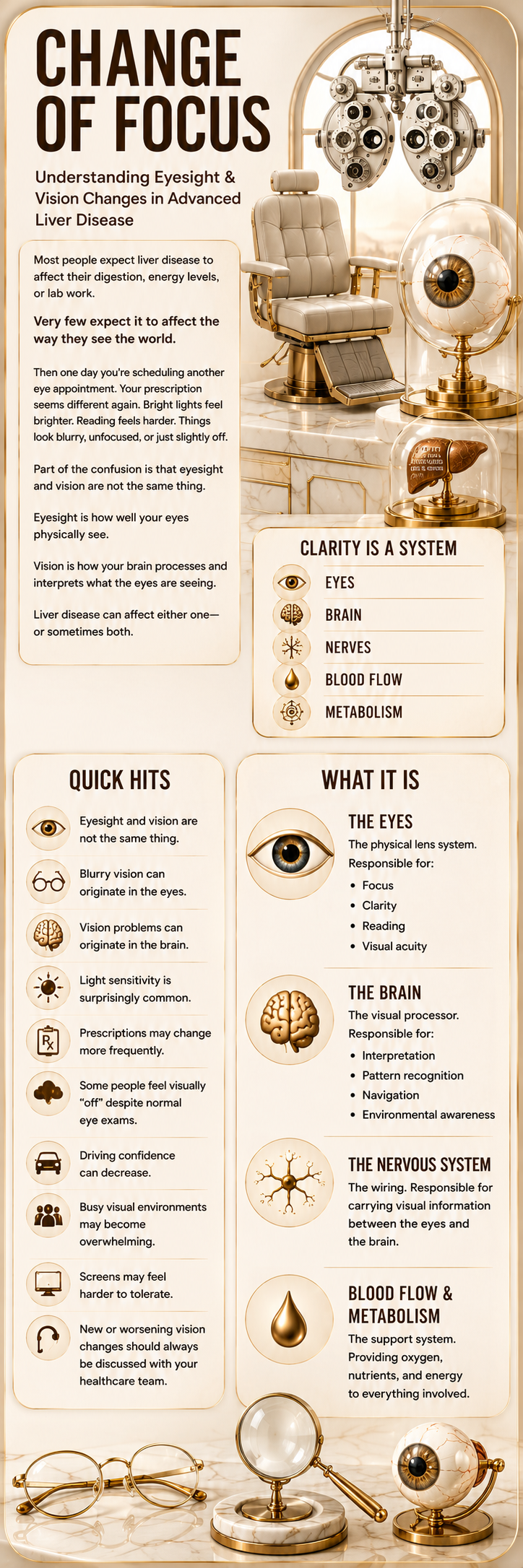
Most people expect liver disease to affect their digestion, energy levels, or lab work.
Very few expect it to affect the way they see the world.
Then one day you're scheduling another eye appointment. Your prescription seems different again. Bright lights feel brighter. Reading feels harder. Things look blurry, unfocused, or just slightly off, and nobody seems entirely sure whether the problem starts in your eyes, your brain, your medications, or somewhere in between.
Part of the confusion is that eyesight and vision are not the same thing. Eyesight refers to how well your eyes physically see. Vision refers to how your brain processes and interprets the information your eyes send it. Liver disease can affect either one—or sometimes both at the same time.
What It Is
Seeing clearly requires far more than healthy eyes.
Your ability to make sense of the world depends on multiple systems working together:
👁️ Eyesight — the physical structures responsible for focus, clarity, and visual acuity.
🧠 Vision — the brain's ability to interpret and organize what the eyes are seeing.
🩸 Blood Flow — delivering oxygen and nutrients to both the eyes and the brain.
⚡ The Nervous System — transmitting visual information from one place to another.
🧪 Metabolic Balance — helping all of those systems function properly.
When liver disease begins affecting these systems, changes can appear in different ways.
Eyesight Changes
These are problems originating in the eyes themselves.
Patients may notice:
👓 Blurry vision
📖 Difficulty reading
🔍 Frequent prescription changes
💡 Light sensitivity
😵 Dry eyes
These symptoms are often related to fluid shifts, diabetes, medications, nutritional deficiencies, or changes affecting the eye directly.
Vision Changes
These occur when the eyes are seeing normally, but the brain struggles to process the information efficiently.
Patients often describe:
🌫️ Feeling visually "off"
🧩 Difficulty processing busy environments
🚗 Less confidence driving
🧠 Trouble tracking or interpreting visual information
😵 Feeling disconnected from what they're seeing
This is one reason some people have relatively normal eye exams but still feel like their vision isn't quite right.
Things Nobody Warns You About
Most people imagine vision changes as blurry vision.
Vision changes in liver disease can be much stranger.
Patients describe:
Trouble focusing even with the right prescription
Bright lights feeling unusually bright
Difficulty reading for long periods
Feeling visually overwhelmed in busy environments
Needing more time to process what they're seeing
Feeling like the world is slightly out of focus even when it isn't
Some describe it as looking through a dirty window.
Others describe it as feeling disconnected from what they're seeing.
Almost everyone describes it as frustrating.
Read More
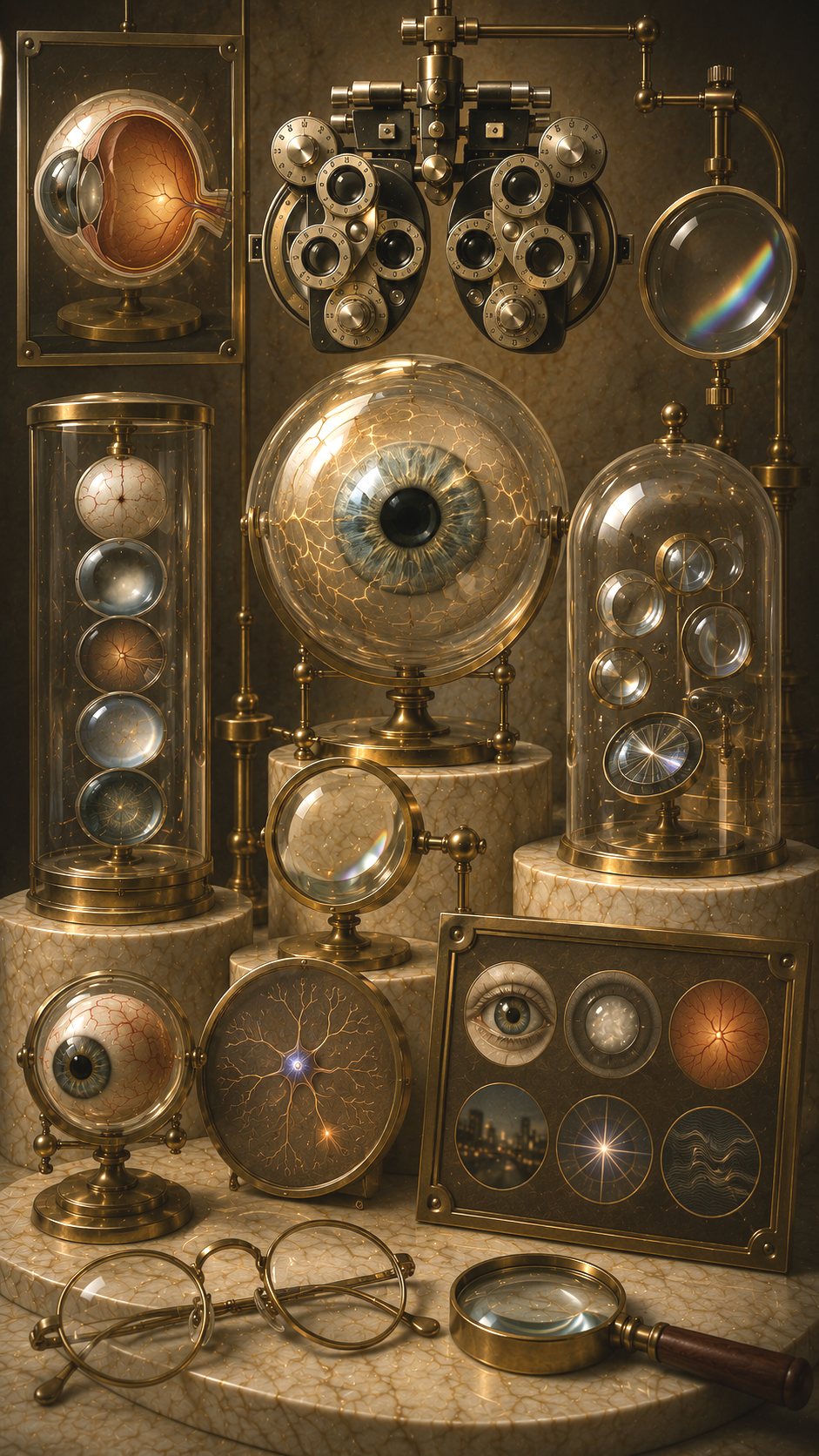
What It Feels Like
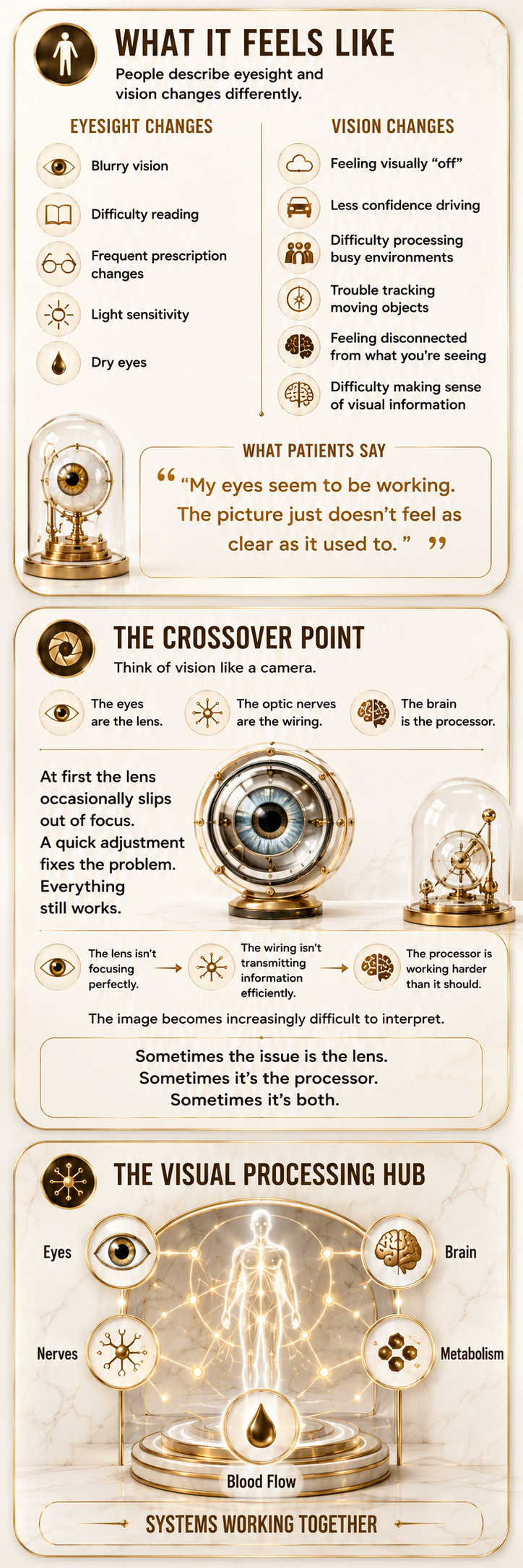
People describe eyesight and vision changes differently.
Some experience problems with their eyesight:
👓 Blurry vision
📖 Difficulty reading
🔍 Frequent prescription changes
💡 Light sensitivity
🖥️ Increased eye strain
Others experience problems with their vision:
🌫️ Feeling visually "off"
🚗 Less confidence driving
🧩 Difficulty processing busy environments
🎯 Trouble focusing on moving objects
😵 Feeling disconnected from what they're seeing
🧠 Difficulty making sense of visual information
Many people struggle to explain it.
As one patient described it:
"My eyes seem to be working. The picture just doesn't feel as clear as it used to."
The Crossover Point
Think of vision like a camera.
The eyes are the lens.
The optic nerves are the wiring.
The brain is the processor.
At first, the lens occasionally slips out of focus.
A quick adjustment fixes the problem.
Everything still works.
Over time, multiple parts of the system begin struggling at once.
The lens isn't focusing perfectly.
The wiring isn't transmitting information efficiently.
The processor is working harder than it should.
The image becomes increasingly difficult to interpret.
Vision changes in liver disease often occur in much the same way.
Sometimes the issue is the lens.
Sometimes it's the processor.
Sometimes it's both.
Things Nobody Explains
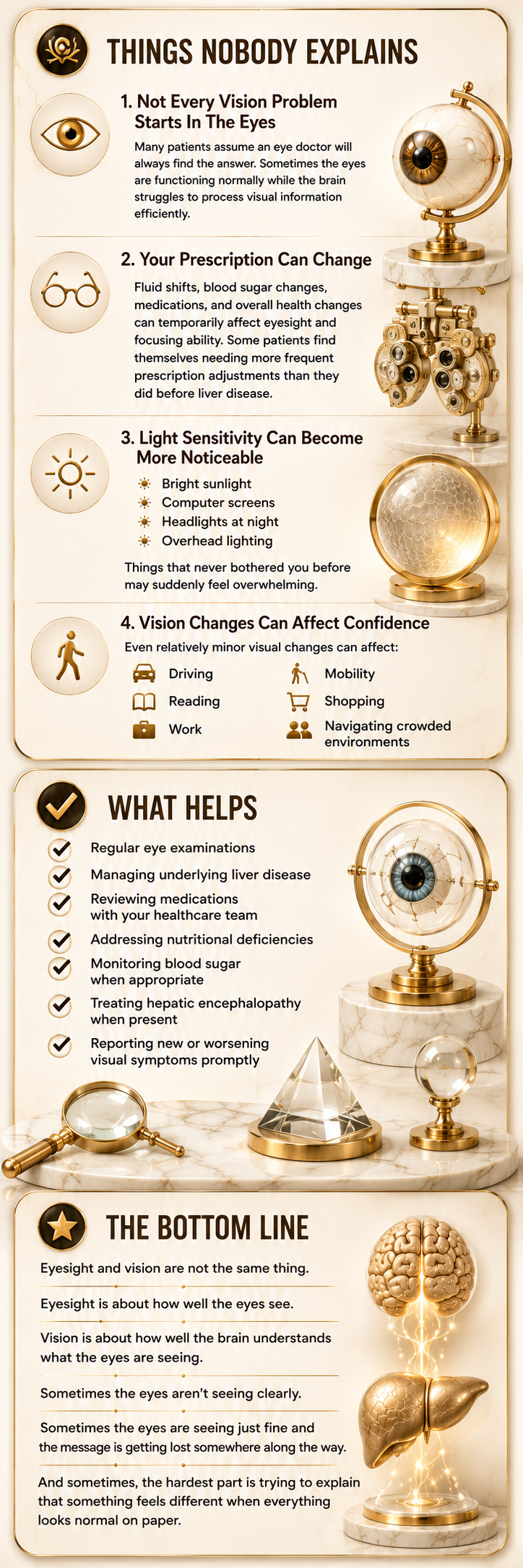
1. Not Every Vision Problem Starts in the Eyes
Many patients assume an eye doctor will always find the answer.
Sometimes the eyes are functioning normally while the brain struggles to process visual information efficiently.
2. Your Prescription Can Change
Fluid shifts, blood sugar fluctuations, medications, and overall health changes can temporarily affect eyesight and focusing ability.
Some patients find themselves needing more frequent prescription adjustments than they did before liver disease.
3. Light Sensitivity Can Become More Noticeable
Bright sunlight.
Computer screens.
Headlights at night.
Overhead lighting.
Things that never bothered you before may suddenly feel overwhelming.
4. Vision Changes Can Affect Confidence
Even relatively minor visual changes can affect:
🚗 Driving
📖 Reading
💻 Work
🚶 Mobility
🛒 Shopping
🌆 Navigating crowded environments
The symptoms may not be dangerous, but they can still have a meaningful impact on daily life.
What Helps
✔️ Regular eye examinations
✔️ Managing underlying liver disease
✔️Reviewing medications with your healthcare team
✔️Addressing nutritional deficiencies
✔️ Monitoring blood sugar when appropriate
✔️ Treating hepatic encephalopathy when present
✔️Reporting new or worsening visual symptoms promptly
The Bottom Line
Eyesight and vision are not the same thing.
Eyesight is about how well the eyes see.
Vision is about how well the brain understands what the eyes are seeing.
When liver disease affects blood flow, metabolism, nerves, medications, nutrition, or brain function, either system can be affected.
Sometimes the problem is that the eyes aren't seeing clearly.
Sometimes the eyes are seeing just fine and the message is getting lost somewhere along the way.
And sometimes, the hardest part is trying to explain that something feels different when everything looks normal on paper.
Within a few months, my vision changed so dramatically that I ended up in an expensive, deeply annoying optometrist spiral: three separate visits, three new prescriptions, three different pairs of glasses.
I thought I was aging.
I thought my eyes were just being dramatic.
I thought I had an eye problem.
Turns out, I may have been optimizing for the wrong organ.
Because advanced liver disease does not politely stay in the liver lane. It affects metabolism, inflammation, hormones, nutrition, fluid balance, blood vessels, and sometimes, apparently, your ability to see the world clearly.