

What It Feels Like
Hepatic encephalopathy can feel different for everyone.
Common experiences include:
🧠 Brain fog
🧠 Forgetfulness
🧠 Difficulty concentrating
🧠 Slower thinking
🧠 Word-finding problems
🧠 Mental fatigue
🧠 Mood changes
🧠 Feeling "off"
Sleep-related symptoms often include:
🌙 Wide awake at 2:00 AM
☀️ Exhausted during the day
😴 Unplanned naps
⏰ Sleep-wake reversal
📅 Feeling disconnected from normal schedules
The Crossover Point
Think of your brain like a switchboard.
At first, a few signals arrive late.
A connection flickers.
A message gets rerouted.
Everything still works.
Then more signals begin crossing wires.
Some messages arrive slowly.
Others never arrive at all.
The switchboard becomes increasingly difficult to manage.
Hepatic encephalopathy is what happens when the brain is forced to work through static.
Things Nobody Explains
1. It Isn't Just Confusion
Many people expect hepatic encephalopathy to look dramatic.
Often it begins with subtle changes that are easy to dismiss.
2. Sleep Problems Can Be an Early Clue
For some patients, a reversed sleep schedule appears long before obvious cognitive symptoms.
3. You May Notice It Last
Friends and family sometimes recognize changes before the patient does.
4. It Can Fluctuate
A person may feel completely normal one day and noticeably foggy the next.
Infections, dehydration, constipation, medications, and other stressors can all contribute.
What Helps
✅ Lactulose when prescribed
✅ Rifaximin when prescribed
✅ Preventing constipation
✅ Staying hydrated when appropriate
✅ Managing infections quickly
✅ Maintaining nutrition and muscle mass
✅ Regular follow-up with your healthcare team
The Bottom Line
Hepatic encephalopathy is not a character flaw, a lack of effort, or a failure to pay attention.
It's a complication of liver disease that affects the brain's ability to process information efficiently.
Sometimes it looks like confusion.
Sometimes it looks like forgetfulness.
And sometimes it looks like lying awake at 3:00 AM wondering why a disease built around fatigue won't let you sleep.
What It Feels Like
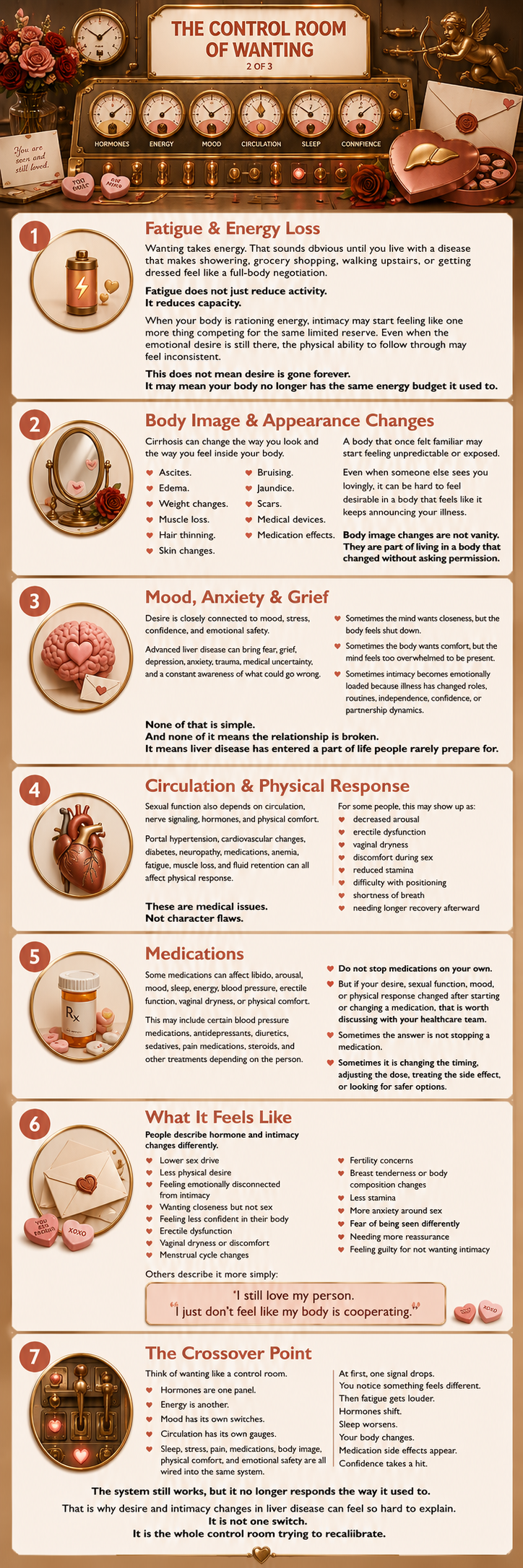
People describe hormone and intimacy changes differently.
Some experience:
⚖️ Lower sex drive
⚖️ Less physical desire
⚖️ Feeling emotionally disconnected from intimacy
⚖️ Feeling less confident in their body
⚖️ Erectile dysfunction
⚖️ Vaginal dryness or discomfort
⚖️ Menstrual cycle changes
⚖️ Fertility concerns
⚖️ Breast tenderness or body composition changes
⚖️ Less stamina
⚖️ More anxiety around sex
⚖️ Fear of being seen differently
⚖️ Needing more reassurance
⚖️ Wanting closeness but not sex
⚖️ Feeling guilty for not wanting intimacy
Others describe it more simply:
“I still love my person. I just don’t feel like my body is cooperating.”
The Crossover Point
Think of desire like a control room.
Hormones are one panel.
Energy is another.
Mood has its own switches.
Circulation has its own gauges.
Sleep, stress, pain, body image, medications, and confidence are all wired into the same system.
At first, one signal drops.
You notice something feels different.
Then fatigue gets louder.
Hormones shift.
Sleep worsens.
Your body changes.
Medication side effects appear.
Confidence takes a hit.
The system still works, but it no longer responds the way it used to.
That is why sex drive changes in liver disease can feel so hard to explain.
It is not one switch.
It is the whole control room trying to recalibrate.
Things Nobody Explains
1. Libido Changes Are Not Always About Attraction
A lower sex drive does not automatically mean you are less attracted to your partner.
It may mean your body is dealing with hormone shifts, fatigue, inflammation, sleep disruption, medications, pain, fluid retention, anxiety, depression, or body image changes.
Love and libido are connected.
But they are not the same thing.
2. Wanting Closeness and Wanting Sex Are Not Always the Same
Some people still crave affection, reassurance, touch, cuddling, emotional closeness, or feeling wanted.
But they may not want sex in the same way, at the same frequency, or under the same conditions as before.
That distinction matters.
Sometimes intimacy has to be rebuilt around connection first.
3. The Body Can Feel Unfamiliar
Cirrhosis can change weight, shape, skin, hair, strength, swelling, stamina, scars, and confidence.
Even if nobody else is judging you, it can be difficult to feel at home in a body that keeps changing.
That discomfort deserves compassion.
Not dismissal.
4. Partners May Misread It
A partner may interpret distance as rejection.
The patient may interpret their own lack of desire as failure.
Both people may be hurting, but nobody knows how to say the quiet part out loud.
Clear communication can prevent silence from becoming a second illness.
5. Doctors May Not Ask
Many patients are never asked about sex drive, sexual function, menstrual changes, erectile dysfunction, vaginal dryness, fertility concerns, or intimacy.
That does not mean these issues are unimportant.
It means you may have to bring them up first.
What Helps
Helpful strategies may include:
✔️ Discussing hormone symptoms with your healthcare team
✔️Reviewing medications and side effects
✔️Treating fatigue, pain, itching, cramps, HE, or sleep disruption
✔️ Addressing erectile dysfunction or vaginal dryness when present
✔️ Checking nutrition, protein intake, anemia, thyroid, vitamins, or other contributors when appropriate
✔️Managing ascites, edema, or physical discomfort
✔️ Supporting mental health
✔️Communicating openly with your partner
✔️ Rebuilding intimacy around affection, trust, and comfort
✔️ Asking about fertility, pregnancy safety, or contraception when relevant
✔️ Working with specialists when needed
Seek medical advice before using hormone therapy, erectile dysfunction medications, supplements, testosterone products, herbal libido products, or over-the-counter sexual health treatments, especially with advanced liver disease or portal hypertension.
The Bottom Line
Hormones, sex drive, and intimacy changes are not side issues.
They are part of the body-wide reality of advanced liver disease.
Cirrhosis can affect the chemistry of desire, the energy required for intimacy, the confidence needed to be seen, and the physical systems that make sexual function possible.
Sometimes the hardest part is not the symptom itself.
It is the silence around it.
You are not broken.
You are not failing.
Your body is trying to protect itself while living under different conditions.
And that deserves honesty, care, and support—not shame.
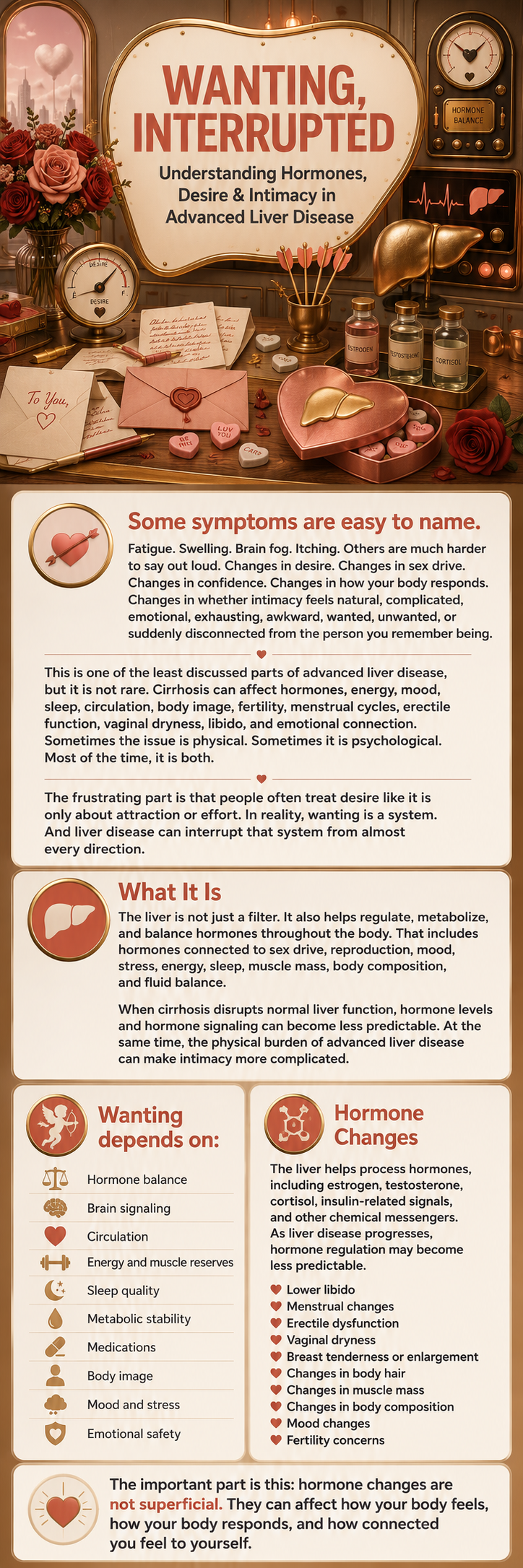
Understanding Hormones, Desire & Intimacy in Advanced Liver Disease
Hepatic encephalopathy is one of the hardest cirrhosis complications to explain because it does not always look the way people expect.
Most people imagine dramatic confusion, hospitalization, or someone suddenly not knowing where they are. And yes, HE can become severe. But for many people, it begins much more quietly. A conversation becomes harder to follow. A familiar task takes longer. Words disappear mid-sentence. You walk into a room and forget why. You read the same paragraph again and again. Something feels off, but not always in a way you can easily prove.
The frustrating part is that hepatic encephalopathy affects the brain, but it starts with the liver. When the liver cannot filter toxins efficiently, substances from the gut can build up, circulate through the body, and interfere with how the brain processes information. The result is not laziness, weakness, or a lack of effort. It is a liver-related brain-processing problem.
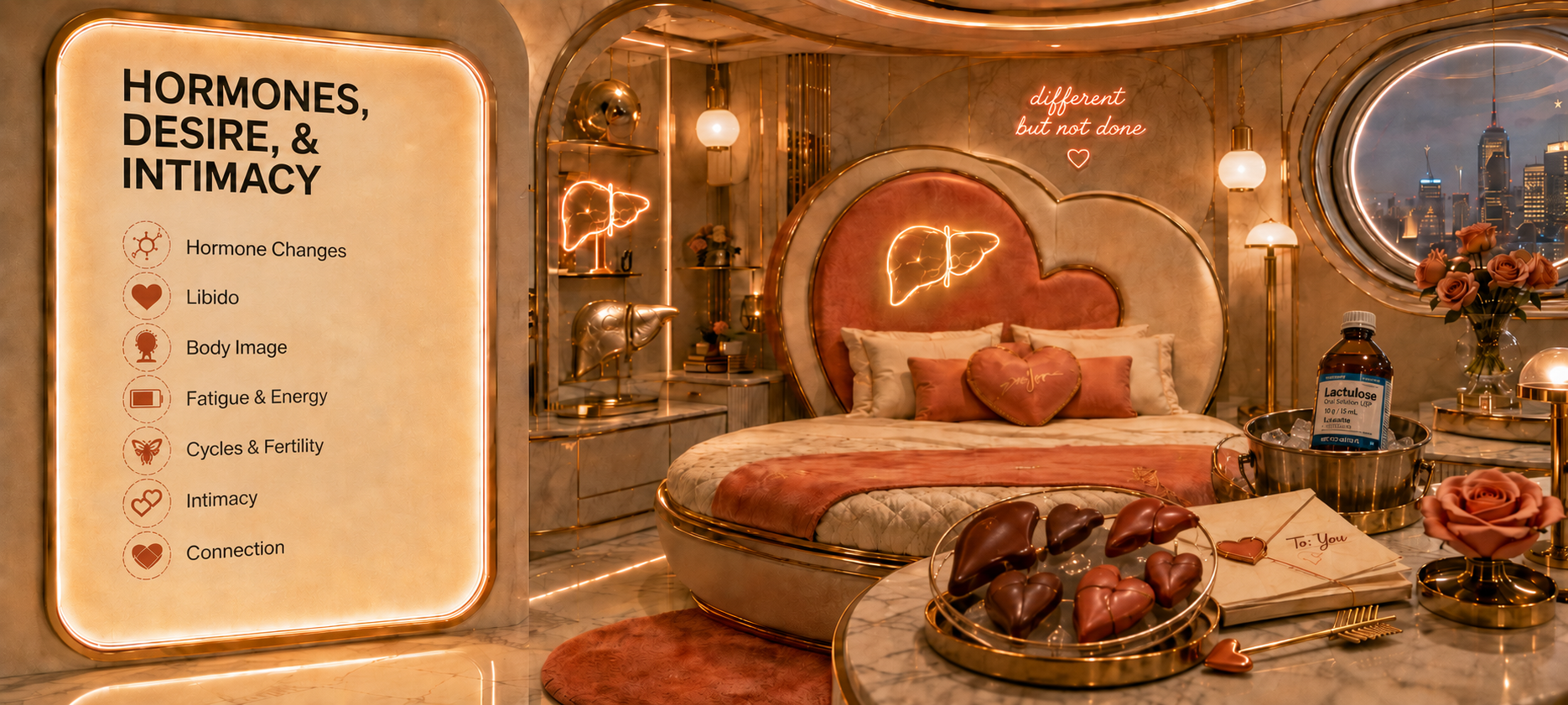
What It Is
The liver is not just a filter.
It helps regulate, metabolize, and balance hormones throughout the body.
That includes hormones connected to sex drive, reproduction, mood, stress, energy, sleep, muscle mass, body composition, and fluid balance.
When cirrhosis disrupts normal liver function, hormone levels and hormone signaling can change. At the same time, the physical burden of advanced liver disease can make intimacy more complicated.
Sex drive is not controlled by one thing.
It depends on:
⚖️ hormone balance
🧠 brain signaling
🫀 circulation
💪 muscle and energy reserves
🌙 sleep quality
🧪 metabolic stability
💊 medications
🪞 body image
🧠 mood and stress
🤝 emotional safety
When several of those systems are strained at once, libido can change.
And that does not mean something is wrong with you as a person.
It means your body is trying to function under different conditions.
Hormone Changes
The liver helps process hormones, including estrogen, testosterone, cortisol, insulin-related signals, and other chemical messengers.
As liver disease progresses, hormone regulation may become less predictable.
This can contribute to:
⚖️ lower libido
⚖️ menstrual changes
⚖️ erectile dysfunction
⚖️ changes in body hair
⚖️ breast tenderness or enlargement
⚖️ changes in muscle mass
⚖️ mood changes
⚖️ changes in body composition
⚖️ fertility changes
Hormone disruption can look different depending on the person, their sex, age, medications, underlying liver disease, and overall health.
Fatigue & Energy Loss
Sex drive requires energy.
That sounds obvious until you live with a disease that makes showering, grocery shopping, walking upstairs, or getting dressed feel like a full-body negotiation.
Fatigue does not just reduce activity.
It reduces capacity.
When your body is rationing energy, intimacy may start feeling like one more thing competing for the same limited reserve.
This does not mean desire is gone forever.
It may mean your body no longer has the same energy budget it used to.
Body Image & Appearance Changes
Cirrhosis can change the way you look and the way you feel inside your body.
Ascites.
Edema.
Weight changes.
Muscle loss.
Hair thinning.
Skin changes.
Bruising.
Jaundice.
Scars.
Medical devices.
Medication effects.
A body that once felt familiar may start feeling unpredictable or exposed.
Even when someone else sees you lovingly, it can be hard to feel desirable in a body that feels like it keeps announcing your illness.
Body image changes are not vanity.
They are part of living in a body that has changed without asking permission.
Mood, Anxiety & Grief
Sex drive is closely connected to mood, stress, and emotional safety.
Advanced liver disease can bring fear, grief, depression, anxiety, trauma, medical uncertainty, and a constant awareness of what could go wrong.
Sometimes the mind wants closeness, but the body feels shut down.
Sometimes the body wants comfort, but the mind feels too overwhelmed to be present.
Sometimes intimacy becomes emotionally loaded because illness has changed roles, routines, independence, confidence, or partnership dynamics.
None of that is simple.
And none of it means the relationship is broken.
It means liver disease has entered a part of life people rarely prepare for.
Circulation & Physical Function
Sexual function also depends on circulation, nerve signaling, hormones, and physical comfort.
Portal hypertension, cardiovascular changes, diabetes, neuropathy, medications, anemia, fatigue, muscle loss, and fluid retention can all affect physical response.
For some people, this may show up as:
🫀 decreased arousal
🫀 erectile dysfunction
🫀 vaginal dryness
🫀 discomfort during sex
🫀 reduced stamina
🫀 difficulty with positioning
🫀 shortness of breath
🫀 needing longer recovery afterward
These are medical issues.
Not character flaws.
Medications
Some medications can affect libido, arousal, mood, sleep, energy, blood pressure, erectile function, vaginal dryness, or physical comfort.
This may include certain blood pressure medications, antidepressants, diuretics, sedatives, pain medications, steroids, and other treatments depending on the person.
Do not stop medications on your own.
But if your sex drive or sexual function changed after starting or changing a medication, that is worth discussing with your healthcare team.
Sometimes the answer is not stopping a medication.
Sometimes it is changing the timing, adjusting the dose, treating the side effect, or looking for safer options.
.
Wanting, Interrupted

Read More
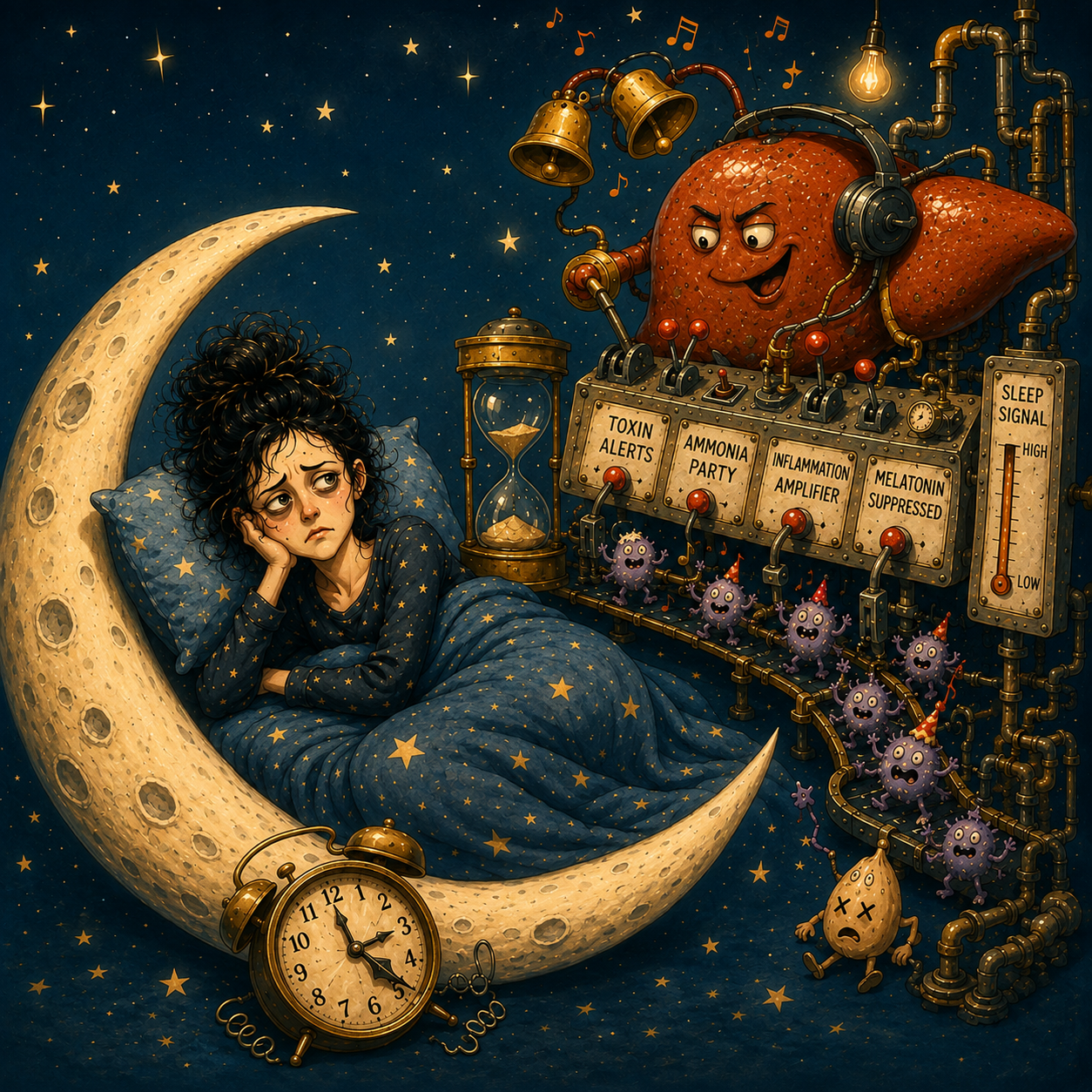
Toxins like ammonia can build up in the bloodstream and reach the brain. This causes a neurological complication called Hepatic Encephalopathy (HE). It doesn't always look medical at first—it often looks like extreme brain fog, mood swings, or "laziness." But it is a real physical condition that patients cannot control. Read to understand the symptoms, hidden triggers, and treatments that help keep the mind clear.