
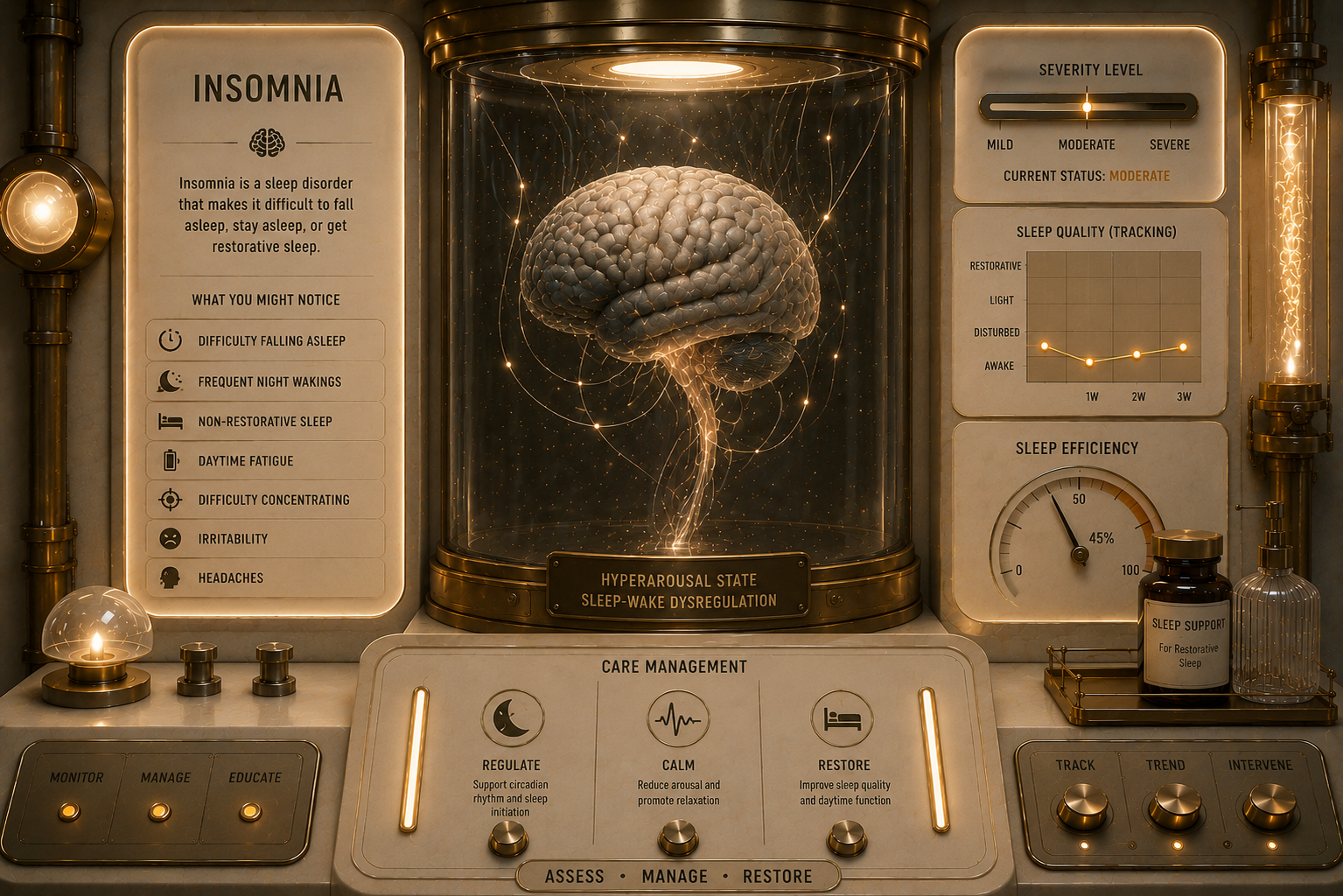
Insomnia
Important Medical Disclaimer: I am Angie, from @diagnosis_cirrhosis on TikTok. I am a cirrhosis patient sharing my personal lifestyle, nutrition, and mindset journey. I am a data aggregator and community builder, not a licensed medical professional, doctor, or dietitian. Content on diagnosiscirrhosis.com is based solely on my personal experience living with advanced liver disease and is intended for informational and educational purposes only. It does not constitute medical advice or a substitute for professional medical care. Always follow the recommendations of your own healthcare team and consult your hepatologist or physician before changing your diet, medication, or lifestyle routine.
‘

by Angie from @diagnosis_cirrhosis on TikTok
How does a disease notorious for making you tired also make it impossible to sleep?
Sleep disruption in liver disease exists on a distinct pathophysiological spectrum.
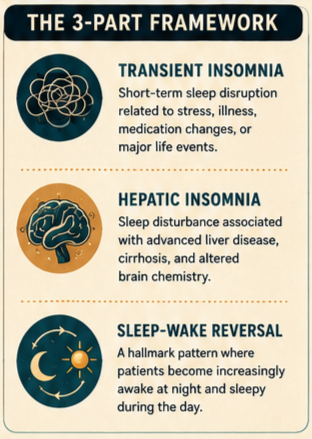
Transient (or situational) insomnia is a brief period of sleeplessness directly tied to the emotional shock, anxiety, or lifestyle changes of managing a medical condition.
Hepatic insomnia is an ingrained, neurochemical disorder where advanced liver damage or cirrhosis structurally alters your brain chemistry and flips your internal biological clock upside down [1].
People frequently mistake sleep issues in liver patients for standard, everyday stress.
In reality, the transition from an acute bout of worry-induced sleeplessness to true hepatic insomnia represents a profound biological shift—one where your sleep-wake cycle is no longer controlled by the sun, but by your liver’s inability to clear toxins from your blood.
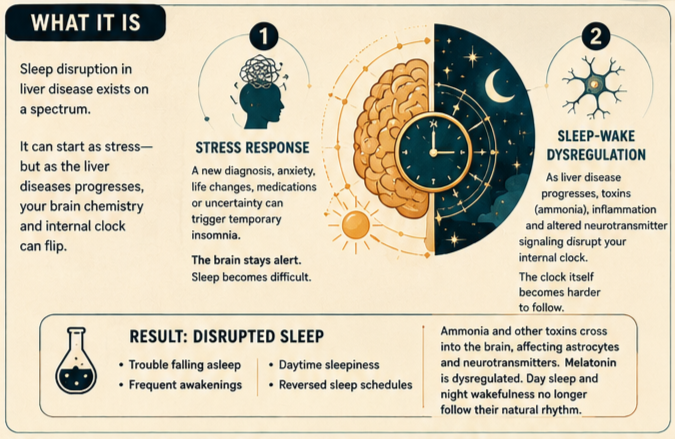
What is Hepatic or Cirrhosis Insomnia?
A healthy sleep-wake cycle relies on a delicate balance between your brain's internal clock and a steady buildup of natural sleep pressure throughout the day. When you are first diagnosed with a liver condition, the immediate psychological stress causes transient insomnia.
However, as liver disease progresses toward cirrhosis, the organ loses its structural integrity.Clinical studies tracking advanced liver failure demonstrate that the disease triggers a permanent shift from a mental problem to a chemical one [2].
The Loss of Metabolic Clearance:A scarred liver can no longer process everyday metabolic byproducts, most notably ammonia.This toxin slips past the liver, enters the systemic bloodstream, and directly crosses the blood-brain barrier.
Astrocyte Swelling: Once inside the brain, ammonia forces support cells called astrocytes to swell. This low-grade, chronic swelling disrupts the delicate neural pathways that regulate drowsiness and wakefulness.
Melatonin Dysregulation: A damaged liver is unable to properly metabolize melatonin—the hormone responsible for telling your body it is nighttime. This causes melatonin levels to remain high during the day and drop unexpectedly at night,completely shattering your circadian rhythm [3]. [1]
The Diagnostic Line
Transient/Situational Insomnia: Sleep is disrupted by anxiety or physical discomfort, but responds well to standard sleep hygiene, comfort adjustments, and basic stress management.
Hepatic Insomnia (Circadian Inversion): A distinct medical state wherethe biological clock is physically reversed.The patient experiences profound daytime sleepiness (somnolence) and absolute, wide-awake alertness throughout the entire night.
What Does Liver Disease Sleep Reversal Feel Like?
The physical and mental toll changes entirely as sleep disruption migrates from a passing phase of stress to an active symptom of metabolic liver failure.
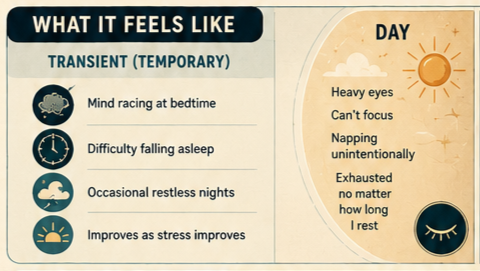
During Transient Insomnia, you frequently feel:
A restless, wired sensation at night, with your mind actively thinking about your health, lab numbers, or future appointments.
A clear sense of relief and an immediate return to normal sleep patterns once you adjust to your treatment plan or your anxiety settles.
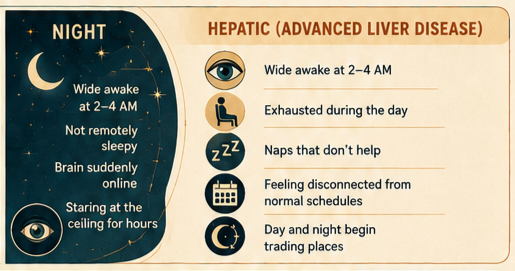
When the condition crosses into Hepatic Insomnia, the daily burden shifts completely. Here’s what happened to me:
An absolute, uncontrollable urge to sleep during the late morning and afternoon, often napping for hours despite trying to stay awake.
A bizarre, wide-awake "daytime energy" that suddenly hits the brain at midnight, leaving you staring at the ceiling for hours without any natural drowsiness.
A deep frustration where your body feels physically broken and heavy, yet your brain's internal "off switch" refuses to engage at night.
Subtle daytime changes, such as mild spatial confusion, changes in your handwriting, or an uncharacteristic irritability that disappears once you finally get a few hours of rest.
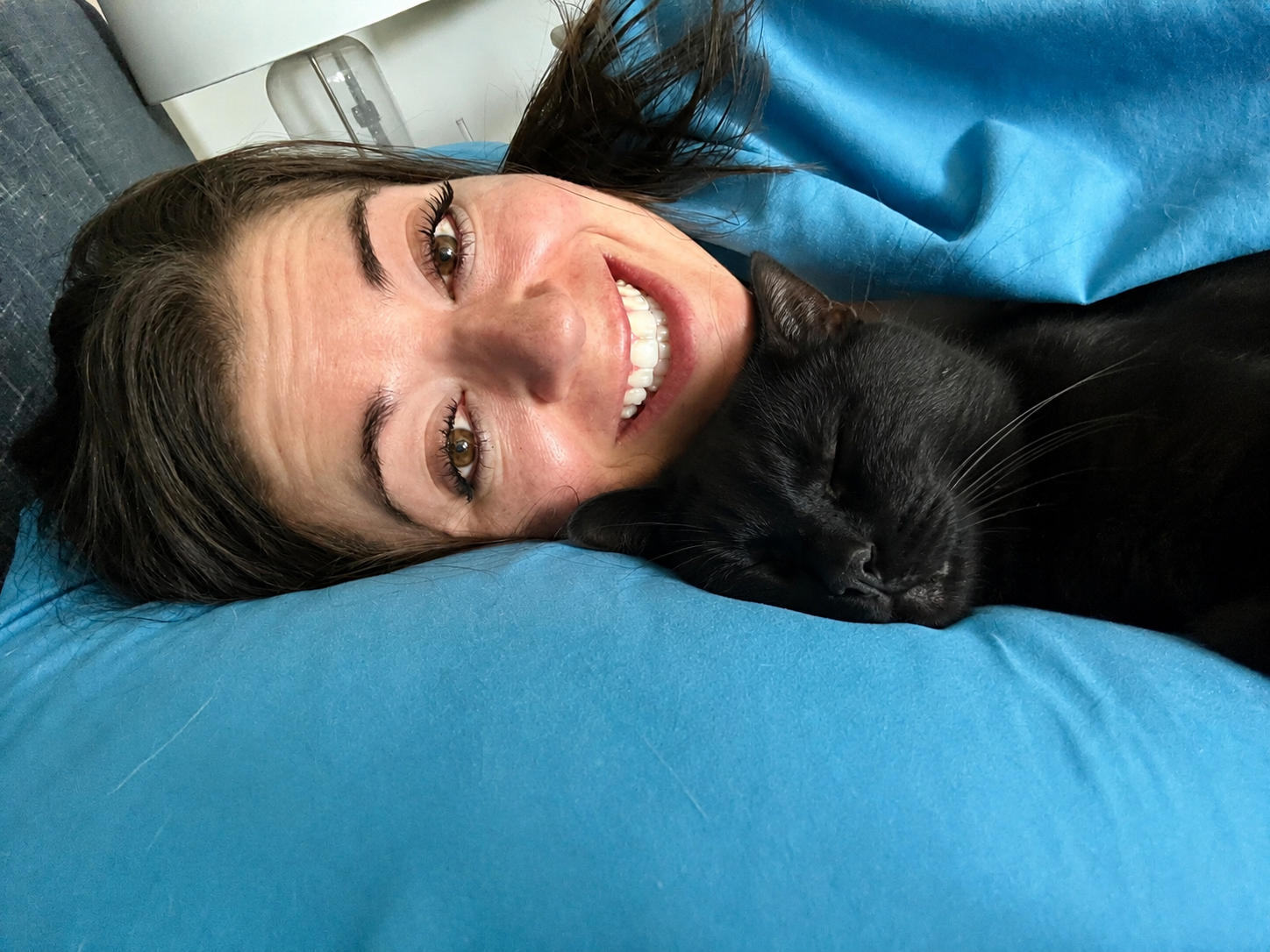
Sometimes you can’t help but wonder if your liver is making you as nocturnal as your household panther
The Crossover Point: The Shift to Hepatic Encephalopathy
This shift is the earliest clinical warning sign that the brain is actively responding to neurotoxic accumulation—marking the baseline boundary of Minimal Hepatic Encephalopathy (MHE) [4].[1]
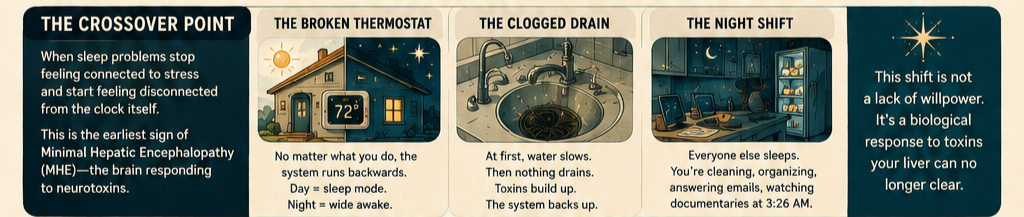
To visualize this crossover point, think of three concrete examples:
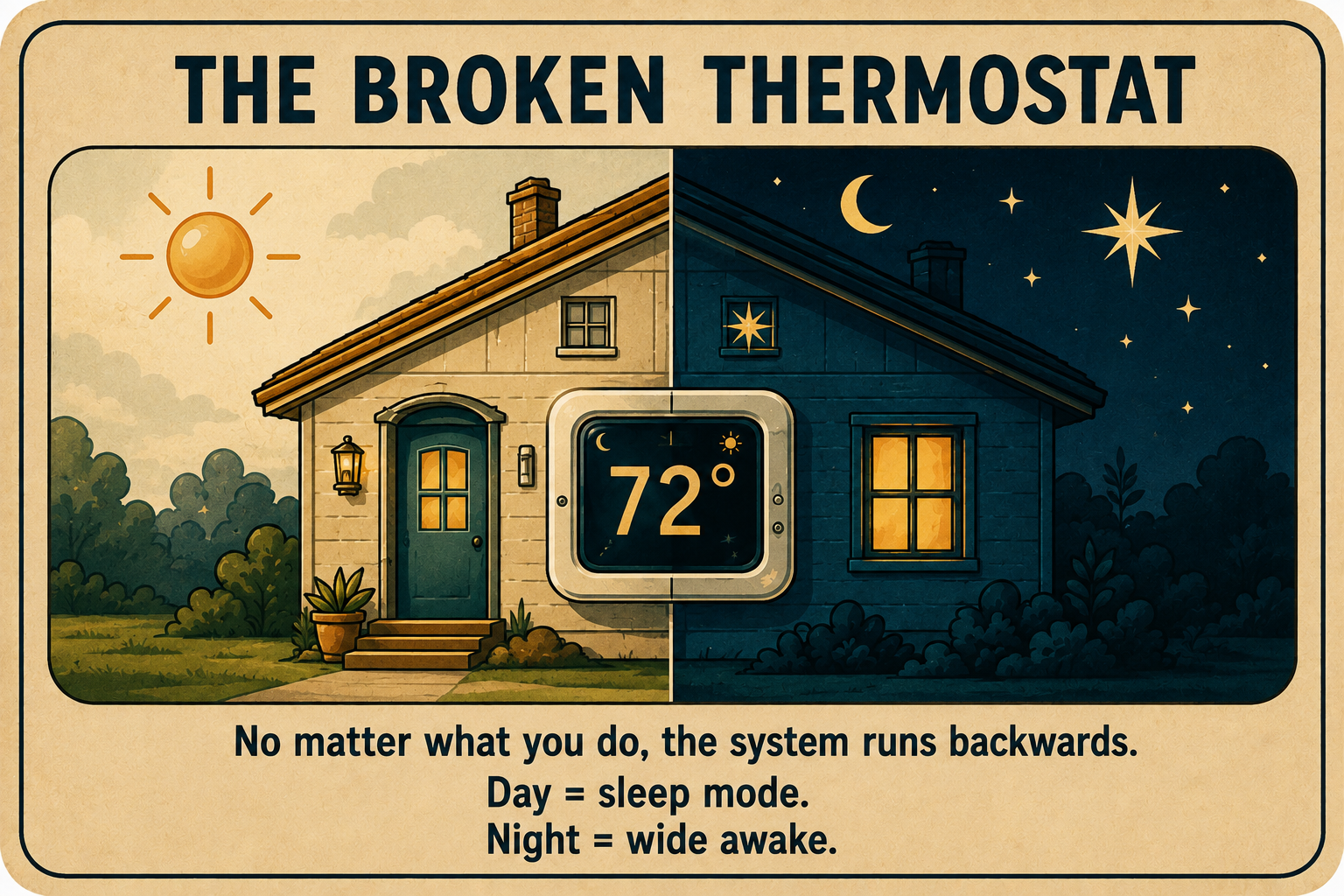
Broken Thermostat: In transient insomnia, the bedroom is simply too hot because the window was left open (a passing stressor like anxiety). You close the window, and the room cools down. At the hepatic insomnia crossover point, the internal wiring of the house's central thermostat breaks. No matter how many windows you open or close, the heater automatically turns on at night and the air conditioning blasts during the day. The core control system is broken.
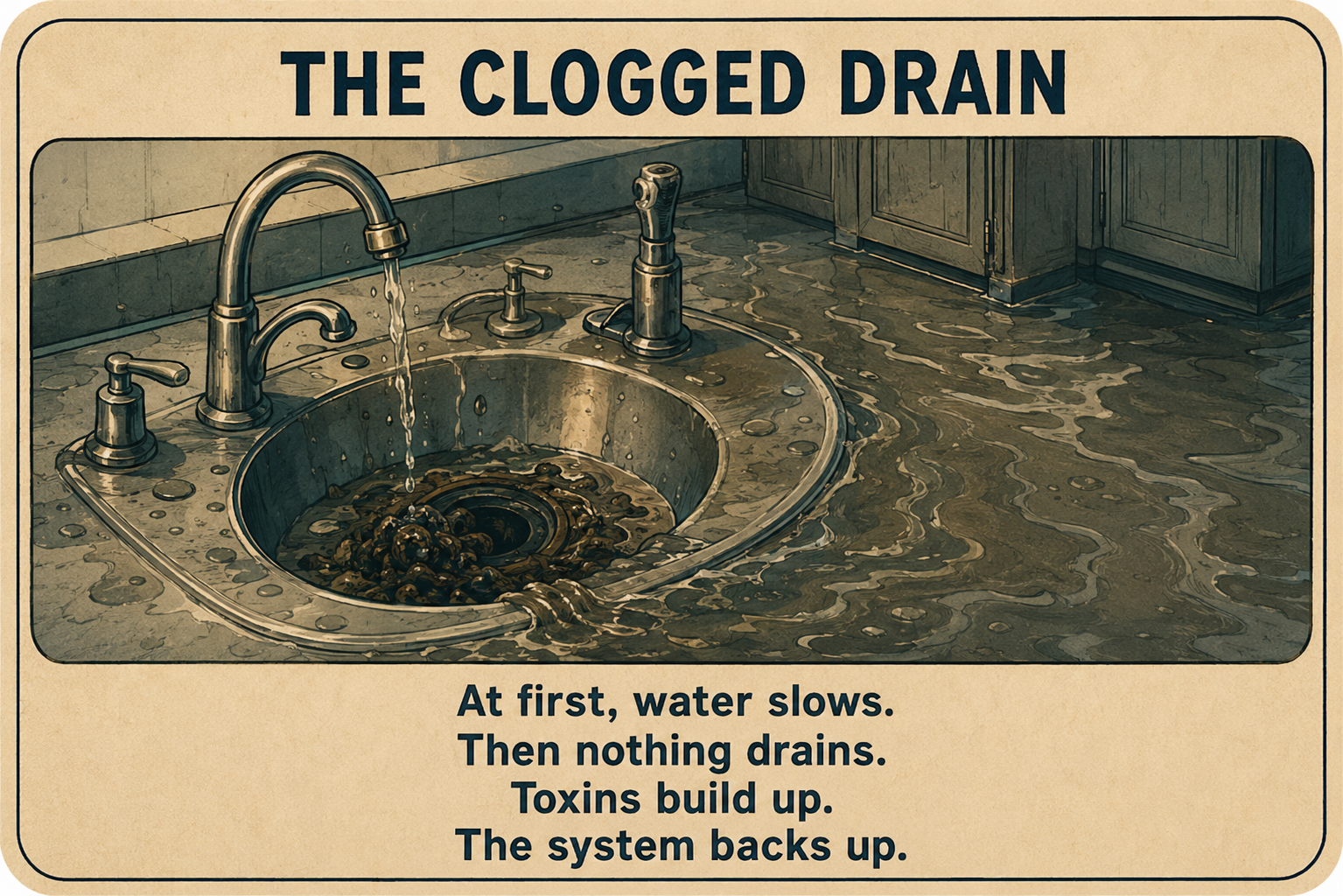
The Clogged Kitchen Drain:Imagine washing dishes. In early liver stages, water slows down slightly if a few scraps get in the drain, but it eventually empties out. The hepatic insomnia crossover point is when the main pipe under the house completely collapses.The waste water (ammonia) has nowhere to go;it reverses direction and backs up completely through the kitchen sink, flooding the entire floor(the brain) with stagnant, toxic fluid.
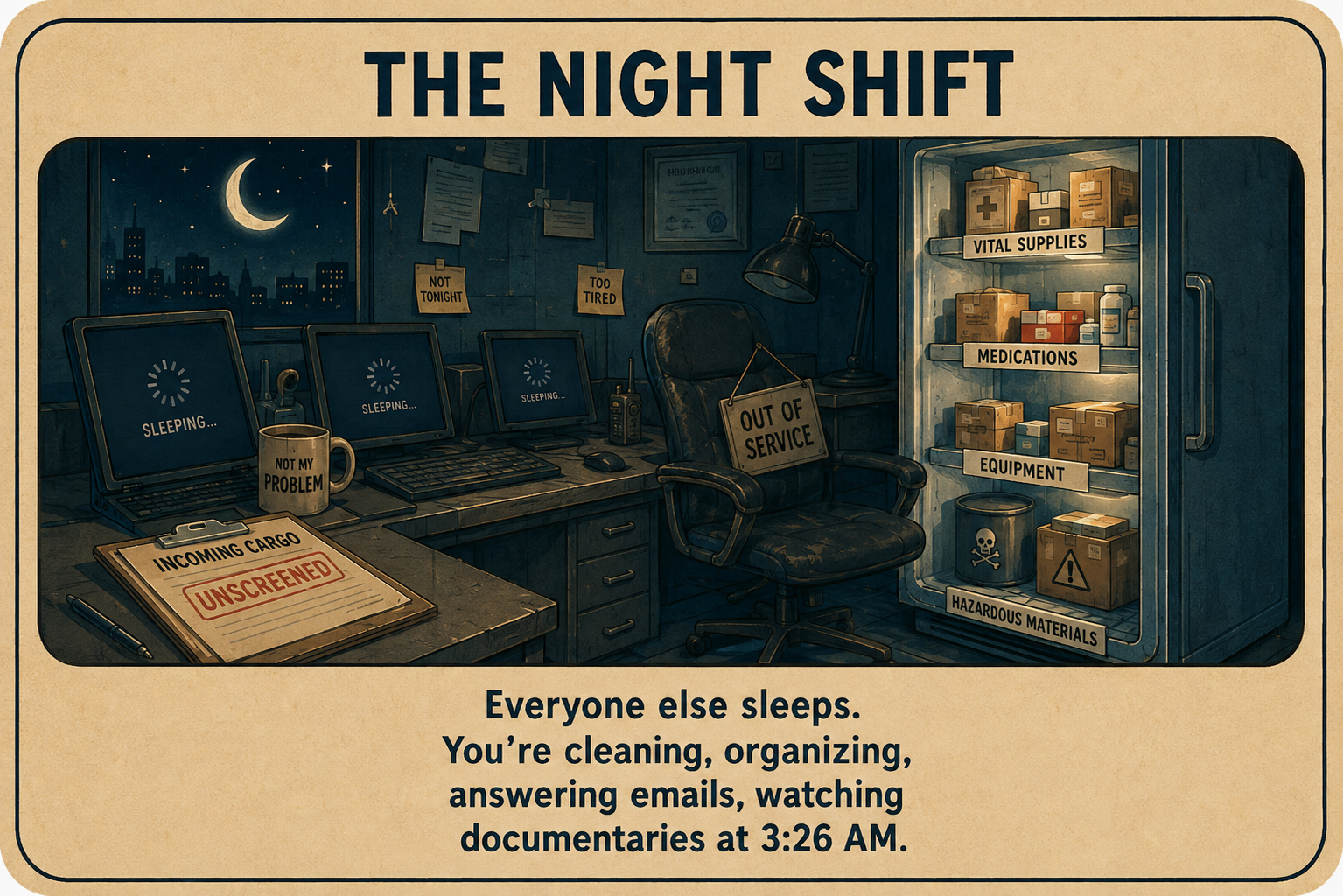
The Overloaded Border Crossing: Think of a customs checkpoint where trucks deliver vital supplies. In transient insomnia, traffic jams occur because of a temporary holiday rush(a sudden flare of physical pain or stress). At the hepatic crossover point, the customs building itself is permanently damaged. The officers can no longer screen the incoming cargo, allowing dangerous, unauthorized hazardous materials (toxins) to roll freely straight into the heart of the city without any inspection.
Patient data emphasizes that when a liver patient develops a reversed sleep schedule, it is rarely an isolated lifestyle habit. It is a sign that the liver's processing capacity has dropped below a critical threshold, requiring a fundamental shift in medical management [5]. [1]
Things Nobody Explains
1. Standard Sleeping Pills Can Be Life-Threatening
With standard transient insomnia, a doctor might prescribe a mild sedative to help you get through a rough week. If you have advanced liver damage or cirrhosis, taking standard sleeping pills (like benzodiazepines or Zolpidem) is incredibly dangerous [2]. Because your liver cannot metabolize these drugs, they build up rapidly in your blood, causing profound over-sedation that can mimic a liver coma or accelerate full-blown Hepatic Encephalopathy. [1]
2. Your Sleep Inversion is Often the Very First Warning Sign
Many patients believe that hepatic encephalopathy only looks like severe confusion or an inability to speak. In reality, a reversed sleep schedule—being wide awake at night and deeply sleepy during the day—is often the very first, subtle warning sign of brain toxicity, appearing months before a patient shows any obvious mental confusion.

3. Eating Too Much (or Too Little) Protein Triggers It
Because ammonia comes from the breakdown of dietary protein, some patients mistakenly cut out protein entirely to try and sleep better. This is a severe mistake [1]. Stripping your diet of protein causes muscle wasting (sarcopenia), and because muscles help filter ammonia, losing muscle mass actually makes your insomnia and brain fog much worse. You must optimize, not eliminate, your nutrition. [1]
4. The Nighttime Wakefulness is a Chemical Illusion [1]
When you are wide awake at 3:00 AM with hepatic insomnia, you might feel like your body has plenty of energy. This is a false chemical signal created by the way ammonia alters your brain's neurotransmitters (like GABA and glutamate). Underneath that synthetic alertness, your organs and muscles are experiencing severe metabolic depletion.
What Helps: Clinical Management
Clinical management shifts entirely from standard sleep hygiene to aggressive metabolic filtration once a patient crosses into a hepatic sleep pattern.

How to Manage Day-to-Day Liver Disease Anxiety & Insomnia
Targeted Comfort Management: If sleep is broken because of physical liver symptoms—like fluid retention (ascites) or intense skin itching (pruritus)—doctors focus heavily on localized care. This involves using specialized binders like cholestyramine for itching and elevating the head of the bed to relieve the physical pressure of abdominal fluid on the lungs.
Anxiety De-escalation: Working closely with a care coordinator to understand your lab trends helps remove the psychological dread that keeps the nervous system on high alert at bedtime. [1]
Clinical Treatments for Cirrhosis Sleep Inversion & Insomnia
Aggressive Lactulose Titration: The primary treatment for hepatic sleep inversion is not a sleep aid, but a specialized laxative syrup called lactulose [6]. Lactulose changes the chemical environment of your gut to trap ammonia and flush it out of your body. Doctors will adjust your daily dose until you are having exactly 2 to 3 soft bowel movements a day, which physically removes the toxins driving the nighttime alertness.
Low-Dose Melatonin Calibration: For patients in the earlier, compensated stages of cirrhosis who do not have overt encephalopathy, clinical trials indicate that a low, short-term dose of 3mg of melatonin can safely help reset the delayed nighttime peak, shortening the time it takes to fall asleep [7].
Targeted Morning Light Therapy: To fix a broken circadian rhythm, clinicians use high-lux light boxes immediately upon waking in the morning. This bright light exposure helps force your brain to reset its internal clock, suppressing daytime melatonin production and helping your body re-learn that daytime is for wakefulness. [1, 2, 3]
Sources
[1] Frontiers in Medicine:Commonly Encountered Symptoms and Their Management in Patients with Cirrhosis.Frontiers in Medicine
[2] PubMed Central (PMC):The Beauty Sleep to Keep a Healthy Liver.PMC12692208
[3] PubMed Central (PMC):Managing Sleep Disturbances in Cirrhosis.PMC4868900
[4] Journal of Clinical and Experimental Hepatology:Sleep Disorder in Patients with Chronic Liver Disease.PMC7642630
[5] PubMed Central (PMC):Prevalence of and Factors Associated with Sleep-Wake Disturbances in Cirrhosis.PMC8267360
[6] PubMed Central (PMC):Lactulose in Cirrhosis Management.PMC10578757
[7] PubMed Central (PMC):Low-Dose Melatonin for Sleep Disturbances in Early-Stage Cirrhosis.PMC7411556 [1, 2, 3, 4, 5]
Medical Disclaimer & General Guidance
The information provided across these resources is for educational and informational purposes only. It is not intended to be a substitute for professional medical advice, diagnosis, or treatment. Sleep inversions, daytime somnolence, and metabolic brain shifts are complex conditions that require direct management by a qualified hepatologist or gastroenterologist. Always seek the direct advice of your physician before starting any sleep supplements, altering your protein intake, or adjusting your prescription bowel protocols.
