
What’s the Obsession with Albumin?
Important Medical Disclaimer: I am Angie, a cirrhosis patient sharing my personal lifestyle, nutrition, and mindset journey. I am a data aggregator and community builder, not a licensed medical professional, doctor, or dietitian. Content on diagnosiscirrhosis.com is based solely on my personal experience living with advanced liver disease and is intended for informational and educational purposes only. It does not constitute medical advice or a substitute for professional medical care. Always follow the recommendations of your own healthcare team and consult your hepatologist or physician before changing your diet, medication, or lifestyle routine.
@diagnosis_cirrhosis 🧪📉 Albumin is not just “another lab” on your chart 👀📋 It is one of the main proteins made by the liver 🏭🧬 So when albumin starts dropping ⬇️ it can be a sign your liver is not working as well as it should ⚠️ Yes, albumin helps keep fluid where it belongs 💧➡️🩸 And when it gets low, fluid can start leaking into places it should not 😵💫 That can mean: ⚠️ swelling in the legs or feet 🦵 ⚠️ bloating 🤰 ⚠️ ascites 💧 ⚠️ feeling more run down or fragile 😞 But albumin is about more than fluid 👇 It also helps show how much liver function and support your body still has 🧠🫀🩸 That is part of why labs matter so much in advanced liver disease, cirrhosis, and liver failure 📊🩺 And it is also why newer scoring models like MELD 3.0 pay attention to albumin too 📉🧮 Your labs are not just numbers. They are clues 🕵️♀️✨ They help show what your liver is still able to do… and where it may be struggling 💛 Common causes of cirrhosis and chronic liver disease can include: alcohol-related liver disease 🚫🍷 fatty liver disease / NAFLD / MASLD 🍩🧈 NASH / MASH 🔥 hepatitis B 🦠 hepatitis C 🦠 autoimmune hepatitis 🛡️ primary biliary cholangitis 🧬 primary sclerosing cholangitis 🧬 hemochromatosis ⚙️ Wilson’s disease 🪙 alpha-1 antitrypsin deficiency 🧩 drug-induced liver injury 💊 and cryptogenic cirrhosis ❓ If you are living with cirrhosis, fibrosis, fatty liver, hepatitis, or unexplained symptoms, learning your labs matters 💡📚 Talk to your doctor or hepatologist if something feels off 👩⚕️👨⚕️🩺 #bloodwork #patienteducation #medschool #nursetok #liverhealth ♬ original sound - diagnosis cirrhosis
Video Transcript & Key Points From My Caption:
The Master Protein: Albumin is one of the main proteins made by the liver 🏭🧬 So when albumin starts dropping ⬇️ it can be a sign your liver is not working as well as it should ⚠️.
Fluid Dynamics: Yes, albumin helps keep fluid where it belongs. It acts like a magnet inside your blood vessels 💧➡️🩸 And when it gets low, fluid can start leaking into places it should not 😵💫.
The Warning Signs: That can mean swelling in the legs or feet 🦵 (edema), bloating 🤰, ascites 💧, and feeling more run down or fragile 😞.
The Functional Clue: But albumin is about more than fluid 👇 It also helps show how much liver function and support your body still has 🧠🫀🩸.
The Modern Math: That is part of why labs matter so much in advanced liver disease, cirrhosis, and liver failure 📊🩺 And it is also why newer scoring models like MELD 3.0 pay attention to albumin too 📉🧮.
Your Body's Blueprint: Your labs are not just numbers. They are clues 🕵️♀️✨ They help show what your liver is still able to do… and where it may be struggling 💛. [1, 2, 3, 4, 5]
Why Is Albumin Such a Critical Lab on Your Cirrhosis Chart?
A Patient’s Journey from Needle Phobia to Deciphering Liver Function Clues By Angie from @diagnosis_cirrhosis from TikTok
—> Don’t Miss: Questions for Your Doctors and Dietician
I have never liked getting blood drawn. To this day, I still do not look at the needle. I do not like the medical choreography of it: the alcohol swab, the rubber tourniquet, the tray setup, the little moment where everyone pretends getting stabbed with a needle is somehow casual.
But once the labs came back? That was different. The numbers became one of the few places in cirrhosis where I felt like I could actually orient myself. Not control things necessarily. Not “fix” them. But understand them. And when your body suddenly feels abstract and unpredictable, understanding becomes its own form of comfort.
Honestly, this was the first place where I started doing what I now jokingly call “personal medical data aggregation.” I wanted to understand what each lab meant, how they related to one another, what could make them improve or worsen, what trends mattered, and what changes were meaningful versus just statistical noise.
Because over time, the trends became far more important than any single number. The labs stopped feeling like random, scary medical jargon and started becoming a story. A very imperfect story. But still a story. And albumin was one of the first labs where I realized: okay… this one matters.
Moving Beyond Just "Another Lab" on a Portal
Part of the reason I paid attention to albumin was because it kept showing up everywhere in chronic illness spaces. It was discussed constantly in cirrhosis conversations, explicitly tied to fluid retention, nutrition, swelling, prognosis, ascites, and overall liver function. But honestly? I think the first reason I truly paid attention to it was because it was part of the MELD ecosystem. If a metric was important enough to influence how liver disease severity and transplant allocation were discussed, I knew I needed to master its language.
Then I learned the biological reality: albumin is produced by the liver. Not partially. Not indirectly. Solely.
That was the moment it clicked for me that albumin was not just a sterile word on a screen. It was one of the clearest windows into how much functional support my liver was still capable of providing my body.
What Albumin Tracks in Advanced Liver Disease:
• Real-time vascular oncotic pressure stability
• Systemic manufacturing capability of the liver tissue
• Fluid volume boundaries (preventing vascular leaks)
• Long-term nutritional trends and muscle mass stability




When the Vocabulary Stops Being Theoretical
One of the strangest things about cirrhosis is watching medical concepts slowly become physical experiences. At first, albumin was just a baseline score on a hospital portal. Then suddenly, reality hit. Fluid was accumulating, my body was swelling, therapeutic paracenteses were happening, my stamina was collapsing, and everything felt progressively heavier.
Suddenly, that number had physical context. That is one of the hardest emotional transitions in chronic illness: when the vocabulary stops being theoretical.
Think of albumin as your body’s internal magnetic sponge circulating in your bloodstream to maintain something called oncotic pressure. In simple terms, it acts like a molecular glue that holds water inside your blood vessels. When your liver tissue is compromised and your albumin levels drop below the normal threshold, that water loses its holding force. It begins to leak out of your blood vessels and pools directly into the surrounding tissue.
This cellular leakage is the root cause of profound peripheral edema (swelling in the legs and feet) and ascites (massive fluid accumulation in the abdomen). When you understand this math, you realize that tracking your albumin isn't just an academic exercise—it is a literal measurement of your body's structural ability to keep fluid where it belongs.
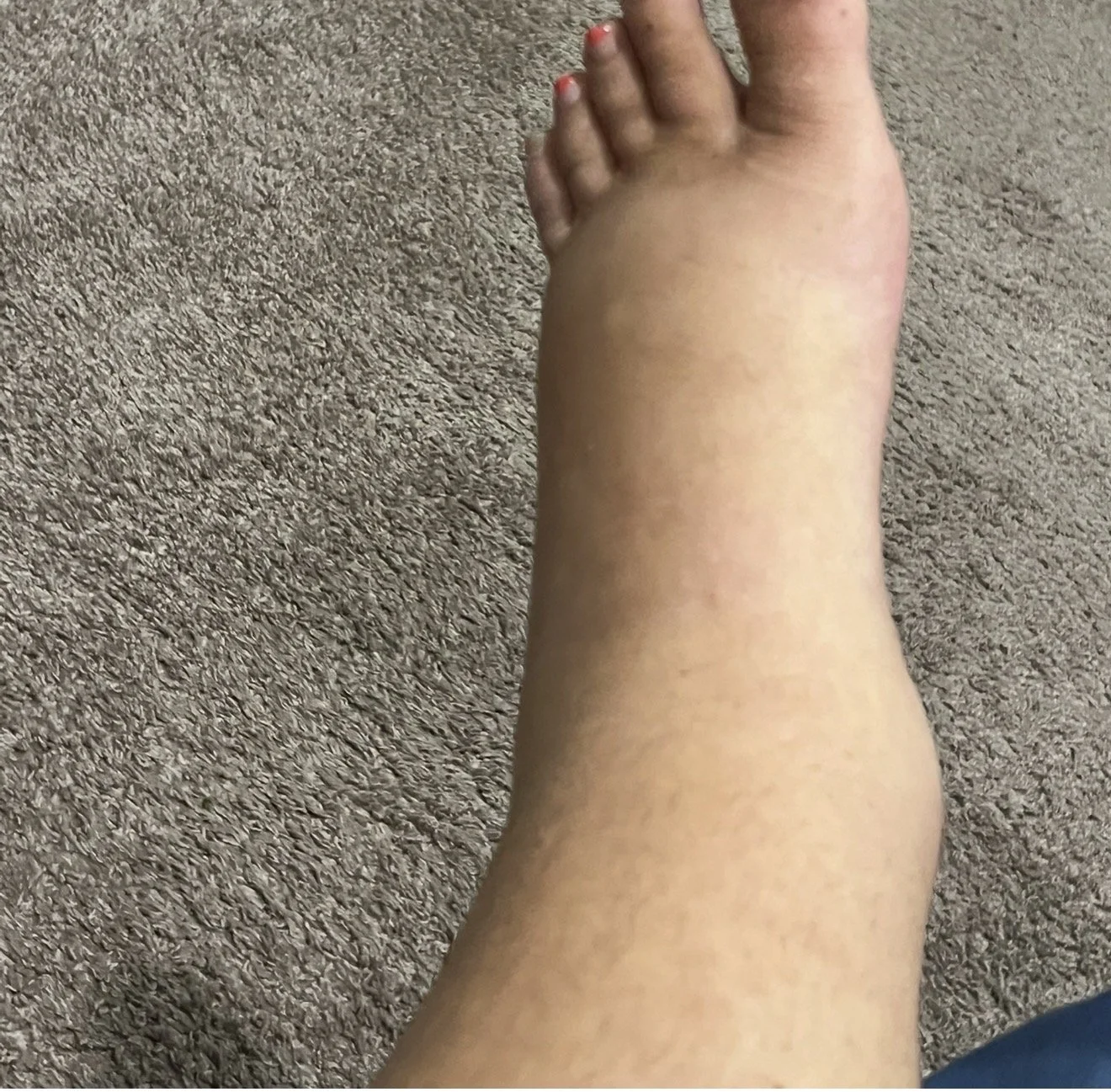
Edema is no joke! Also - ask your doctor about shaving your legs with cirrhosis!!
What Causes Advanced Liver Disease and Cirrhosis?
As a data aggregator tracking these conditions, it is important to remember that chronic liver stress, tissue fibrosis, and decreased protein manufacturing can stem from many different root causes. Common triggers of chronic liver disease can include:
Lifestyle & Metabolic Drivers: Alcohol-related liver disease 🚫🍷, fatty liver disease / NAFLD / MASLD 🍩🧈, and NASH / MASH 🔥.
Viral Triggers: Chronic Hepatitis B 🦠 and Hepatitis C 🦠.
Autoimmune & Genetic Factors: Autoimmune hepatitis 🛡️, primary biliary cholangitis 🧬, primary sclerosing cholangitis 🧬, hemochromatosis ⚙️, Wilson’s disease 🪙, and alpha-1 antitrypsin deficiency 🧩.
Acute Interventions: Drug-induced liver injury 💊 and cryptogenic cirrhosis (unexplained root causes) ❓.
Regardless of what initial variable triggered the injury, if you are living with cirrhosis, fibrosis, fatty liver, or hepatitis, learning to navigate your laboratory panels matters
The Data Breakdown: How Albumin Declines Alter Body Telemetry
To understand why advanced liver disease impacts your overall stamina and fluid balance, we have to look past the blood draw vial and dive straight into the metabolic, chemical, and vascular pathways. As I aggregated the peer-reviewed medical literature, I found three primary systemic mechanisms that link hepatic manufacturing to low serum albumin, all of which mapped directly to what I was feeling [1, 2, 4, 5]:
1. The Collapse of Oncotic Pressure (The Invisible Leaky Pipe)
The blood vessels are meant to function as a closed, pressurized transit system. Albumin, produced solely by functional liver cells, acts as the primary magnetic sponge inside this pipeline to maintain oncotic pressure—the chemical force that physically holds water inside your intravascular space [2, 4]. When advanced scarring (fibrosis) shuts down the liver's manufacturing plant, serum albumin levels drop below the normal threshold, and the blood vessels lose their molecular glue [1, 2, 4].
My Experience: This chemical breakdown is exactly why my body felt like it was slowly turning into an oversaturated sponge. The water in my blood vessels didn't have enough albumin "magnets" to keep it contained, so it began constantly leaking through the vascular walls [2, 4]. It pooled straight into my lower extremities and abdominal cavity, turning a theoretical laboratory drop into the heavy, painful reality of peripheral edema and ascites [2, 4].
2. The Loss of the Molecular Moving Van (Systemic Transport Failure)
Beyond its role as a fluid anchor, albumin functions as the primary systemic transport vehicle in human biology [2, 4]. It binds to and safely carries crucial medications, hormones, fatty acids, and fat-soluble vitamins through the bloodstream so they can be delivered and utilized by your tissues [2, 4]. When your albumin levels tank, free-floating molecules lose their transport system, causing severe metabolic chaos and altering how your body processes vital therapies [2, 4].
My Experience: This transport failure explained why my stamina completely collapsed and why I felt so fundamentally run down and fragile. My body wasn't just struggling with fluid accumulation; it was experiencing a massive internal logistical breakdown. Important nutrients and medications were floating around without a moving van to deliver them, leaving my muscles and organs completely starved of the functional support they needed to keep me online [2, 4].
3. MELD 3.0 Real-Time Scoring Shifts (The Prognostic Indicator)
In advanced liver disease, survival metrics are governed by tracking your functional reserves. While older medical models relied heavily on a snapshot of kidney function and blood clotting times, modern hepatology recognized that a plummeting albumin level is a direct warning sign that the liver's actual manufacturing capability is in jeopardy [1, 3, 5]. This structural shift led to the implementation of the MELD 3.0 scoring model, which integrates serum albumin directly into the math to accurately capture a patient's true risk profile [3, 5].
My Experience: Realizing that albumin was a key pillar of the MELD 3.0 calculation changed how I viewed my laboratory portal [3, 5]. It was no longer just an abstract word to scroll past; it was a literal, real-time scorecard tracking how hard my liver tissue was fighting to support my life [1, 5]. Tracking this trend became an empowering data strategy, allowing me to watch my internal manufacturing metrics fluctuate and giving me the vocabulary to advocate for myself during transplant and clinical evaluations [1, 3, 5].
What to Ask Your Healthcare Team: Specialist Questions
When you are sitting in a sterile exam room dealing with the anxiety of a chronic diagnosis, it is incredibly easy to freeze up or forget what data points to track. To take control of your care, copy these exact, targeted questions and bring them to your next appointments to ensure you are getting the answers you need.
Questions for Your Hepatologist or Gastroenterologist
"What is my exact Albumin trend over my last three lab draws?" (You want to know if your numbers are stabilizing, dropping, or slowly recovering, rather than just looking at a single day's snapshot).
"At what specific Albumin threshold do we need to discuss clinical interventions like a therapeutic paracentesis (fluid drain) or IV Albumin infusions?"
"How heavily is my current Albumin level impacting my overall MELD 3.0 score and transplant listing status?"
"Are my current fluid levels and leg swelling a direct reflection of low Albumin synthesis, or are portal hypertension pressures driving the leakage?"
Questions for Your Registered Dietitian or Hepatic Specialist
"Given my current Albumin levels and dry weight, what is my exact daily protein target in grams to support liver synthesis without overtaxing my system?"
"What are the best liver-safe, low-sodium dense protein sources (like Greek yogurt, egg whites, or specific plant proteins) that I can easily digest when dealing with profound fatigue?"
"How should I structure my protein intake throughout the day—such as adding a mandatory late-night protein snack—to prevent my body from breaking down its own muscle mass for fuel while I sleep?"
"Are there specific macronutrient combinations I should focus on to improve my body's absorption of protein when my liver's bile production is compromised?"
Summary: Labs as a Strange Form of Comfort
There is something oddly grounding about trends, even when the numbers are bad. Because cirrhosis can feel psychologically chaotic. Symptoms fluctuate. Energy fluctuates. Your body becomes unpredictable, and you stop trusting what a “good day” means.
But labs at least gave me something measurable. I could track patterns, compare results, ask questions, research changes, understand progression, and look for relationships. That does not mean labs are controllable, and honestly, learning that distinction matters.
Education is not control. Understanding your albumin does not mean you can magically force it upward through sheer determination. Chronic liver disease is far more complicated than that. But understanding what the body is doing? That matters emotionally. Because uncertainty is exhausting.
I think people assume lab work is emotionally neutral. It is not. Sometimes the portal becomes a source of dread. Sometimes reassurance. Sometimes obsession. Sometimes hope. For me, it became one of the few places where I felt less helpless. Not because I could outsmart cirrhosis, but because I could at least learn its language. And albumin became one of the first words in that language that I truly understood.
Peer-Reviewed Sources and References
Peer-Reviewed Sources and References
National Institutes of Health (NIH): Read the pathological data on protein manufacturing via the official PubMed portal: https://pubmed.ncbi.nlm.nih.gov/29083605/
Establishes that hepatocytes in the liver act as the sole manufacturing plant for creating human serum albumin.
Outlines how a failure in protein synthesis actively destroys capillary membrane boundaries, causing severe systemic leakage.
Journal of Hepatology: Review the clinical mechanics of fluid drops and osmotic pressure shifts directly on the Journal of Hepatology database: journal-of-hepatology.eu
Tracks how a severe plunge in serum albumin destroys the blood's normal intravascular oncotic pressure.
Details the mechanical pipeline that forces fluid to slip out of the bloodstream and pool directly into peripheral leg tissues.
Gastroenterology (AASLD): Explore the structural scoring metrics and transplant allocation math under the official Gastrojournal clinical publication: https://www.gastrojournal.org/article/S0016-5085(21)03469-7/fulltext
Documents the primary clinical trial metrics used to formally update the Model for End-Stage Liver Disease calculation.
Explains why integrating serum albumin levels fixes critical prognostic blind spots and gender inequalities in active transplant list routing.
National Institutes of Health (NIH): Read the pathological data on portal pressure overrides and fluid accumulation mechanics via the official PubMed portal: https://pubmed.ncbi.nlm.nih.gov/33942342/
Exposes how advanced tissue remodeling and structural scarring create a high-pressure block in the main portal vein highway.
Explains how hydrostatic pressure forces plasma fluid to actively leak into and flood the peritoneal cavity.
American Journal of Gastroenterology: Review the clinical consensus parameters for fluid reduction and diuretic tracking via the official AASLD Practice Guidelines: aasld.org
Provides the concrete medical consensus for safely titrating standard loops of diuretics and potassium-sparing diuretics.
Establishes the precise safety thresholds, surveillance intervals, and criteria for performing a large-volume therapeutic paracentesis.
National Institutes of Health (NIH): Read the clinical consensus on fluid shifts, vascular leaks, and how long-term albumin therapy reduces complications via the official PubMed Central portal: nih.gov
Details long-term therapeutic trials showing how regular albumin administration preserves vascular volume.
Explains how targeting specific serum protein baselines drops the recurrence rate of systemic circulatory dysfunction.
American Journal of Gastroenterology: Review the multivariable clinical model detailing the addition of serum albumin to patient risk scores via the official PubMed portal: nih.gov
Hosts the raw statistical parameters confirming why pre-transplant mortality formulas require a protein variable.
Breaks down the mechanical tracking methods used to assess physiological frailty alongside liver disease progression.
American Association for the Study of Liver Diseases (AASLD): Explore the clinical guidelines on muscle breakdown tracking, skeletal degradation, and midnight protein snacking via the official AASLD portal: aasld.org
Establishes the biological rationale for late-night macronutrient feeding to prevent sleep-induced starvation states.
Outlines non-invasive measurement strategies to track muscle mass loss caused by chronic protein synthesis defects.
Journal of Hepatology: Examine the biochemical data tracking how liver synthesis failure leads to fluid migration out of blood vessels via the official Journal of Hepatology portal: journal-of-hepatology.eu
Isolates the cellular signaling pathways that increase endothelial microvascular permeability during advanced inflammation.
Analyzes the osmotic tipping points where fluid shifts from the blood system into empty tissue space.
