
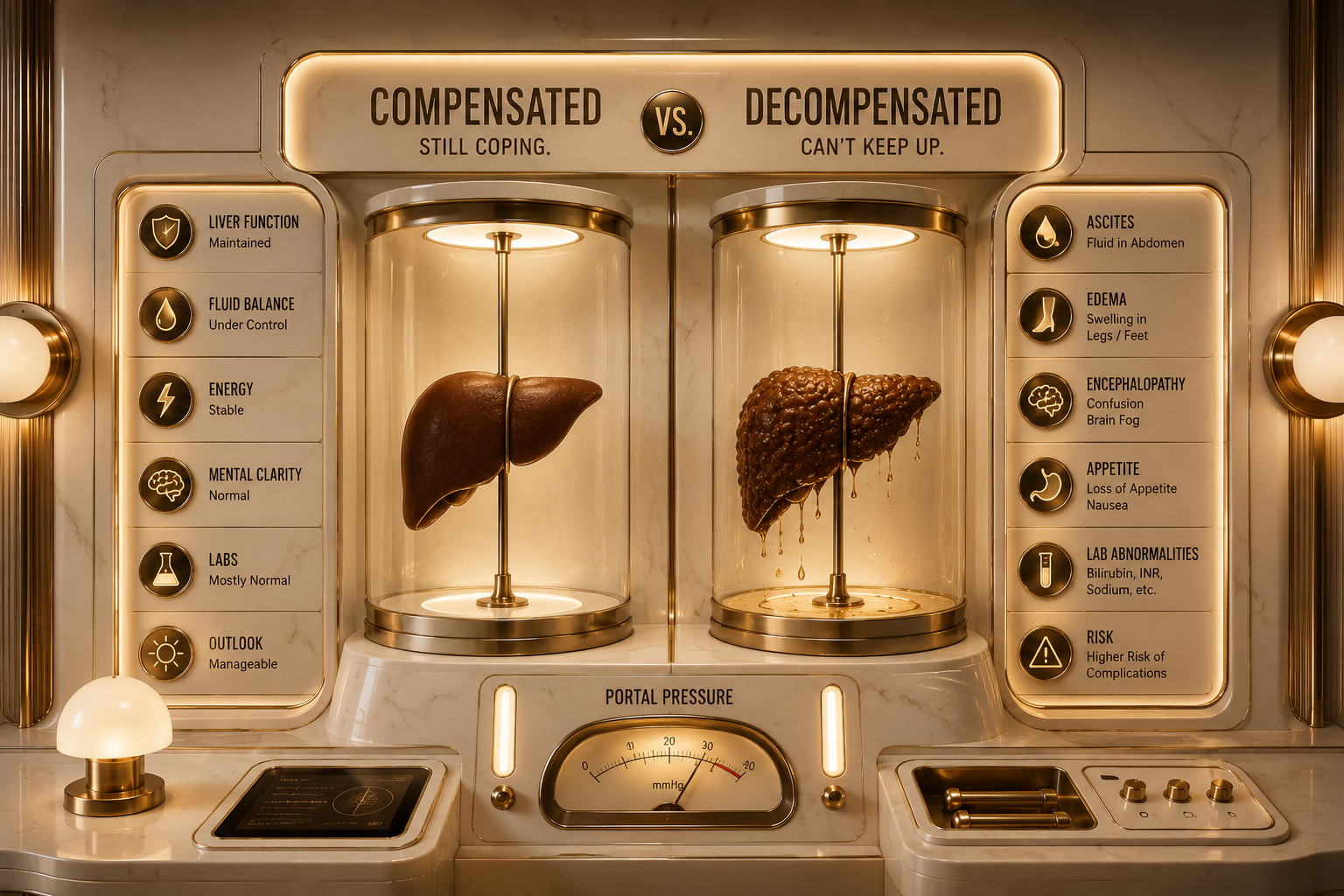
Compensated vs. Decompensated
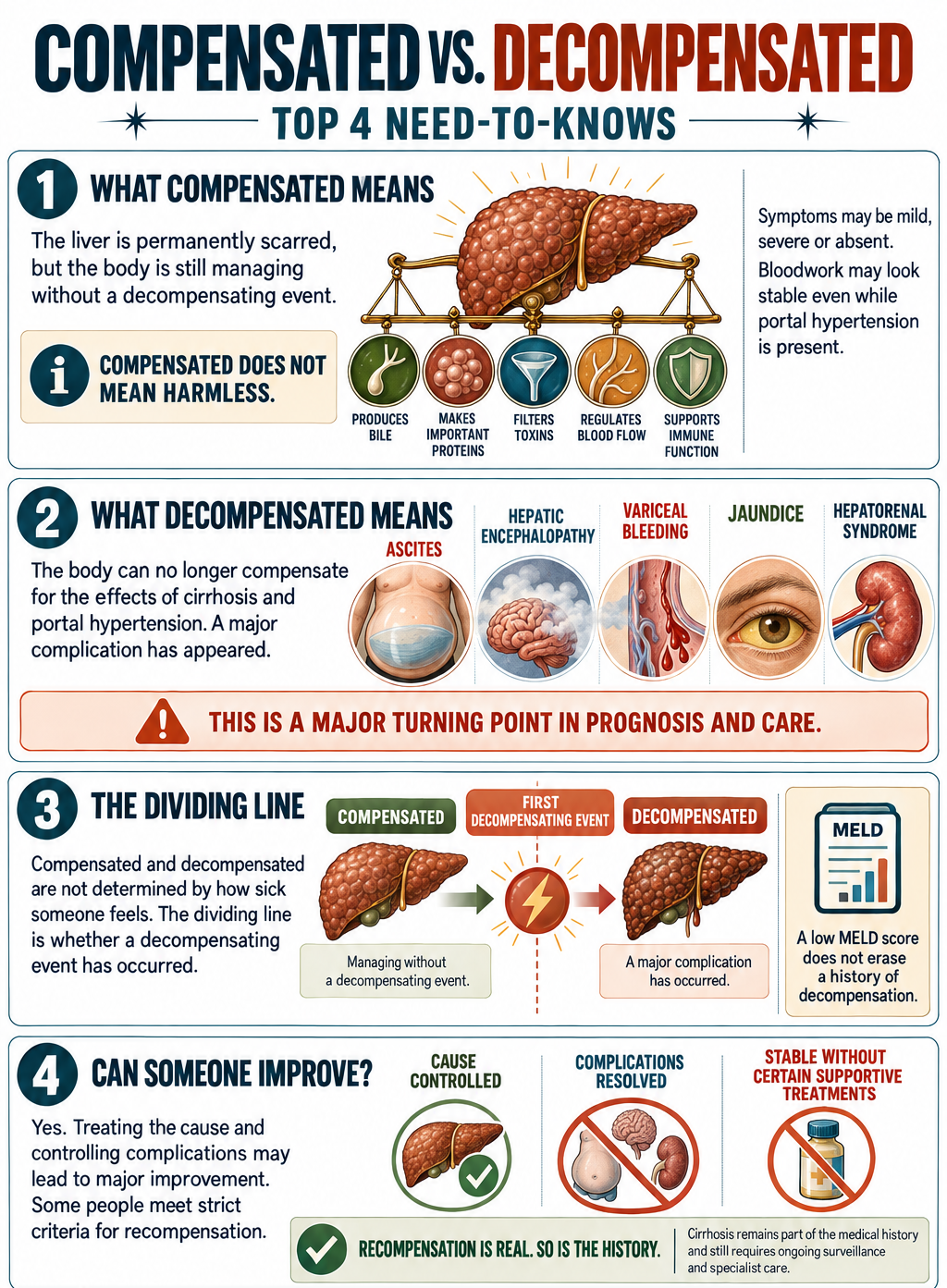
@diagnosis_cirrhosis 🧭 Not every cirrhosis rule applies to every cirrhosis patient at every point in time. That is NOT me saying cirrhosis isn’t serious. It is incredibly serious. It’s saying that compensated cirrhosis and decompensated cirrhosis can require very different day-to-day management, and understanding where you are matters medically and mentally. I see this constantly in liver disease Lives. Someone asks: ❓ Do I need to restrict sodium with cirrhosis? ❓ Do I need to restrict fluids? ❓ Should I be taking lactulose? ❓ Can I exercise with cirrhosis? ❓ Can I eat red meat? ❓ Does cirrhosis mean insomnia? ❓ Does everyone with cirrhosis get brain fog? ❓ What should I avoid with compensated cirrhosis? ❓ What does compensated cirrhosis mean? ❓ what are the rules in cirrhosis? And sometimes we’re trying to answer before asking the most important question: Are we talking about compensated or decompensated cirrhosis—and what complications does this person actually have? 🟢 Compensated cirrhosis means the liver has advanced scarring, but you have not developed the major complications that define decompensation. That does NOT mean “mild cirrhosis.” You can have significant portal hypertension while compensated. You still need appropriate surveillance, treatment of the underlying cause, medication review, nutrition, muscle preservation and regular hepatology care. The goal is to stay compensated. 🔴 Decompensated cirrhosis means major complications have developed, such as: 💧 Ascites 🧠 Hepatic encephalopathy 🩸 Variceal bleeding 🟡 Jaundice Now the day-to-day equation can change substantially. Someone managing ascites may have a specific 🧂 sodium target, 💊 diuretics, daily weights or paracenteses. Someone with HE may need lactulose and/or rifaximin. Someone with significant hyponatremia may be prescribed 💧 fluid restriction. Someone with portal hypertension may need medications or endoscopic management based on their individual risk. These aren’t casual lifestyle tips. They’re treatments for specific problems. And that’s the distinction I think gets lost online. If you’re compensated, reading everything required to manage advanced decompensated cirrhosis can make it feel like you need to live under restrictions that may not currently apply to you. That can create tremendous anxiety around food, water, exercise, medications and normal daily life. But the opposite is equally dangerous. If you’re decompensated, advice from someone living comfortably with compensated cirrhosis may not be appropriate for your situation. Their sodium needs may not be yours. Their fluid recommendations may not be yours. Their exercise tolerance may not be yours. Their medications may not be yours. Their risks may not be yours. ⚠️ This is not permission to ease up on cirrhosis. It is permission to stop treating every possible future complication as though you already have it—and a reminder not to minimize the complications you actually do have. Some things cross stages: 🚫🍷 Avoid alcohol. 🧬 Treat the underlying cause. 💪 Protect muscle and nutrition. 💊 Review medications and supplements. 🩻 Keep recommended HCC surveillance. 🩸 Manage portal hypertension appropriately. 🧪 Keep up with labs and hepatology care. But your specific restrictions should match your specific disease. 🧬 Cirrhosis can result from MASLD/MASH (fatty liver disease), alcohol-associated liver disease, autoimmune hepatitis, hepatitis B, hepatitis C, PBC, PSC, hemochromatosis, Wilson disease, alpha-1 antitrypsin deficiency, drug-induced liver injury, vascular liver disease and other causes. 👩⚕️👨⚕️🩺 Talk to your hepatologist about whether you’re compensated or decompensated, whether you have clinically significant portal hypertension, which complications you currently have, and what your sodium, fluid, nutrition, medication and activity recommendations should be. #cirrhosis #liverhealth #hepatitis #fattyliver #liverdisease ♬ Ritmo Alegre - DirceuFM
Top 4 Need to Knows
Important Medical Disclaimer: I am Angie, a cirrhosis patient sharing my personal lifestyle, nutrition, and mindset journey. I am a data aggregator and community builder, not a licensed medical professional, doctor, or dietitian. Content on diagnosiscirrhosis.com is based solely on my personal experience living with advanced liver disease and is intended for informational and educational purposes only. It does not constitute medical advice or a substitute for professional medical care. Always follow the recommendations of your own healthcare team and consult your hepatologist or physician before changing your diet, medication, or lifestyle routine.
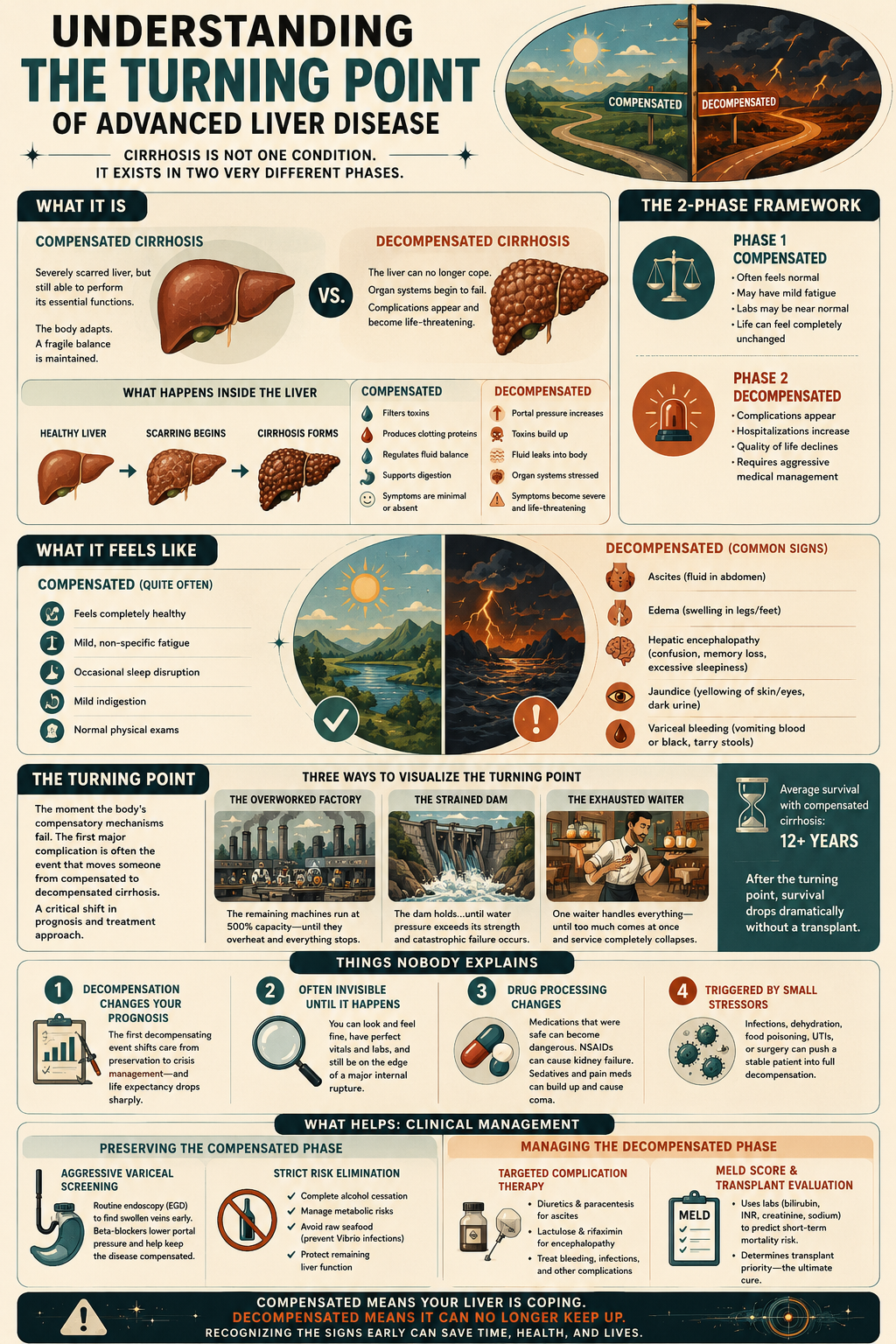
Understanding the Turning Point of Advanced Liver Disease
By Angie from@diagnosis_cirrhosis on TikTok
What It Is
People often look at a diagnosis of cirrhosis as a single, static condition [2]. In reality, it is a dynamic, two-act disease [2]. The transition from compensated to decompensated status marks the most critical prognostic turning point in a patient's liver health journey [2].
The Two Phases
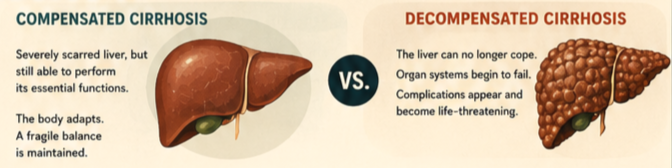
To understand these two phases, it helps to look at how the liver handles advanced structural damage. Chronic inflammation eventually replaces smooth, healthy liver tissue with rigid, bumpy regenerative nodules.
To understand these two phases, it helps to look at how the liver handles advanced structural damage [1]. Chronic inflammation eventually replaces smooth, healthy liver tissue with rigid, bumpy regenerative nodules [1].
In Compensated Cirrhosis, the liver is heavily damaged, but the remaining healthy liver cells (hepatocytes) work overtime [1]. They successfully filter toxins, synthesize blood-clotting proteins, and manage fluid balances [1]. The body adapts to the increased resistance in the portal vein, keeping the patient in a fragile state of equilibrium [1].
According to a clinical review published in the World Journal of Gastroenterology, decompensated cirrhosis occurs when this structural resistance becomes too great or the remaining healthy liver cells diminish past a critical threshold [2]. The liver's metabolic and vascular systems collapse, causing blood pressure in the portal system to skyrocket and forcing toxins and fluids out into the rest of the body [2].
What It Feels Like
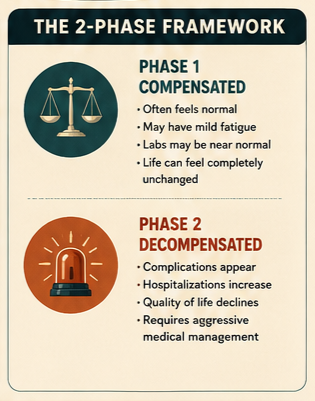
The physical contrast between these two stages is stark [2]. The transition can happen gradually over years, or it can be triggered abruptly by an infection, a spell of dehydration, or a new medication [3].
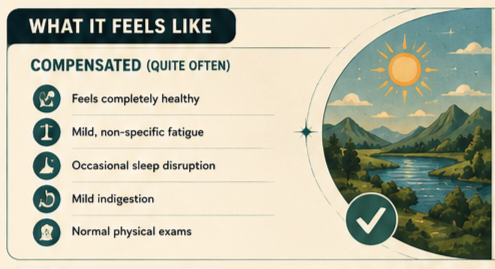
During the Compensated Phase, you frequently feel:
Completely healthy and entirely unaware of the severe scarring inside you [1].
Mild, non-specific fatigue that is easily blamed on aging or a busy schedule [1].
Occasional sleep disruptions or mild indigestion, though most patients have normal physical exams [1].
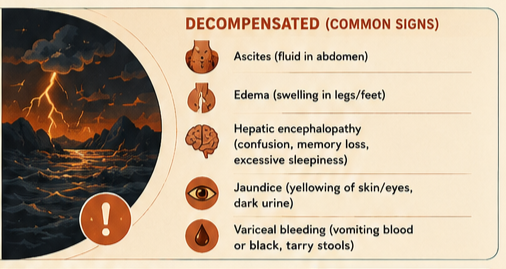
When the disease crosses into the Decompensated Phase, the physical burden changes completely [2]. As detailed in the PMC Cirrhosis Management Review, patients experience [3]:
A rapid, visible expansion of the abdomen (ascites) or severe swelling in the legs (edema) [1], [3].
Sudden episodes of vomiting blood or passing black, tarry stools due to ruptured internal veins [3].
A profound, terrifying state of mental confusion, memory loss, or extreme sleepiness (hepatic encephalopathy) [1], [3].
A distinct yellowing of the skin and the whites of the eyes (jaundice), accompanied by dark, tea-colored urine [1], [3].
The Turning Point: From Silent Struggle to Structural Collapse
The transition from compensated to decompensated cirrhosis is a profound functional "turning point" where the body's compensatory mechanisms fail [2].
To visualize this turning point, think of three concrete examples:
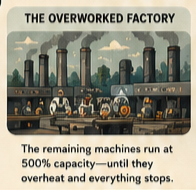
The Overworked Factory: Imagine a factory where 80% of the machinery breaks down. In the compensated phase, the remaining 20% of the machines run at 500% capacity, working 24/7 to keep up with production.
The factory looks functional from the outside. The decompensated turning point is the exact moment those final machines overheat, short-circuit, and the entire assembly line grinds to a sudden, absolute halt.
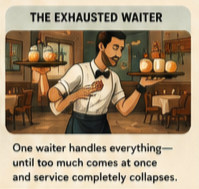
The Exhausted Waiter: Picture a single waiter trying to serve an entire restaurant. In the compensated phase, they run from table to table, sweating and stressed, but they manage to deliver every meal on time.
The decompensated turning point occurs when a busload of fifty new customers suddenly walks through the door; the waiter drops the trays, walks out, and the entire restaurant service collapses.
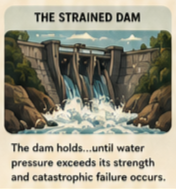
The Strained River Dam: Think of a concrete dam holding back a massive river. In the compensated phase, the river rises to dangerous levels, and small, hairline fractures appear in the wall, but the dam holds the weight of the water.
Decompensation is the exact moment the water pressure exceeds the structural strength of the concrete, causing a catastrophic breach that floods the valley below.
Things Nobody Explains
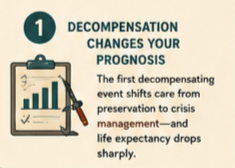
Decompensation Completely Changes Your Prognosis: Compensated cirrhosis is highly stable and can often be managed for over a decade with lifestyle changes [2]. However, once a patient experiences their very first decompensating event—such as fluid buildup or a variceal bleed—the medical approach shifts from "preservation" to "crisis management," and life expectancy drops sharply without a liver transplant [2], [3].
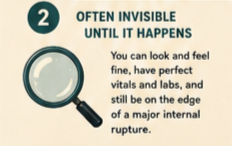
The Turning Point is Often Completely Invisible Until It Happens: A patient can have perfect blood pressure readings, flawless routine lab work, and look incredibly fit, yet be just millimeters away from a major internal rupture [2]. Routine blood markers do not reliably indicate how close a patient is to the decompensation threshold [2].
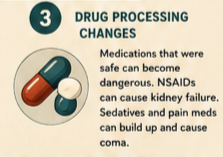
It Completely Alters How Your Body Processes Common Drugs: In the compensated phase, your liver can still filter most standard medications safely [1]. Once you cross into decompensation, your liver's metabolic pathways slow to a crawl [1]. Common over-the-counter drugs like NSAIDs (ibuprofen) can trigger sudden, catastrophic kidney failure, while standard sleep aids or pain medications can accumulate in the blood and send a patient into a deep coma [3].
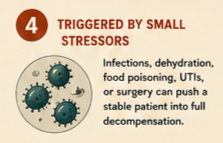
The Turning Point Can Be Triggered by Minor Dehydration or Infection: Many patients assume decompensation only happens if their liver disease gets worse [2]. In reality, a stable, compensated patient can be thrown into full decompensation by something as simple as a urinary tract infection (UTI), a bout of food poisoning, or a routine surgical procedure that stresses the body's fragile fluid balances [3], [4].
What Helps: Clinical Management
Clinical management shifts entirely based on which side of the turning point a patient stands on [3].
Preserving the Compensated Phase:
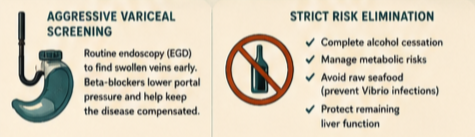
Aggressive Variceal Screening: As outlined in the AAFP Cirrhosis Guidelines, patients must undergo routine upper endoscopies (EGD) to look for swollen veins in the esophagus [4]. Catching these early allows doctors to prescribe beta-blockers to lower portal pressure and keep the disease firmly in the compensated stage [4].
Strict Risk Elimination: Complete and permanent cessation of alcohol, meticulous management of metabolic syndromes, and avoiding raw seafood (to prevent dangerous Vibrio infections) are mandatory to protect the remaining functional liver cells [1], [4].
Managing the Decompensated Phase:
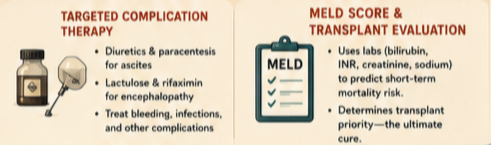
Targeted Complication Therapy: Once decompensation occurs, treatment targets the specific failure [3]. This involves using heavy diuretics and paracentesis for ascites, or prescribing lactulose and rifaximin to flush ammonia out of the digestive tract and clear hepatic encephalopathy, as detailed by the PMC Cirrhosis Management Review [3].
MELD Score Tracking and Transplant Evaluation: Decompensated patients are closely monitored using the Model for End-Stage Liver Disease (MELD) scoring system, which uses lab values (bilirubin, INR, creatinine, and sodium) to calculate short-term mortality risk [1], [3]. This score is used to prioritize patients on the national liver transplant waiting list—the ultimate cure for decompensated disease [1], [3].
@diagnosis_cirrhosis 🚨 “Wait… I’m not decompensated yet?” 😳 🚨 “Could I still be compensated cirrhosis?” 🧐 🚨 “What is cirrhosis compensation?” 👀 🚨 “Where is the line between compensated and decompensated?” ⚠️ 🚨 “Will I KNOW if I decompensate?” If you are panic-searching: 🔎 compensated vs decompensated cirrhosis 🔎 what is compensation in cirrhosis 🔎 how does decompensation start 🔎 how do I know if I’m decompensated 🔎 can you have varices and still be compensated 🔎 does taking medicine mean decompensated 🔎 can beta blockers prevent decompensation 🔎 can lactulose keep you compensated 🔎 what is recompensation 🔎 can decompensated cirrhosis improve 🟢 **Compensated cirrhosis** means the liver is scarred but still “compensating” enough to avoid certain major complications. That does NOT mean: ❌ healthy ❌ mild ❌ harmless ❌ symptom-free ❌ no portal hypertension You can still have: ⚠️ portal hypertension 🩸 varices 📉 low platelets 😮💨 fatigue 🧠 brain fog 🦵 swelling 🧪 abnormal labs 🔴 **Decompensated cirrhosis** usually means the liver/portal pressure system can no longer keep up. Major complications may include: 🌊 ascites 💛 jaundice 🩸 variceal bleeding 🧠 hepatic encephalopathy 🦠 infections 🧪 kidney dysfunction 🏥 hospitalization The confusing part? The “line” is not always emotionally obvious. Sometimes it’s sudden. Sometimes you only understand it later: swelling worsening, sodium dropping, confusion increasing, appetite collapsing, medications being added, endurance disappearing ⚠️ 🫀 Portal hypertension can quietly drive: 🩸 varices 🌊 ascites 📉 low platelets 🦵 edema 🧠 HE 🪤 splenomegaly And yes — you can have portal hypertension and still technically be compensated. 💊 Taking medication does NOT automatically mean you are decompensated. Treatments may be used to prevent complications, reduce portal pressure, manage symptoms, or help maintain stability. 👀 **Recompensation** can happen for some people when the underlying driver is controlled and complications improve, but that is highly individual. Always talk to your doctor, hepatologist, transplant team, or qualified clinician for clarification about your cirrhosis stage/status, symptoms, labs, medications, treatment changes, and whether anything new needs urgent evaluation 🩺💚 Cirrhosis is pressure. Monitoring. Adaptation. Waiting. And sometimes the scariest part is not knowing which side of the line you are standing on. #symptoms #liverhealth #liverfailure #fattyliver #hypertension ♬ original sound - World Hair
Sources
[1] Sharma, B., & John, S. Hepatic Cirrhosis. NIH StatPearls Profile. National Library of Medicine. nih.gov
[2] D'Amico, G., Garcia-Tsao, G., & Pagliaro, L. Natural History and Prognostic Indicators of Survival in Cirrhosis. World Journal of Gastroenterology / Journal of Hepatology. nih.gov
[3] Tapper, E. B., & Parikh, N. D. Diagnosis and Management of Cirrhosis and Its Complications. PMC Clinical Review / JAMA. nih.gov
[4] American Academy of Family Physicians (AAFP). Management of the Hospitalized Patient with Cirrhosis. PubMed Central. nih.gov
Medical Disclaimer & General Guidance
The information provided across these resources is for educational and informational purposes only. It is not intended to be a substitute for professional medical advice, diagnosis, or treatment. Advanced liver disease, compensated cirrhosis, and decompensated liver failure are highly intricate conditions that require constant, specialized clinical oversight by a qualified hepatologist or gastroenterologist. Always seek the direct advice of your physician regarding diagnostic imaging, MELD score calculations, or modifications to your therapeutic plan.
