
Low-Sodium Cirrhosis Safe Marinara Sauce
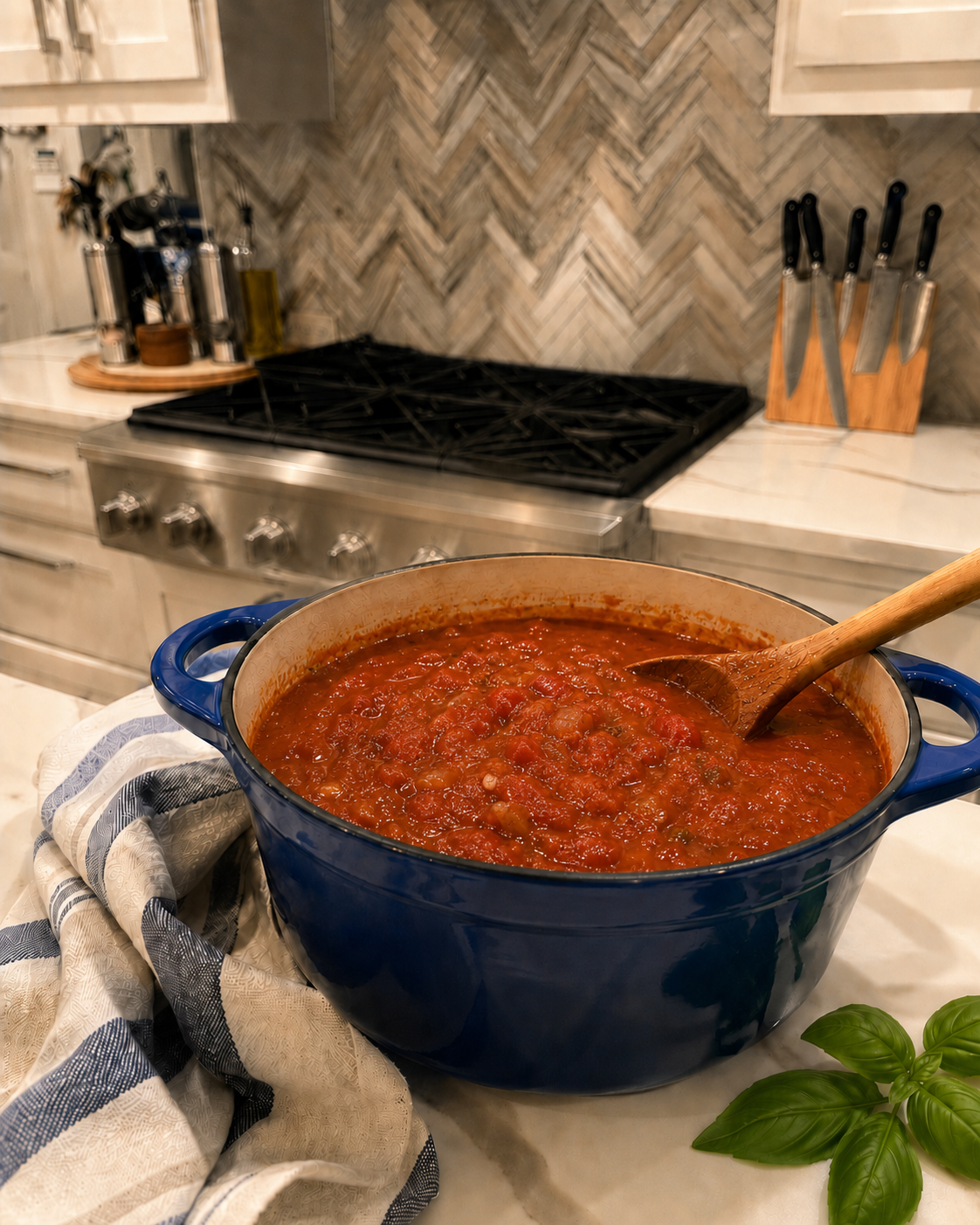
Path A (Parmesan Route) Sodium: ~35 mg Path B (Anchovy/Sardine Route)
Sodium: ~38 mg. Protein: ~3 g. Calories: ~80 kcal. Sugar: ~6 g (All from natural tomato sugars and minimal maple syrup balance)
Liver-Friendly Cooking
By Angie from@diagnosis_cirrhosis on TikTok
The absolute hardest thing to recreate in a traditional Italian tomato sauce without a salt shaker is structural depth. Standard canned tomato sauces rely heavily on added sodium to cut through the natural metal-sharp acidity of the tomato fruit. In our household, I live with a man I love completely—but he is also a man who is a staunch supporter of the Red Sauce Society. He genuinely does not believe in any other form of sauce touching his noodles. It is bizarre, it is wild, but I live with it, so let’s just put it that way: I make a lot of marinara! Because of his high culinary standards, I refuse to let a clinical diagnosis force us to eat bland, boring meals. To "Bam It Up" and establish a rich, authentic base without taxing your liver, we use the natural volcanic sweetness of San Marzano tomatoes, caramelize our aromatics, and activate a massive savory cheat code: choosing your own custom, low-sodium umami path.
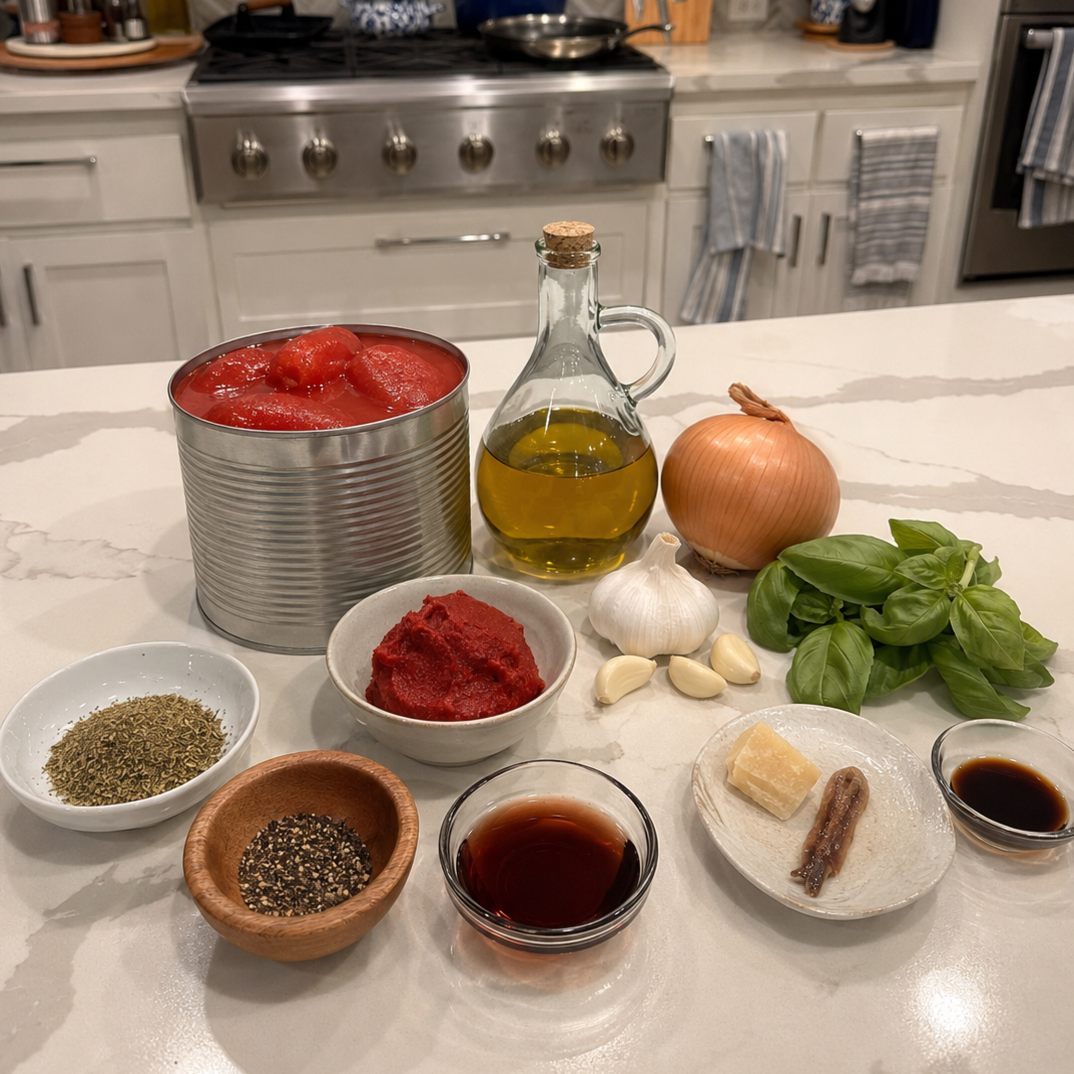
Ingredients for Liver-Safe
Marinara
1 can (28 oz) Whole Peeled San Marzano Tomatoes (Certified D.O.P. preferred)
1 can (6 oz) No-Salt-Added Tomato Paste (Look specifically for "0mg Sodium" labels)
2 tbsp Extra-Virgin Olive Oil
1/2 Medium Sweet Onion, finely diced
5-6 cloves Garlic, minced or thinly sliced
2 tbsp Pure Maple Syrup or Coconut Sugar (To neutralize sharp tomato acidity)
1 tbsp Red Wine Vinegar or Balsamic Vinegar (Provides the active "zing" missing from unsalted sauces)
1 tbsp Dried Oregano or Italian Seasoning Blend
1/4 cup Fresh Basil Leaves, torn
1/2 tsp Black Pepper
Choose Your Flavor Path (The
Umami Boosters)
Pick one of the two paths below to inject deep, savory baseline flavors into your sauce without exceeding your daily sodium budget:
Path A: The Dairy-Rich Route (Parmesan Rind + Worcestershire): Use 1 Leftover Parmesan Cheese Rind(slowly dissolves aged, natural glutamates directly into the sauce for only ~40 mg sodium)and 1 tsp Lea & Perrins Worcestershire Sauce(adds woodsy, complex depth for just 65 mg sodium).
Path B: The Coastal Mediterranean Route (Anchovy/Sardine + Worcestershire): Use 1 Low-Sodium Oil-Packed Anchovy or Sardine Fillet(rinse under cold water to strip surface salt down to ~75 mg sodium; it melts completely into the oil, leaving zero fishy taste—only rich, savory complexity) and 1 tsp Lea & Perrins Worcestershire Sauce(adds woodsy, complex depth for just 65 mg sodium).
Step-by-Step Instructions
Step 1: Bloom the Foundation & Melt Your Fish (If using Path B)
Heat the Oil: Heat the extra-virgin olive oil in a deep saucepan over medium heat.
Melt the Fish (Path B Only): If you chose the Mediterranean route, drop your rinsed anchovy or sardine fillet directly into the hot oil. Use a wooden spoon to break it apart; it will completely dissolve and melt into the oil within 2 minutes.
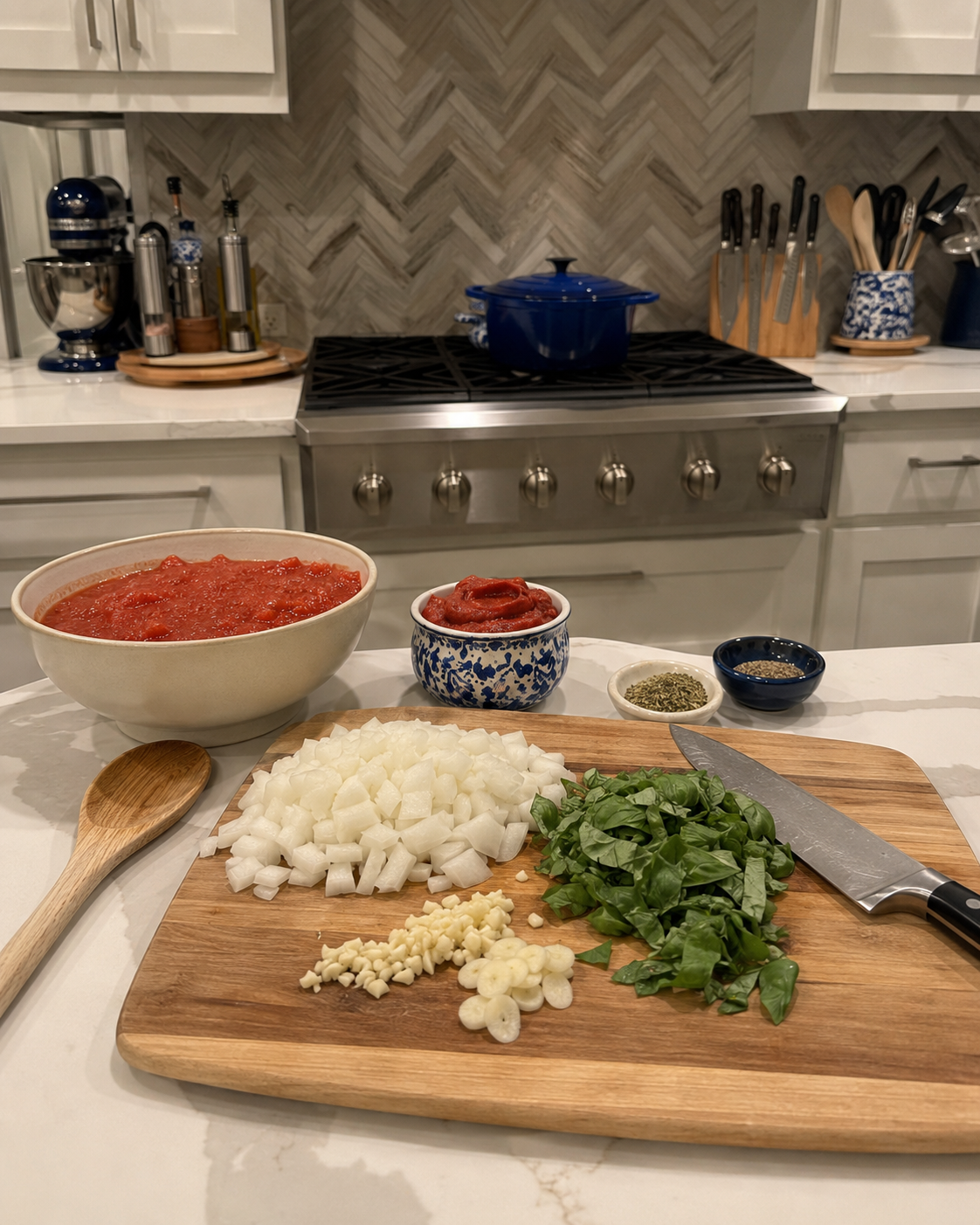
Sauté Aromatics: Add the finely diced sweet onion and cook for 5 minutes until soft and translucent. Add the minced garlic and cook for exactly 60 seconds until highly fragrant. Do not let the garlic brown, or it will turn bitter.
Step 2: Caramelize the Tomato Paste
Create space: Push the onions and garlic to the outer edges of the pan.
Toast the paste: Drop the no-salt-added tomato paste directly into the bare center of the hot pan. Cook the paste undisturbed for 2 to 3 minutes until it deepens from a bright red to a dark brick-red color.
Combine: Stir it completely into the onions and garlic to inject a deeply savory baseline without adding salt.
Step 3: Crush and Activate the Sauce
Add Tomatoes: Pour the can of San Marzano tomatoes (along with their juices) into the pan. Use a sturdy wooden spoon or potato masher to manually crush the whole tomatoes into small chunks.
Rinse the Can: Pour 1/2 cup of water into the empty tomato can, swirl it to catch the remaining juices, and pour it into the pot.
Drop the Boosters: Stir in your 1 teaspoon of Worcestershire sauce, and if you chose Path A, drop your Parmesan cheese rind directly into the center of the pot now. Bring the liquid to a gentle boil, then instantly reduce the heat to low.
Step 4: Balance the Acidity & Simmer
Add Seasonings: Stir in the dried oregano, black pepper, maple syrup, and red wine vinegar.
Simmer: Simmer uncovered on low heat for 25 to 30 minutes, stirring occasionally, until the sauce thickens and coats the back of a spoon. If using the cheese rind, it will soften and release its rich baseline flavor straight into the tomatoes.
Step 5: The Fresh Finish
Remove Rind: Remove the pot from the heat. If you used Path A, use a spoon to fish out any remaining hard pieces of the Parmesan rind and discard them.
Add Herbs: Stir in the freshly torn basil leaves. Let the sauce sit for 5 minutes before ladling it directly over your cooked High-Protein Cirrhosis-Friendly "Sausage" Meatballs.
Liver-Health Nutrition (Per 1/2 Cup Serving)
Path A (Parmesan Route) Sodium: ~35 mg
Path B (Anchovy/Sardine Route) Sodium: ~38 mg
Protein: ~3 g
Calories: ~80 kcal
Sugar: ~6 g (All from natural tomato sugars and minimal maple syrup balance)
One Simple Sauce, Endless Quick Meals
This low-sodium baseline functions as a master sauce that you can twist into a dozen different liver-friendly comfort meals.
The Quick Noodle Toss: By pairing three of our high-protein meatballs and a half-cup of this homemade marinara with a single serving of Banza chickpea pasta, you get a powerhouse dinner plate that delivers a massive 44 grams of muscle-saving protein and 8 grams of digestion-friendly fiber, all while keeping the sodium at an incredibly low 230 milligrams and the calories at a clean, high-density 510 kcal per serving.
Cirrhosis-Friendly Lasagna: Layer this rich sauce with whole grain lasagna noodles, low-sodium ricotta cheese, fresh spinach, and extra lean ground poultry for a comforting, high-protein family bake.
Low-Sodium Friday Pizza Night: Use this thick sauce as your baseline spread over a whole-wheat pita, cauliflower crust, or low-sodium flatbread, then top with a sprinkle of Swiss or low-moisture mozzarella cheese and fresh basil.
The Breakfast "Shakshuka" Twist: Pour two cups of this marinara into a skillet, bring it to a simmer, crack 2 or 3 fresh eggs directly into the sauce, cover with a lid, and poach them until the whites are set for a stunning Mediterranean breakfast or lunch.
Batch & Freeze Like a Pro: Let the marinara cool completely, pour it into airtight freezer-safe bags or glass jars (leave an inch of headspace), and freeze it for up to 3 months.
Why the Ingredients Matter: The "Liver-Specific" Science
Every ingredient in this recipe is chosen for its clinical benefit to a scarred liver. Here is the why behind the medicine:
The Umami Hack (Cheese Rind, Fish, & Worcestershire): Aged cheeses, small oily fish, and Worcestershire sauce are packed with natural, bound glutamates. Clinical nutrition studies published via PubMed show that introducing umami compounds to low-sodium meals naturally amplifies the palate's perception of saltiness. This allows home cooks to create highly satisfying, restaurant-quality profiles while strictly protecting the patient from the massive sodium spikes that trigger or worsen portal hypertension complications.
No-Salt-Added Tomatoes & Paste: Commercial pre-made marinara sauces are hidden sodium landmines designed to maximize shelf-life. By strictly choosing raw, no-salt-added canned bases, you protect your body from fluid retention. Clinical guidelines from the American Association for the Study of Liver Diseases (AASLD) highlight that maintaining a strict sodium ceiling under 2,000 mg daily is the most critical lifestyle barrier to prevent the development or worsening of ascites (abdominal fluid buildup) and peripheral edema.
Lycopene (Cooked Tomatoes): Concentrated tomato paste and cooked whole tomatoes are packed with lycopene, a highly bioavailable antioxidant. Clinical breakdowns from health and medical platforms, including Medical News Today, highlight that lycopene actively reduces hepatic oxidative stress, limits lipid accumulation, and helps suppress inflammatory pathways in damaged liver tissues.
Extra-Virgin Olive Oil: EVOO is a monounsaturated fat rich in oleic acid and polyphenols. Medical reviews published in the National Institutes of Health PMC database demonstrate that high-quality olive oil helps improve hepatic insulin sensitivity, reduces liver fat accumulation, and decreases circulating inflammatory markers, making it the ideal therapeutic cooking oil for a scarred liver.
