
Cirrhosis-Style "Sausage" Meatballs
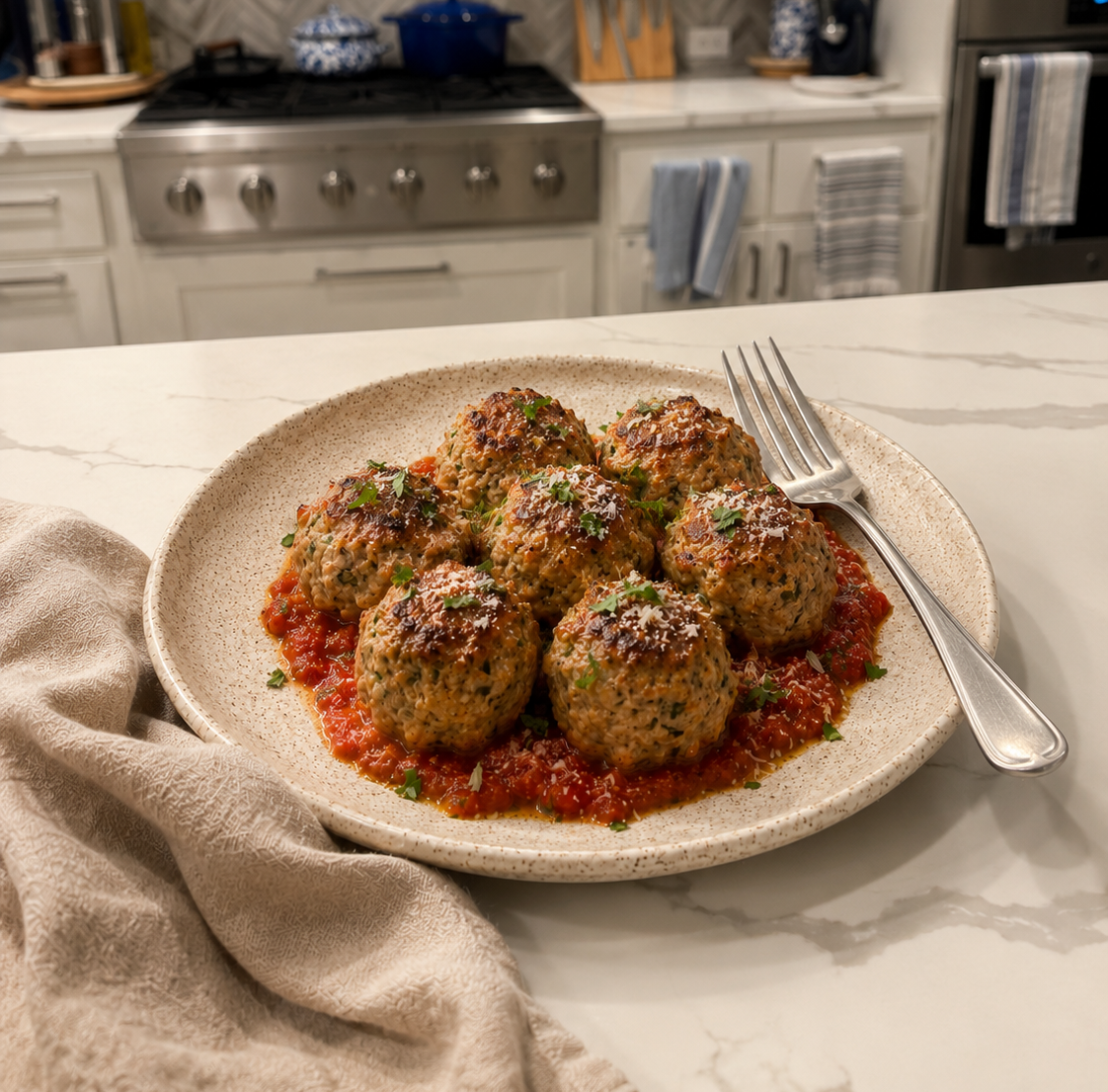
Sodium: ~195 mg Protein: ~31 g Calories: ~245 kcal Fat: ~11 g. Carbs: ~3 g
The hardest part of a liver-friendly diet is missing the deeply comforting, savory flavors we used to take for granted—especially frozen or processed Italian sausage, which is completely off-limits due to massive sodium and fat content. But you do not have to give up those familiar, satisfying meals. The secret to recreating that exact, unmistakable "sausage" warmth without a single grain of salt or a gram of pork is whole fennel seeds. When paired with high-quality lean poultry and nutty Swiss cheese, it completely tricks your palate into thinking you are eating a traditional, restaurant-quality Italian meatball.
Ingredients
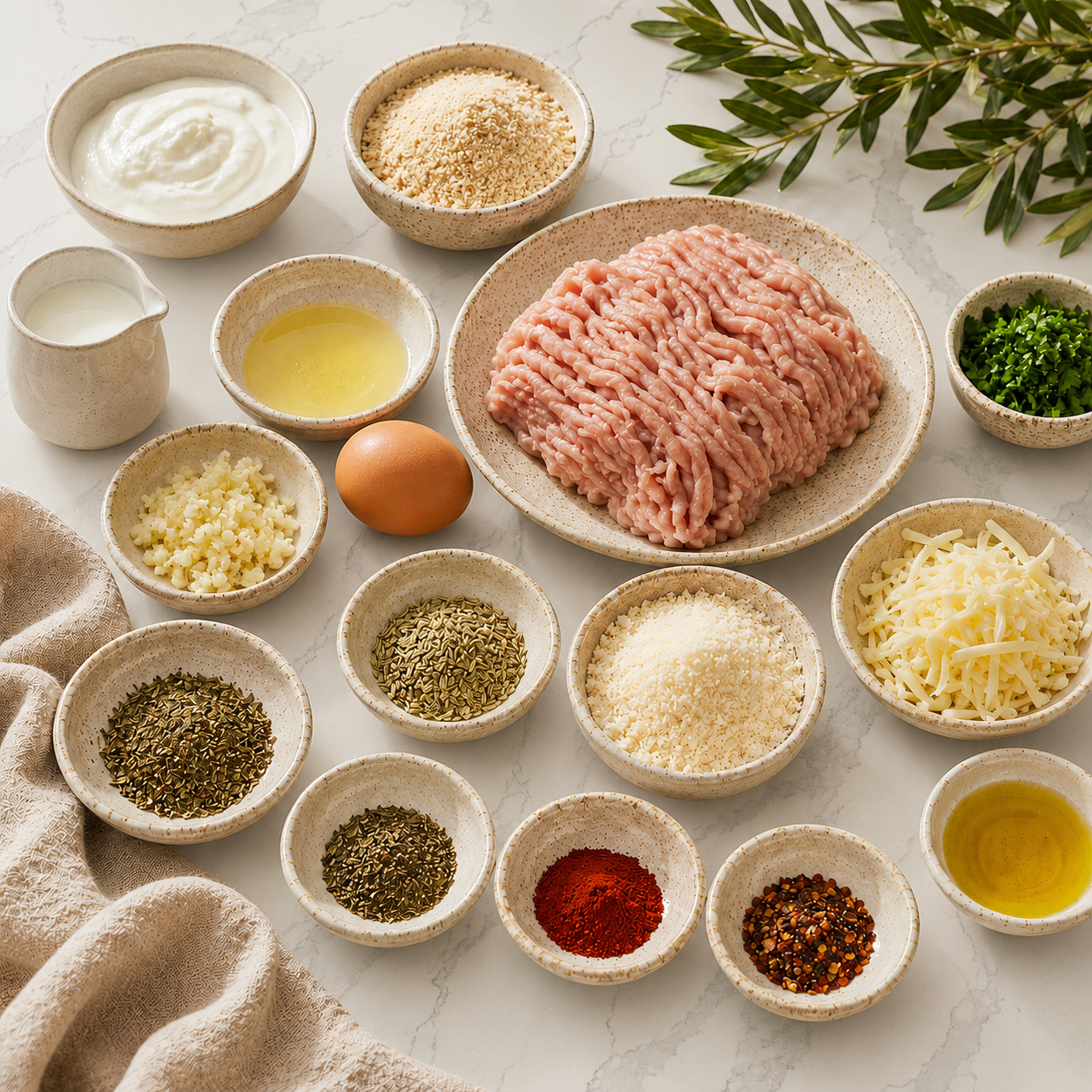
1 lb Lean Ground Turkey or Chicken (93% or 94% lean—avoid 99% fat-free as it dries out)
2 tbsp Plain, Non-Fat Greek Yogurt (Our high-protein, zero-sodium binder that keeps the meat incredibly juicy)
3 tbsp Almond Flour or Panko Breadcrumbs (Low-sodium binder option to hold the structure)
1 Large Egg White (Adds clean protein and holds the meatball together)
1 splash Milk
The "Sausage-Mimic" Flavor Rub:
1 tbsp Whole Fennel Seeds, lightly crushed (The absolute key to the sausage illusion)
1/2 cup Fresh Italian Parsley, finely chopped (Provides a bright, fresh herbal punch)
5-6 cloves Garlic, minced (While it feels like a lot, this delivers the heavy savory punch that replaces salt)
1 tsp Dried Oregano (Or 2 tsp of a basic Italian Seasoning blend if that is what you have on hand)
1 tsp Dried Basil
1/2 tsp Smoked Paprika (Brought back to add that rich, wood-fired background note)
1 tsp Black Pepper
1/4 tsp Red Pepper Flakes (For a classic "hot Italian sausage" kick)
The Smart-Cheese Blend (Reduced and Optimized):
1/4 cup Grated Parmesan Cheese (Cut in half to drop the sodium drastically while keeping the intense savory umami)
1/2 cup Shredded Swiss Cheese (Brings a nutty sweetness that highlights the fennel, while naturally providing less sodium than mozzarella)
Instructions
Option A: The Master Oven Bake (For Lower Fat & Easier Cleanup)
Prep and Preheat: Preheat your oven to 400°F (204°C). Line a large baking sheet with parchment paper, or place a wire-mesh cooling rack over a baking sheet to let any rendered fat drip away.
Arrange and Bake: Place the chilled meatballs on the prepared baking sheet or rack, leaving an inch of space between each one. Bake in the center rack for 14–16 minutes.
Safety Check: Insert a digital food thermometer into the middle of the largest meatball to verify it reads exactly 165°F.
Option B: The "Bam It Up" Skillet Sear (For a Rich Crust)
Toast and Crush: In a dry skillet over medium heat, toast the fennel seeds for 60 seconds until highly aromatic. Lightly crush them using the back of a spoon to release their oils.
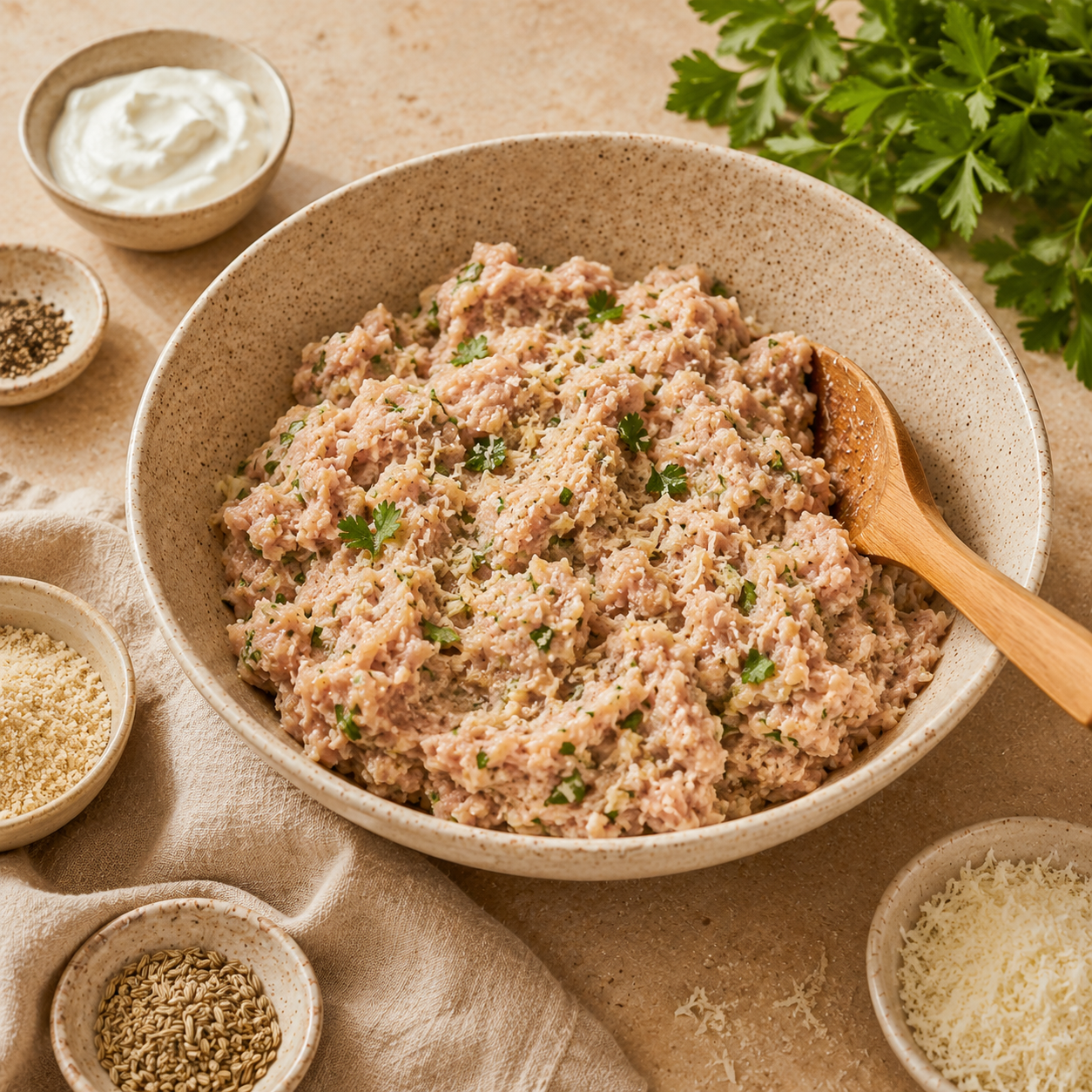
Mix the Binder and Aromatics: In a large bowl, whisk together the Greek yogurt, egg white, almond flour (or breadcrumbs), splash of milk, crushed fennel seeds, parsley, garlic, oregano (or Italian seasoning), basil, paprika, black pepper, and red pepper flakes until it forms a uniform, highly fragrant paste.
Incorporate the Meat and Cheese: Add the ground turkey or chicken, grated parmesan cheese, and shredded Swiss cheese to the bowl. Using your hands, gently fold the mixture together just until combined. Pro Tip: Do not overmix, or the meatballs will become dense and tough.
Shape: Roll the mixture into 12 equally-sized meatballs (about the size of a golf ball).
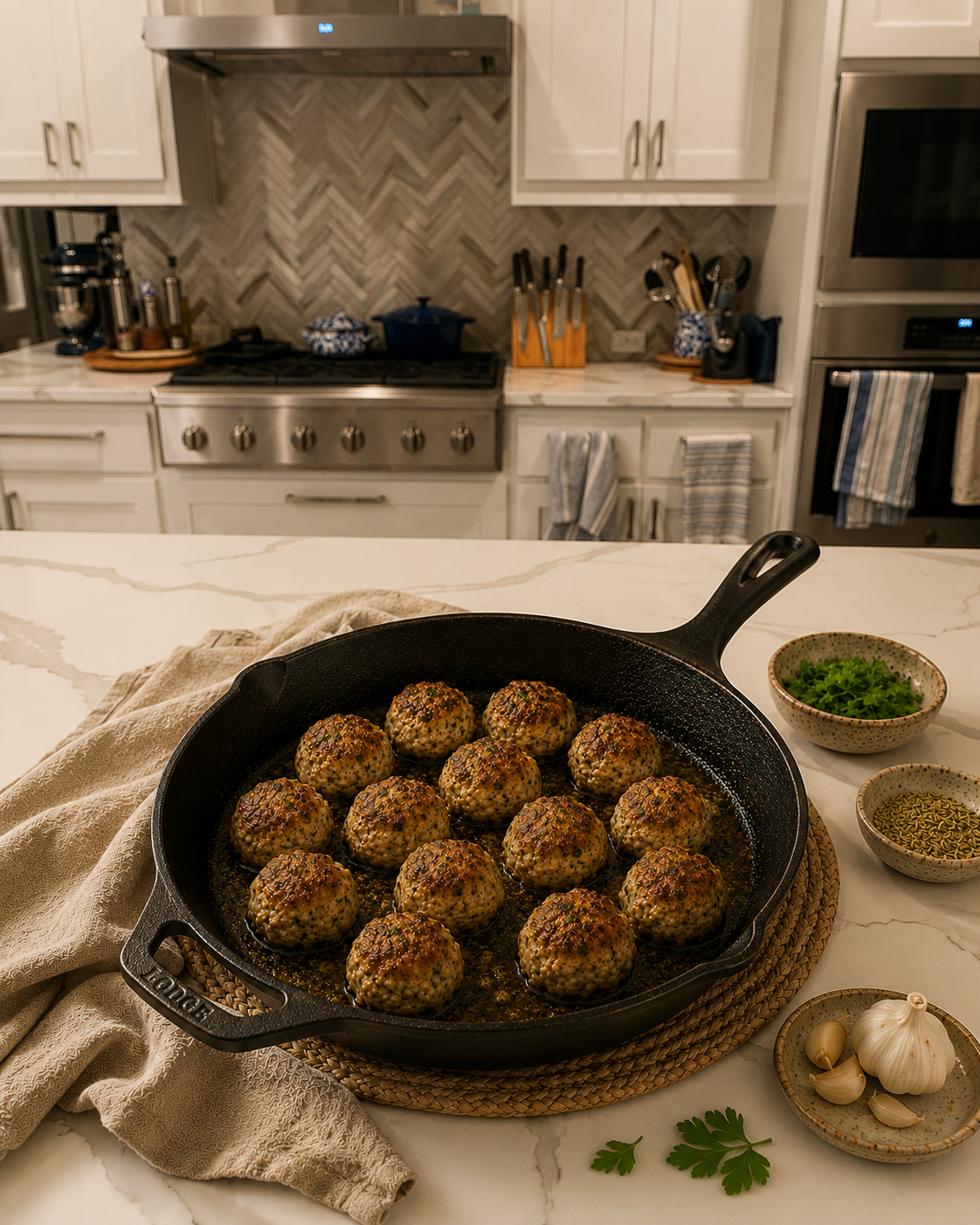
Sear: Heat 1 tablespoon of olive oil in a large skillet over medium-high heat. Add the meatballs and sear for 2–3 minutes per side until a golden-brown crust forms.
The Finish: Lower the heat to medium-low, cover the skillet with a lid, and let them cook through for another 6–8 minutes.
Safety Check: Use a digital food thermometer to ensure the center of the meatballs hits exactly 165°F.
Step 3: The Juiciness Rest
Relax the Meat: Once cooked to 165°F, remove the meatballs from the heat and let them rest on a clean plate or cutting board for 5 minutes before serving. This allows the tightened muscle fibers to relax and reabsorb their natural juices so they stay tender.
Liver-Health Nutrition (Per Serving / 3 Meatballs)
Sodium: ~195 mg (Phenomenal for keeping fluid retention/ascites at bay)
Protein: ~31 g (High-density lean protein packed with amino acids to combat cirrhosis-induced muscle wasting)
Calories: ~245 kcal (Hits your target of ~250 calories perfectly!)
Fat: ~11 g
Carbs: ~3 g
Pro Tips: Working with Lean Poultry
1. The Ice Water Trick: Lean poultry is very sticky to work with. Wet your hands with cold water before rolling the meatballs to keep the meat from sticking to your skin.
2. The Quick Flavor Test: Before rolling all 12 meatballs, take a tiny pinch of the mixture and microwave it for 45 seconds to cook it. Taste it to see if you want to dial up the fennel or garlic before shaping the rest!
3. Batch and Freeze: These freeze beautifully. Once fully cooked and cooled, freeze them on a baking sheet, then transfer to a freezer bag. Pop them directly into a low-sodium homemade marinara sauce whenever you need an instant protein boost.
Make it a Meal
1. Pair with Banza Noodles and my Marinara Sauce: Link here
Why Banza? Banza noodles naturally have double the protein and three times the fiber of regular pasta. By combining them, you create a powerhouse meal that packs a double protein punch in a much smaller portion size. This means you get maximum muscle-building nutrition in just a few bites, without overloading your digestive system or feeling uncomfortably full. It is the ultimate restaurant-quality, high-density plate!
By pairing three of our high-protein meatballs and a half-cup of this homemade marinara with a single serving of Banza chickpea pasta, you get a powerhouse dinner plate that delivers a massive 44 grams of muscle-saving protein and 8 grams of digestion-friendly fiber, all while keeping the sodium at an incredibly low 230 milligrams and the calories at a clean, high-density 510 kcal per serving.
Why the Ingredients Matter: The "Liver-Specific" Science
Every ingredient in this recipe is chosen for its clinical benefit to a scarred liver. Here is the why behind the medicine:
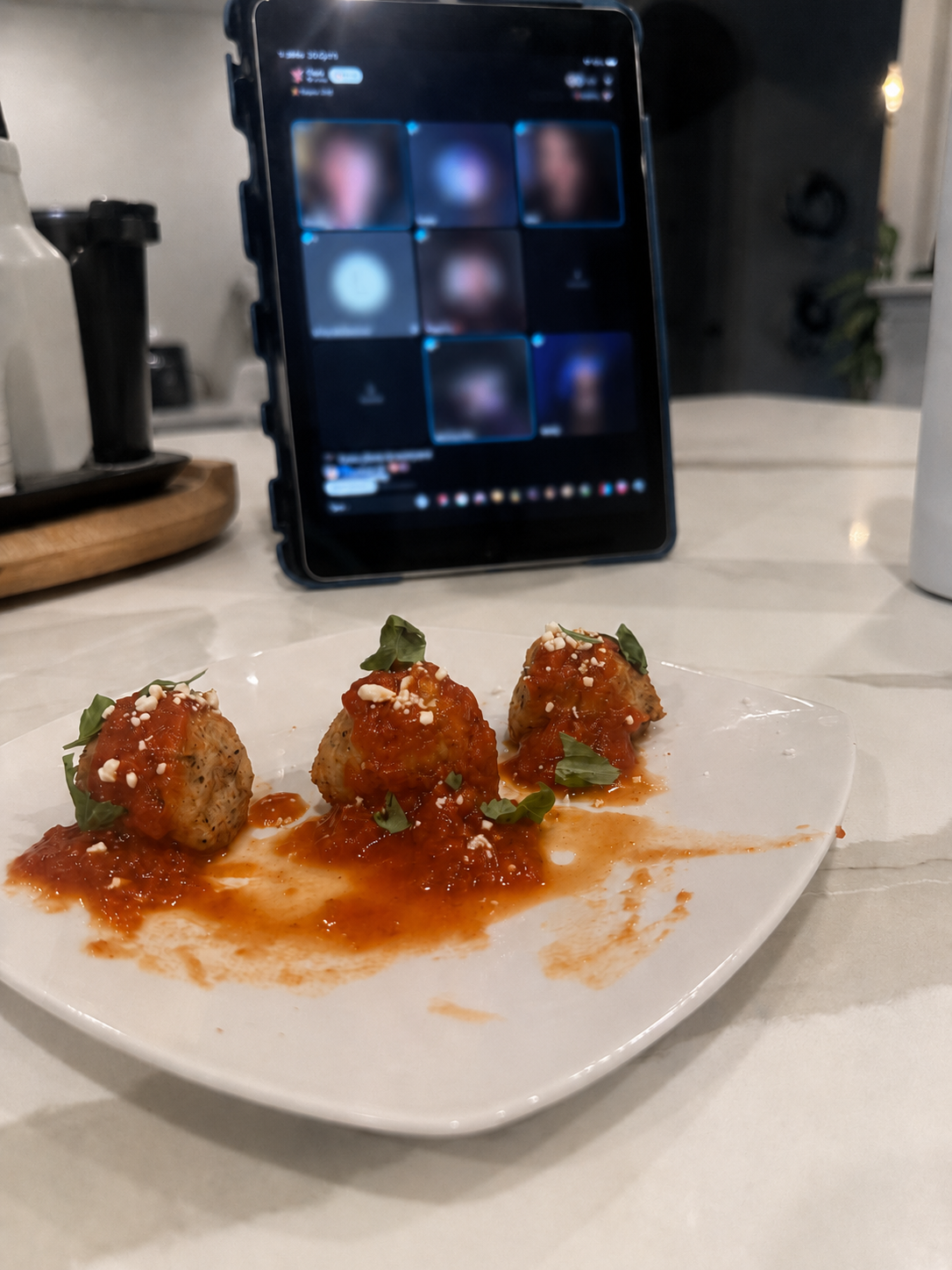
An easy go to. Freezer to plate in minutes- even while on TikTok LIVE with friends
Ground Poultry, Greek Yogurt & Swiss Cheese (Sarcopenia Defense): Cirrhosis rapidly depletes muscle mass, a clinical condition known as sarcopenia. Combining lean poultry with Greek yogurt and Swiss cheese maximizes your protein intake per bite using clean, easily digestible proteins that do not place a heavy ammonia burden on the liver like red meats do. According to clinical pearls from the American Association for the Study of Liver Diseases (AASLD), aggressive protein supplementation—aiming for 1.2 to 1.5 g/kg of body weight daily—is a first-line clinical strategy to counter malnutrition, manage frailty, and preserve lean body mass in adult cirrhosis patients.
Fennel Seeds: Fennel contains powerful volatile oils (such as anethole) that naturally stimulate digestion and improve gastrointestinal movement. Clinical literature tracked via PubMed establishes that fennel extracts and trans-Anethole provide strong hepatoprotective and antioxidant defenses for liver cells. This provides vital structural support and targeted comfort against bloating or gas, which frequently manifest when portal hypertension slows down general digestion.
Garlic, Oregano, Basil & Paprika: These sulfur-rich aromatics and herbs stimulate the liver's phase II detoxification pathways. Clinical breakdowns from health platforms like Medical News Today highlight that sulfur-containing foods and garlic help optimize internal cellular defense mechanisms and reduce chronic inflammation. Specifically, these compounds stimulate the body's production of glutathione—the master antioxidant—which actively shields remaining healthy liver cells from severe oxidative stress, lipid peroxidation, and progressive tissue damage.
Italian Parsley: Acting as a natural, gentle diuretic, parsley helps the kidneys safely flush out excess fluids. Medical reviews published in the National Institutes of Health PMC database demonstrate that parsley compounds mechanically inhibit the Na+/K+-ATPase enzyme in the kidneys, decreasing sodium reabsorption to safely increase urine output. This natural process directly assists your daily dietary efforts to control sodium, easing water retention to prevent peripheral edema and the painful accumulation of abdominal fluid (ascites).
