
Portal Hypertension
@diagnosis_cirrhosis 🩸🌊 Portal Hypertension: the complication nobody explains properly 👀 If you have cirrhosis, you’ve probably heard the term a hundred times. Portal hypertension. And everybody says it like you’re supposed to know what it means. But here’s the weird part: Portal hypertension isn’t just one complication. It’s the problem-causing problem. The thing behind a whole bunch of other cirrhosis complications. The supervillain nobody introduces properly 😭 — Most people aren’t lying awake at 2 AM searching: “What is portal hypertension?” They’re searching things like: 👉 Why is my stomach filling with fluid? Why a low sodium diet in cirrhosis? 👉 Why are my platelets low? 👉 Why is my spleen enlarged? 👉 Why did my doctor order an endoscopy? 👉 Why do I need carvedilol? 👉 What causes side effects in cirrhosis? 👉 What made me decompensate? 👉 Why does cirrhosis suddenly affect everything? And portal hypertension is often sitting somewhere in the middle of those answers. — 🫀 Think of your liver like a giant filter. Blood from your stomach, intestines, pancreas, and spleen is constantly trying to flow through it. Normally, blood moves through the liver pretty easily. But cirrhosis creates scar tissue. Scar tissue creates resistance. Think traffic 🚗🚗🚗 The cars keep coming. But suddenly the highway narrows. Traffic backs up. Pressure builds. And once pressure builds, the dominoes start falling. — 💧 Why is my stomach filling with fluid? Portal hypertension is one major reason ascites develops. As pressure rises, fluid can leak out of blood vessels and collect in the abdomen. — 🦵 Why are my legs and feet swelling? Why does low sodium matter? Portal hypertension can contribute to fluid retention throughout the body: 🦵 swollen ankles 🦵 swollen feet 🦵 swollen legs — 📉 Why are my platelets low? Portal hypertension can enlarge the spleen. Doctors call this splenomegaly. As the spleen enlarges, it can trap platelets, which is one reason platelet counts drop in cirrhosis. — 🩸 Why do I need an endoscopy? Because portal hypertension can create varices. Varices are pressure-relief detours that form when blood can’t move through the liver easily. Some form in the esophagus or stomach, where they can bleed. — 💊 Why am I taking carvedilol, propranolol, or nadolol? Beta blockers are often used in cirrhosis not for regular high blood pressure, but to help reduce portal pressure and lower variceal bleeding risk. — 🧠 What does portal hypertension have to do with hepatic encephalopathy? As pressure builds, blood can bypass the liver through collateral vessels. That means toxins may avoid normal liver processing, which can contribute to hepatic encephalopathy. — 😵💫 This is why portal hypertension feels like it’s everywhere. Because it kind of is. It can leave fingerprints on: 💧 ascites 🦵 edema 📉 low platelets 🧽 enlarged spleen 🩸 varices 🧠 hepatic encephalopathy 💊 beta blockers 🏥 endoscopies Suddenly the thing you were told was “just pressure” starts looking a lot more important. — 🧬 Common causes of cirrhosis and portal hypertension include autoimmune hepatitis 🔥 fatty liver disease / MASLD / NAFLD / MASH / NASH 🍩 alcohol-related liver disease 🚫🍷 hepatitis B 🦠 hepatitis C 🦠 PBC 🧬 PSC 🧬 hemochromatosis ⚙️ Wilson’s disease 🪙 alpha-1 antitrypsin deficiency 🧩 drug-induced liver injury 💊 cryptogenic cirrhosis ❓ or other causes. 👩⚕️👨⚕️🩺 Always talk to your doctor or hepatologist about ascites, swelling, low platelets, enlarged spleen, varices, hepatic encephalopathy, beta blockers, endoscopy results, decompensation, or any new symptoms. Because understanding portal hypertension helps explain why so many seemingly unrelated cirrhosis symptoms are actually connected 💚 #symptoms #liverhealth #fattyliver #bloodpressure #lowsodium ♬ Positive Vibes - Various Artist
Jump To:
Whatever it is, the way you tell your story online can make all the difference.
Understanding Portal Hypertension: The Structural Traffic Jam of Advanced Liver Disease
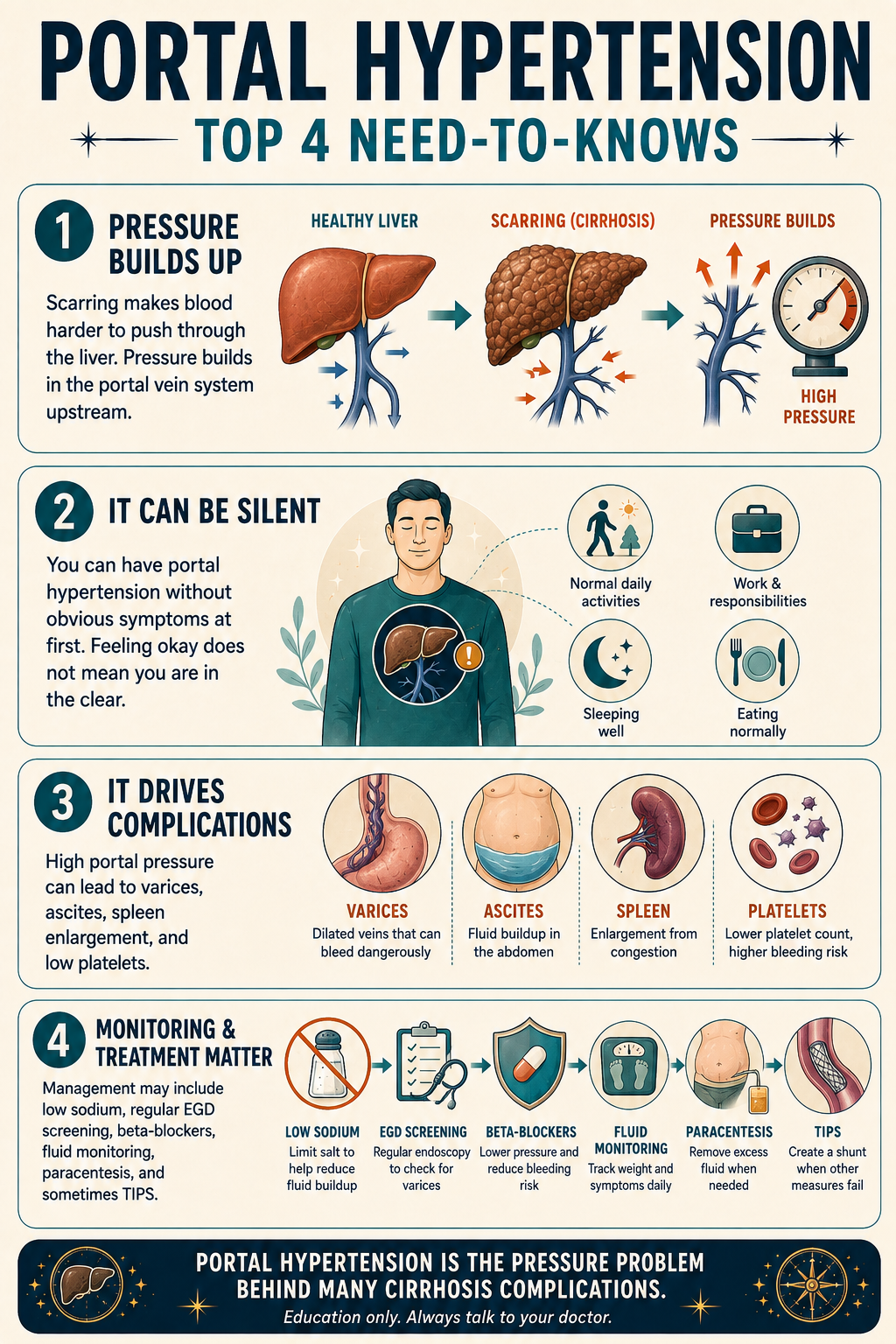
Your liver is designed to be a highly efficient, low-resistance filtration system. When chronic liver disease causes cirrhosis, healthy tissue is replaced by stiff scar tissue, dramatically altering the mechanical architecture of the organ. [1, 2, 3, 4]
Blood from your digestive organs still has to get through the liver to return to the heart, but it is met with immense resistance. This restriction creates a critical backlog of pressure inside the portal vein system—the major vascular highway feeding the liver. [1, 2, 3]
This state is called Portal Hypertension. Think of it like a massive column of traffic trying to force itself down a highway that has narrowed, hardened, and partially closed. As the pressure builds upstream, your body is forced to build physical "detours," rerouting blood into fragile, shallow pathways where it was never meant to go. [1]
Portal hypertension is not a separate disease from cirrhosis; it is the core mechanical driver behind its most severe complications. [1, 2]
What It Is
In a healthy body, the hepatic venous pressure gradient (HVPG)—the pressure difference between the entry and exit veins of the liver—measures \(5 \text{ mm Hg}\) or less. Portal hypertension officially begins when that gradient reaches \(\geq 6 \text{ mm Hg}\). []
When structural scarring is met with compensatory shifts—like the overproduction of nitric oxide causing system-wide blood vessel dilation—the body triggers a hyperdynamic circulatory state. This paradoxically forces even more blood flow back toward the blocked liver, driving pressure higher. [1, 2]
According to the NIH StatPearls Portal Hypertension Monograph, once the pressure gradient reaches a threshold of \(\geq 10 \text{ mm Hg}\) (known as Clinically Significant Portal Hypertension), the risks of major structural failure rise significantly. When it hits \(\geq 12 \text{ mm Hg}\), the body begins to decompensate rapidly. [1]
This internal backup forces blood and fluid into surrounding areas, directly triggering:
Varices: Severely enlarged, fragile veins throughout the digestive tract.
Ascites: Massive fluid accumulations within the abdominal cavity.
Splenomegaly: A physically enlarged spleen caused by engorged blood backup.
Thrombocytopenia: Critically low blood platelet counts. [1, 2, 3, 4, 5, 6, 7]
What It Feels Like
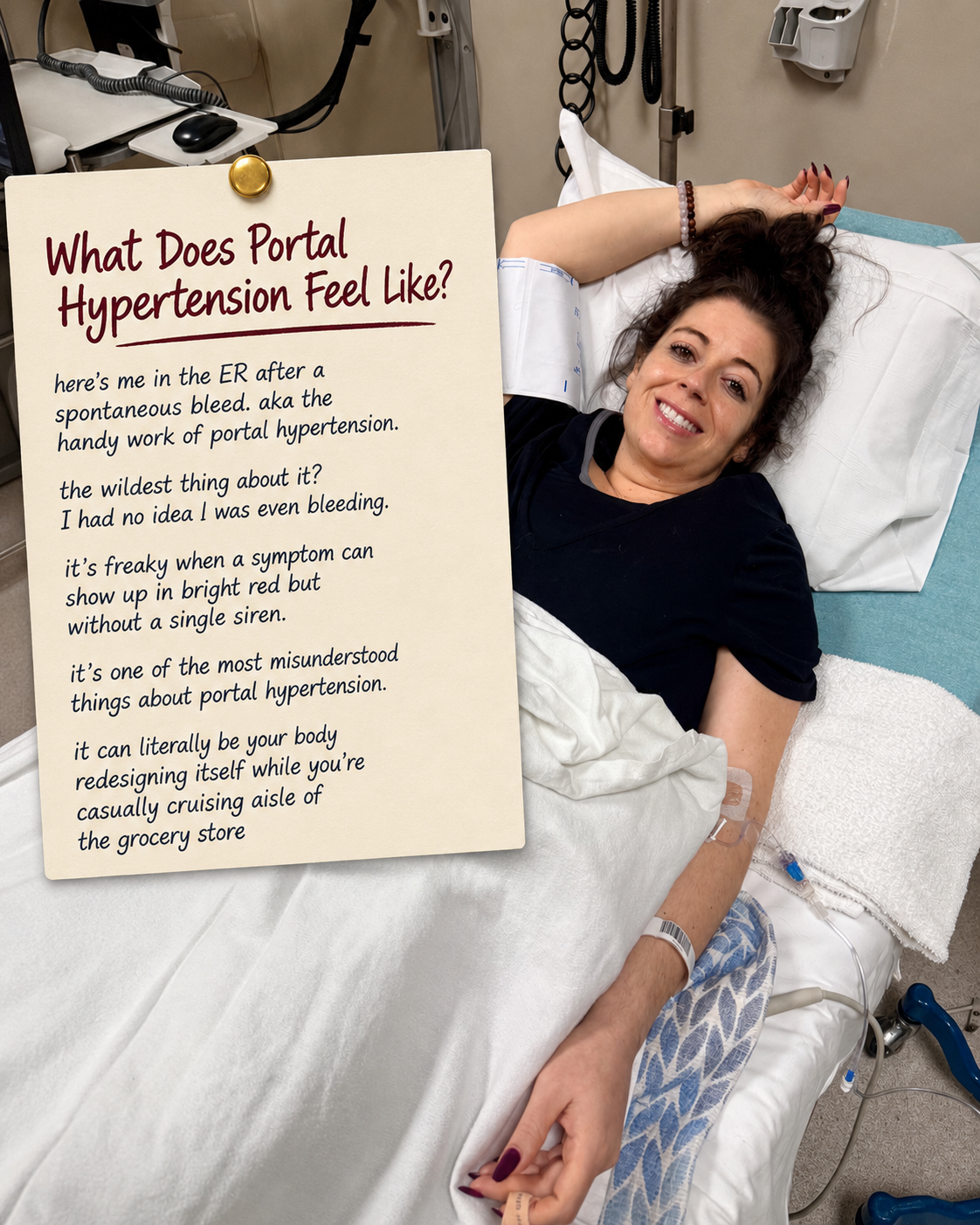
Portal hypertension is notorious for being a silent condition. It can progress quietly for years before a single outward symptom manifests. [1]
When visible signs finally appear, they are usually driven by secondary complications rather than the high blood pressure itself. These signs include: [1]
Abdominal Distension: Progressive abdominal bloating, a sudden feeling of fullness while eating, or deep pressure and heaviness caused by fluid pooling.
Peripheral Edema: Visible swelling in the legs, ankles, and feet.
Shortness of Breath: Severe ascites fluid placing physical upward pressure on the diaphragm, making breathing difficult.
Systemic Fatigue: Chronic exhaustion driven by a hyperdynamic circulatory system and underlying metabolic strain.
Bruising and Spontaneous Bleeding: Caused by a lack of circulating platelets.
Acute Upper GI Bleeding: Sudden vomiting of dark blood or passing black, tarry stools due to ruptured internal vessels. This is a life-threatening medical emergency. [1, 2, 3, 4, 5]
Why It Happens: The Anatomy of a Detour
To understand portal hypertension, look at how the body attempts to save itself from a vascular blockage. When blood can no longer pass through the hardened liver sinusoids, it backs up into the stomach, spleen, and intestines. [1, 2]
To relieve this extreme pressure, the body attempts to bypass the liver entirely by dilating tiny, pre-existing vessels to form collateral circulation. [1]
The primary danger is that these collateral blood vessels—frequently developing in the lower esophagus, the lining of the stomach, and the rectum—are incredibly thin-walled. They are structurally incapable of handling high-pressure arterial flow. As they swell into varices, they become stretched like over-inflated balloons. A sudden spike in internal pressure can cause them to rupture violently. [1, 2, 3]
Simultaneously, this pressure backup alerts the kidneys to retain sodium and water, altering fluid dynamics and forcing plasma to physically leak out of the liver surface and blood vessels directly into the peritoneal cavity (ascites). [1, 2, 3]
Things Nobody Explains
1. Feeling "Fine" Does Not Mean You Are Safe
Because blood vessels do not have pain receptors that alert you to high pressure, varices and splenomegaly develop entirely in the background. Many patients only discover they have portal hypertension during a routine screening endoscopy or when a varicose vein suddenly bleeds. [1, 2, 3]
2. Ascites Is Not Simply "Water Weight"
Abdominal ascites is not cosmetic bloating or simple fluid retention from a salty meal. It is a profound failure of hydrostatic pressure and hormonal volume regulation. It signals that the body can no longer properly distribute fluid between the bloodstream and body tissues. [1, 2, 3]
3. Your Spleen Becomes a Platelet Trap
As portal blood backs up into the splenic vein, the spleen swells with stagnant blood. An enlarged spleen begins to prematurely trap and destroy blood platelets (thrombocytes). This drop in platelets on a routine blood panel is often the very first clinical clue that portal hypertension is developing. [1, 2, 3, 4]
4. The Detours Prevent Detoxification
While the body’s new vessel detours keep blood moving, they skip the liver's filtration system entirely. This means toxins like ammonia bypass processing and go straight to the heart and brain, dramatically accelerating the onset of Hepatic Encephalopathy (HE). [1, 3]
What Helps: Clinical Management
Clinical strategies focus on mechanically lowering the pressure within the portal vein system and aggressively managing fluid dynamics to avoid life-threatening bleeding episodes. [1, 2]
Critical Lifestyle Management
Strict Sodium Restriction: Keeping dietary sodium exceptionally low is required to stop the hormonal cascade that tells the kidneys to retain fluid and worsen ascites.
Aggressive Fluid Tracking: Patients must track daily weights; a sudden spike of 2–3 pounds in 24 hours usually indicates rapid internal fluid accumulation rather than fat gain.
Regular Diagnostic Screenings: Consistent upper endoscopies (EGDs) allow clinicians to view the esophagus and stomach directly to monitor the size and rupture risk of silent varices. [1, 2, 3, 4]
Primary Clinical Treatments
Non-Selective Beta-Blockers (NSBBs): Unlike standard beta-blockers used purely for heart rate, medications like propranolol, nadolol, and carvedilol are used here. By blocking beta-1 receptors, they decrease cardiac output; by blocking beta-2 receptors, they cause targeted tightening of the splanchnic blood vessels. This reduces the sheer volume of blood rushing into the portal system, effectively lowering internal variceal pressure and cutting the relative risk of a fatal bleed by roughly 50%.
Endoscopic Variceal Ligation (Banding): During a routine endoscopy, a specialist can place tiny rubber bands directly around enlarged varices. This cuts off their blood supply, causing them to safely scar over and disappear before they have a chance to rupture.
Therapeutic Paracentesis: For severe, tense ascites that causes pain or shortness of breath, a physician inserts a needle through the abdominal wall under sterile conditions to physically drain excess fluid—often removing multiple liters at a time.
The TIPS Procedure: A Transjugular Intrahepatic Portosystemic Shunt (TIPS) is a procedure where an interventional radiologist threads a stent through the jugular vein down into the liver. This stent creates an artificial, low-resistance tunnel directly through the liver scar tissue, connecting the portal vein to the hepatic vein. This immediately drops portal pressure and resolves refractory ascites. However, because it allows unfiltered blood to bypass liver cells completely, a primary risk of a TIPS procedure is the sudden worsening of hepatic encephalopathy. [1, 2, 3, 4, 5, 6, 7]
Sources
NIH StatPearls:Portal Hypertension Profile – Clinical breakdown of venous pressures, etiology, staging thresholds, and the definition of clinically significant portal hypertension (CSPH). https://www.ncbi.nlm.nih.gov/books/NBK507718/
NIH StatPearls (Book Chapter):Hepatic Cirrhosis Pathophysiology – Technical review explaining intrahepatic vascular resistance, vasoconstriction, nitric oxide/endothelin imbalances, and hyperdynamic splanchnic circulation. https://www.ncbi.nlm.nih.gov/books/NBK482419/
PubMed Central (PMC) Clinical Review:Cirrhotic Ascites Review: Pathophysiology, Diagnosis and Treatment – Detailed assessment of fluid and volume dysregulation, renal sodium retention, and paracentesis techniques. https://pmc.ncbi.nlm.nih.gov/articles/PMC3664283/
PubMed Central (PMC) Therapeutics Journal:Dose Optimization of Non-Selective Beta Blockers in Portal Hypertension – Analysis of beta-1 and beta-2 receptor blockade, splanchnic vasoconstriction, and the prevention of variceal hemorrhage. https://pmc.ncbi.nlm.nih.gov/articles/PMC11844126/ [1]
Medical Disclaimer & General Guidance
The information provided across these resources is for educational and informational purposes only. It is not intended to be a substitute for professional medical advice, diagnosis, or treatment. Advanced liver disease and its associated complications—including hepatic encephalopathy, portal hypertension, ascites, and varices—are complex medical conditions that require precise, individualized clinical management. Always seek the advice of your physician, hepatologist, or other qualified healthcare provider with any questions you may have regarding a medical condition or treatment plan.
For anything of concern, contact your hepatologist and/or dial 911 immediately.
