
Varices & Bleeding
Caregiver Guide to Managing Varices and Bleeding Risks at Home
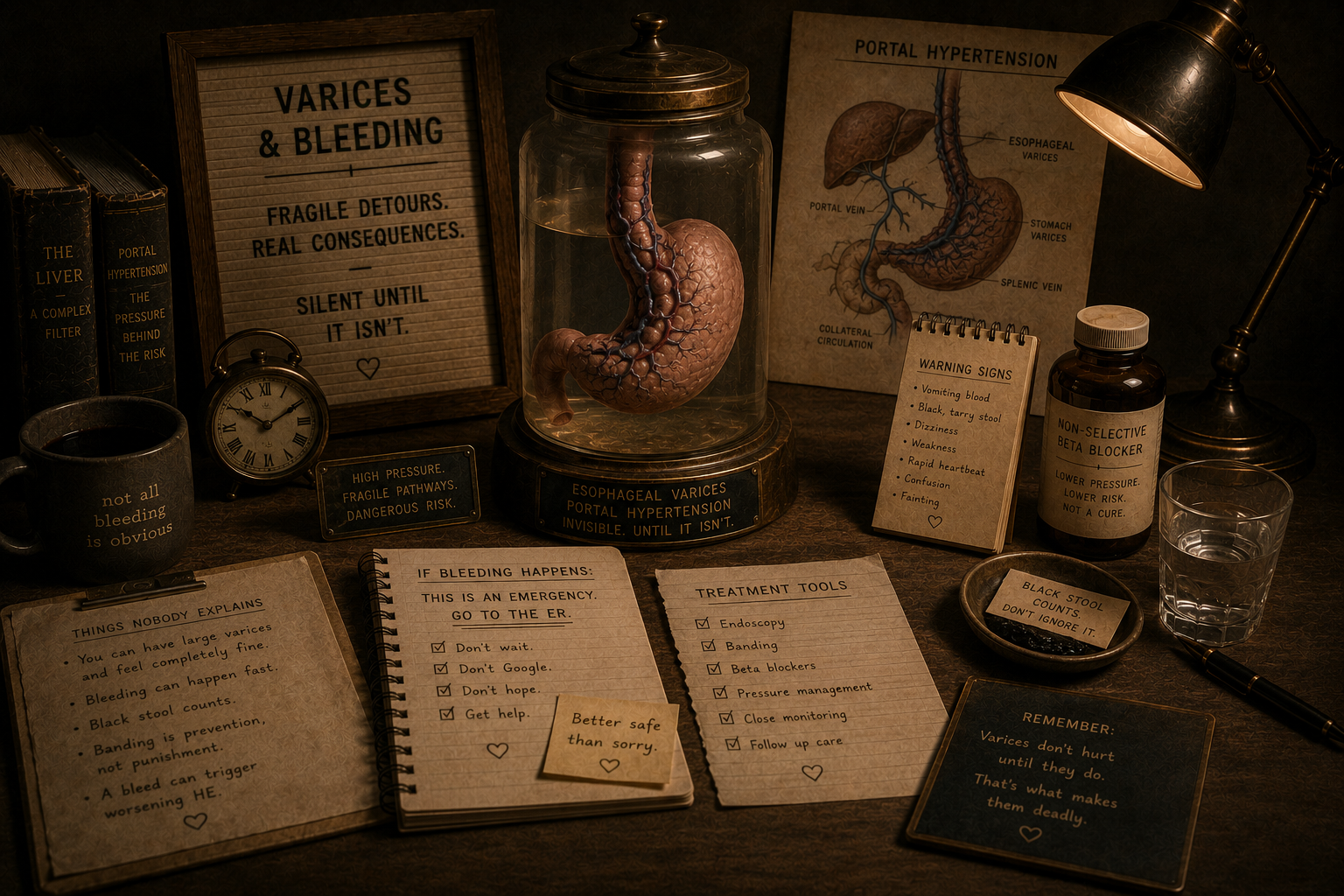
Caring for a loved one with advanced liver cirrhosis means standing guard against varices—swollen, fragile varicose veins that form in the esophagus and stomach due to Portal Hypertension.
Because varices are entirely silent, your loved one can feel completely healthy right up until a vessel tears open. As a caregiver, you must understand that a variceal bleed is a life-threatening, time-sensitive emergency.
Your role is to strictly manage preventive medications, spot early signs of internal bleeding, and know exactly how to react if an acute hemorrhage occurs at home.
The Emergency Protocol: Act Instantly (Call 911)
A ruptured varix causes rapid, heavy internal bleeding. This is not a "wait and see" scenario. Call 911 immediately if your loved one exhibits any of these signs of an active bleed:
Vomiting Blood: This can appear as bright red, active blood or dark, grainy fluid resembling wet coffee grounds.
Black, Tarry Stool: Sticky, foul-smelling, jet-black bowel movements mean blood is leaking into their upper digestive tract.
Fainting, Dizziness, or Unresponsiveness: Sudden, severe drops in blood volume cause their blood pressure to crash, leading to a pale complexion, cold skin, or fainting.
Daily Essential Caregiving Tasks
1. Prioritize Medication and Screening Compliance
What to do: Ensure your loved one never misses a dose of their prescribed non-selective beta-blockers (such as carvedilol, propranolol, or nadolol). Additionally, make sure they attend every scheduled upper endoscopy (EGD) screening.
Why it matters: Beta-blockers are not being used for simple blood pressure here; they act as a physical shield that reduces the volume of blood rushing into the portal vein system, lowering the pressure inside the fragile varices [PMC7545167]. Regular endoscopies allow doctors to band and eliminate large veins before they can rupture [NBK448078].
Action step: Set strict alarms for medication times. If your loved one feels dizzy when standing up, report this to their hepatologist rather than skipping doses; the doctor can adjust the timing or dose safely.
2. Aggressively Prevent Constipation and Straining
What to do: Monitor daily stool frequency and consistency. Ensure they are taking their prescribed lactulose or stool softeners to avoid any physical straining on the toilet.
Why it matters: When a patient constipates and strains to pass a bowel movement, it causes a violent spike in internal abdominal and thoracic pressure (known as the Valsalva maneuver). This sudden surge of pressure can instantly cause a thin, fragile varix to burst.
Action step: Ensure they pass 2 to 3 soft stools every day. If they are constipated, do not let them strain; contact their medical team immediately to adjust their laxative schedule.
3. Monitor for Hidden Signs of Slow Bleeding
What to do: Regularly check for signs of a slow, hidden "trickle" bleed, which includes tracking energy levels, skin color, and changes in stool color.
Why it matters: Not all variceal bleeds present as explosive vomiting. Sometimes, a varix develops a microscopic tear that slowly leaks blood into the digestive system, causing progressive, severe anemia and structural decline.
Action step: Look for unusual paleness inside their lower eyelids, cold fingertips, a resting heart rate that is higher than normal, or a sudden, unexplained drop in their cognitive clarity (HE).
4. Watch for Post-Bleed Mental Confusion (HE)
What to do: If your loved one experiences a minor or managed bleeding episode, monitor their mental status with extreme vigilance over the following 48 hours.
Why it matters: When blood pools in the stomach and intestines, the body digests it as an enormous protein meal. Gut bacteria break down this blood, creating a massive spike in toxic ammonia that enters the bloodstream and directly triggers severe Hepatic Encephalopathy (HE).
Action step: Watch for extreme sleepiness, a sudden inability to track conversations, or a flapping tremor in their hands (asterixis). A gastrointestinal bleed and an HE flare almost always occur together.
Caregiver Sources
PubMed Central (PMC) Therapeutics Review:Management of Acute Variceal Bleeding – Essential medical breakdown detailing emergency hospital timelines, vasoactive infusions, and caregiver warning signs. nih.gov
NIH StatPearls:Esophageal Varices Profile – Clinical blueprint outlining the mechanics of endoscopic variceal ligation (banding), size categorization, and rupture metrics. nih.gov
PubMed Central (PMC) Nursing Guide:Nursing Care of Patients With Cirrhosis – Practical home management strategies covering pressure control, preventing bathroom straining, tracking slow bleeds, and home safety setups. nih.gov
Medical Disclaimer & General Guidance
The information provided across these resources is for educational and informational purposes only. It is not intended to be a substitute for professional medical advice, diagnosis, or treatment. Advanced liver disease and its associated complications are complex medical conditions that require precise, individualized clinical management. Always seek the advice of your physician, hepatologist, or other qualified healthcare provider with any questions you may have regarding a medical condition or treatment plan.
For anything of concern, contact your hepatologist and/or dial 911 immediately.
