
Calcium
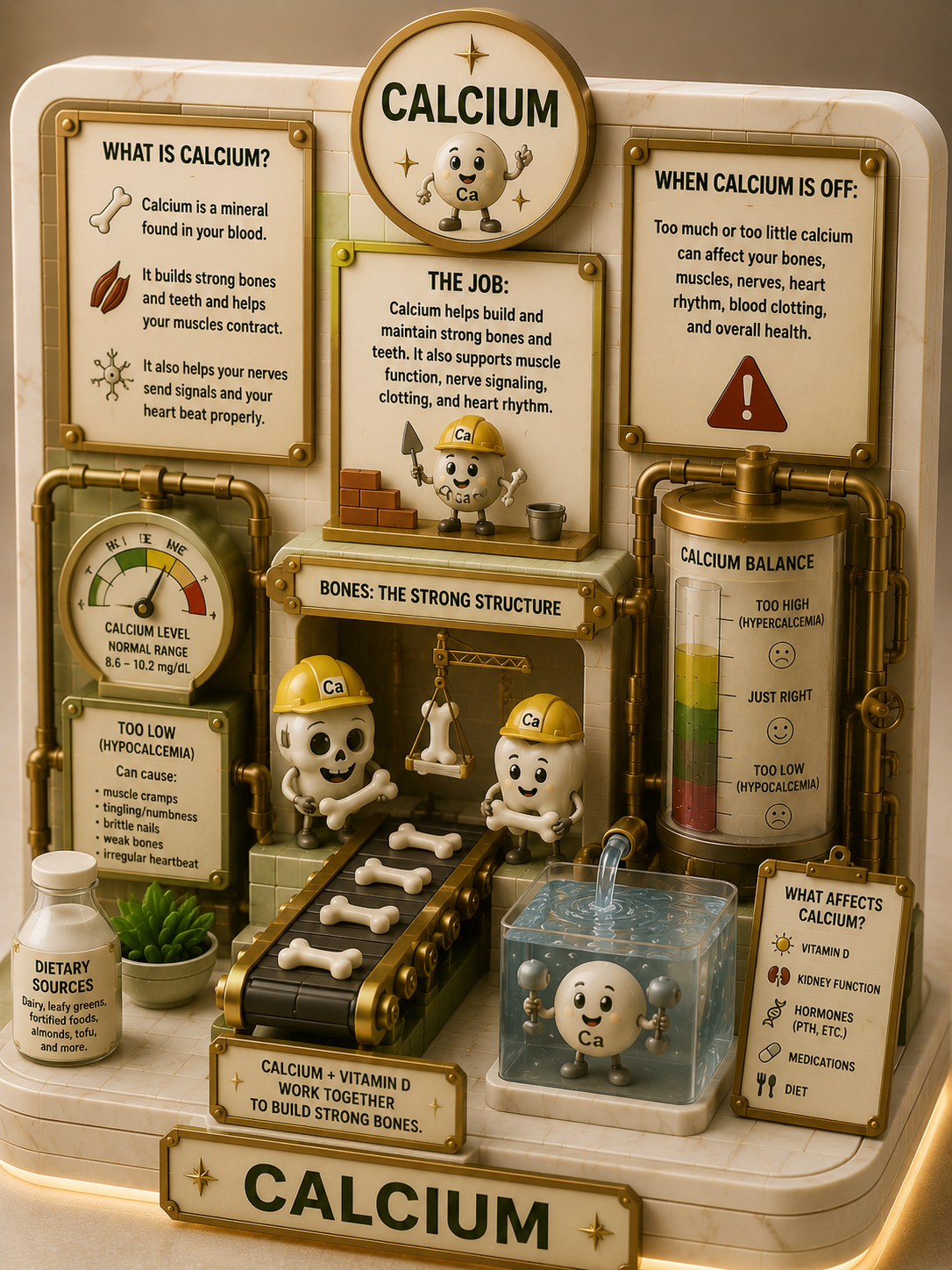
@diagnosis_cirrhosis 🧪 Calcium is WAY more complicated than people think 👀🫀🫘 People see calcium on their CMP or kidney bloodwork and think: 🦴 “bones.” Meanwhile your body is using calcium for: ⚡ nerve signaling 💪 muscle contraction 🫀 heart rhythm 🧠 electrical stability This is not a casual mineral 😭 — 🧪 why is calcium on a CMP or kidney bloodwork? Because calcium helps doctors understand: - electrolyte balance - kidney function 🫘 - nutrition - hormone regulation - liver function 🫀 - bone metabolism - overall metabolic stability The kidneys are heavily involved in calcium regulation. They help decide: 👉 how much calcium stays 👉 how much leaves in urine 👉 and help activate vitamin D ☀️ So when kidney function changes… 👉 calcium can change too 👀 — 🫀 in cirrhosis, calcium gets complicated FAST People with cirrhosis are often dealing with: ☀️ vitamin D problems 🫘 kidney dysfunction 🧪 low magnesium 🍽️ malnutrition 🫀 low albumin And ALL of those can affect calcium regulation. — 🧪 wait… what does albumin have to do with calcium? A lot of calcium travels attached to albumin. So when albumin drops… 👉 total calcium can LOOK low too. Even if active calcium is still normal 👀 That’s why doctors sometimes check: 🧪 corrected calcium or: 🧪 ionized calcium Because context matters. — ⚡ LOW calcium can cause: - tingling - numbness - twitching - muscle cramps - weakness - spasms - abnormal heart rhythms ⚠️ HIGH calcium can also be dangerous and cause: - constipation - dehydration - confusion - fatigue - kidney stones - heart rhythm problems — 🥛 foods that can support calcium intake: - Greek yogurt - mozzarella - leafy greens 🥬 - almonds 🌰 - tofu - tahini - salmon 🐟 …and yes 😭 low sodium canned salmon WITH the bones is actually high in calcium. Which feels fake, honestly. — 🧬 causes of cirrhosis autoimmune hepatitis 🔥 fatty liver disease (MASLD / NAFLD / MASH / NASH) 🍩 alcohol-related liver disease 🚫🍷 hepatitis B 🦠 hepatitis C 🦠 primary biliary cholangitis (PBC) 🧬 primary sclerosing cholangitis (PSC) 🧬 hemochromatosis ⚙️ Wilson’s disease 🪙 alpha-1 antitrypsin deficiency 🧩 drug-induced liver injury 💊 cryptogenic cirrhosis ❓ or other causes 🫀 — 👩⚕️👨⚕️🩺 always talk to your doctor Especially if you have: - cirrhosis - CKD / kidney disease - muscle cramps - tingling - weakness - abnormal calcium labs - abnormal albumin - vitamin D deficiency - rhythm symptoms Because calcium problems are usually about: 👉 WHY the number moved not just the numbers ✅ 🔎 why is calcium included in bloodwork? 🔎 why is calcium on a CMP? 🔎 why do doctors check calcium levels? 🔎 what does calcium do in the body? 🔎 what does calcium do besides bones? 🔎 why does calcium affect the heart? 🔎 can low calcium cause tingling or cramps? 🔎 can low calcium cause neuropathy symptoms? 🔎 what causes low calcium in cirrhosis? 🔎 why is calcium low in liver disease? 🔎 what does albumin have to do with calcium? 🔎 why does low albumin make calcium look low? 🔎 what is corrected calcium? 🔎 what is ionized calcium? 🔎 can kidney disease affect calcium levels? 🔎 why do kidneys regulate calcium? 🔎 can cirrhosis cause abnormal calcium? 🔎 symptoms of low calcium 🔎 symptoms of high calcium 🔎 best calcium foods for cirrhosis 🔎 is canned salmon high in calcium? 🔎 why does canned salmon have calcium? 🔎 foods high in calcium for liver disease 🔎 calcium and liver disease 🔎 calcium and kidney disease 🔎 electrolyte abnormalities in cirrhosis 🫀🫘🧪 #phlebotomy #nursing #bloodwork #liverhealth #calcium ♬ original sound - diagnosis cirrhosis
Top 4 Calcium Need to Knows
Important Medical Disclaimer: I am Angie, a cirrhosis patient sharing my personal lifestyle, nutrition, and mindset journey. I am a data aggregator and community builder, not a licensed medical professional, doctor, or dietitian. Content on diagnosiscirrhosis.com is based solely on my personal experience living with advanced liver disease and is intended for informational and educational purposes only. It does not constitute medical advice or a substitute for professional medical care. Always follow the recommendations of your own healthcare team and consult your hepatologist or physician before changing your diet, medication, or lifestyle routine.
My Experience with It
By Angie from @Diagnosis_Cirrhosis on TikTok
Calcium is one of those words that immediately drags you backward into childhood.
The second it showed up on my lab panel, my brain did not go to cirrhosis.
It went to Got Milk? ads.
Tiny cafeteria milk cartons.
Grocery aisles full of yogurt, cheese, and those chalky little supplements people take like they are casually reinforcing the foundation of a suburban split-level.
Calcium felt familiar. Friendly, even.
The bone one.
The strong teeth one.
The “drink your milk” one.
So when I saw it sitting there on my labs next to numbers with much darker energy — bilirubin, INR, creatinine, sodium — calcium did not exactly strike fear into my heart.
It felt almost wholesome. Like one of the few lab values that might show up wearing a cardigan.
And before cirrhosis, I treated it that way. I took calcium supplements at different points without giving it much thought, because calcium had always lived in my mind as basic health infrastructure. Bones. Nutrition. Done.
But cirrhosis has a real talent for taking the simplest words on the page and making them weird.
Calcium was one of those rude little awakenings for me.
Cirrhosis & Calcium
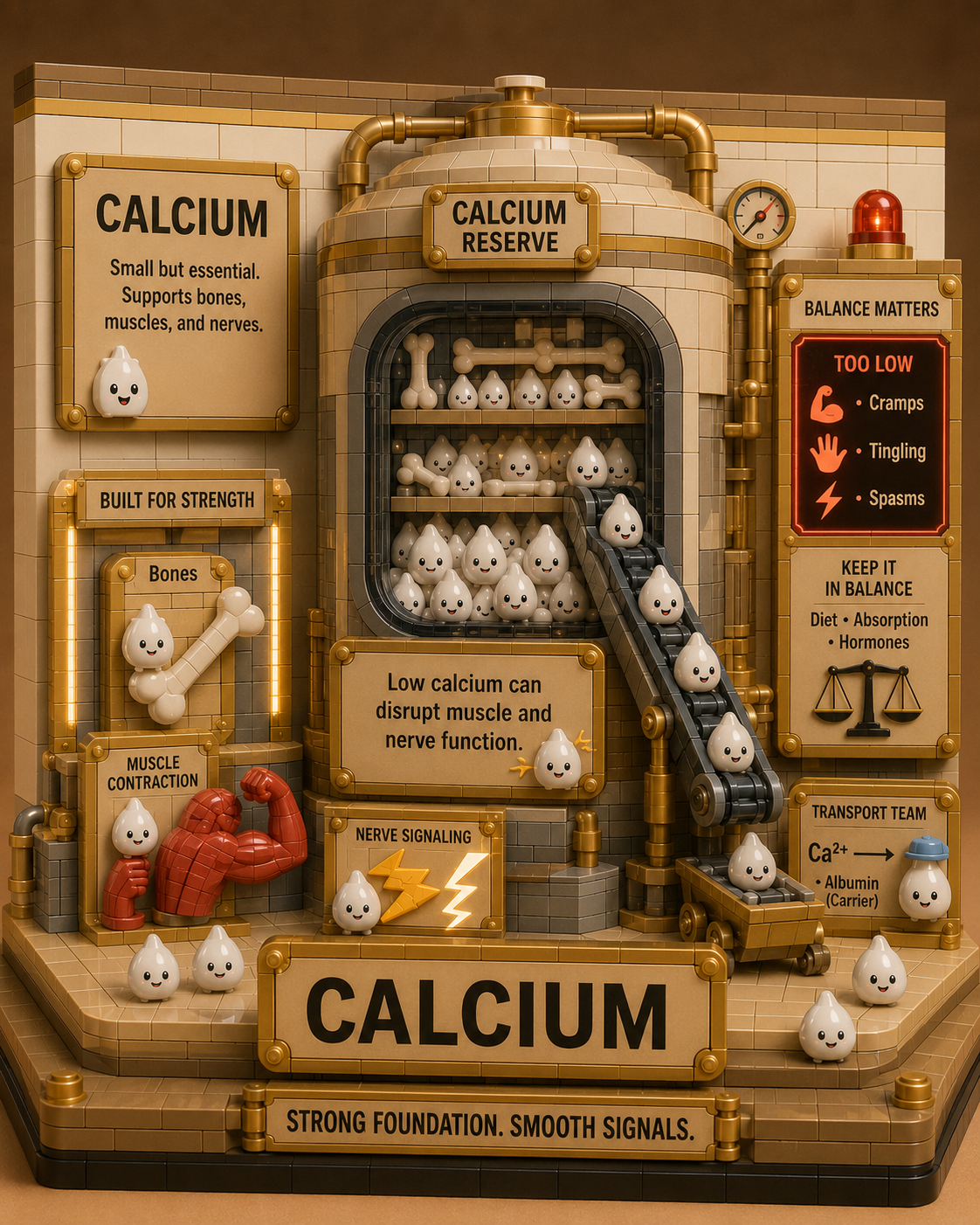
Because calcium is not just “do you have enough bone mineral?” It is part of a much larger conversation involving muscles, nerves, heart rhythm, vitamin D, kidney function, nutrition, albumin, and the way the body keeps minerals balanced in the blood.
And then there is the albumin piece, which was the part that made me stop and stare at the lab like it had personally betrayed me.
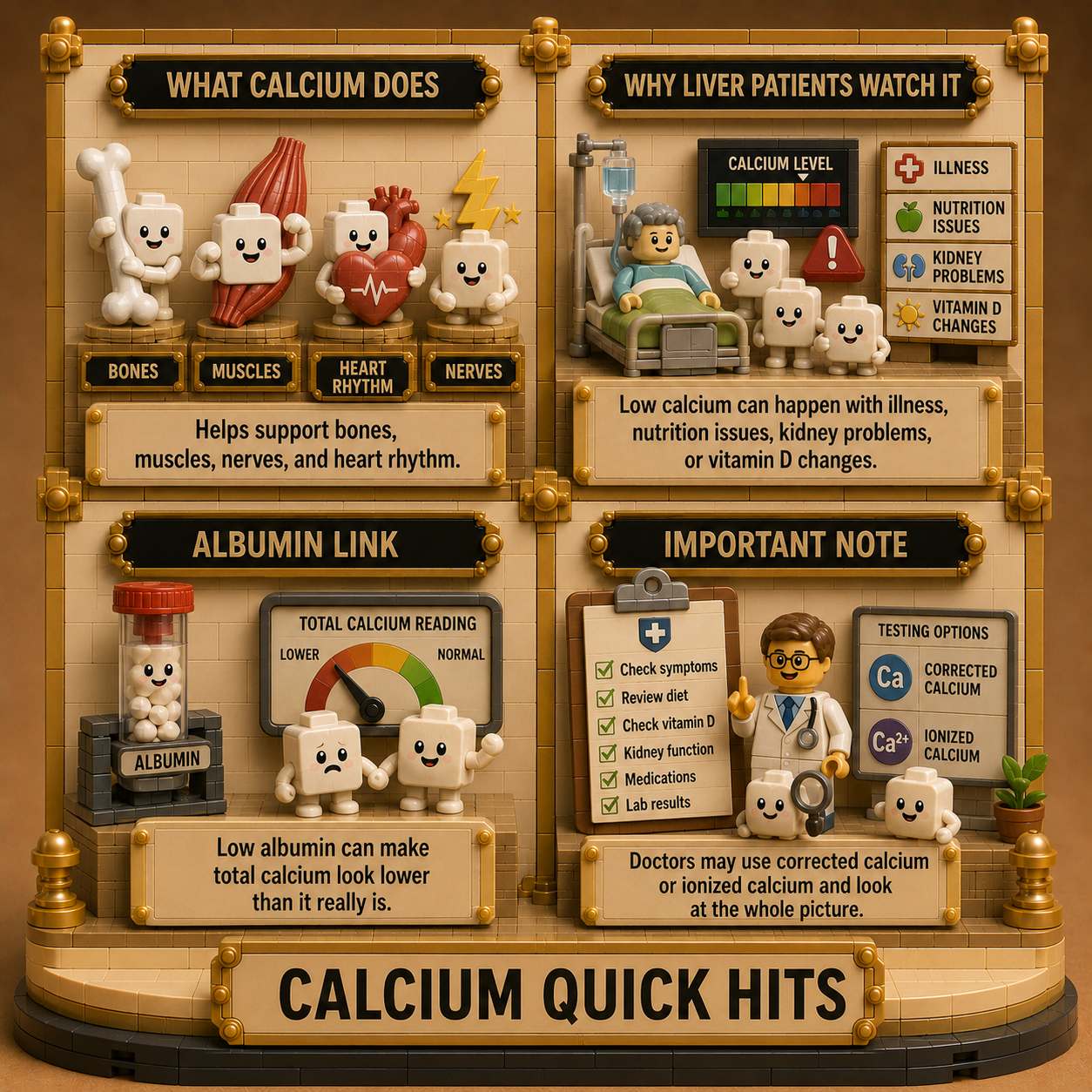
A lot of calcium in the blood is bound to albumin.

So if albumin is low — which can absolutely happen in advanced liver disease — the total calcium number can look low too, even when the more active form of calcium may tell a different story. That is why doctors sometimes look at corrected calcium or ionized calcium instead of treating the total calcium number like the entire plot.
That was the paradigm shift for me. Calcium was not suddenly scary because milk became sinister.
It was scary because the number I thought I understood turned out to be attached to a whole hidden system.
Bones, yes. But also albumin.
Vitamin D.
Kidneys.
Muscles.
Nerves.
Fluid shifts.
Nutrition.
The general electrical and structural integrity of the human body, which apparently does not run on childhood dairy propaganda alone.
So calcium became another example of what cirrhosis keeps teaching me:
The familiar labs are not always the simple ones.
Why Isn't in the MELD ?
While primary electrolytes like sodium are woven directly into the MELD score to track immediate mortality risks, calcium is deliberately excluded from the allocation math. Even though severe bone density loss and shifting mineral profiles are common in advanced liver disease, using serum calcium to calculate a patient’s transplant priority status would create major clinical distortions [2, 5].
The Protein Illusion: What Is Misrepresented?
The primary reason calcium is left out of the MELD formula is that a standard total calcium reading is heavily dependent on a liver-produced protein called albumin [2, 5].
The Falsely Plunging Number: Nearly half of the calcium in your blood rides on the back of albumin [2, 5]. When a cirrhotic liver stops producing enough albumin, total serum calcium levels artificially plummet on paper, even if the active, usable calcium in the body is perfectly healthy [2].
Skewing the Priority Scale: If total calcium were factored into the MELD score, patients with low protein levels would receive a deceptively high priority rank based on a "fake" deficiency, completely undermining the standardized equity of the national transplant list [2].
Long-Term Fragility vs. Short-Term Survival
MELD scores are strictly designed to predict a patient's short-term mortality risk over a 90-day window [5].
A Chronic Slow Burn: Calcium imbalances and conditions like hepatic osteodystrophy represent chronic, slow-burning structural degradation [4]. While a drop in sodium signals an immediate, life-threatening neurological and fluid crisis, a drop in calcium tracking tells doctors about long-term bone vulnerability rather than imminent, acute organ failure [4, 5].
The Treatment Bias: Because low calcium is a condition that can be rapidly manipulated or masked by standard intravenous infusions or heavy supplement regimens, it cannot be used as an independent, unalterable variable to judge who receives a organ first [1, 5].
Key Takeaways:
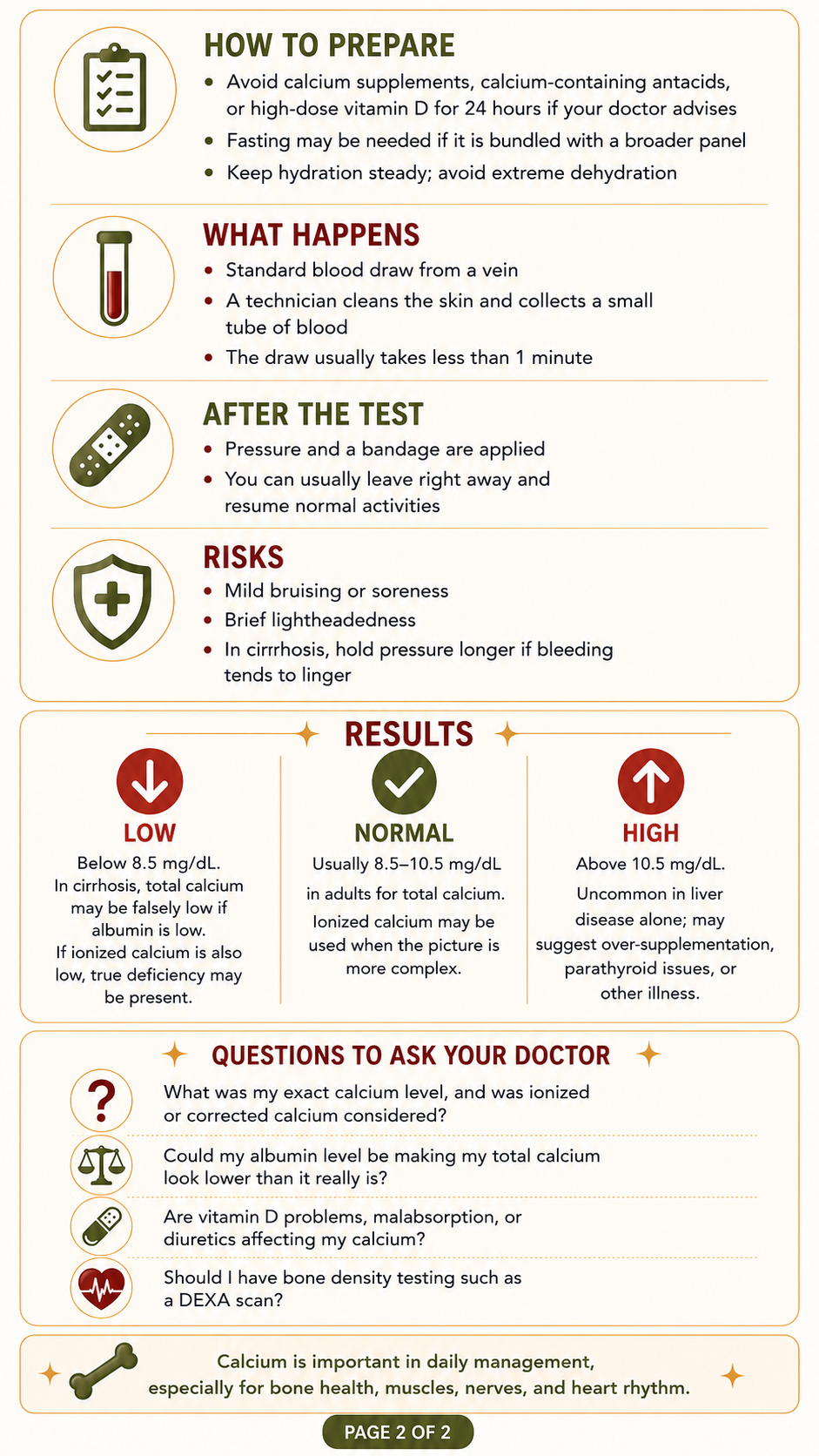
What the Procedure Is
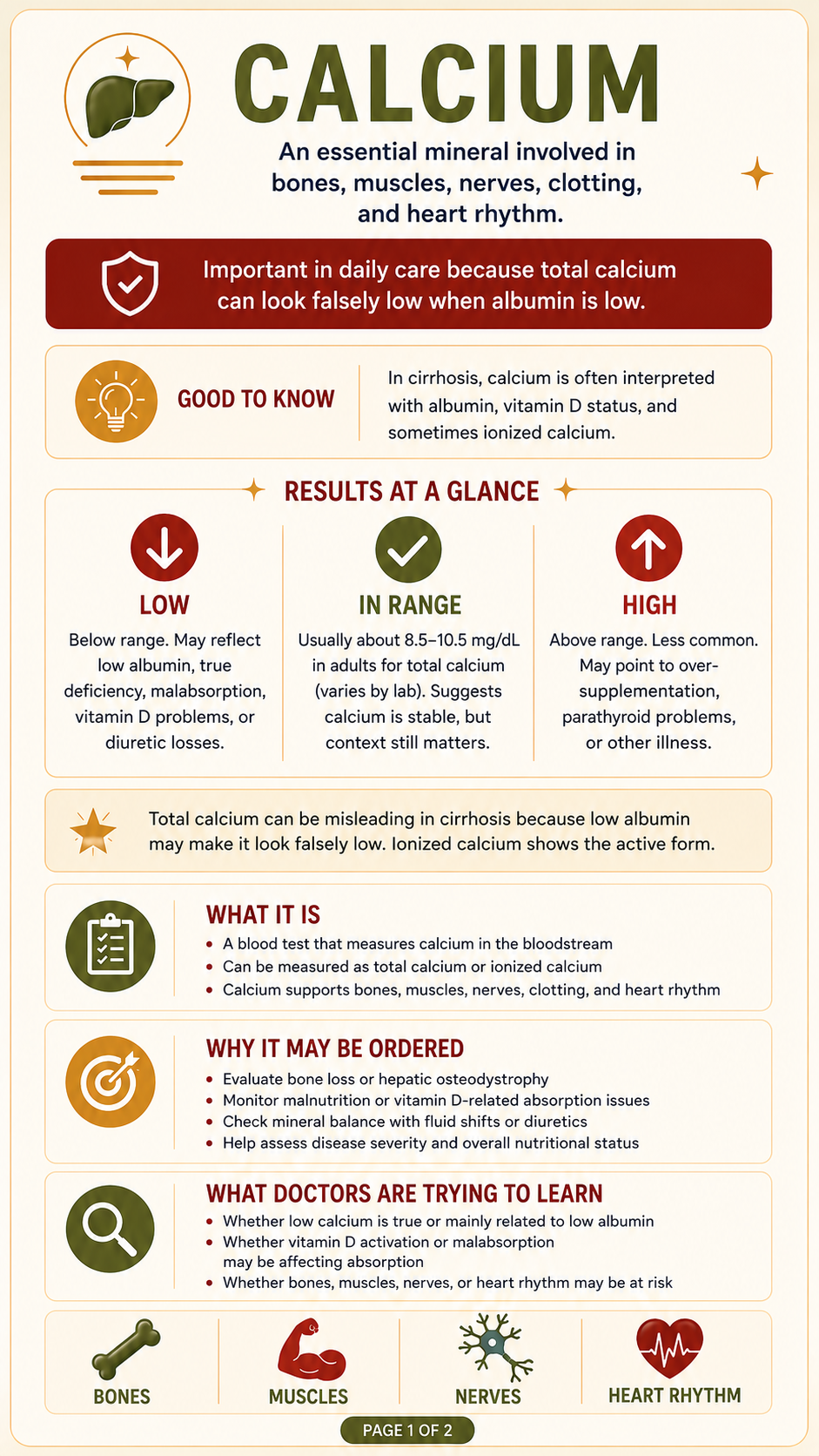
The serum calcium test is a routine venipuncture blood draw used to evaluate the total or elemental level of calcium circulating within your vascular system [1, 4]. In a standard clinical laboratory, calcium is measured in two distinct ways:
Total Serum Calcium: This measures both the “free” calcium and the calcium bound to transport proteins in your blood [1].
Ionized Calcium: This isolates the active, unbound form of calcium [1]. This represents the gold standard metric for patients with complex chronic illnesses because it measures the exact amount of the mineral actively performing cellular work [1].
Why This Procedure May Be Recommended
Hepatologists and gastroenterologists closely track calcium levels in cirrhosis patients because the liver serves as an invisible anchor for mineral metabolism [4, 5]. A doctor will prioritize tracking this marker to:
Evaluate Bone Density Loss: Cirrhosis dramatically accelerates hepatic osteodystrophy, a severe blending of osteoporosis and osteopenia, making bone fragility a major risk [4].
Monitor Malnutrition Status: Advanced liver disease restricts the body’s capability to process macronutrients, and plummeting calcium levels act as a silent alarm for worsening systemic wasting [3, 4].
Assess Changes in Circulatory Volume: Fluctuations in fluid retention, such as the accumulation of abdominal ascites, profoundly skew how minerals distribute across body tissues [5].
Forecast Disease Progression: Clinically low calcium tracking historically correlates with higher model for end-stage liver disease, or MELD, scores and advanced Child-Pugh classifications [2].
What Doctors Are Trying to Learn
When analyzing your metabolic panel, a physician is looking past your skeletal system to evaluate how well your organs are communicating [1, 5]. Primarily, they are investigating the Albumin Relationship [2, 5]. Nearly half of all calcium in your blood rides on the back of a liver-produced protein called albumin [2, 5]. When cirrhosis destroys the liver’s ability to synthesize albumin, total calcium readings plummet artificially [2, 5].
Doctors must calculate a “corrected calcium” formula to figure out if you have a true, dangerous mineral deficiency, or if your labs are simply reflecting a drop in your liver’s protein production [2]. Additionally, they watch this marker to track systemic vitamin D activation, as a failing liver can no longer process vitamin D into its usable form to absorb calcium from your food [3, 4].
How to Prepare
Preparing for a calcium test is straightforward, but standard compliance rules apply to guarantee an accurate diagnostic baseline [1]:
Ditch the Supplements: Do not take calcium supplements, antacids containing calcium, or high-dose vitamin D capsules for at least 24 hours before your blood draw [1].
Confirm Fasting Orders: While a standalone calcium draw requires no fasting, it is routinely wrapped into a Comprehensive Metabolic Panel, or CMP, which mandates 8 to 12 hours of zero caloric intake [1].
Hydrate Consistently: Severe dehydration concentrates your blood volume, artificially inflating your protein and mineral metrics to mask underlying deficiencies [1].
What Happens During & After It
The collection follows standard, low-risk laboratory venipuncture protocols [4]. A technician applies a tourniquet, sanitizes a vein location, usually at the bend of the elbow, and draws a single vial of blood over roughly 30 to 45 seconds [4].
Following the draw, pressure is applied to the puncture site with a cotton gauze pad to manage bleeding before sealing it with a standard adhesive bandage [4]. You can immediately return to your normal schedule, drive yourself away from the lab, and eat or drink right away [4].
Risks and What to Watch For
The physical risks associated with a basic blood panel are minimal and transient [4]. You may encounter light bruising, localized tenderness, or a brief wave of lightheadedness during the puncture [4].
However, patients with advanced cirrhosis should explicitly watch for prolonged bleeding or hematoma formation at the puncture site [5]. Because a cirrhotic liver struggles to manufacture essential blood-clotting proteins, even a routine needle poke requires firm, extended manual pressure to heal cleanly [5].
What Results May Mean
Standard reference ranges for total serum calcium hover strictly between 8.5 and 10.5 mg/dL [1]. In the framework of advanced cirrhosis, results typically split into distinct clinical categories:
Pseudohypocalcemia — Falsely Low: Total calcium reads under 8.5 mg/dL, but your ionized calcium is completely healthy [1, 2]. This confirms that your body has plenty of active calcium, but your liver’s low albumin output is distorting the main lab number [2, 5].
True Hypocalcemia — True Low: Both total and ionized calcium levels are low [1, 2]. This highlights structural malabsorption, severe vitamin D activation failure, or unintended side effects from heavy loop diuretic use, like furosemide, prescribed to manage fluid retention [3, 5].
Hypercalcemia — Rare High: Readings scaling past 10.5 mg/dL are uncommon in liver disease [1]. If present, it can stem from heavy over-supplementation, underlying parathyroid issues, or systemic inflammatory events brought on by an acute decompensation episode [1, 2].
Questions to Ask Your Doctor
To advocate for yourself effectively at your next clinical follow-up, consider bringing these targeted questions to your medical team:
What was my exact ionized calcium level, and did you have to run a corrected calculation against my current albumin numbers [1, 2]?
Given my cirrhosis baseline, do my calcium numbers indicate that I am developing hepatic osteodystrophy or bone loss [4]?
Are the diuretics I am taking to manage fluid or ascites causing my body to flush out too much calcium through my urine [5]?
Is my liver still successfully activating Vitamin D, or should we evaluate prescription-strength options to help my gut absorb nutrients [3, 4]?
Should we schedule a routine DEXA bone density scan to establish a clear baseline for my skeletal strength [4]?
Sources
[1] UCLA Health / Endocrine Surgery: Clinical Reference Standards for Ionized and Serum Calcium Dynamics and Fasting Guidelines.
[2] The Professional Medical Journal: Analyzing Hypocalcemia Prevalences, Albumin Relationships, and Priority Scoring Disruptions Across Decompensated Cirrhosis.
[3] ScienceDirect / Textbook of Clinical Biochemistry: Mechanisms of Vitamin D Hydroxylation Failures and Nutrient Malabsorption in Chronic Hepatology.
[4] National Institutes of Health (NIH) / PMC— George, J. A., & Tsiaousis, G. (2025). Hepatic Osteodystrophy: An Underrecognized Metabolic Bone Disease in Advanced Liver Failure. World Journal of Gastroenterology.
[5] National Institutes of Health (NIH) / PMC] — Liamis, G., & Filippatos, T. D. (2015). Hyponatremia and Electrolyte Disorders in Decompensated Liver Disease and Short-Term Mortality Risk. World Journal of Gastroenterology.
