
Cinematically Sick - Cirrhosis, Hair Loss & Curls?
Important Medical Disclaimer: I am Angie, a cirrhosis patient sharing my personal lifestyle, nutrition, and mindset journey. I am a data aggregator and community builder, not a licensed medical professional, doctor, or dietitian. Content on diagnosiscirrhosis.com is based solely on my personal experience living with advanced liver disease and is intended for informational and educational purposes only. It does not constitute medical advice or a substitute for professional medical care. Always follow the recommendations of your own healthcare team and consult your hepatologist or physician before changing your diet, medication, or lifestyle routine.
🚨👀 Watch: The part of liver disease nobody wants to talk about: the fragile baseline and structural strain 💇♀️💔
(POV: Realizing hair loss isn't a cosmetic failure—it's your body's survival economy making a calculated decision 😵💫⏳)
@diagnosis_cirrhosis 💇♀️🌀 Why is my hair falling out? Why is my hair suddenly curly? 👀 If you’ve ever found yourself standing in front of the mirror wondering: 🔎 why is my hair falling out all of a sudden? 🔎 can cirrhosis cause hair loss? 🔎 can liver disease make your hair thin? 🔎 why is my hair suddenly curly? 🔎 can chronic illness change hair texture? 🔎 can autoimmune hepatitis cause hair loss? 🔎 can fatty liver disease affect hair? 🔎 can fibrosis cause hair loss? 🔎 why is my hair growing back differently? 🔎 is this from my liver disease or my medications? You’re definitely not alone. Because one of the strangest things about cirrhosis, fibrosis, fatty liver disease, autoimmune hepatitis, and chronic illness is realizing your hair apparently has opinions too 💇♀️🫠 — 💇♀️ Why does hair fall out with cirrhosis? Your body is constantly making decisions about where to spend its energy ⚡ When you’re healthy, there is usually enough to go around. But when you’re dealing with cirrhosis, advanced fibrosis, chronic inflammation, malnutrition, infections, medications, autoimmune disease, or liver failure… The body starts prioritizing survival. Hair is not high on the priority list 😭 Your body is focused on supporting: 🧠 brain function ❤️ heart function 🫁 breathing 🫘 kidneys 🩸 circulation 💪 muscle 🫀 keeping you alive Not growing luxurious hair. So when resources become limited: 📉 hair growth slows 📉 more hairs enter the shedding phase 📉 hair becomes thinner 📉 hair falls out faster than it grows back Hair loss is often your body saying: 👉 “We have bigger problems right now.” 🍽️ Nutrition matters Hair growth requires: 💪 protein 🍽️ calories 🧪 vitamins ⚖️ hormones 🩸 healthy circulation People with cirrhosis are often dealing with: 🍽️ poor appetite 😵 early fullness 💧 ascites 💪 muscle wasting / sarcopenia 🧪 nutrient deficiencies 🤢 nausea ⚡ fatigue Which can all affect hair growth. So when people start searching: 🔎 is this a vitamin deficiency? 🔎 is this protein deficiency? 🔎 is this zinc deficiency? 🔎 can low protein cause hair loss? The answer is sometimes yes. — 🧬 Autoimmune hepatitis, medications, and hair loss If you have autoimmune hepatitis, you’ve probably searched: 🔎 can autoimmune hepatitis cause hair loss? 🔎 can immunosuppressants cause hair loss? 🔎 is CellCept causing my hair loss? 🔎 is prednisone causing my hair loss? Disease, medication, nutritional or all of the above! 🌀 Why is my hair suddenly curly? This is one of the weirdest searches in the liver community. People ask: 🔎 why did my straight hair become curly? 🔎 why is my hair texture changing? 🔎 can illness change hair texture? 🔎 can cirrhosis make hair curly? And surprisingly, yes. Hair texture changes can happen after: 🔥 autoimmune disease 🦠 illness 💊 medications ⚖️ hormone changes 🧬 major physiological stress When hair grows back after shedding, it can sometimes come back: 🌀 curlier 〰️ wavier 📏 different texture 🎨 different color 📉 thinner Because the body growing it back is not necessarily the same body that grew it the first time. 😵💫 The chronic illness hair spiral Hair starts falling out.Then the searches begin: 🔎 is my liver getting worse? 🔎 is this my medication? 🔎 will my hair grow back? 🔎 why is my hair changing? 🔎 can liver failure cause hair loss? 🔎 can cirrhosis make your hair thin? And honestly, there usually isn’t one perfect answer. 🧬 Common causes of cirrhosis include: autoimmune hepatitis 🔥 fatty liver disease / MASLD / NAFLD / MASH / NASH 🍩 alcohol-related liver disease 🚫🍷 hepatitis B 🦠 hepatitis C 🦠 PBC 🧬 PSC 🧬 hemochromatosis ⚙️ Wilson’s disease 🪙 alpha-1 antitrypsin deficiency 🧩 drug-induced liver injury 💊 cryptogenic cirrhosis ❓ or other causes 👩⚕️👨⚕️🩺 Always talk to your doctor, hepatologist, dermatologist, or another qualified healthcare professional about: 💇♀️ significant hair loss 🌀 sudden texture changes 🧪 possible vitamin deficiencies 🍽️ nutrition concerns 💊 medication side effects ⚖️ hormone changes #hairloss #curlyhair #symptoms #liverhealth #autoimmunedisease ♬ Best Seller - Ewin music
Video Transcript & Key Points From My Caption:
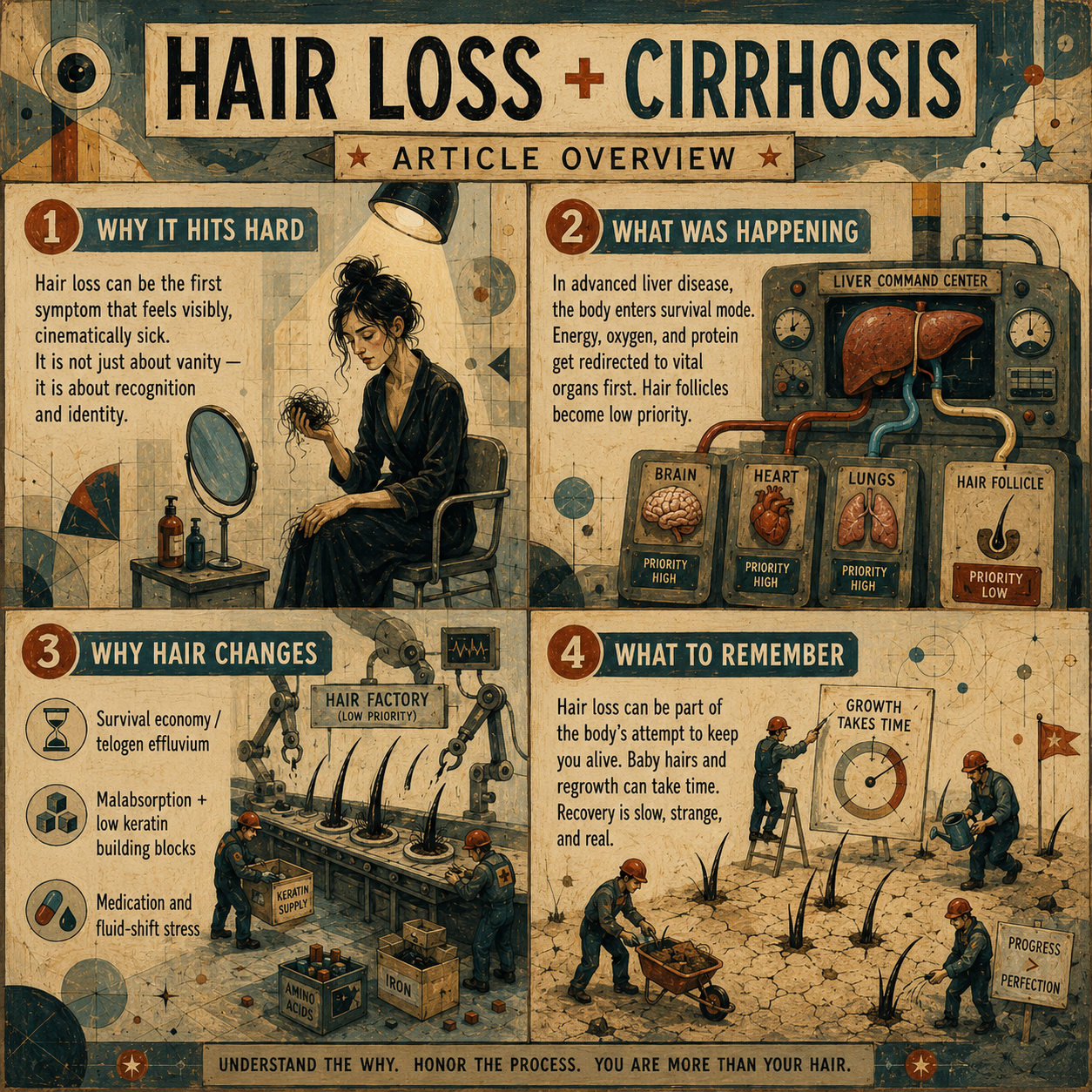
The Cinematic Symptom: Hair loss is the moment chronic illness shifts from a hidden internal battle to a highly visible, undeniable physical reality.
The Emergency Diversion: When the liver is facing advanced failure, the body enters a survival protocol. It systematically diverts its remaining protein, oxygen, and metabolic fuel away from non-essential systems (like hair follicles) to keep your core organs alive.
The Medication Reassignment: Many standard prescriptions required to manage advanced liver disease can independently alter cell replication cycles, contributing directly to structural strain and hair thinning without patients ever realizing it.
The Hepatic Mrs. Potato Head
by Angie from @Diagnosis_Cirrhosis on TikTok
Hair Loss Was the First Time I Felt Cinematically Sick
One thing about me is that, believe it or not, I have never been a particularly vain person. Was I in a sorority? Yes. Have I always worn makeup? Also yes. But my hair? Absolutely not. I am, with deep respect to myself, one of the least skilled full heads of hair this side of the Mississippi.
Which makes the hair loss even stranger emotionally. Becauseit was not about being precious with my blowout routine. There was no blowout routine. There was barely a routine at all. But hair still becomes part of your identity, even when your bad hair days are part of your brand. And when mine started falling out, it felt like the disease had finally learned my name.
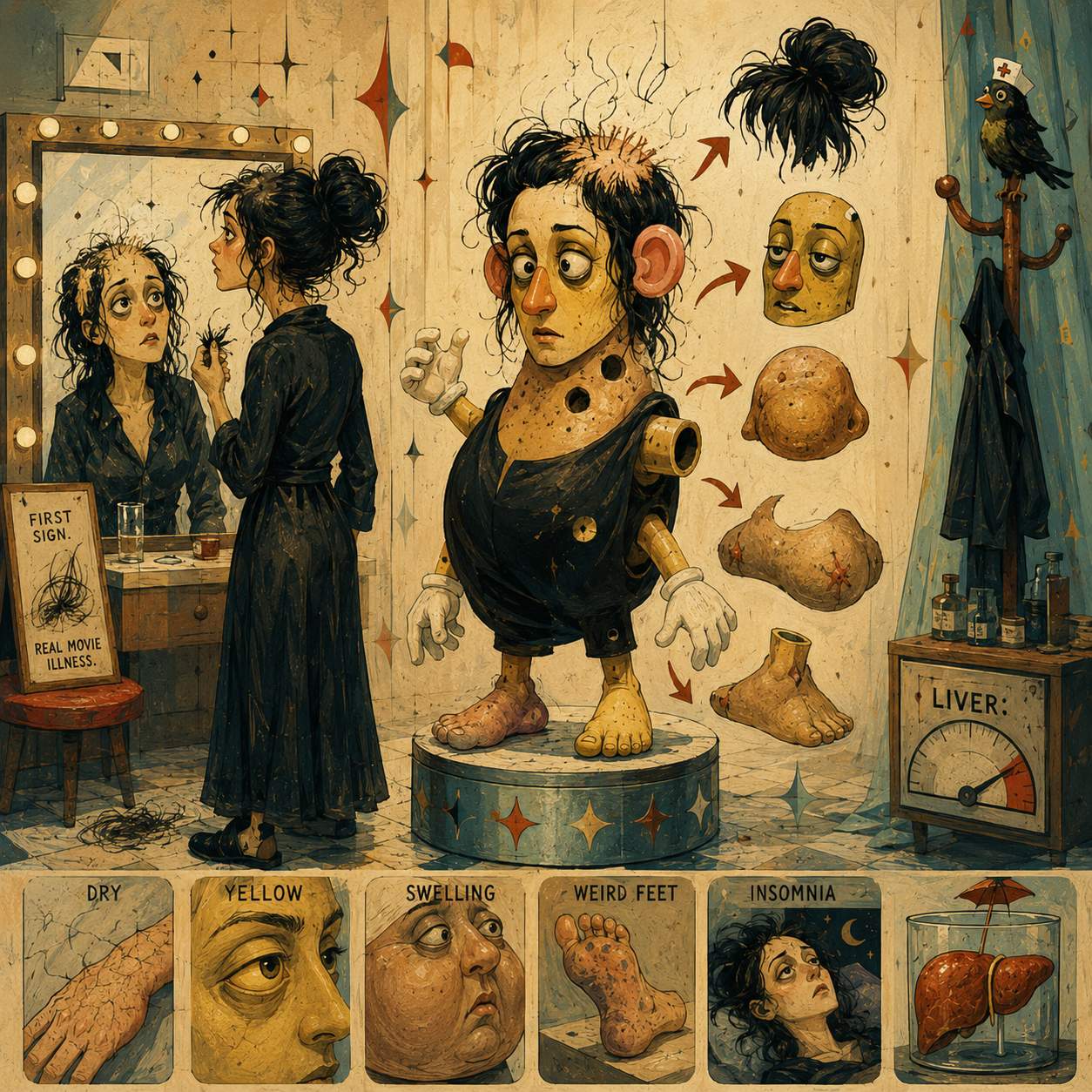
There is an unspoken joke in the cirrhosis world that you slowly start turning into a vampire. And honestly? Unfortunately accurate:
You’re awake all night.
Your skin gets dry.
You turn yellow.
Your body swells.
Your feet get weird.
Your hair falls out.
It is like your liver starts dismantling your physical appearance one component at a time. A cursed Mr. Potato Head situation, but make it hepatic.
And hair loss is different because it is the cinematic symptom. It is the scene in every movie where someone stands in the shower with a clump of hair in their hand and suddenly everyone understands: Oh. They are really sick. That is what made it land so hard. Not beauty. Recognition. It was the first symptom that matched the visual language of illness I already understood.
The Walker, the Drain, and the Shower Calculus
Looking back, the texture change should have tipped me off too. My hair changed before I really understood what was happening. Which is funny, because in high school I got a perm and was devastatingly proud of it. Wet n Wild gel. Crunchy curls. Wet-look commitment. It took work to make your hair look wet for an entire school day, but luckily I grew up somewhere with no humidity, so that gel had a fighting chance. Okay, I take it back, I guess I was validly vain with hair hubris for one beautiful moment in time. When that perm grew out, I was genuinely sad.
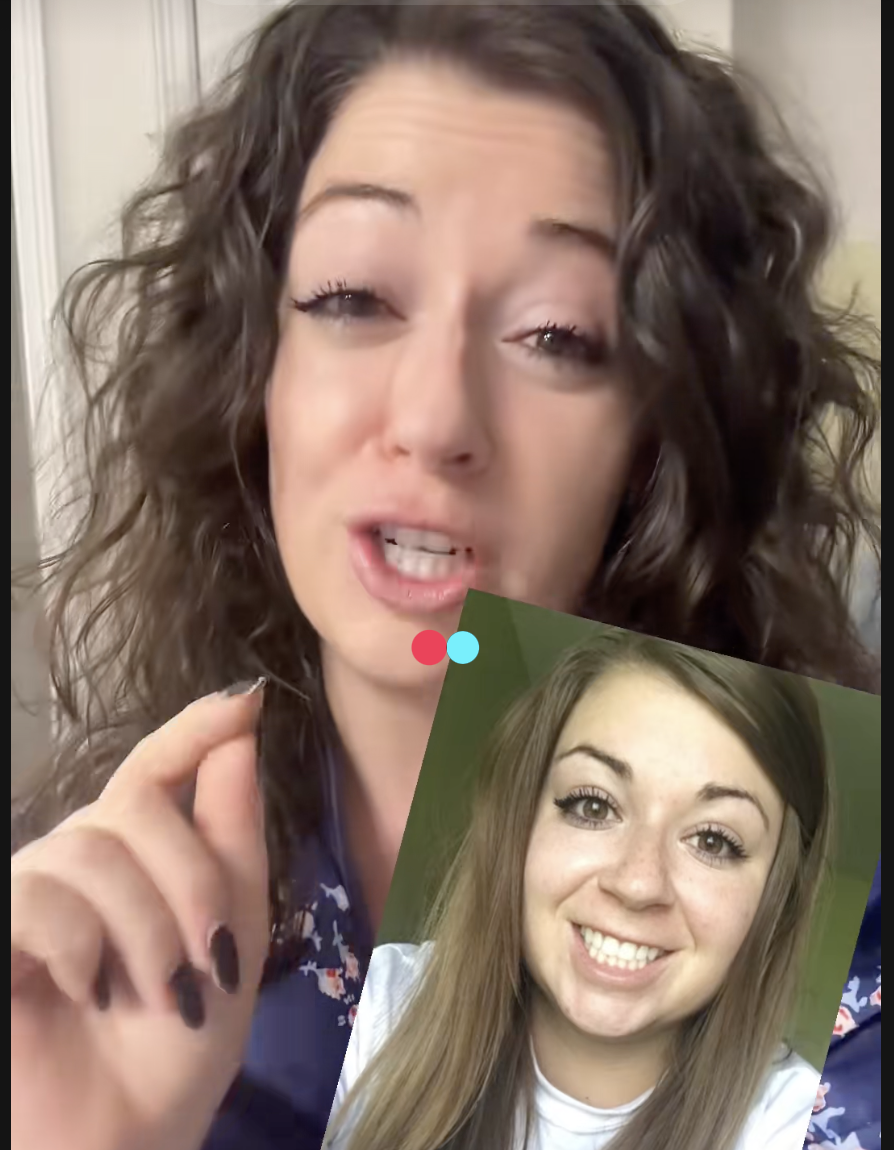
And now? My hair is extremely curly.I rarely wear it curly because, again, I am cosmetically under qualified to operate my own head, but it is wild. The texture changed. The hair fell out. The baby hairs grew back. And somehow, what do you know, I may have my liver to thank for the curls I once paid for in grimaces and giggles because I let my highly confident and convincing best friend do it rather than in cash the old-fashioned way.
That is the strange part of cirrhosis. Your body changes in ways that are devastating, confusing, occasionally absurd, and sometimes almost funny — but only after enough time has passed to let the joke breathe.
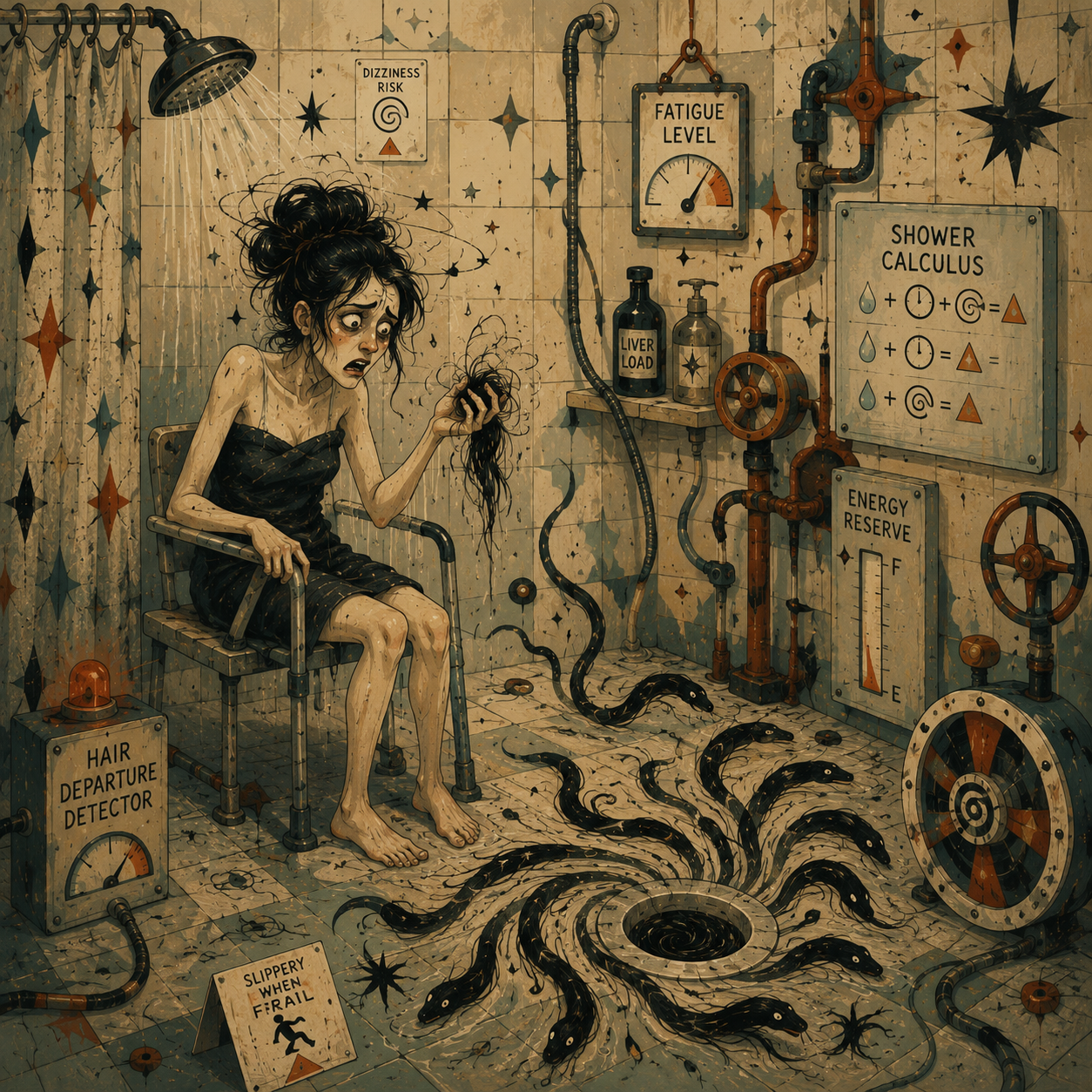
At the time, there was nothing funny about standing in the shower scared to wash my hair. It was scary enough showering as it was. Yeah, the not-being-allowed-to-shave-your-legs thing was cool — bleeding risk, bacteria, talk to your doctor — but aside from already having a walker in the shower to prevent dizzy falls, clumps of hair were breaking my all-natural, cirrhosis-safe chamomile body wash’s back. Not to mention, I could no longer silently turn a blind eye to stray strands washing down the drain and feigning disbelief when my poor husband had to do the semi-yearly drain clean. No, this was real, visible, and as undeniable as my guilty conscience every time I strategically dodged drain cleaning day. It felt like erosion I could hold in my hands.
It was almost an out-of-body experience, watching the hair swim toward the drain like skinny black water moccasins. Before this, I mostly took gravity’s word that my hair eventually made it down there. Plausible deniability for drain-clog crimes I had never been fully acquitted of.
But this time, it was oddly beguiling. Hypnotic, even. The visual equivalent of the “that’s all folks” circle pinching the movie screen black at the end of a film. I watched every strand slither toward the abyss. Which says a lot, because before I got sick, I used to be scared of snakes.
The Silent Reassignment of the Google Keyboard
What I completely missed at the time was the invisible role that my medication portfolio was playing in this structural strain. I had no idea that certain prescriptions could contribute to this, or that it would even happen at all.
When you are first sent home after decompensation, your fingers are usually racing to grace the Google keyboard, exercising some symptomatic, cinematic fear over every single twinge or abnormal arrow on your lab portal. If your toe twitches, you look it up. If your skin itches, you look it up.

But with my hair? I didn't even question it. For the first time since my diagnosis, my fingers didn't race to the screen. It was a weird, almost "that makes sense" reassignment to it happening. I just looked at the clumps in my hand, assumed my liver was completely overwhelmed, and left it at that.
As an obsessive researcher, the mechanics actually make perfect sense. When the liver is facing advanced structural failure, your body enters a literal survival economy. It doesn't care about cosmetic preservation. It systematically cuts off the energy supply to non-essential systems like hair follicles to divert every single ounce of remaining protein, oxygen, and metabolic fuel to your core organs just to keep you online.
On top of that cellular shock, the massive fluid shifts from high-dose diuretics required to keep ascites at bay push hair bulbs prematurely out of their growth cycle, forcing a sudden, undeniable shed. It wasn't a glitch, and it wasn't a failure of my shampoo—it was my body making a calculated executive decision to keep me alive.
  The Survival Economy of a Failing Liver:
 ┌──────────────────────────┐
 │ • Normal Mode: Energy is evenly split across all cells.   │
 │ • Crisis Mode: Core internal organs face failure.         │
 │ • Emergency Pivot: Follicles are shut down to save protein│
 │ • The Outcome: Hair sheds as the body fights for survival│
└────────────────────────────┘The Data Breakdown:
To understand why advanced chronic illness shifts from a hidden internal battle to a highly visible physical reality, we have to look past the shampoo bottle and dive straight into the metabolic, mechanical, and vascular pathways. As I aggregated the peer-reviewed medical literature, I found three primary systemic mechanisms that link hepatic filtration failure to sudden hair thinning and texture changes, all of which mapped directly to what I was feeling:
1. The Survival Economy of Telogen Effluvium (The Emergency Diversion)
The hair growth cycle requires immense, continuous energy and protein synthesis to keep follicles in the active growth phase (anagen). When the liver undergoes advanced structural tissue scarring, the body enters a literal survival economy. To protect your core vital organs, the central metabolic system automatically triggers an emergency pivot—systematically cutting off the nutrient and oxygen supply to non-essential systems like hair follicles to keep your heart, lungs, and brain online.

My Experience: This systemic shock is the exact biological reason behind the "cinematic symptom" that landed so hard in the shower. My body had quietly made a calculated executive decision to stop prioritizing cosmetic preservation. The sudden, massive shift pushed my hair bulbs prematurely out of their growth cycle and into a resting phase, transforming my daily routine into the terrifying reality of watching strands slide down the drain like skinny water moccasins.
Source Citation: The physiological consensus mapping how severe metabolic shock and advanced chronic illness triggers this rapid follicle shutdown is verified under the Telogen Effluvium: A Comprehensive Review of Metabolic Triggers on PubMed.
2. Malabsorption and Keratin Degradation (The Factory Starvation)
The liver is the master factory responsible for synthesizing foundational plasma proteins, managing amino acids, and storing fat-soluble vitamins. When hepatic tissue is severely compromised, its manufacturing capability plummets, leading to severe systemic malnutrition. Without adequate bioavailable proteins and essential micronutrients like zinc and iron, the body cannot produce keratin—the fundamental structural block required to build strong hair shafts.

My Experience: Looking back, the sudden texture change that preceded the shedding should have tipped me off to this internal factory starvation. My hair was fundamentally changing because my follicles were quite literally running out of raw building materials. While I was busy tracking my lab portal for major statistical noise, my body was quietly dealing with advanced nutrient malabsorption, leaving my hair to grow back thin, fragile, and chemically altered because the structural engine was starved of fuel.
Source Citation: The clinical parameters tracking how advanced hepatic malnutrition directly accelerates muscle wasting and structural protein breakdown are documented in the Sarcopenia, Malnutrition, and Keratin Degradation in Patients with Chronic Liver Cirrhosis on the World Journal of Gastroenterology.
3. Medication Reassignment and Cellular Cycle Shock (The Pharmacological Strain)
Advanced cirrhosis management requires a complex portfolio of heavy medications, including high-dose diuretics used to manage fluid volume and keep ascites at bay. While these medications are absolutely life-saving anchors, their massive systemic fluid shifts and impact on rapid cell replication cycles can place immense secondary strain on peripheral tissues. Certain prescriptions can independently disrupt the delicate cellular environment of the hair root, forcing an accelerated shedding process.
My Experience: I completely missed the invisible role my medication portfolio was playing in this structural strain, assuming my liver was simply overwhelmed. But the biochemistry reveals that your body is managing a massive balancing act. The high-dose diuretics required to keep my baseline stable were simultaneously shocking my hair bulbs out of their normal timelines. It wasn't a failure of my chamomile soap; it was a necessary trade-off—my life-saving pharmacological pit crew was actively saving my life, even if it meant my hair had to face the collateral damage.
Source Citation: The tracking metrics detailing how specific chronic disease prescriptions alter follicle shedding dynamics are meticulously cataloged in the Drug-Induced Alopecia and Telogen Effluvium Metrics on the Journal of Clinical and Aesthetic Dermatology.
What to Ask Your Healthcare Team: Specialist Questions
Managing structural hair changes requires moving past cosmetic panic and evaluating your underlying systemic nutrition. Bring these targeted questions to your next appointments:
Questions for Your Hepatologist or Gastroenterologist
"Could my recent sudden hair thinning be a side effect or secondary reaction to the heavy dosages of diuretics required for my fluid management?"
"Are my baseline lab trends—specifically my total protein and serum albumin levels—showing signs of malabsorption that could be starving my structural tissues?"
"Is this change in texture and volume a reflection of the overall systemic shock my body experienced during my last acute hospitalization or illness flare?"
Questions for Your Registered Dietitian or Hepatic Specialist
"How can I safely increase my intake of liver-safe, amino-acid-dense proteins within my strict low-sodium guidelines to support follicle recovery?"
"Are there specific micronutrient deficiencies (like zinc or iron) common in malabsorption that we should test for before considering any over-the-counter vitamins?"
"How can we structure my meals to improve nutrient absorption without placing an extra metabolic filtration load on my liver pathways?"
Summary: Measuring Recovery Strand by Strand
Even now, when I see the little baby hairs around my head, I remember that version of myself trying to measure recovery strand by strand, as if every millimeter was a secret signal that things were getting better. Maybe it was, or maybe I still need to believe that.
If you are currently sitting on a shower bench or looking at a walker, terrified to brush your hair because of what might come out in your brush, remember:
Your body is not failing you: It is keeping your heart, brain, and lungs online by sacrificing a non-essential cosmetic system.
The baseline can rebuild: Just like the baby hairs eventually start popping up, structural healing takes immense time. A static follicle cannot grow until the internal metabolic environment stabilizes.
Be kind to yourself: This illness changes your physical architecture in ways that can feel completely alienating. Treat your changing body with the patience it deserves. You are surviving a war.
Peer-Reviewed Sources and References
National Institutes of Health (NIH): Read the clinical data linking systemic organ failure stress to follicle cycle disruptions via Telogen Effluvium: A Comprehensive Review of Metabolic Triggers.
Establishes how advanced chronic disease shock forces growing follicles prematurely into a systemic resting and shedding phase.
Details the neuroendocrine tracking pathways that govern severe metabolic resource diversion during vital organ crises.
World Journal of Gastroenterology: Review the research tracking malnutrition and structural protein deficiencies under Sarcopenia, Malnutrition, and Keratin Degradation in Patients with Chronic Liver Cirrhosis.
Tracks how a drop in hepatic protein synthesis degrades the structural integrity of keratinized tissues throughout the body.
Outlines the metabolic parameters of severe micronutrient malabsorption and muscle mass wasting in advanced fibrosis.
Journal of Clinical and Aesthetic Dermatology: Explore how common chronic disease medications influence hair shedding dynamics via the publication on Drug-Induced Alopecia and Telogen Effluvium Metrics.
Isolates the cellular replication interferences caused by prolonged high-dose therapeutic drug regimens.
Analyzes the fluid shift baselines and systemic timelines required for follicles to safely recalibrate after a pharmaceutical overload.
NIH StatPearls Hepatic Encephalopathy Profile – A comprehensive clinical review of the pathophysiology, staging, triggers, and standard medical management of HE.
NIH Bookshelf Neurochemical Review on Manganese and Ammonia – A detailed look at how metabolic toxins cross the blood-brain barrier, cause astrocyte swelling, and alter neurotransmission.
PubMed Central Clinical Meta-Analysis on Lactulose and Rifaximin – An analysis of the direct mechanism of action, clinical outcomes, and the therapeutic necessity of maintaining proper bowel protocols.
@diagnosis_cirrhosis 🚨💇♀️ Hair loss with cirrhosis… yes, it’s a thing 👀✨💭 Live highlight 🎥✨💫 If you’ve ever searched: 👉 can cirrhosis cause hair loss 🤔💇♀️ 👉 why is my hair falling out with liver disease 😳🫠 👉 does fatty liver cause hair thinning 🍩📉 👉 hair loss after liver failure 🚨💭 👉 can medications for cirrhosis cause hair loss 💊👀 👉 why am I shedding so much hair 😵💫💇♀️ 👉 what causes cirrhosis 🌀🔎 👉 can fatty liver turn into cirrhosis 🍩➡️🌀 …you are not imagining it 🫶✨🤍 ⸻ 🧠💡 Why hair loss happens with cirrhosis Hair loss is usually not just one thing ❌ It is often a combination of what your body has been through 🧩💭 👉 being very sick / decompensation 🚨😵💫 👉 system-wide stress 😮💨⚡ 👉 nutritional deficiencies 🍽️⬇️🧪 👉 hormone changes 🩸📉 👉 medications 💊 👉 chronic inflammation 🔥🧬 Hair loss can be a symptom and/or a side effect 👀✨💇♀️ Your body is prioritizing survival over hair growth 🫶⚖️ ⸻ ⏳📉 “Shock” to the system After a major illness, the body can shift hair into a resting phase 😵💫💭 👉 increased shedding 💇♀️⬇️ 👉 noticeable thinning weeks later ⏳📆 👉 not always immediate 🫠 This is often called telogen effluvium 🧠✨ ⸻ 😳💭 Other factors with liver disease 👉 low protein / malnutrition 🍽️🥩⬇️ 👉 vitamin deficiencies (iron, zinc, etc.) 🧪💊 👉 hormonal disruption 🩸⚖️ 👉 absorption issues 🤢📉 👉 overall systemic strain 😮💨🧬 All of these can contribute to hair thinning 💇♀️📉✨ ⸻ 💊⚠️ Medications can play a role too 👉 diuretics 💧 👉 beta blockers 💊 👉 other chronic medications 🧴🩺 Not always the main cause… but sometimes part of the picture 🧩👀 ⸻ 🌀💡 Common causes of cirrhosis Cirrhosis can develop from many different conditions over time, including: 👉 fatty liver / NAFLD / MASLD 🍩✨ 👉 NASH / MASH 🧪🔥 👉 alcohol-related liver disease 🚫🍷 👉 autoimmune hepatitis 🛡️🔥 👉 hepatitis B & C 🦠 👉 PBC / PSC (bile duct diseases) 🧬 👉 hemochromatosis ⚙️ 👉 Wilson’s disease 🪙 👉 alpha-1 antitrypsin deficiency 🧩 👉 drug-induced liver injury 💊⚠️ 👉 or any other cause of cirrhosis ✨🌀 No matter the cause… when cirrhosis progresses or decompensates, the body can experience stress-related changes like hair loss 😵💫💇♀️💭 ⸻ 😵💫 Why it’s so frustrating Because it feels like: 👉 “I’m already dealing with cirrhosis… and now this?” 😞💔 Hair loss is: 👉 visible 👀 👉 emotional 💔 👉 a reminder your body has been through a lot 😮💨🫶 ⸻ 🔎✨ If you’re asking yourself: 👉 is hair loss a symptom of cirrhosis 🤔 👉 will my hair grow back after liver disease 🌱💇♀️ 👉 why am I losing hair after being very sick 😵💫 👉 can fatty liver cause hair thinning 🍩📉 👉 what causes cirrhosis 🌀 👉 how to stop hair loss with liver disease 💭 …you are not alone 🫶✨🤍 ⸻ 📣🫶 Bottom line Hair loss with cirrhosis is often a sign your body has been under significant stress 😮💨⚠️ 👉 illness 🚨 👉 decompensation 🌀 👉 nutritional strain 🍽️⬇️ 👉 systemic changes 🧬 The good news 💛✨ 👉 as your body stabilizes, hair can improve over time ⏳🌱💇♀️ But it takes patience 😵💫🫶✨ ⸻ ✨ Always talk to your doctor or hepatologist about hair loss, labs, nutrition, and medications 👩⚕️👨⚕️🩺💬 Because this is not just about hair 💇♀️ it is about what is happening underneath 🧬✨ #livehighlights #tiktoklive #symptoms #hairloss #liverhealth ♬ Move Like This - Unyamyak
