
-
Community
-
Levity
-
Nutrition
-
Support
-
Recommendations
-
Education
-
Advocacy
-
Compassion
- Community - Levity - Nutrition - Support - Recommendations - Education - Advocacy - Compassion
Albumin
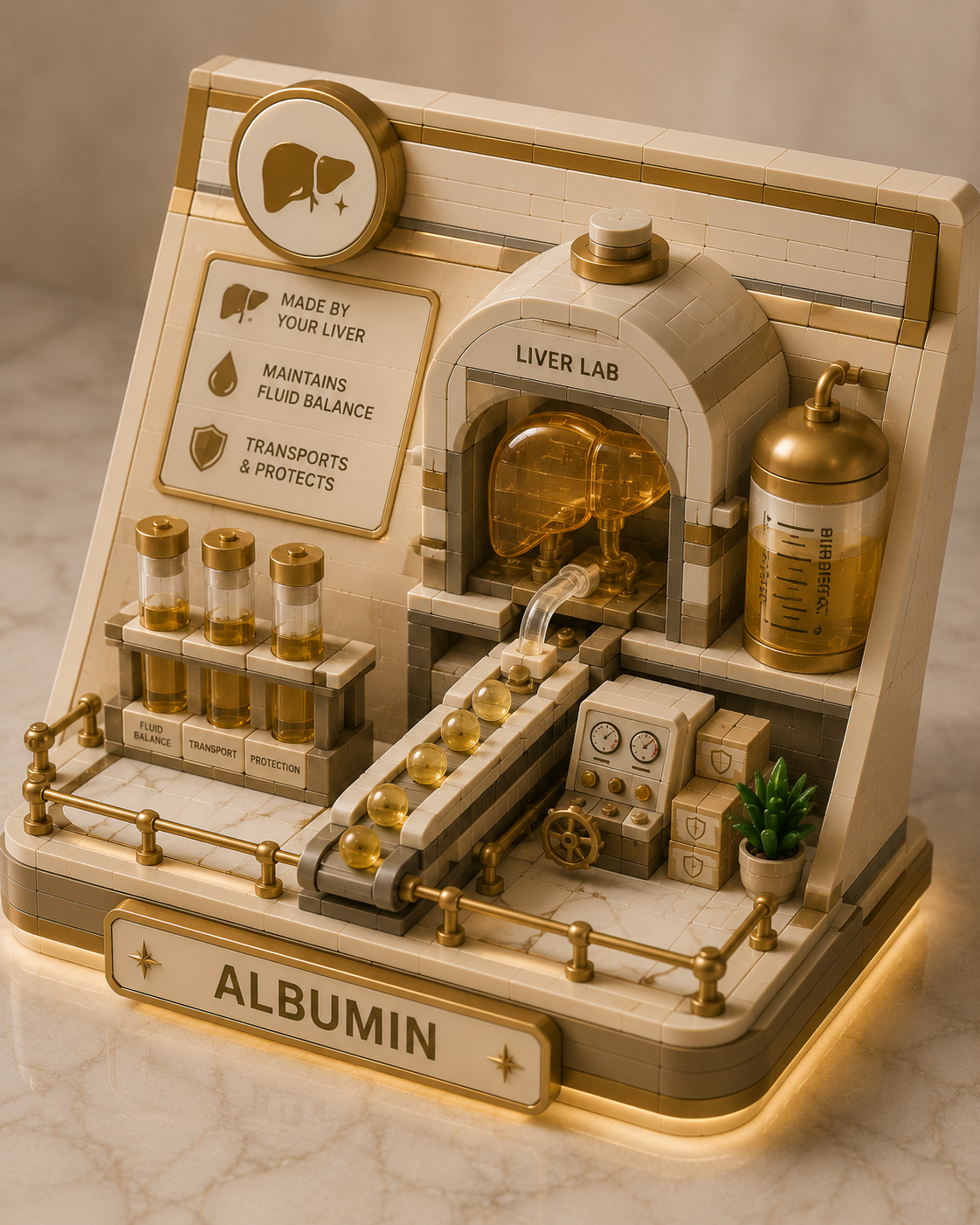
Physicians look at your albumin level to evaluate the true "working power" or synthetic capacity of your liver . They also use albumin to understand your blood's oncotic pressure—the magnetic force that keeps fluid safely inside your blood vessels instead of leaking out into your tissues. When a hepatologist looks at your metabolic profile, they evaluate albumin as a directly measured metric alongside your "Total Protein" panel.

Jaundice
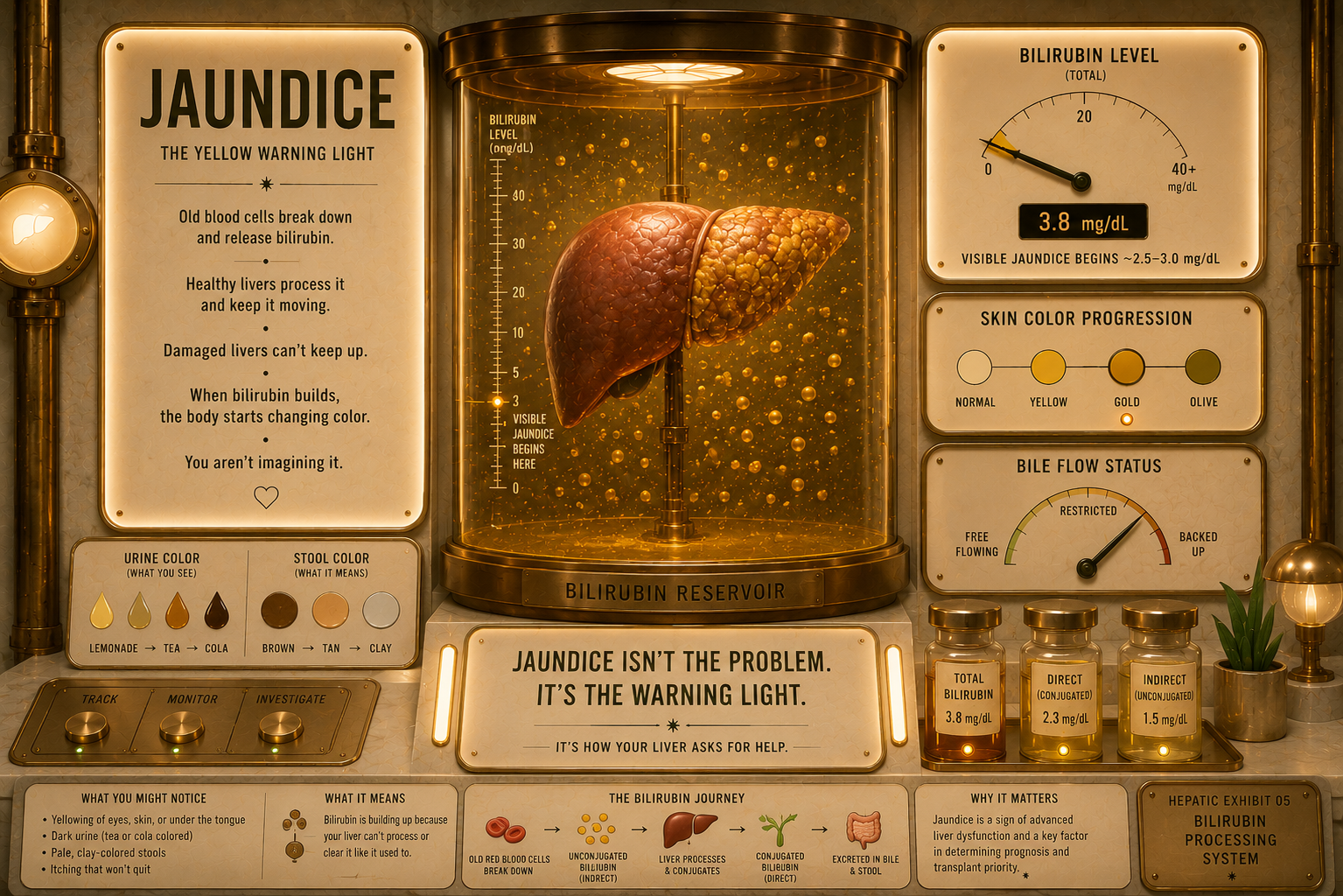
Abnormal yellowing in chronic liver failure exists on a highly specific developmental spectrum. Transient (or situational) jaundice is a brief, temporary spike in pigment levels—such as a mild flare after a temporary drug reaction or a passing bout of dehydration—that resolves quickly once the trigger is removed. Hepatic jaundice is an ingrained, systemic failure where a cirrhotic liver’s structural collapse simultaneously destroys its ability to process cellular waste and mechanically blocks the internal plumbing of the bile ducts .
Bilirbuin
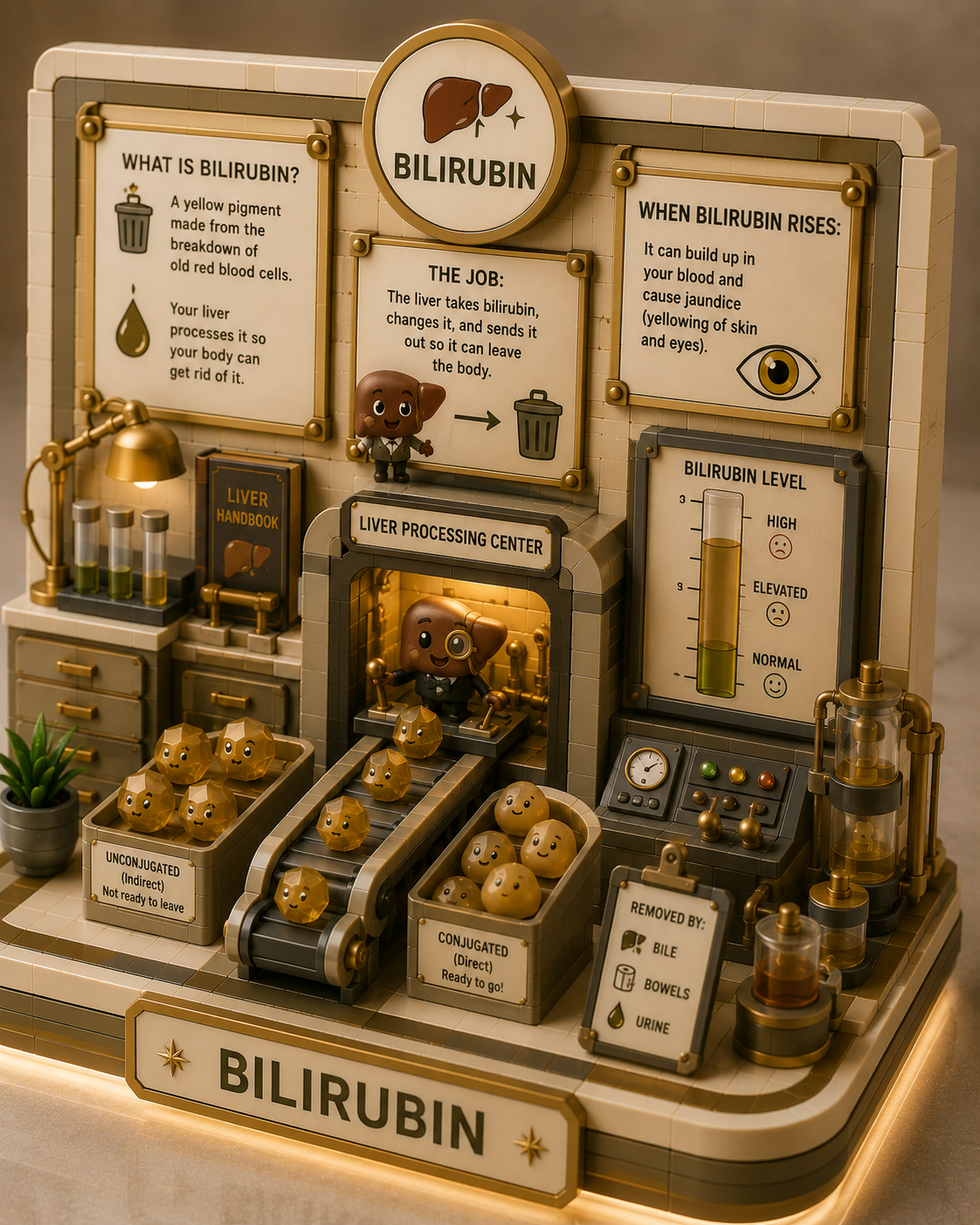
Bilirubin is a yellow pigment made when the body breaks down old red blood cells. The liver’s job is to process bilirubin and move it out through bile, so a rising bilirubin level can mean that clearing system is getting backed up. When bilirubin builds up, it can show up in ways people actually notice: yellow eyes or skin, dark urine, pale stool, and itching.