

What It Feels Like
Hepatic encephalopathy can feel different for everyone.
Common experiences include:
🧠 Brain fog
🧠 Forgetfulness
🧠 Difficulty concentrating
🧠 Slower thinking
🧠 Word-finding problems
🧠 Mental fatigue
🧠 Mood changes
🧠 Feeling "off"
Sleep-related symptoms often include:
🌙 Wide awake at 2:00 AM
☀️ Exhausted during the day
😴 Unplanned naps
⏰ Sleep-wake reversal
📅 Feeling disconnected from normal schedules
The Crossover Point
Think of your brain like a switchboard.
At first, a few signals arrive late.
A connection flickers.
A message gets rerouted.
Everything still works.
Then more signals begin crossing wires.
Some messages arrive slowly.
Others never arrive at all.
The switchboard becomes increasingly difficult to manage.
Hepatic encephalopathy is what happens when the brain is forced to work through static.
Things Nobody Explains
1. It Isn't Just Confusion
Many people expect hepatic encephalopathy to look dramatic.
Often it begins with subtle changes that are easy to dismiss.
2. Sleep Problems Can Be an Early Clue
For some patients, a reversed sleep schedule appears long before obvious cognitive symptoms.
3. You May Notice It Last
Friends and family sometimes recognize changes before the patient does.
4. It Can Fluctuate
A person may feel completely normal one day and noticeably foggy the next.
Infections, dehydration, constipation, medications, and other stressors can all contribute.
What Helps
✅ Lactulose when prescribed
✅ Rifaximin when prescribed
✅ Preventing constipation
✅ Staying hydrated when appropriate
✅ Managing infections quickly
✅ Maintaining nutrition and muscle mass
✅ Regular follow-up with your healthcare team
The Bottom Line
Hepatic encephalopathy is not a character flaw, a lack of effort, or a failure to pay attention.
It's a complication of liver disease that affects the brain's ability to process information efficiently.
Sometimes it looks like confusion.
Sometimes it looks like forgetfulness.
And sometimes it looks like lying awake at 3:00 AM wondering why a disease built around fatigue won't let you sleep.
What It Feels Like
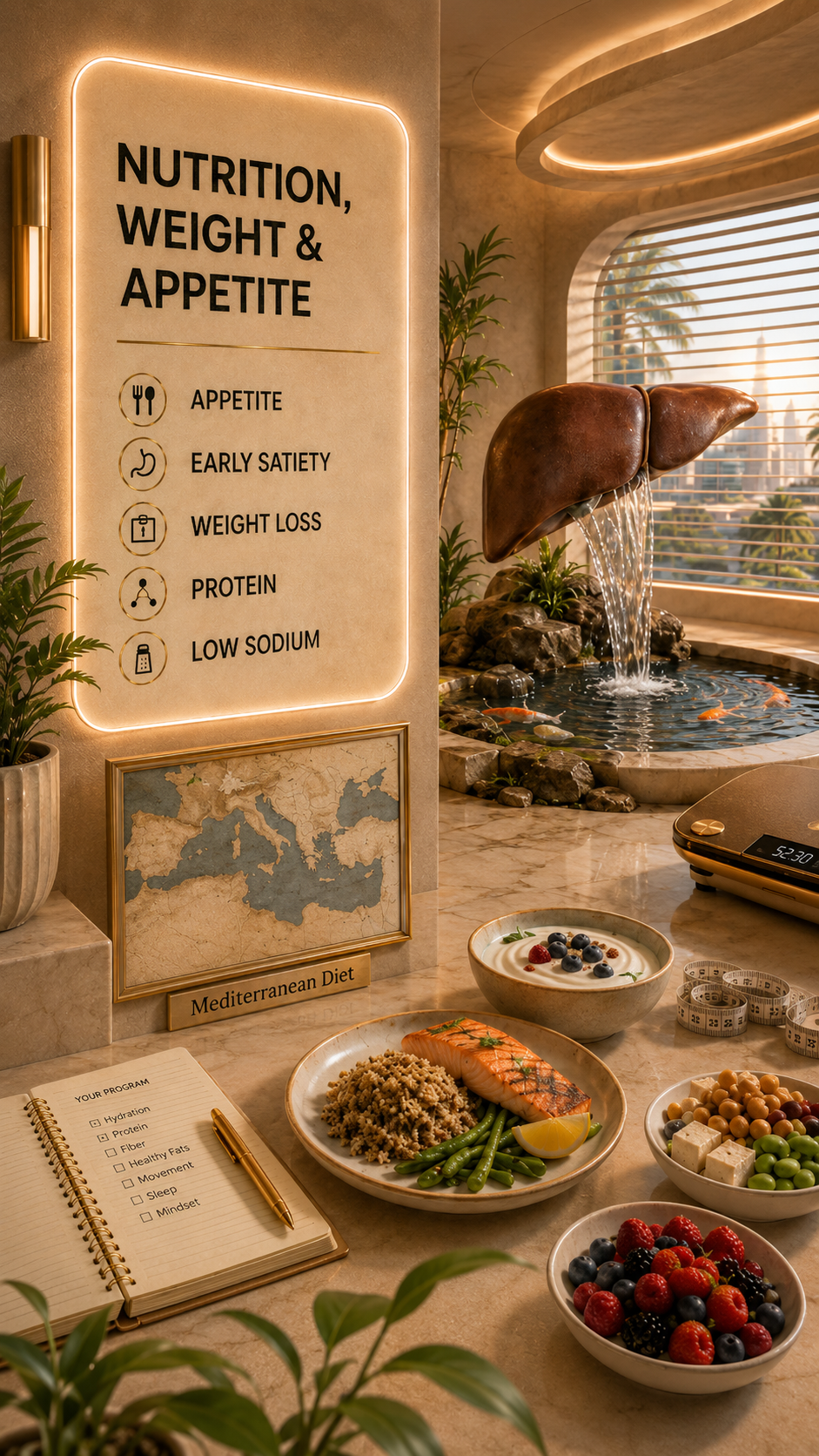
Nutrition changes can feel different for everyone.
Patients commonly describe:
🍽️ No appetite
🍽️ Feeling full after a few bites
🍽️ Nausea
🍽️ Food aversions
🍽️ Taste changes
🍽️ Bloating
🍽️ Weight loss
🍽️ Fluid weight gain
🍽️ Muscle loss
🍽️ Weakness
🍽️ Eating feeling like a chore
🍽️ Anxiety around sodium
🍽️ Confusion about protein
🍽️ Feeling judged for what they eat
🍽️ Being hungry but unable to eat enough
Others describe it more simply:
“I know I need food. I just do not feel like my body has room for it.”
The Crossover Point
Think of nutrition like a supply chain.
The body needs deliveries every day.
Protein.
Energy.
Vitamins.
Minerals.
Fluid balance.
Salt control.
Blood sugar stability.
At first, the system compensates.
You skip a meal and catch up later.
You lose a little appetite and work around it.
You feel weaker but assume it is just fatigue.
Then the supply chain gets strained.
Appetite drops.
Fluid builds.
Muscle breaks down.
Sodium becomes harder to manage.
The scale stops telling the truth.
The body still needs supplies, but the delivery system is no longer running smoothly.
That is when nutrition becomes more than eating.
It becomes logistics.
Things Nobody Explains
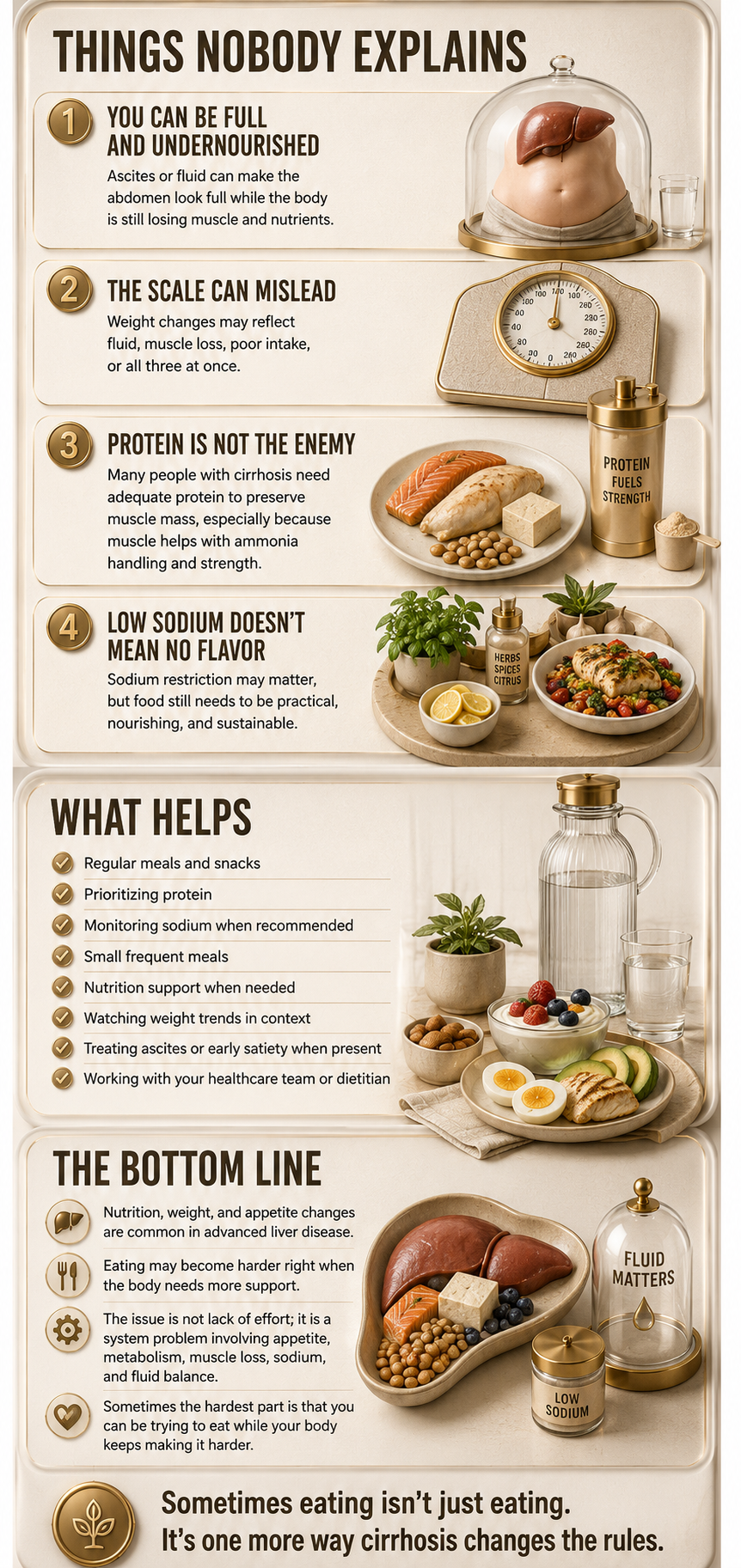
1. Weight Gain Is Not Always Nourishment
A rapid increase on the scale may be retained fluid.
It does not necessarily mean the body is well fed.
You can gain weight and still be losing muscle.
2. Weight Loss Is Not Always Good News
People may praise weight loss without realizing it could include muscle loss, poor intake, malnutrition, or worsening illness.
In cirrhosis, weight loss needs context.
The goal is not just a lower number.
The goal is a stronger body.
3. Protein Is Not the Enemy
Many people with liver disease worry that protein will make things worse.
For most cirrhosis patients, adequate protein is essential for maintaining muscle and supporting recovery.
The details should be individualized, but fear of protein can do real harm if it leads to under-eating.
4. Sodium Restriction Can Be Emotionally Exhausting
Low sodium eating is not just a food rule.
It affects restaurants, holidays, family meals, convenience, cravings, social life, and the ability to eat without constantly calculating.
That mental load is real.
5. Appetite Loss Can Look Like “Not Trying”
From the outside, it may seem simple.
Just eat.
But appetite loss, early fullness, nausea, fatigue, fluid pressure, and food anxiety can make eating feel physically and emotionally difficult.
Needing help with food does not mean someone is being difficult.
It means nutrition has become part of the disease.
What Helps
Nutrition plans should be individualized with your healthcare team, especially if you have ascites, edema, kidney disease, diabetes, hepatic encephalopathy, or transplant evaluation.
Helpful strategies may include:
✔️ Working with a liver-informed dietitian
✔️ Eating smaller, more frequent meals
✔️Prioritizing protein as recommended
✔️ Using a bedtime snack when advised
✔️ Monitoring sodium intake
✔️ Tracking weight trends
✔️Watching for rapid fluid-related weight gain
✔️ Addressing nausea, reflux, or early fullness
✔️Treating ascites or edema when present
✔️ Managing hepatic encephalopathy
✔️ Checking vitamin and mineral deficiencies when appropriate
✔️ Maintaining muscle through nutrition and movement when possible
✔️ Asking for help with shopping, cooking, or meal planning
Seek medical guidance if you have rapid weight gain, worsening swelling, severe appetite loss, vomiting, confusion, black stools, vomiting blood, severe weakness, or inability to maintain intake.
The Bottom Line
Nutrition, weight, and appetite changes in cirrhosis are not simple.
They are not just about eating better, eating less, losing weight, gaining weight, or trying harder.
Advanced liver disease can affect appetite, digestion, fluid balance, sodium handling, muscle mass, protein needs, metabolism, blood sugar, energy, and the way your body uses the food you are able to eat.
Sometimes the problem is not that you are eating too much.
Sometimes it is not that you are eating too little.
Sometimes the problem is that the entire system responsible for nourishment is under strain.
Eating ain’t easy.
Not when fullness lies.
Not when the scale lies.
Not when your body needs fuel but makes food feel impossible.
You are not failing at food.
Your body is asking for support.
Understanding Nutrition, Weight & Appetite Changes in Advanced Liver Disease
Most people think nutrition is about eating better.
With advanced liver disease, it can become something much stranger.
You may feel full after a few bites. You may lose weight without meaning to. You may gain weight from fluid while your muscles are disappearing. Food may sound exhausting. Protein may suddenly matter more than ever. Sodium may feel like it is hiding in the walls. And somehow, everyone still has advice.
Eat more. Eat less.
Lose weight. Don’t lose muscle.
Avoid salt. Get enough protein.
Don’t overdo anything.
The confusing part is that cirrhosis can make nutrition feel completely contradictory. Your body may be swollen but undernourished. Your stomach may feel full while your muscles are breaking down. The scale may go up while your strength goes down.
That is why eating ain’t easy.
Not because you do not care.
Because your body’s relationship with food, fuel, fluid, appetite, muscle, and weight has changed.
What It Is
Nutrition in liver disease is not just about calories.
It is about keeping the body supplied while the liver is working under difficult conditions.
The liver helps process nutrients, store energy, regulate blood sugar, make proteins, support digestion, and coordinate metabolism. When cirrhosis disrupts those systems, eating can become less straightforward.
Nutrition changes can involve:
🍽️ Appetite
💪 Muscle mass
⚖️ Weight changes
🧂 Sodium balance
🥚 Protein needs
💧 Fluid retention
🧪 Blood sugar
🫀 Energy production
🧠 Brain function
🦴 Strength and recovery
When these systems shift, the body may need more support at the exact same time eating becomes harder.
Appetite Loss
Appetite loss is common in advanced liver disease.
Sometimes food simply does not sound good. Sometimes nausea, bloating, reflux, taste changes, fatigue, medications, or early fullness make eating feel like work.
This can create a frustrating cycle.
You do not feel hungry.
So you eat less.
Then you have less energy.
Then preparing food becomes harder.
Then your body gets even less of what it needs.
Appetite loss is not always about willpower.
Sometimes it is your body struggling to manage digestion, fluid, inflammation, hormones, and energy at the same time.
Early Satiety
Early satiety means feeling full sooner than expected.
With cirrhosis, this can happen for several reasons. Ascites can create pressure in the abdomen. Bloating can make the stomach feel crowded. Slower digestion, nausea, or fatigue can make meals feel overwhelming.
A person may sit down hungry and feel done after a few bites.
That does not mean they are eating enough.
It means the body is sending a fullness signal before nutrition needs are actually met.
Weight Changes
Weight can become misleading in liver disease.
Some people lose weight unintentionally.
Some gain weight from fluid.
Some do both at the same time.
That means the number on the scale may not tell the whole story. A person can be retaining fluid in the abdomen or legs while losing muscle from their arms, shoulders, face, hips, and legs.
This is one of the most confusing parts:
You can be heavier and weaker.
You can be swollen and malnourished.
You can look “bigger” while your body is losing the tissue it needs most.
Muscle Loss
Muscle loss is one of the biggest nutrition concerns in cirrhosis.
Muscle is not just for strength or appearance. It helps with mobility, balance, stamina, recovery, blood sugar regulation, and even ammonia processing.
When muscle mass declines, everything can become harder:
💪 Walking
💪 Stairs
💪 Showering
💪 Carrying groceries
💪 Recovering from illness
💪 Managing fatigue
💪 Staying independent
This is why protein matters so much.
For many people with cirrhosis, the goal is not simply weight loss or weight gain.
The goal is protecting muscle.
Protein
Protein can be confusing because many patients were once told to avoid it.
For most people with cirrhosis, adequate protein is important because the body needs it to maintain muscle, heal tissue, support immunity, and recover from stress.
Protein needs can vary depending on kidney function, hepatic encephalopathy, transplant status, weight, nutrition status, and medical history.
But the old idea that everyone with cirrhosis should avoid protein is outdated.
The question is not usually whether protein matters.
It is what kind, how much, how often, and what your healthcare team recommends for your specific situation.
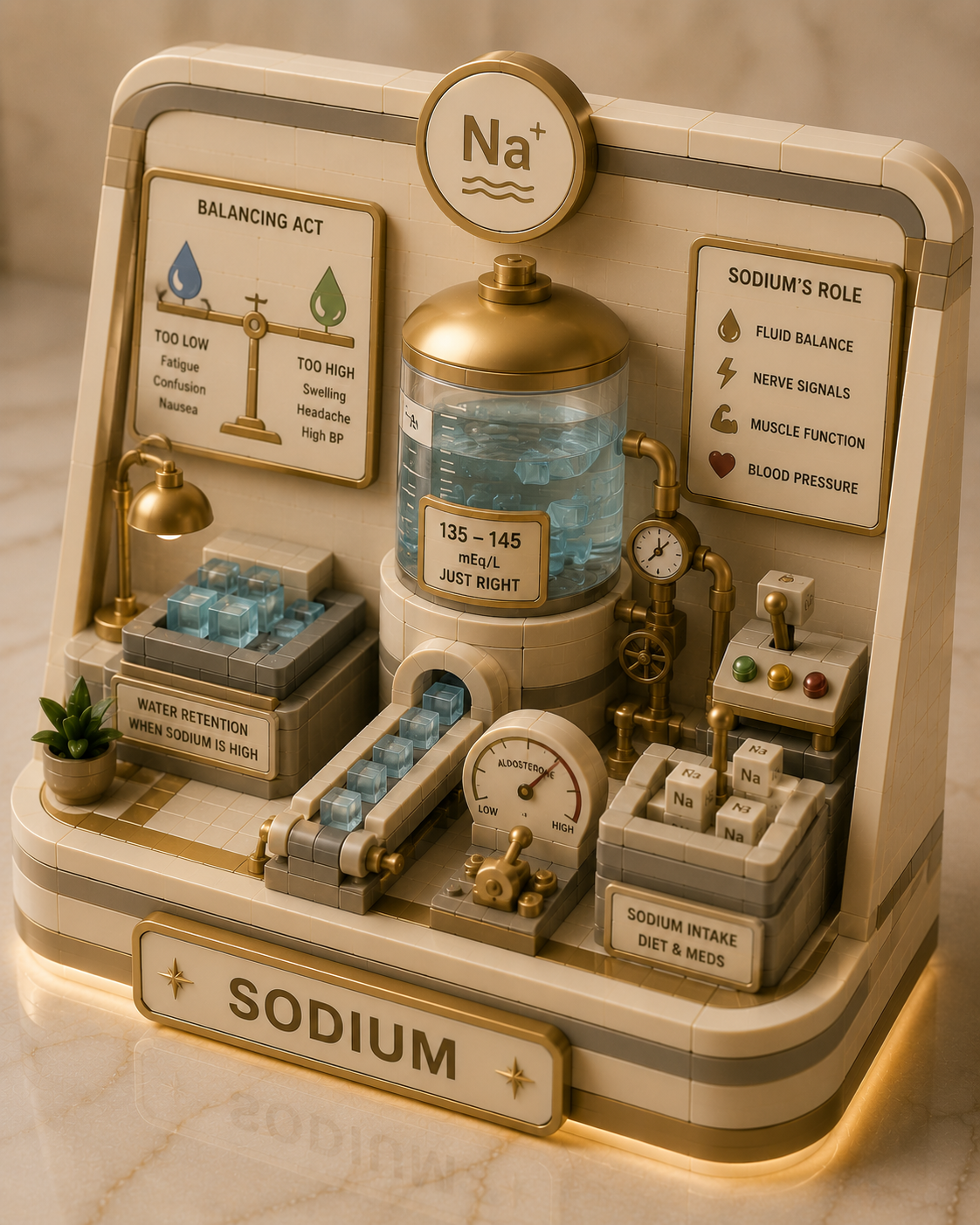
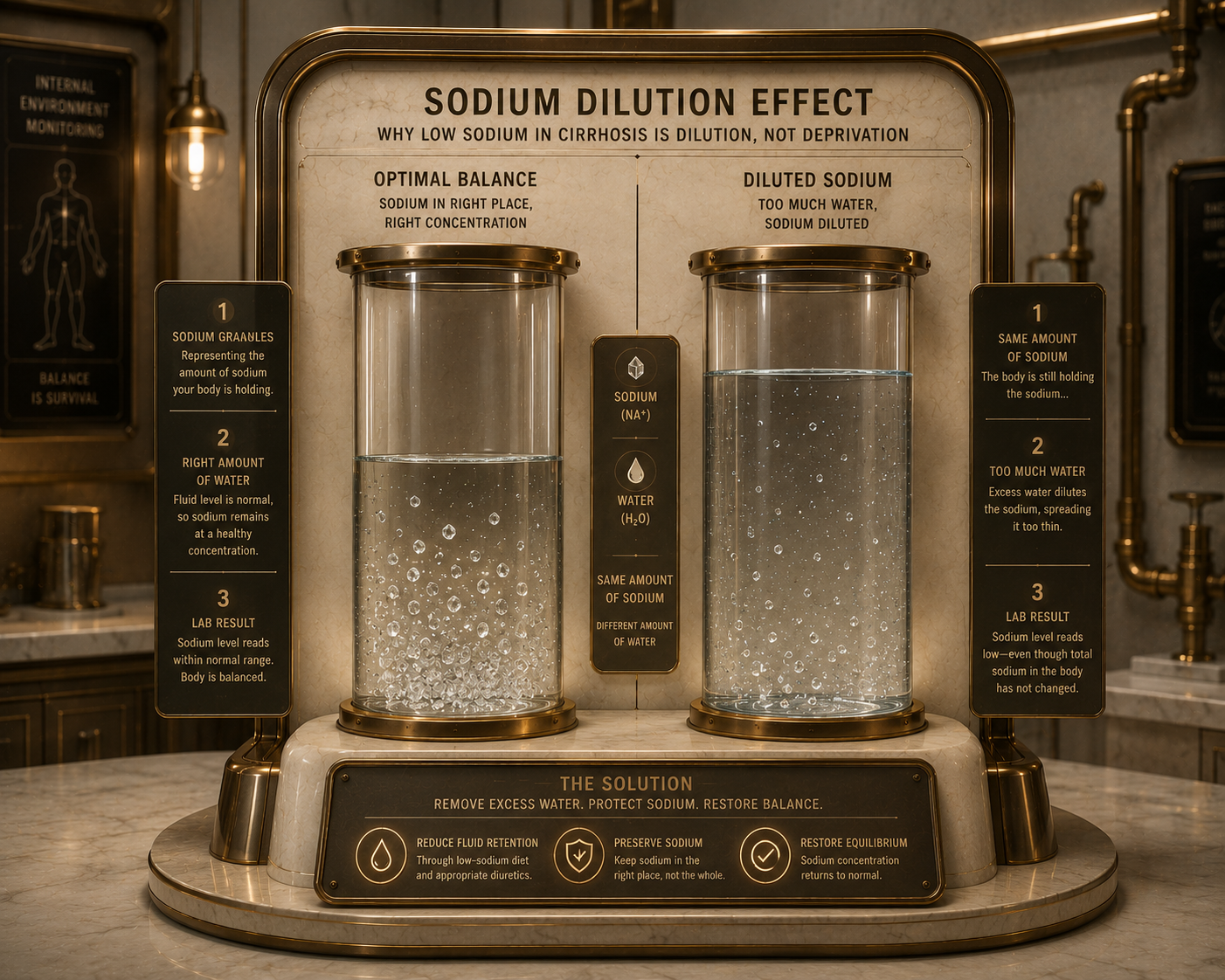
Sodium
Sodium matters because it can worsen fluid retention.
For people with ascites or edema, sodium restriction is often one of the most important nutrition tools. But it can also be one of the hardest.
Sodium hides everywhere:
🧂 Restaurant meals
🧂 Soups
🧂 Sauces
🧂 Condiments
🧂 Bread
🧂 Deli meats
🧂 Pickles
🧂 Frozen meals
🧂 Seasoning blends
🧂 “Healthy” packaged foods
The hard part is that low sodium eating can make food feel less convenient, less social, and sometimes less appetizing.
That matters.
Because if food becomes too restricted to eat, the plan stops working.
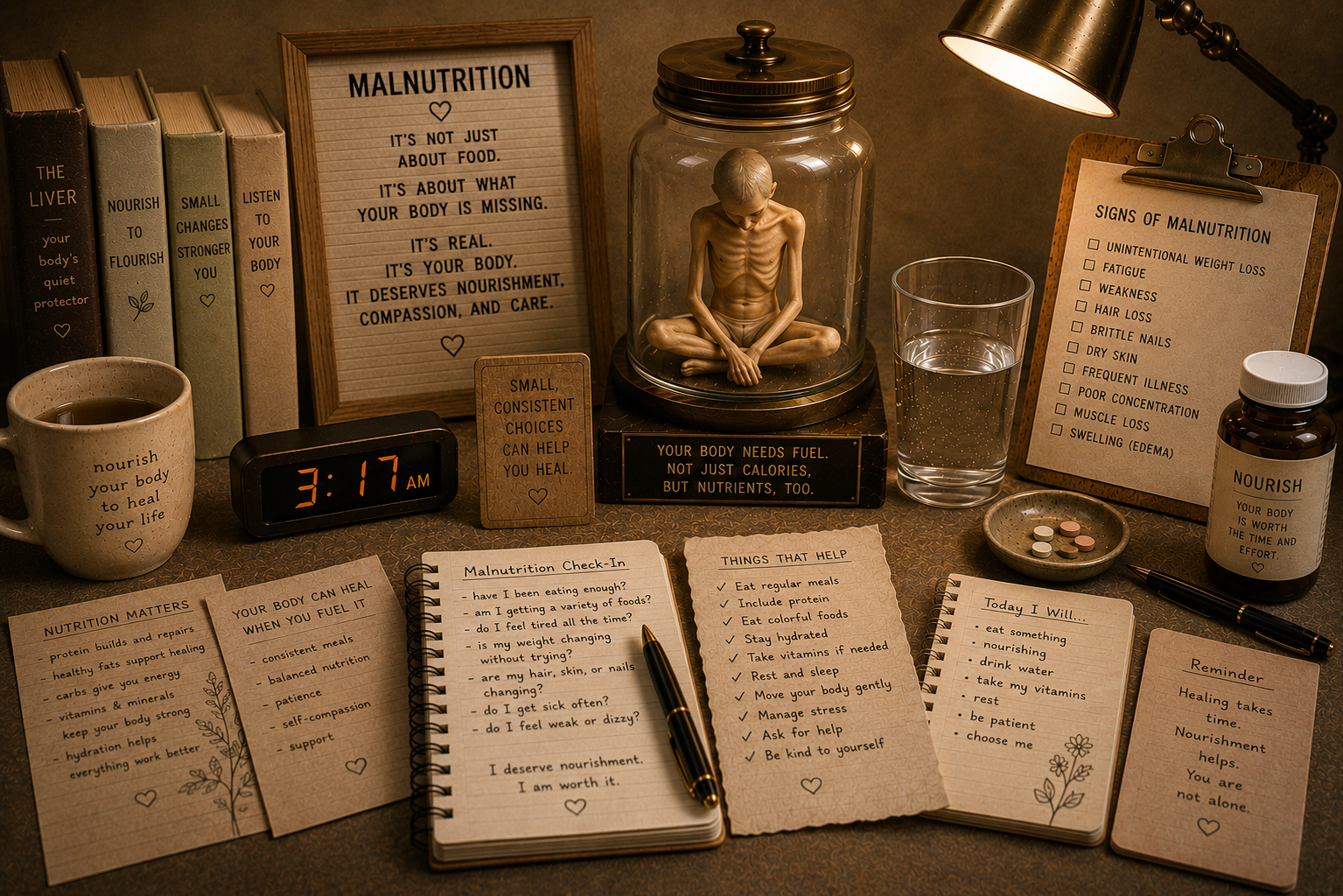
Malnutrition
Malnutrition does not always look the way people expect.
It is not always extreme thinness.
In cirrhosis, malnutrition can happen even when someone looks normal, overweight, or fluid overloaded.
The body may be missing protein, calories, vitamins, minerals, muscle, or usable energy.
This can affect:
🧪 Labs
💪 Strength
🧠 Mental clarity
🛡️ Immune function
🩹 Healing
🚶 Mobility
😴 Fatigue
🏥 Recovery from illness
Malnutrition is not a moral failure.
It is a medical complication.
Blood Sugar & Energy
The liver helps store and release energy.
When liver function changes, blood sugar and energy regulation can become less stable. Some people feel shaky, weak, foggy, nauseated, or drained when they go too long without eating.
This is one reason smaller, more frequent meals or snacks may help some patients.
It is also why a bedtime snack is sometimes recommended for people with cirrhosis, depending on their medical plan.
The goal is to prevent the body from running on empty for too long.
.
Eating Ain’t Easy
Read More

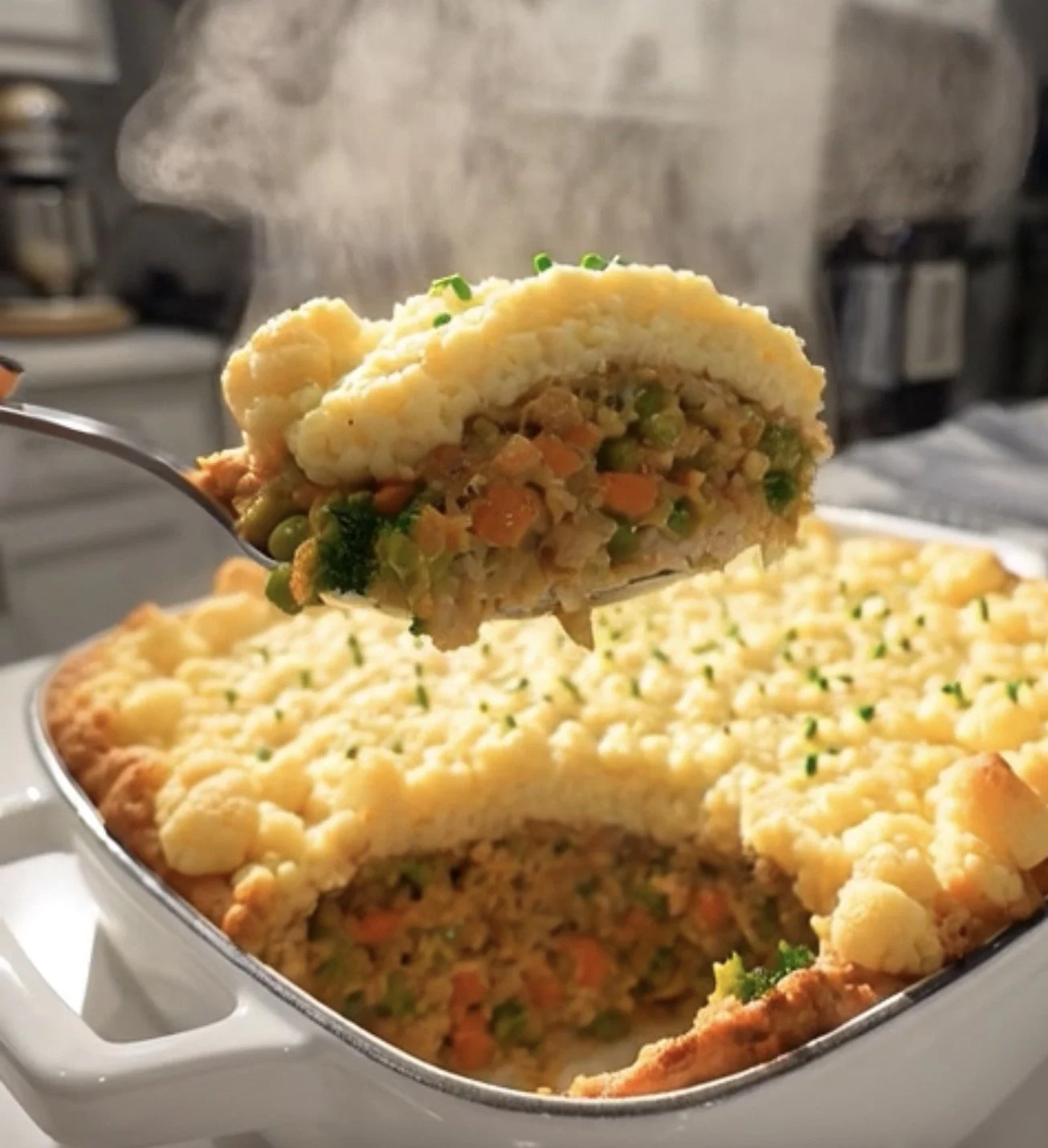
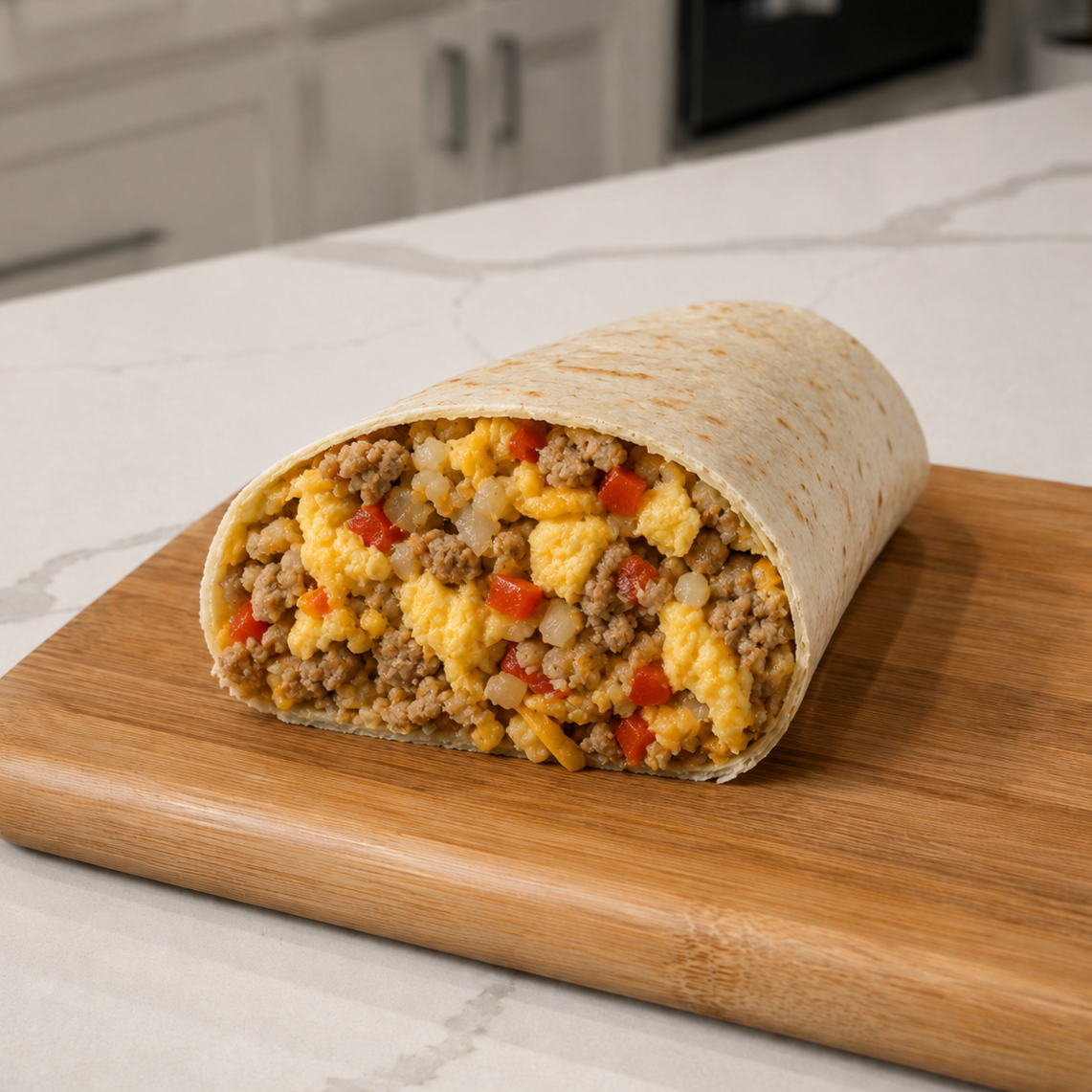

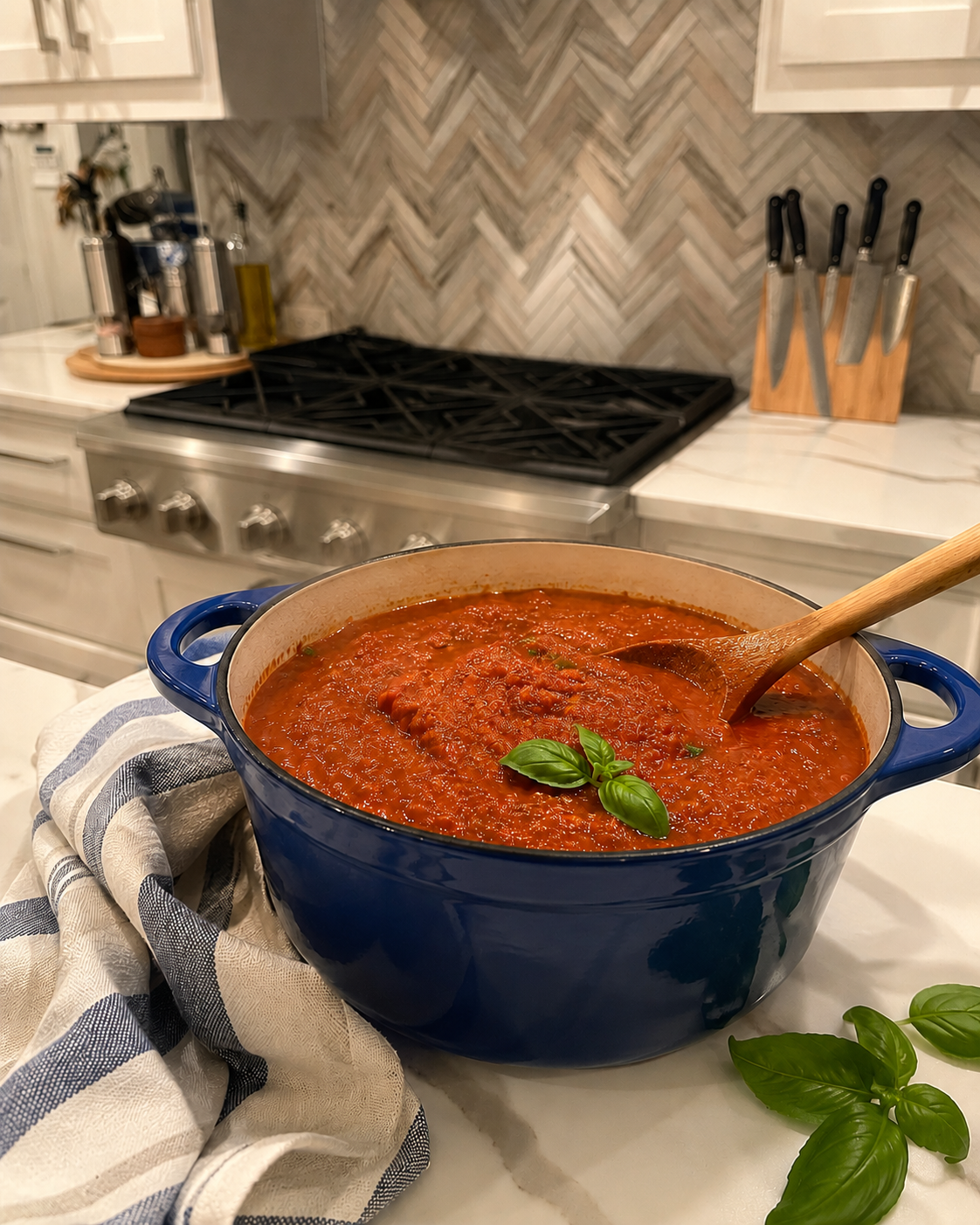


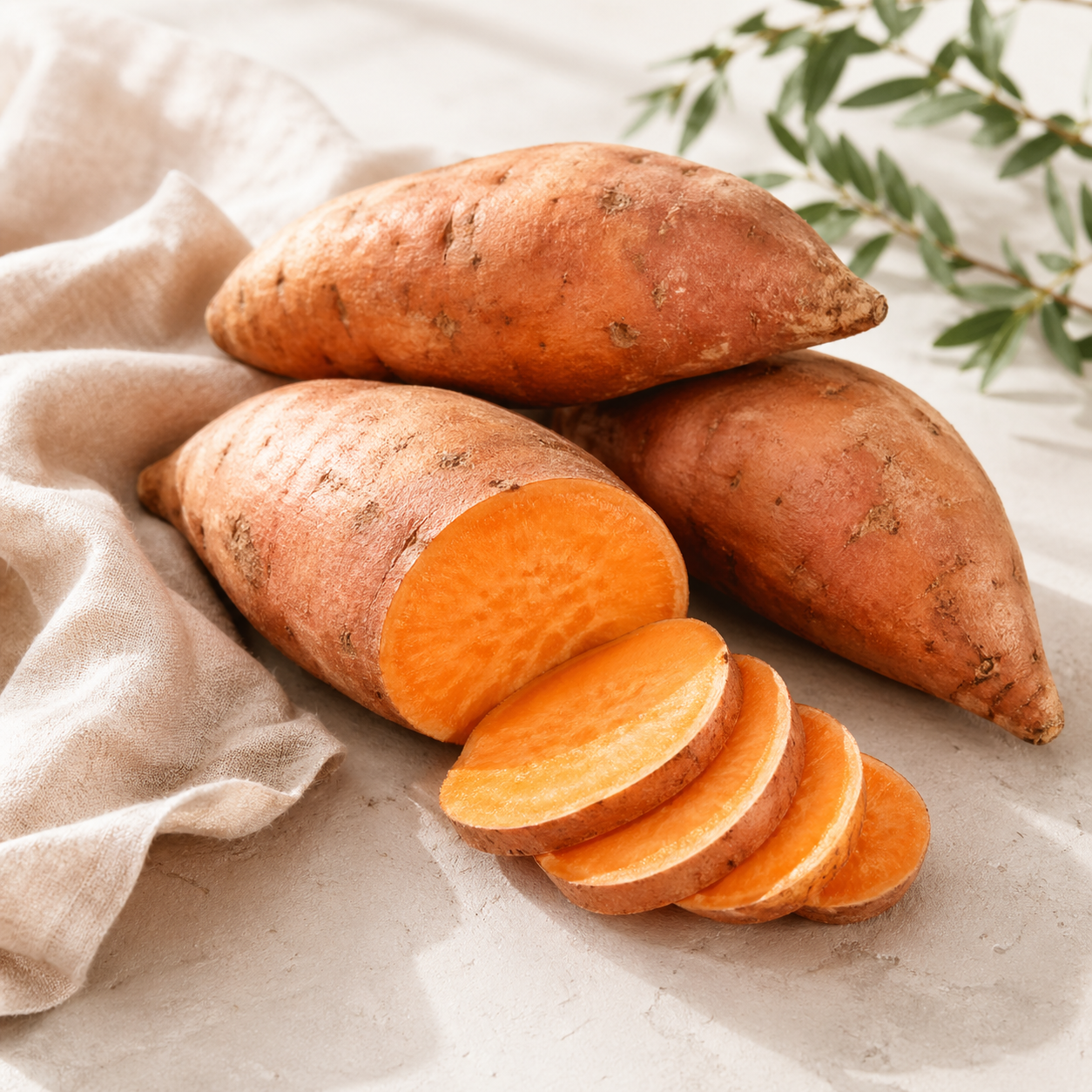
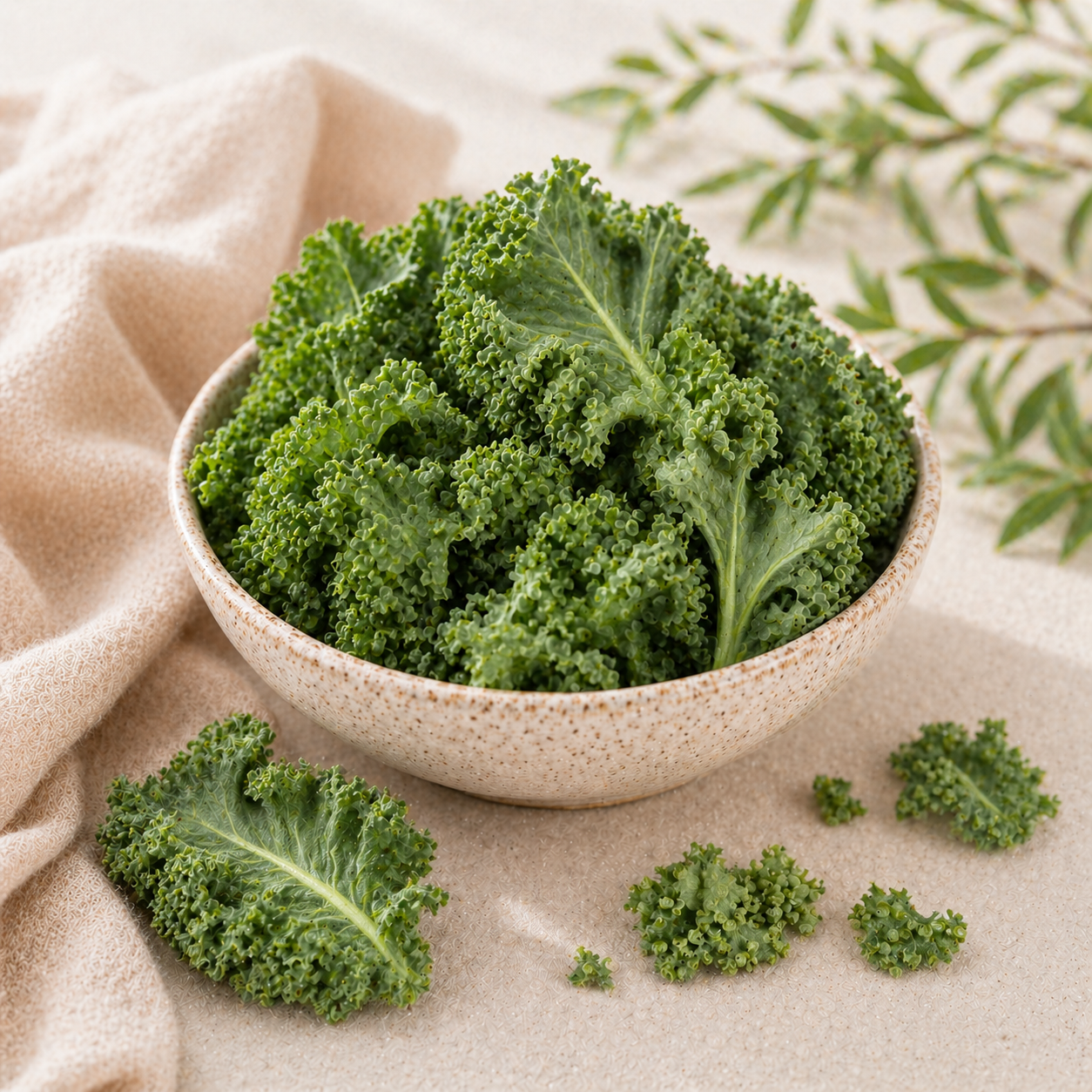


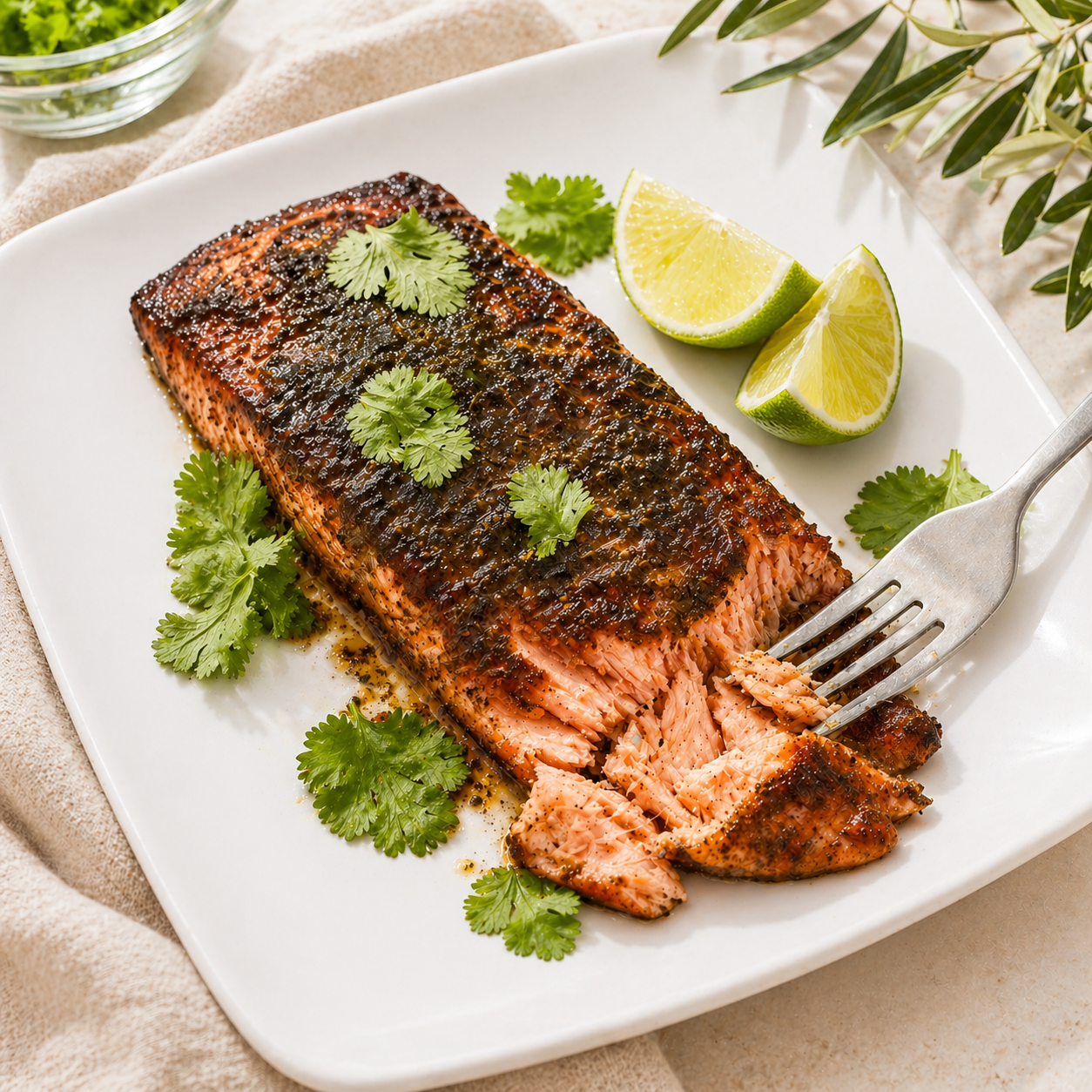
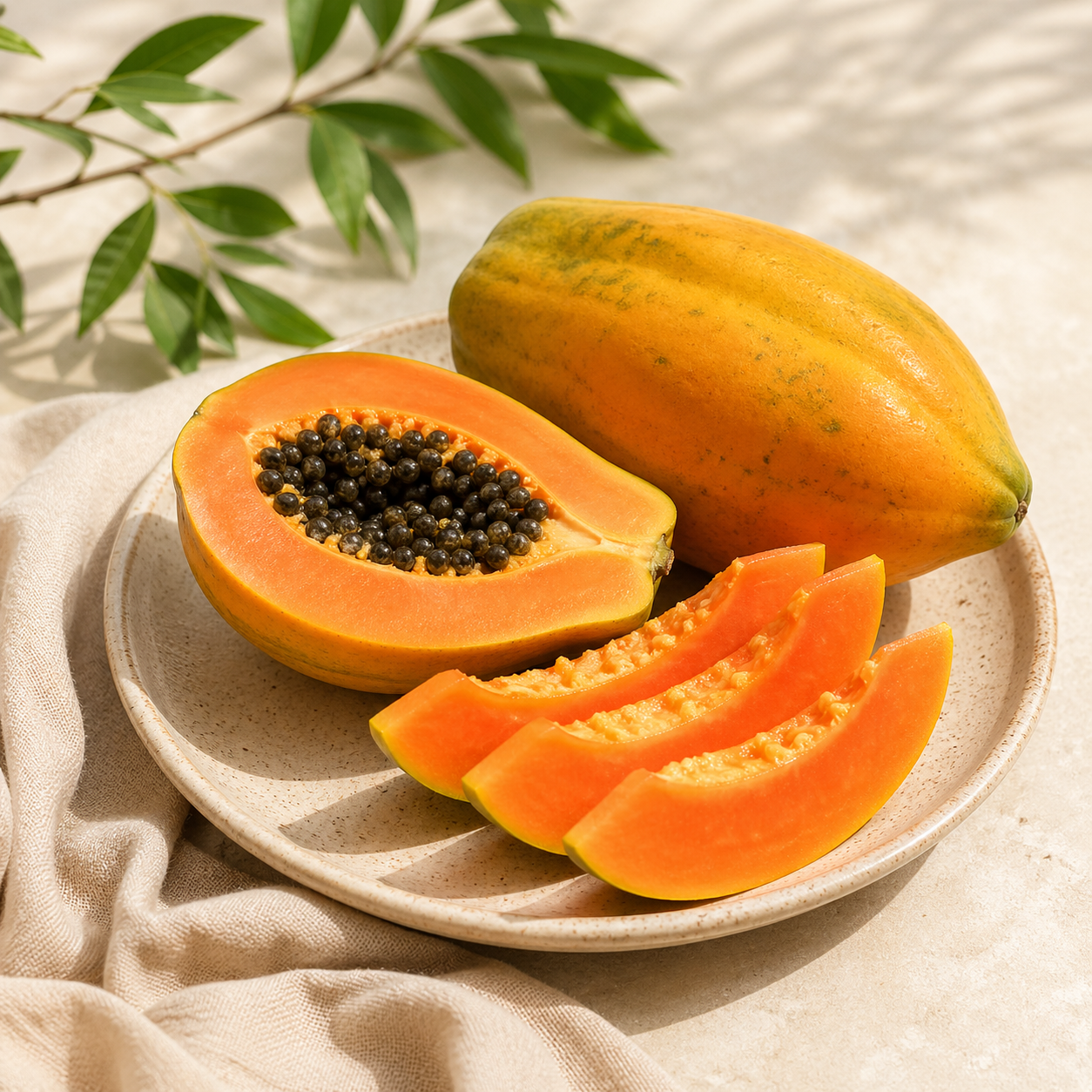
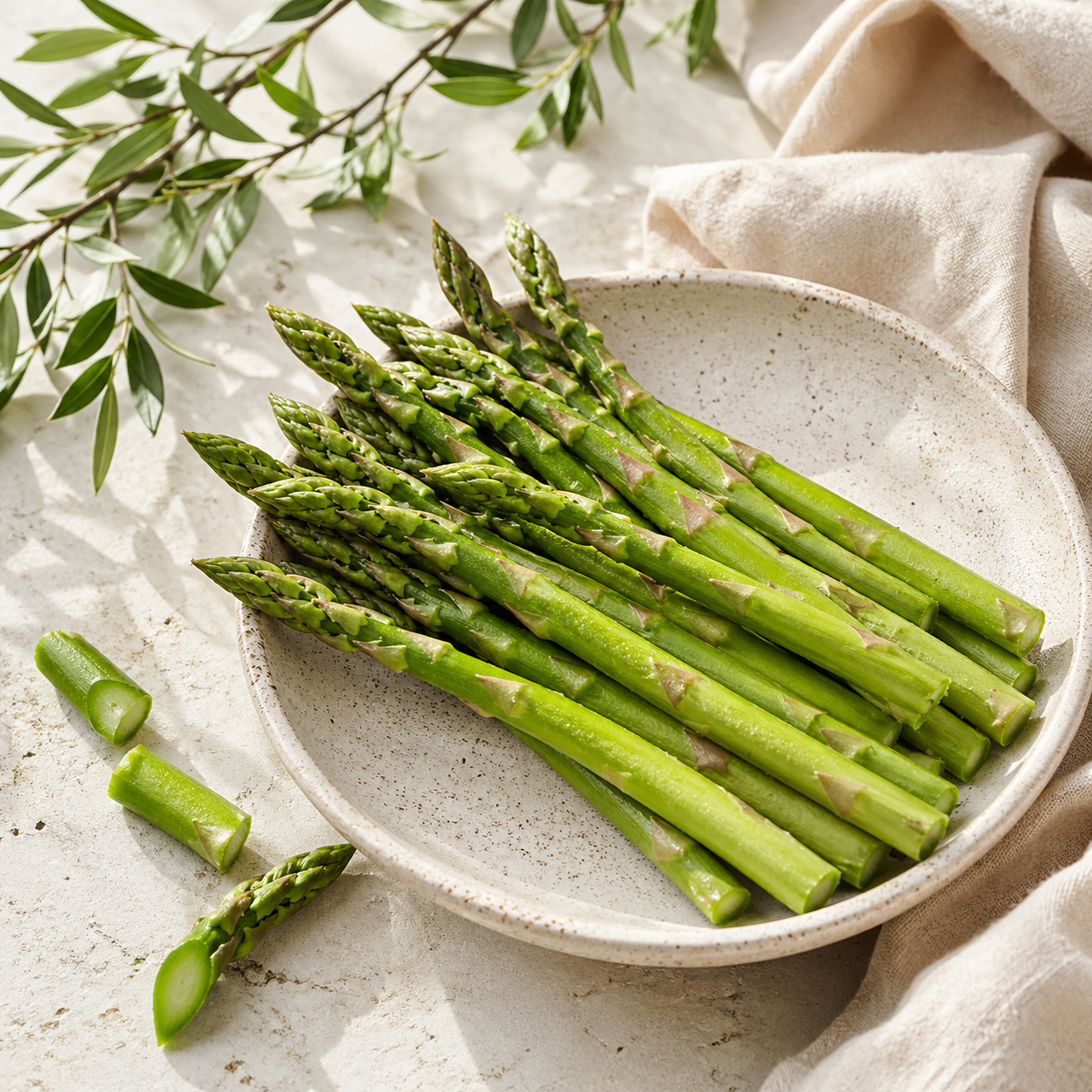


Forget boring salads and sodium-heavy takeout traps. By replacing high-sodium wrappers with crisp, nutrient-dense cabbage leaves and layering deep, authentic flavors with ginger, garlic, and zero-salt toasted sesame aroma, this recipe delivers a massive 19g of muscle-saving protein per cup while keeping sodium completely bottomed out.