Hello Yellow
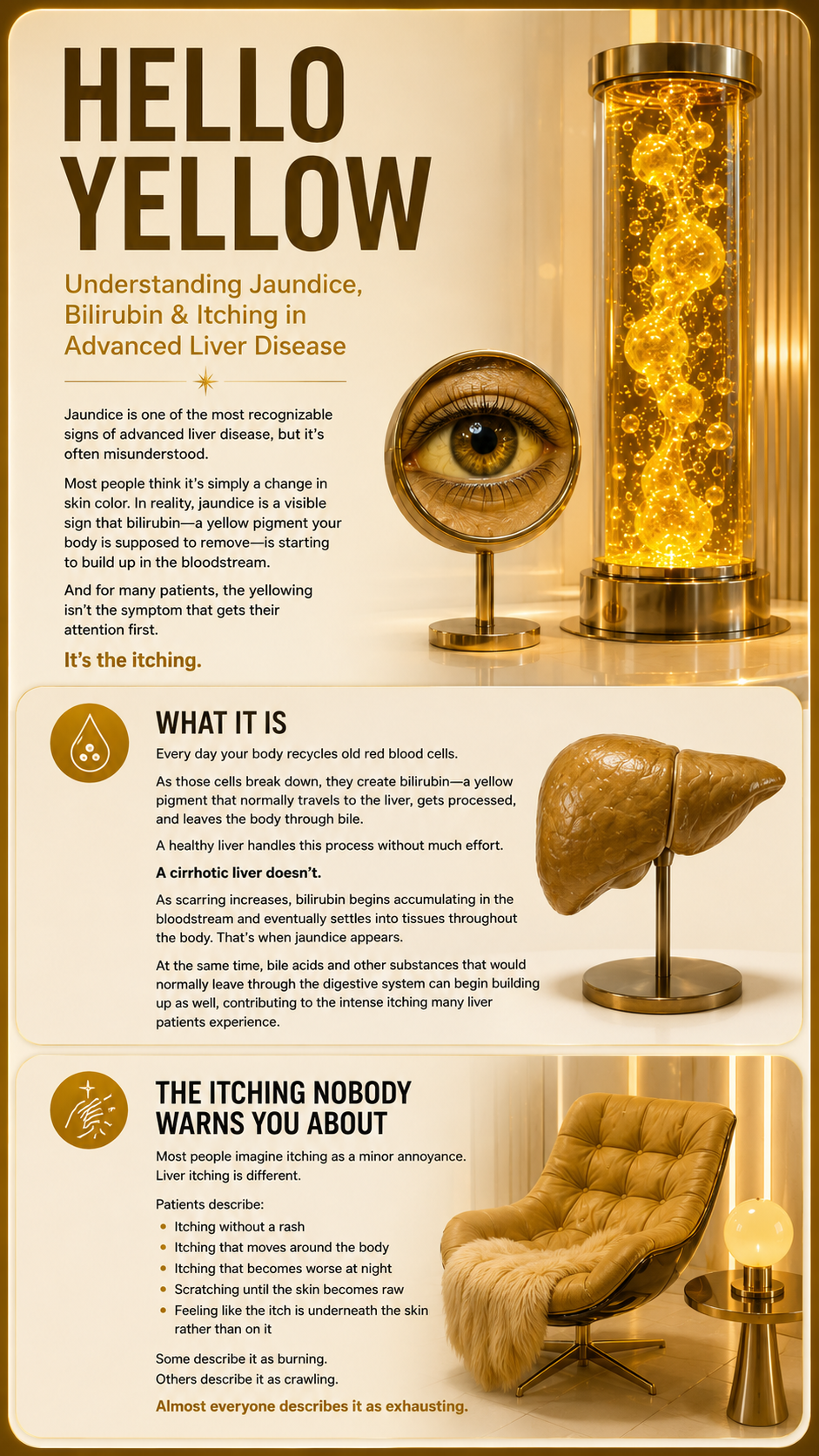
Understanding Jaundice, Bilirubin & Itching in Advanced Liver Disease
Jaundice is one of the most recognizable signs of advanced liver disease, but it's often misunderstood.
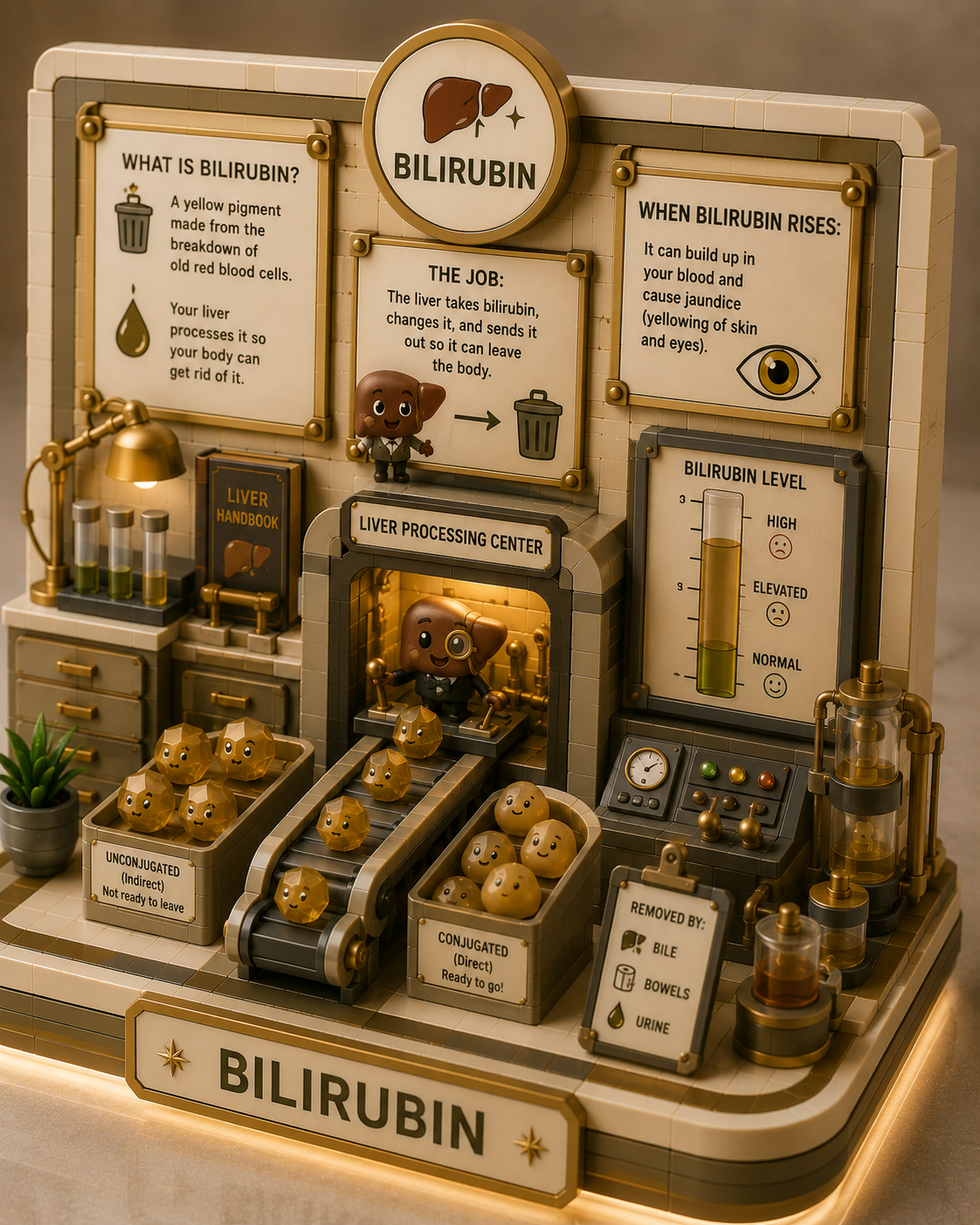
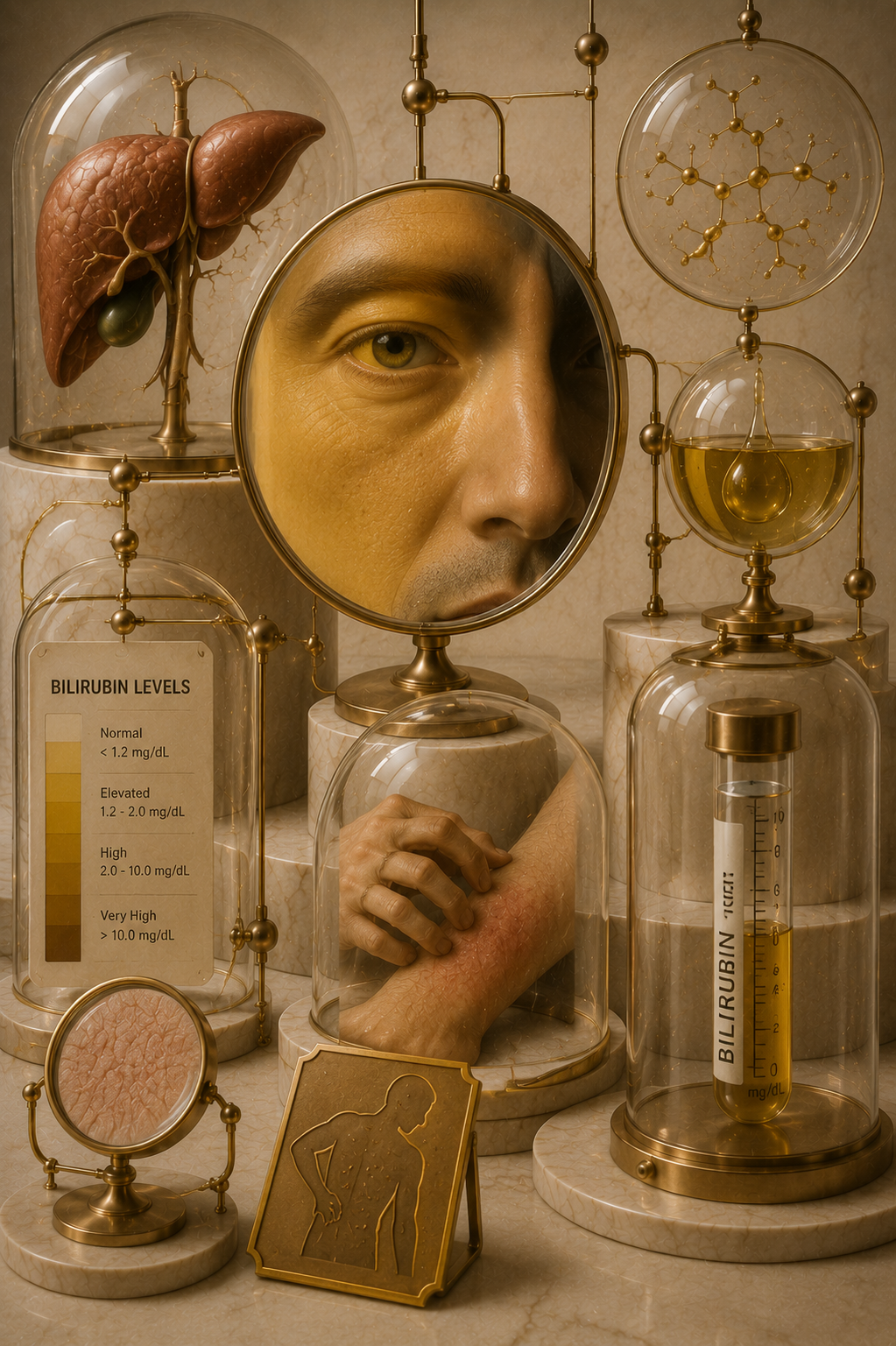
Most people think it's simply a change in skin color. In reality, jaundice is a visible sign that bilirubin—a yellow pigment your body is supposed to remove—is starting to build up in the bloodstream.
And for many patients, the yellowing isn't the symptom that gets their attention first.
It's the itching.
What It Is
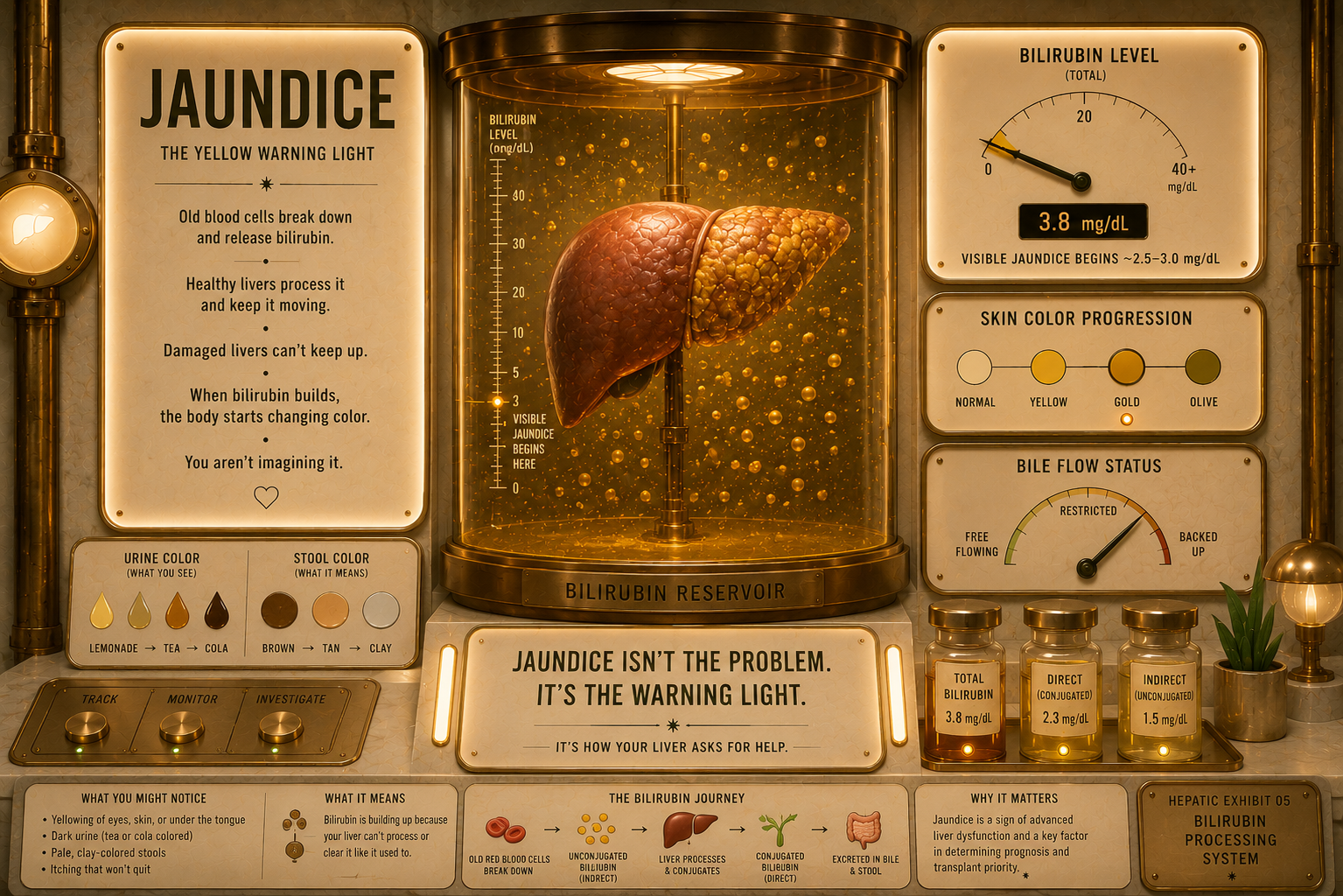
Every day your body recycles old red blood cells.
As those cells break down, they create bilirubin—a yellow pigment that normally travels to the liver, gets processed, and leaves the body through bile.
A healthy liver handles this process without much effort.
A cirrhotic liver doesn't.
As scarring increases, bilirubin begins accumulating in the bloodstream and eventually settles into tissues throughout the body.
That's when jaundice appears.
At the same time, bile acids and other substances that would normally leave through the digestive system can begin building up as well, contributing to the intense itching many liver patients experience.
Explore below to learn more & my experiences
What It Feels Like
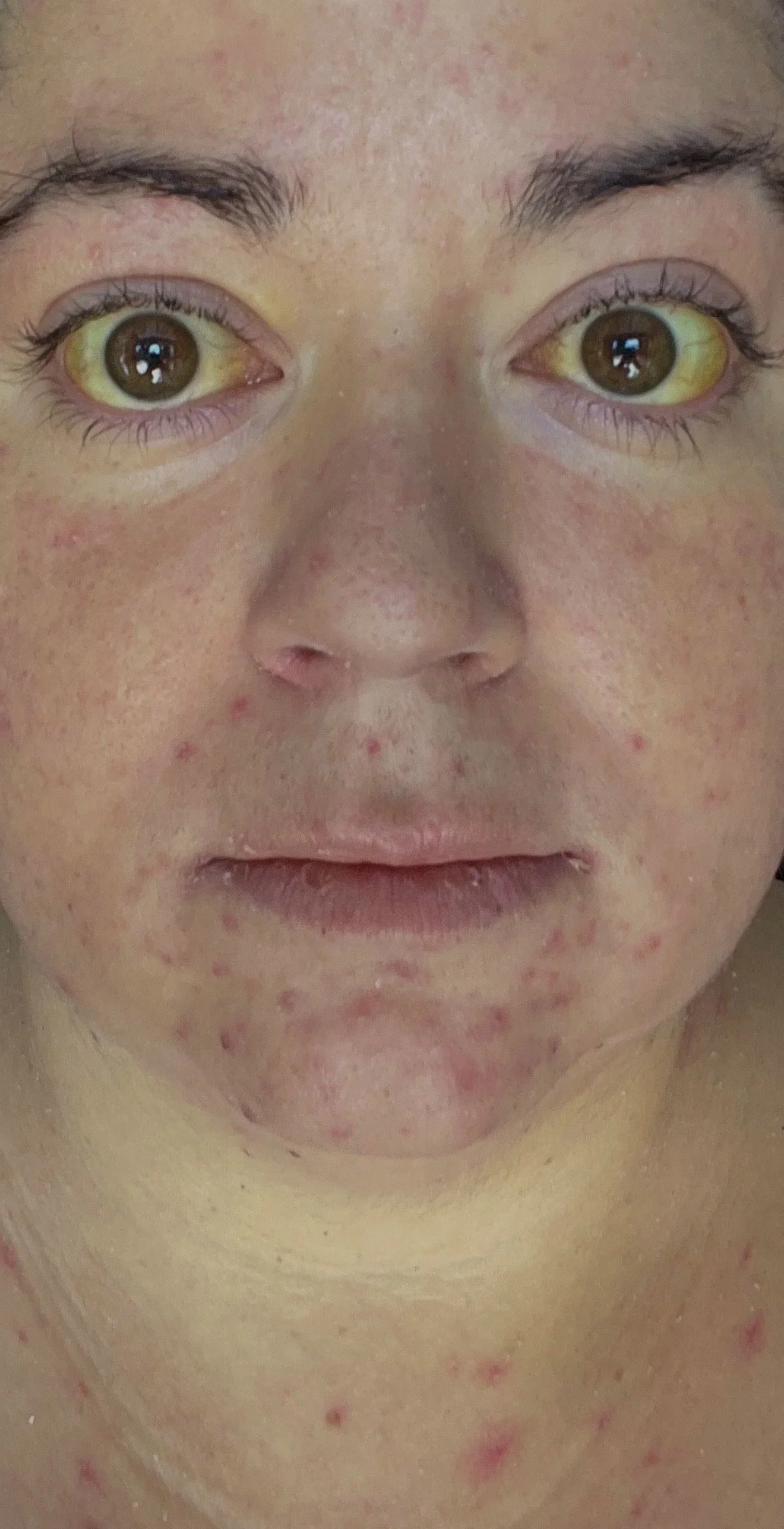
For some people, jaundice arrives gradually.
A slight yellow tint under the tongue.
A change in the whites of the eyes.
A comment from a family member asking if you're feeling okay.
For others, it seems to appear overnight.
Patients commonly notice:
🟡 Yellow eyes
🟡 Yellow skin
🟡 Dark urine
🟡 Pale or clay-colored stools
🟡 Fatigue
🟡 Loss of appetite
And often:
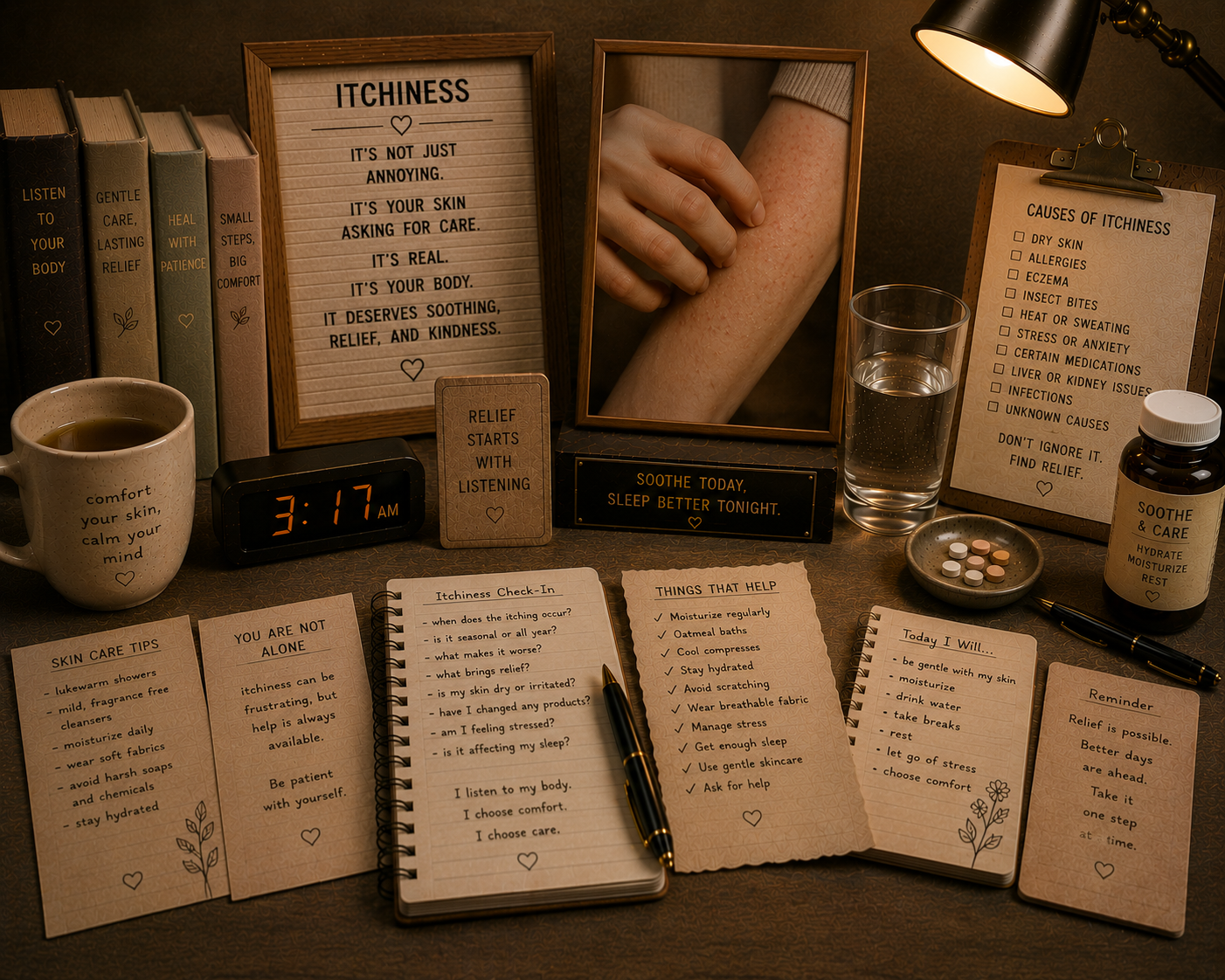
🔥 Itching that refuses to quit.
The Itching Nobody Warns You About
Most people imagine itching as a minor annoyance.
Liver itching is different.
Patients describe:
Itching without a rash
Itching that moves around the body
Itching that becomes worse at night
Scratching until the skin becomes raw
Feeling like the itch is underneath the skin rather than on it
Some describe it as burning.
Others describe it as crawling.
Almost everyone describes it as exhausting.
The Crossover Point
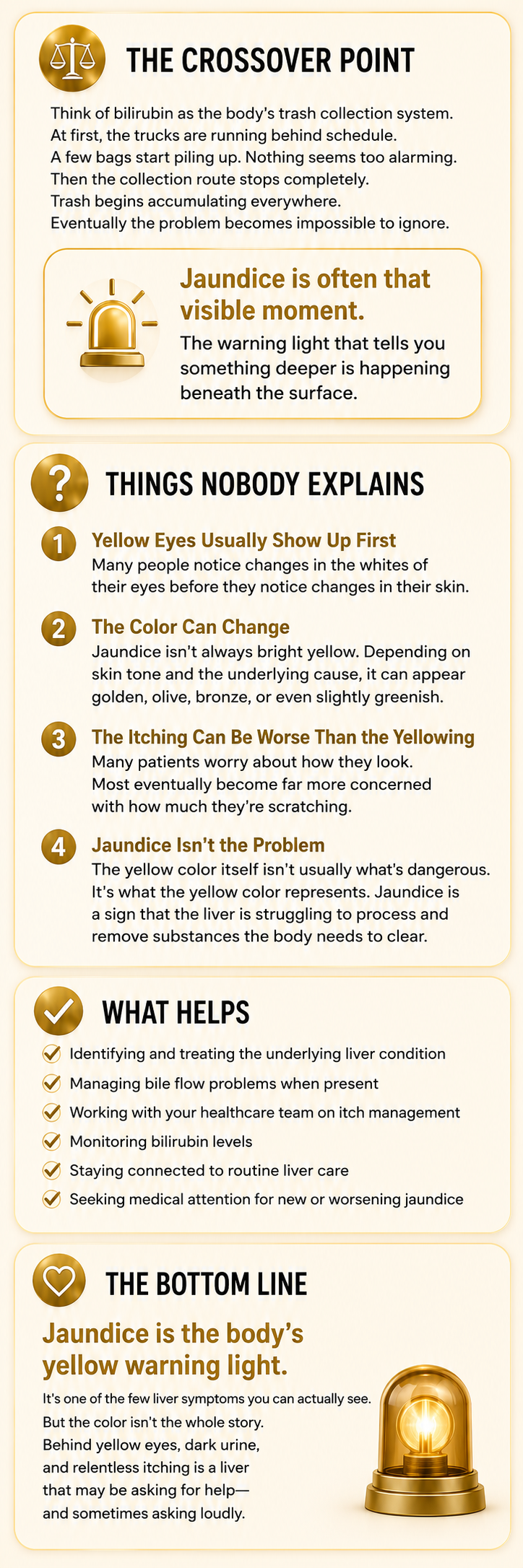
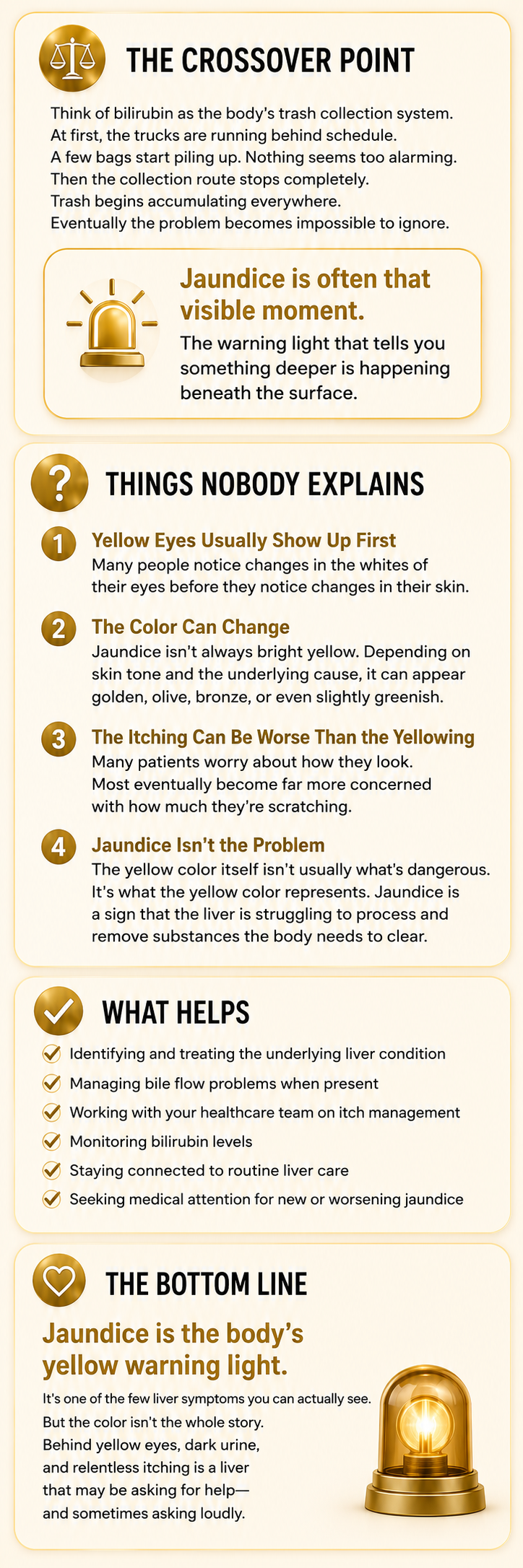
Think of bilirubin as the body's trash collection system.
At first, the trucks are running behind schedule.
A few bags start piling up.
Nothing seems too alarming.
Then the collection route stops completely.
Trash begins accumulating everywhere.
Eventually the problem becomes impossible to ignore.
Jaundice is often that visible moment.
The warning light that tells you something deeper is happening beneath the surface.
Things Nobody Explains
1. Yellow Eyes Usually Show Up First
Many people notice changes in the whites of their eyes before they notice changes in their skin.
2. The Color Can Change
Jaundice isn't always bright yellow.
Depending on skin tone and the underlying cause, it can appear golden, olive, bronze, or even slightly greenish.
3. The Itching Can Be Worse Than the Yellowing
Many patients worry about how they look.
Most eventually become far more concerned with how much they're scratching.
4. Jaundice Isn't the Problem
The yellow color itself isn't usually what's dangerous.
It's what the yellow color represents.
Jaundice is a sign that the liver is struggling to process and remove substances the body needs to clear.
What Helps
✔️ Identifying and treating the underlying liver condition
✔️Managing bile flow problems when present
✔️Working with your healthcare team on itch management
✔️Monitoring bilirubin levels
✔️ Staying connected to routine liver care
✔️Seeking medical attention for new or worsening jaundice
The Bottom Line
Jaundice is the body's yellow warning light.
It's one of the few liver symptoms you can actually see.
But the color isn't the whole story.
Behind yellow eyes, dark urine, and relentless itching is a liver that may be asking for help—and sometimes asking loudly.
Read More