
Sweet Potatoes
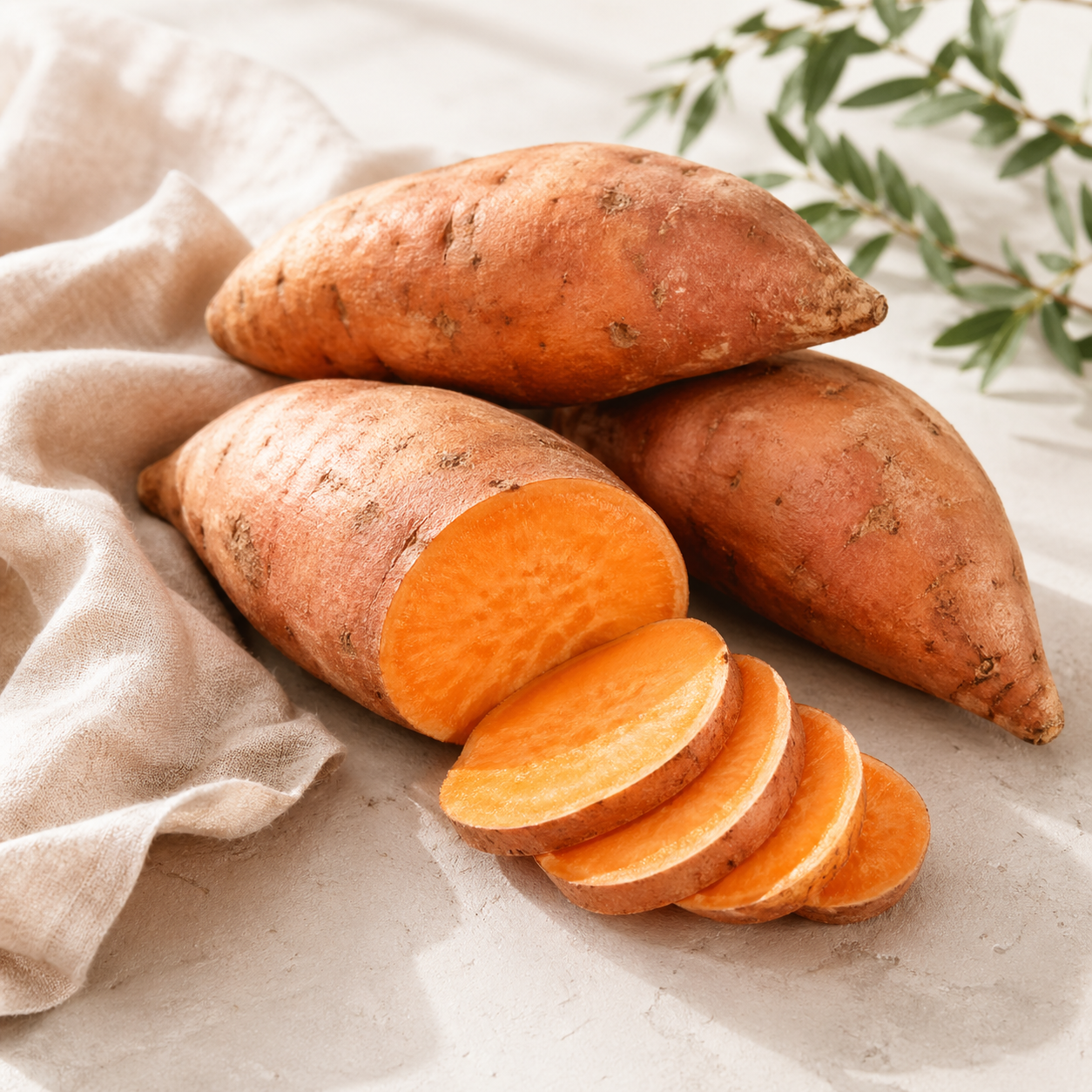
Are Sweet Potatoes Safe for Cirrhosis?
Yes, whole sweet potatoes are safe and serve as a vital metabolic lifeline for individuals with liver cirrhosis, but they require strict portion awareness due to complex potassium tracking and structural digestive side effects.
Why Sweet Potatoes are Safe For You:
Glycogen Support: Provides a steady, slow-release source of complex carbohydrates to prevent muscle breakdown (sarcopenia).
The Tissue Repair Benefit: Packed with massive levels of beta-carotene to support healthy liver cell regeneration.
The Brain Benefit: High soluble fiber forms a natural gel in the gut, binding to ammonia waste before it can hit your bloodstream.
The Safe Status: Naturally sweet and savory, acting as an automatic salt replacement to reduce heavy sodium cravings.
My Cirrhosis - Sweet Potato Soirée
This one is easy. Almost too easy that it felt uncertain in a new way (leave it to cirrhosis to find some form of a curveball!!) Sweet potatoes did not need a rebrand.
I already liked them. They were not suspicious. They were not decorative. They were not pretending to be something they weren’t. They were just sweet potatoes: warm, soft, reliable, and emotionally reasonable.
Which mattered, because after cirrhosis, eating got weird.
There were days when food felt like a full-time job. Appetite was inconsistent. Meals felt too ambitious. Nutrition mattered, but enthusiasm was not always available.
Sweet potatoes were easy.
Sweet Potatoes: The "Amber Anchor" for Glycogen Storage and Liver Regeneration
In the intricate nutritional strategy for managing liver cirrhosis, the Sweet Potato (Ipomoea batatas) is much more than a comforting root vegetable; it is a foundational "metabolic anchor." For a patient with a scarred liver, the organ's ability to store glucose as glycogen is severely compromised, often leading to energy crashes and sarcopenia (muscle wasting). Sweet potatoes provide a high-potency source of complex carbohydrates and beta-carotene. These nutrients act as a slow-release fuel system, preventing the insulin spikes that drive liver fat while providing the antioxidant "armor" needed to shield healthy hepatocytes from the oxidative stress that accelerates fibrosis.
A Voyage Through Time: The "Tuber of the Sun" and the Polynesian Mystery
The history of the sweet potato is a 5,000-year saga of botanical resilience and a fascinating archaeological mystery that suggests ancient trans-oceanic travel.
The Mesoamerican Heart: Native to Central and South America, sweet potatoes were domesticated at least 5,000 years ago. The Incas and Mayans revered them as a "gift from the sun," utilizing them as a primary energy source to build their high-altitude civilizations.
The Polynesian "Kumara" Mystery: One of the greatest mysteries in botany is how the sweet potato reached Polynesia long before European explorers. Genetic testing shows that the "Kumara" (the Maori word for sweet potato) was present in the Cook Islands as early as 1000 CE. This suggests that either ancient Polynesians sailed to South America and back, or that the seeds survived a journey across thousands of miles of ocean on driftwood—proving the incredible "survivability" of this liver-saving plant.
Columbus’s Misnomer: When Christopher Columbus encountered the sweet potato in the Caribbean, he called it batata. Because it looked somewhat like the "white potato" (Solanum tuberosum) found later, the two became linguistically tangled. In reality, the sweet potato is a member of the Morning Glory family, entirely unrelated to the common potato.
The Civil War Lifesaver: During the American Civil War, sweet potatoes became the "survival crop" for the South. When wheat and corn supplies were cut off by blockades, the sweet potato’s ability to grow in poor soil and store well through winter prevented widespread starvation, earning it a permanent place in Southern medicinal folklore as a "blood-builder."
Why Sweet Potatoes are a "Liver-Specific" Superfood
For a patient with cirrhosis, the liver's "energy warehouse" is understaffed. Sweet potatoes provide the specific chemical tools needed to keep the body's chemistry stable and supported.
1. Beta-Carotene: The Cellular Repair Technician
Sweet potatoes are the world's premier source of beta-carotene, which the body converts into Vitamin A. This is critical for cirrhosis patients because Vitamin A is stored in the liver and is essential for cell regeneration. Research indicates that the carotenoids in sweet potatoes can help reduce oxidative stress and inhibit the inflammatory pathways that turn healthy tissue into scar tissue.
2. Soluble Fiber and the "Ammonia Sweep"
A scarred liver struggles to filter out ammonia, a toxin that causes brain fog. Sweet potatoes are packed with soluble fiber, which forms a gel-like substance in the gut. This "gel" binds to ammonia and other nitrogenous waste, carrying them out of the body through the digestive tract before they can enter the bloodstream and tax the liver.
3. Potassium for Fluid Management (Ascites)
Managing fluid retention, or ascites, is a primary challenge in cirrhosis. Sweet potatoes are exceptionally high in potassium, which acts as a natural diuretic. Potassium helps the kidneys flush out excess sodium—the primary driver of swelling—helping to ease the pressure on the portal vein.
4. Manganese and the SOD Defense
Sweet potatoes provide a significant hit of manganese, a trace mineral that acts as a cofactor for Superoxide Dismutase (SOD). SOD is the liver's "Master Defense Enzyme," responsible for neutralizing the most aggressive free radicals produced during the detoxification process.
The Amber Anchor Illusion: Two Risks You Cannot Overlook
While Ipomoea batatas provides incredible filtration armor, its heavy nutrient load can trigger internal physical shifts that mimic severe liver decompensation:
The Sudden GI Bloat (The Ascites Mimic): The massive hit of soluble fiber that binds to ammonia can cause sudden, intense gas and abdominal distension if you eat too much too fast. For a patient constantly monitoring their waistline for fluid retention (ascites), this phantom bloating can trigger a massive wave of anxiety. Track your portions strictly to avoid throwing your digestive tract into a panic loop.
The Hepatorenal Potassium Load: Sweet potatoes are a powerhouse of potassium, which helps your kidneys flush out excess sodium. However, if your cirrhosis journey is complicated by hepatorenal syndrome or advanced kidney strain, your body cannot dump potassium efficiently. Overloading your system can alter your lab values overnight, meaning your portions must be treated as a calculated addition, not an all-you-can-eat vegetable.
How I Eat Them: Bake one. Mash one. Throw it in a bowl. Add cinnamon. Add Greek yogurt. Add whatever made sense that day. They did not ask too much of me, which automatically made them elite.
When eating anything felt hard, sweet potatoes were one of the foods I could still manage. Gentle enough when my body felt dramatic. Substantial enough to feel like I had actually done something useful.
Personally, they became a staple because sometimes the best food is not the most impressive food.
Sometimes it is the one that helps you eat when eating feels like work.
@diagnosis_cirrhosis 🍠✨ Sweet Potato Pie Whip ✨🍠 Cozy fall vibes on a cold winter night ❄️🥧🤍 Creamy… cinnamon-spiced… naturally sweet… literally tastes like sweet potato pie filling 😍🔥 BUT 👇 It’s also a recipe that is high fiber, low sodium, antioxidant-packed, and balanced with protein 💪💚✨ So with nourishing cirrhosis, fibrosis or fatty liver recipes, your liver doesn’t take the hit 🙅♀️🍷➡️💚 ✨ sweet potato = vitamin A + potassium powerhouse 🍠⚡ ✨ Greek yogurt + soy milk = protein support 💪🥄 ✨ cinnamon + turmeric = anti-inflammatory boost 🔥🧡 ✨ optional seeds = fiber + healthy fats 🌱✨ So yes… this is a dessert 🍰 but it can also be a smart snack or even breakfast 👀☀️ Perfect for anyone living with: autoimmune hepatitis 🛡️🔥 MASLD / NAFLD 🍩 MASH / NASH 🧪 alcohol-related liver disease 🚫🍷 hepatitis B 🦠 hepatitis C 🦠 PBC 🧬 PSC 🧬 hemochromatosis ⚙️ Wilson’s disease 🪙 A1AT deficiency 🧩 cryptogenic cirrhosis ❓ Or honestly… anyone who wants something sweet without undoing their progress (low sodium, high protein, high fiber) 🙌✨ 💡 ~240–280 calories 🔥 💡 7–9g fiber (!!) 🌱 💡 low sodium (~130mg) 🧂⬇️ 💡 real ingredients you can feel good about 🛒💚 Save this for your next cozy night in 🫶❄️ Because comfort food should still take care of you 💚✨ #highproteinmeals #healthydessert #recipeideas #fattyliver #hearthealth ♬ original sound - diagnosis cirrhosis
"Are You an Aspiring Chef?" Here are Winning Combos
Since cirrhosis requires a strict low-sodium diet, the natural sweetness of the amber tuber provides a satisfying base that doesn't need salt to taste "complete."
The "Metabolic Shield" Roast (Sweet Potato + Cinnamon + Walnuts): Roast cubed sweet potatoes with a heavy dusting of cinnamon. The cinnamon improves insulin sensitivity, and the walnuts provide the arginine to help the liver flush the ammonia that the potato’s fiber has trapped.
The "Andean Repair" Bowl (Sweet Potato + Quinoa + Black Beans): A triple-threat of complex carbs and plant protein. The quinoa and black beans fight muscle wasting, while the sweet potato provides the energy to process those proteins.
The "Savory Zest" Mash (Sweet Potato + Garlic + Olive Oil): Mash steamed sweet potatoes with roasted garlic and extra virgin olive oil. The olive oil helps your body absorb the fat-soluble beta-carotene, and the garlic provides the sulfur for detox.
The "Omega Sunrise" (Sweet Potato + Salmon + Cilantro): Serve a baked salmon fillet over a mashed sweet potato. Top with fresh cilantro to bind heavy metals and brighten the dish without sodium.
Sweet Potato “Pie” Whip: video above! 🍠 (Serves 2) Ingredients: • 1 medium sweet potato (~200g cooked) • ¼ cup plain nonfat Greek yogurt • 3 tbsp unsweetened soy milk • ½ tsp cinnamon • ¼ tsp turmeric + pinch black pepper • ¼ tsp vanilla • 1–2 tsp monk fruit / stevia / honey Optional: • 1 tsp flax or chia seeds • toppings: cacao nibs, pistachios, blueberries Instructions: 1. Cook sweet potato until very soft 2. Mash until smooth 3. Add everything else 4. Whip/blend until creamy 5. Split into 2 + add toppings Per serving: ~120–140 cal | 6g protein | 3–4.5g fiber |
Nifty Prep Tools for the Liver-Friendly Kitchen
To keep your "Amber Anchors" nutrient-dense and easy to prep, these Amazon tools are essential for any liver-safe home:
Fullstar 9-in-1 Vegetable Chopper and Dicer: Sweet potatoes are incredibly dense and can be hard to cut, especially for patients experiencing fatigue. This tool allows you to dice an entire sweet potato into uniform cubes in one motion, ensuring they cook evenly and retain their nutrients.
OXO Good Grips Pro Vegetable Peeler: While the skin contains fiber, many patients find it hard to digest. This professional-grade peeler makes removing the tough outer layer effortless, saving precious energy.
Silpat Non-Stick Silicone Baking Mat: To get that "caramelized" sweetness without using butter or high-sodium oils, these mats are a necessity. They allow the potato's natural sugars to roast perfectly without sticking.
Vremi Glass Meal Prep Containers: Cooked sweet potato is the ultimate "small, frequent meal" staple. Pre-portion 4-ounce servings in these airtight glass containers so they are ready to grab for a quick, muscle-saving snack throughout the week.
Summary of Benefits for Cirrhosis
Glycogen Support: Provides a steady release of glucose to prevent muscle breakdown.
Tissue Repair: Massive levels of beta-carotene support liver cell regeneration.
Ammonia Defense: High soluble fiber binds toxins in the gut.
Fluid Balance: Potassium helps flush excess sodium to manage ascites.
Salt Replacement: Naturally sweet and savory, reducing the craving for salt.
Credible Sources for Your Journey
National Institutes of Health (PMC): Antioxidant activity and hepatoprotective effect of sweet potato
American Liver Foundation: Nutrition and Cirrhosis: The Power of Complex Carbohydrates
Healthline: Sweet Potatoes: Nutrition Facts and Health Benefits
Medical News Today: What are the benefits of sweet potatoes?
ScienceDirect: Carotenoids and Liver Health: A Comprehensive Review
