
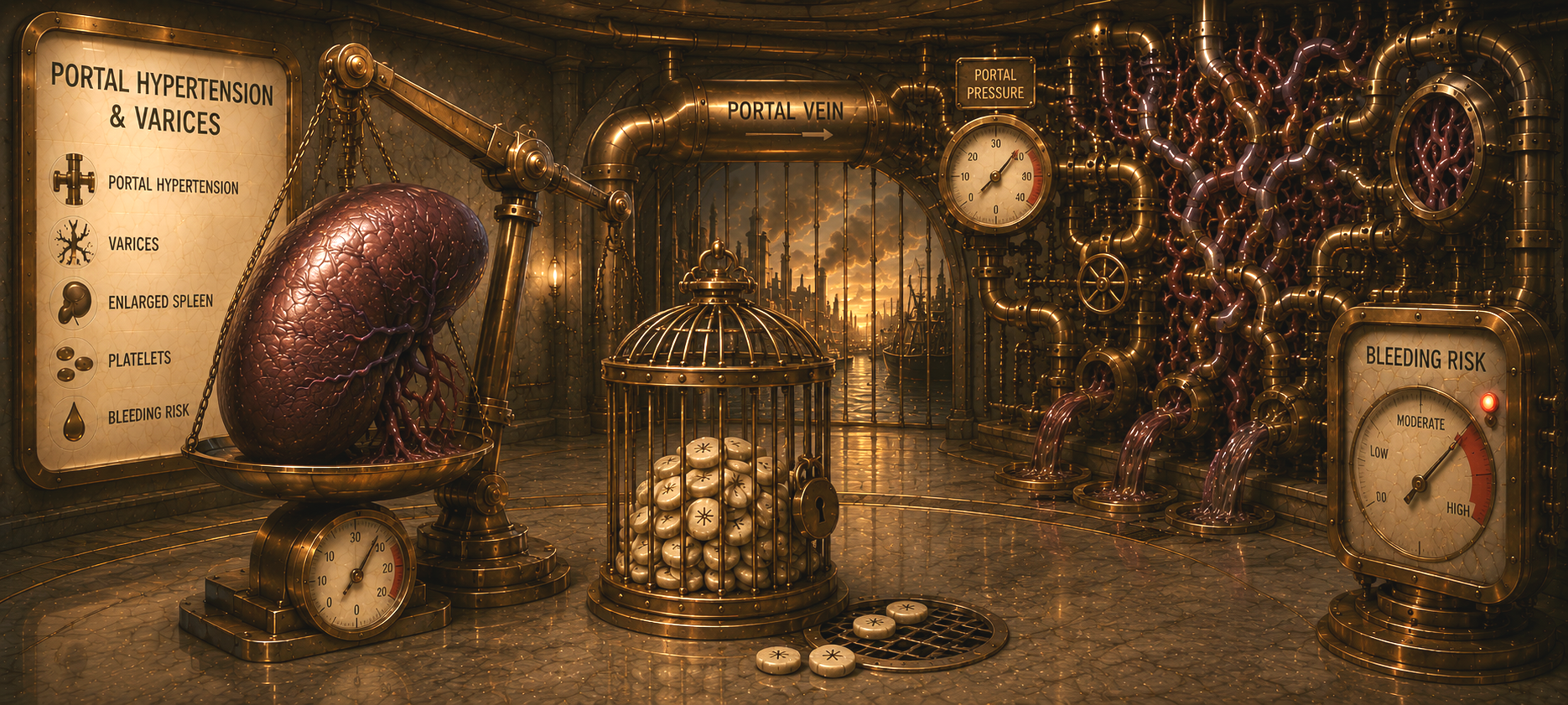
Gridlock & Detours
Portal Hypertension & Varices
It started as a constellation of red spots on my chest. At least I thought it did until I finally actually understood what it meant for an umbilical vein to recanalize, or what a spontaneous IMV-IMC shunt was, or better yet that your body can result to a hemorrhoid to avoid internal explosion… really though.
When this concept was first broached with me it was about 32 seconds before my first endoscopy and frankly the camera bopping around my esophagus sounded far more treacherous than “pressure”.
Turns out I bet on the wrong horse-power there. More on that below, including my experience with these crazy crimson symptoms.
Explore below to learn more & my experiences
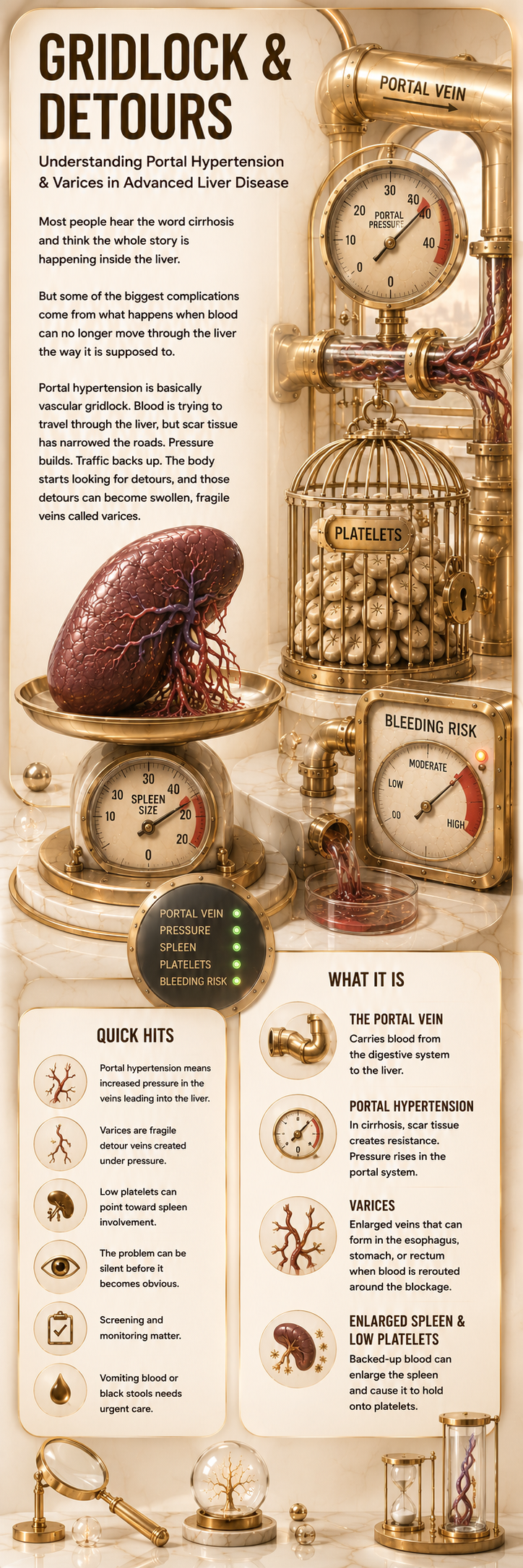
Understanding Portal Hypertension & Varices in Advanced Liver Disease
Most people hear the word cirrhosis and think the whole story is happening inside the liver.
But some of the biggest complications come from what happens when blood can no longer move through the liver the way it is supposed to.
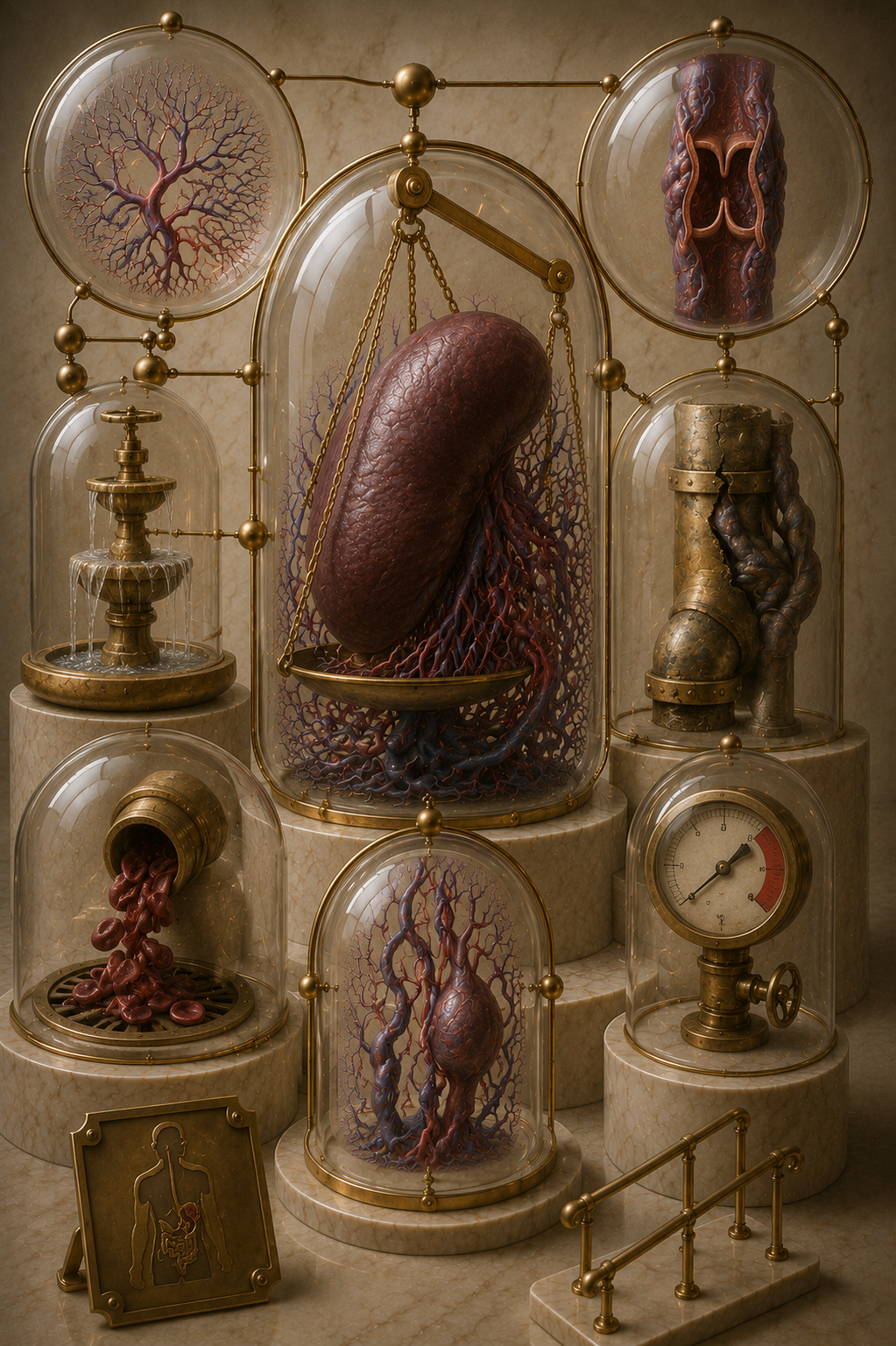
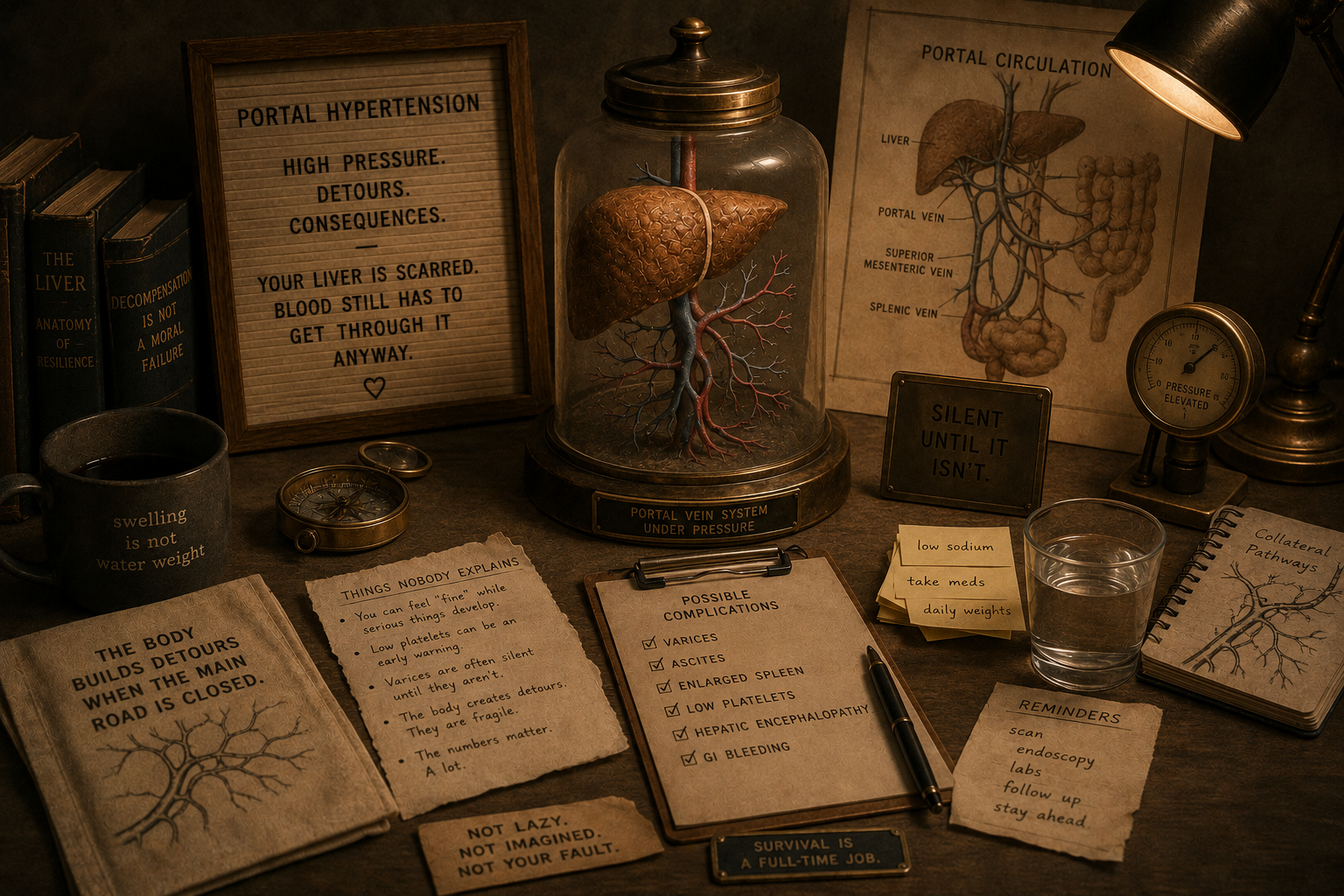
Portal hypertension is basically vascular gridlock. Blood is trying to travel through the liver, but scar tissue has narrowed the roads. Pressure builds. Traffic backs up. The body starts looking for detours, and those detours can become swollen, fragile veins called varices.
Portal Hypertension
Portal hypertension means there is increased pressure in the blood vessels that lead into the liver.
That pressure can affect the spleen, digestive tract, veins, platelets, and bleeding risk.
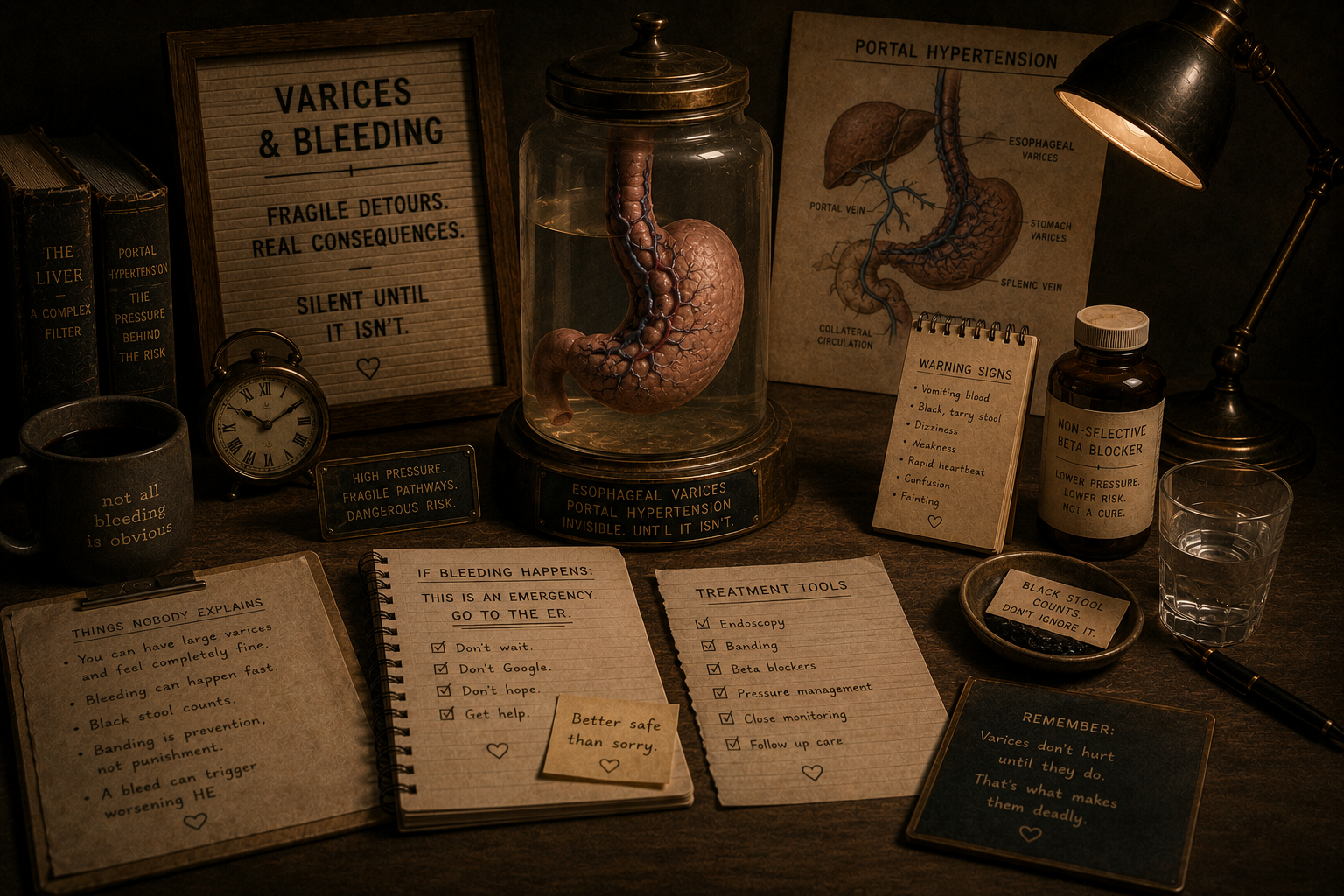
Varices
When pressure builds, the body tries to reroute blood around the blockage.
Those alternate routes can form varices, which are enlarged veins that often develop in the esophagus, stomach, or rectum.
They are not dangerous because they exist. They are dangerous because they are thin, fragile, and under pressure.
Enlarged Spleen & Low Platelets
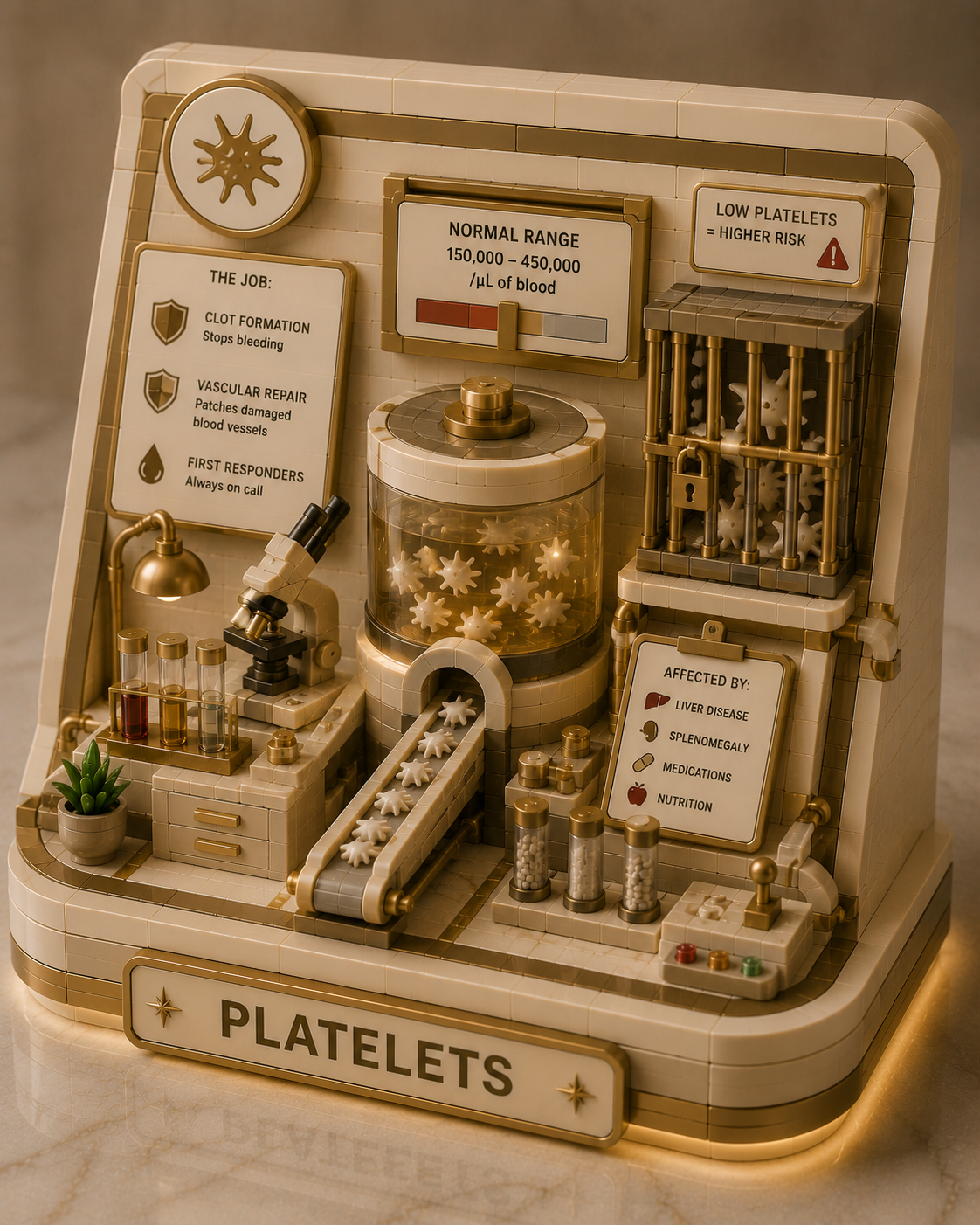
As blood backs up, the spleen can enlarge and begin holding onto platelets.
That is why low platelets can sometimes be a clue that portal pressure and spleen involvement are part of the picture.
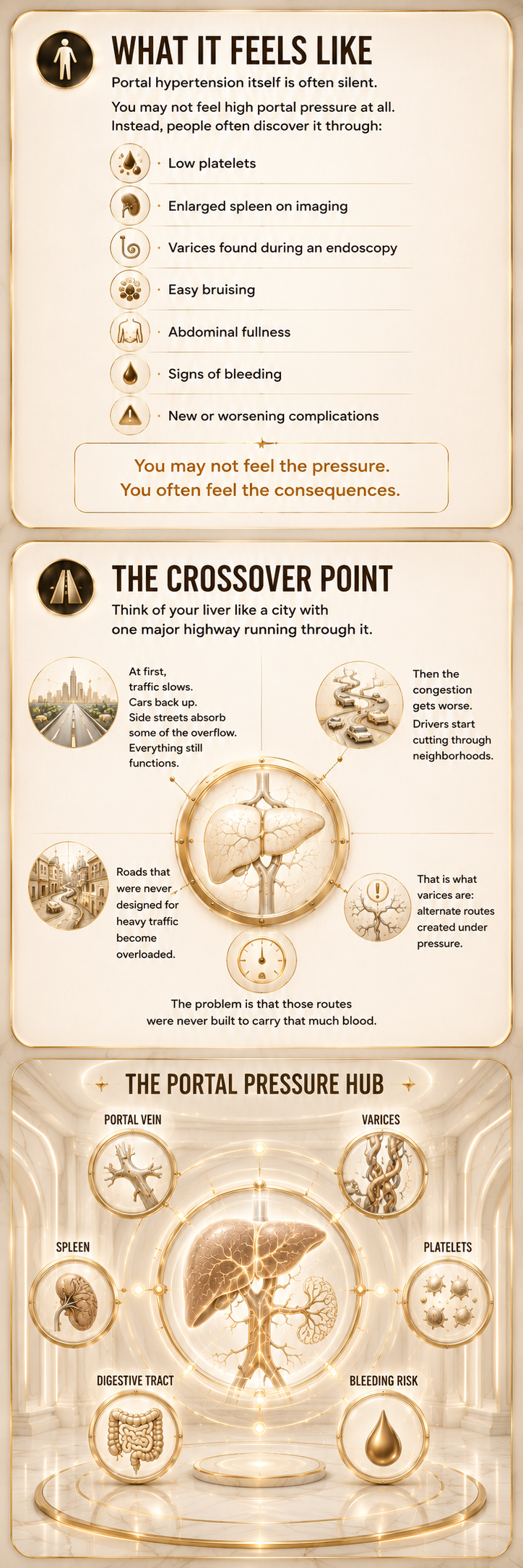
What It Feels Like
Portal hypertension itself is often silent.
You may not feel high portal pressure at all.
Instead, people often discover it through:
🩸 Low platelets
🩸 Enlarged spleen on imaging
🩸 Varices found during an endoscopy
🩸 Easy bruising
🩸 Abdominal fullness
🩸 Signs of bleeding
🩸 New or worsening complications
The Crossover Point
Think of your liver like a city with one major highway running through it.
At first, traffic slows.
Cars back up.
Side streets absorb some of the overflow.
Everything still functions.
Then the congestion gets worse.
Drivers start cutting through neighborhoods.
Roads that were never designed for heavy traffic become overloaded.
That is what varices are: alternate routes created under pressure.
The problem is that those routes were never built to carry that much blood.
Read More
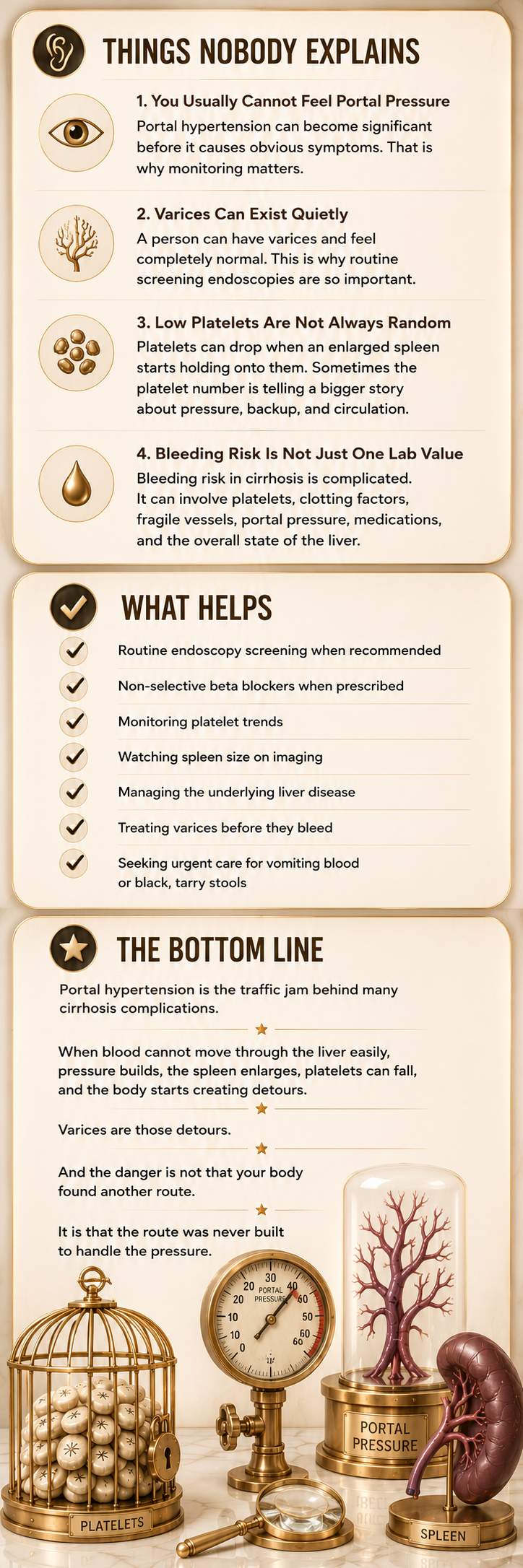
Things Nobody Explains
1. You Usually Cannot Feel Portal Pressure
Portal hypertension can become significant before it causes obvious symptoms.
That is why monitoring matters.
2. Varices Can Exist Quietly
A person can have varices and feel completely normal.
This is why routine screening endoscopies are so important.
3. Low Platelets Are Not Always Random
Platelets can drop when an enlarged spleen starts holding onto them.
Sometimes the platelet number is telling a bigger story about pressure, backup, and circulation.
4. Bleeding Risk Is Not Just One Lab Value
Bleeding risk in cirrhosis is complicated.
It can involve platelets, clotting factors, fragile vessels, portal pressure, medications, and the overall state of the liver.
What Helps
✔️ Routine endoscopy screening when recommended
✔️ Non-selective beta blockers when prescribed
✔️Monitoring platelet trends
✔️ Watching spleen size on imaging
✔️ Managing the underlying liver disease
✔️ Treating varices before they bleed
✔️ Seeking urgent care for vomiting blood or black, tarry stools
The Bottom Line
Portal hypertension is the traffic jam behind many cirrhosis complications.
When blood cannot move through the liver easily, pressure builds, the spleen enlarges, platelets can fall, and the body starts creating detours.
Varices are those detours.
And the danger is not that your body found another route.
It is that the route was never built to handle the pressure.
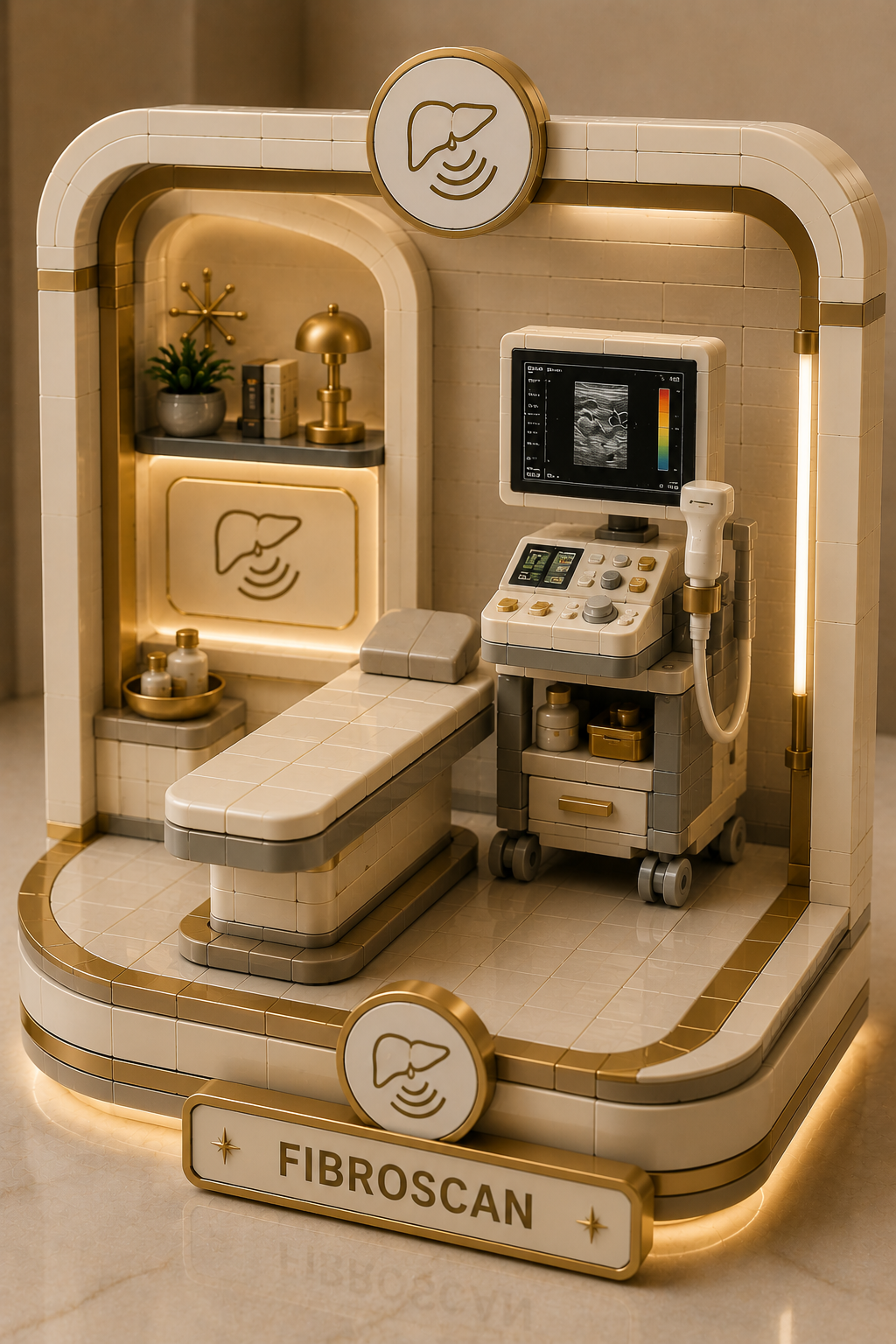
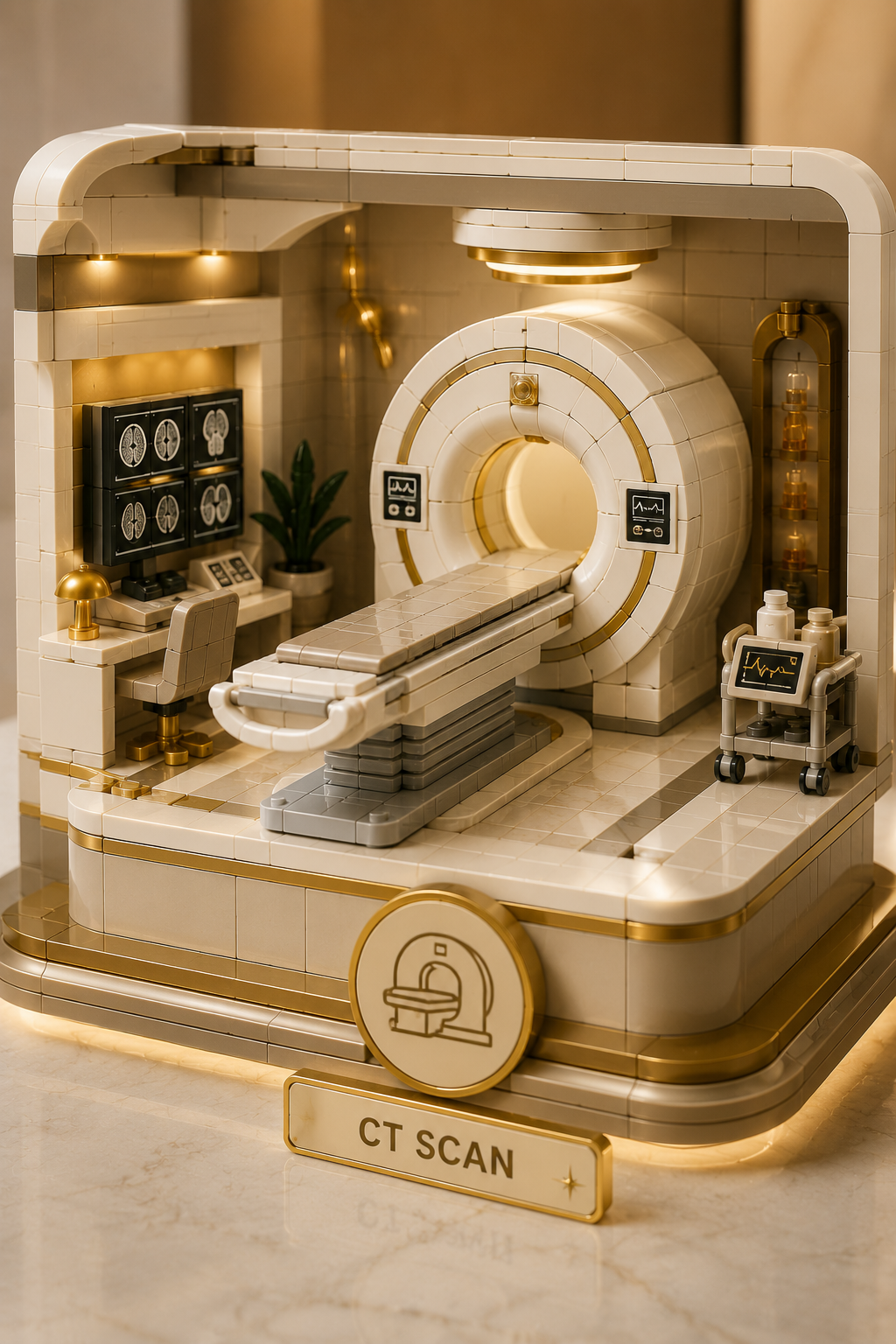

Magnetic Resonance Imaging (MRI) serves as a gold standard for noninvasively evaluating liver cirrhosis, capable of detecting structural liver changes, assessing stiffness, and identifying hepatocellular carcinoma. The imaging technique, which includes advanced methods like Magnetic Resonance Elastography (MRE), allows clinicians to map portal hypertension and evaluate tissue composition.