
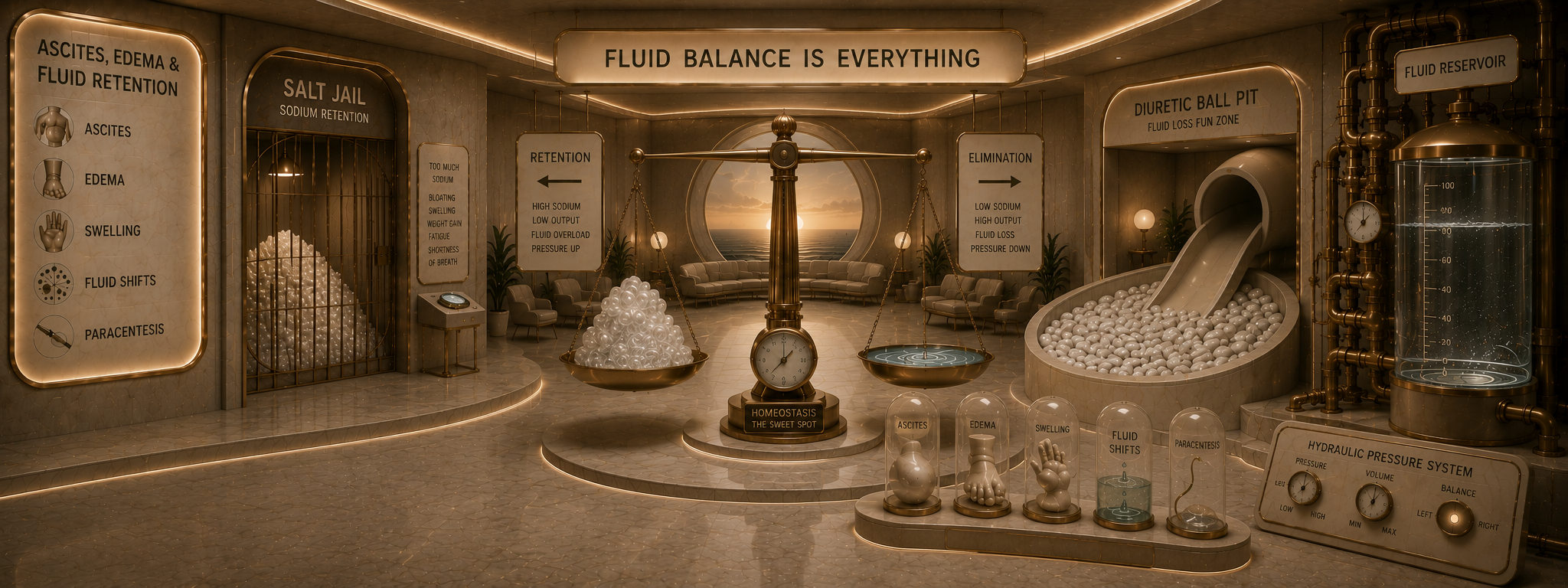
Ascites & Edema
Fluid Dynamics
Understanding Ascites & Edema in Advanced Liver Disease
One day your pants fit normally. The next, you're loosening the waistband, switching shoes, and wondering how you gained ten pounds in a week when your appetite has barely existed.
Fluid retention is one of the most recognizable complications of advanced liver disease. It can show up in the abdomen as ascites, in the legs and feet as edema, or sometimes both at the same time. What makes it so frustrating is that it often feels like the laws of physics have stopped making sense. You're swollen everywhere, yet your body is actually struggling to keep enough fluid where it belongs.
People often assume fluid retention is simply "water weight." In reality, it is the result of a complex chain reaction involving portal hypertension, changes in blood flow, kidney signaling, sodium retention, and a liver that can no longer maintain normal fluid balance.
For me, ascites and edema were not even an impending doom that was on my unsurprisingly sparse radar.
I thought that my liver was failing… not that my body was fulfilling the self proclaimed fear i’d had for eons - that I was dehydrated. Unfortunately, the fluid came, and it was at a time when I was still under the impression that this was all temporary.
So what did I do? More hydration… that’s always the answer, right? Wrong! Read more about fluid in cirrhosis so that you do not make the same mistakes I did!


Explore below to learn more & my experiences
For me, ascites and edema were not even an impending doom that was on my unsurprisingly sparse radar.
I thought that my liver was failing… not that my body was fulfilling the self proclaimed fear i’d had for eons - that I was dehydrated. Unfortunately, the fluid came, and it was at a time when I was still under the impression that this was all temporary.
So what did I do? More hydration… that’s always the answer, right? Wrong! Read more about fluid in cirrhosis so that you do not make the same mistakes I did!
What It Feels Like
Ascites
Fluid accumulates inside the abdominal cavity.
Patients commonly experience:
💧 Rapid abdominal enlargement
💧 Tightness or pressure
💧 Feeling full after only a few bites of food
💧 Difficulty bending over
💧 Shortness of breath
💧 Unexpected weight gain
Edema
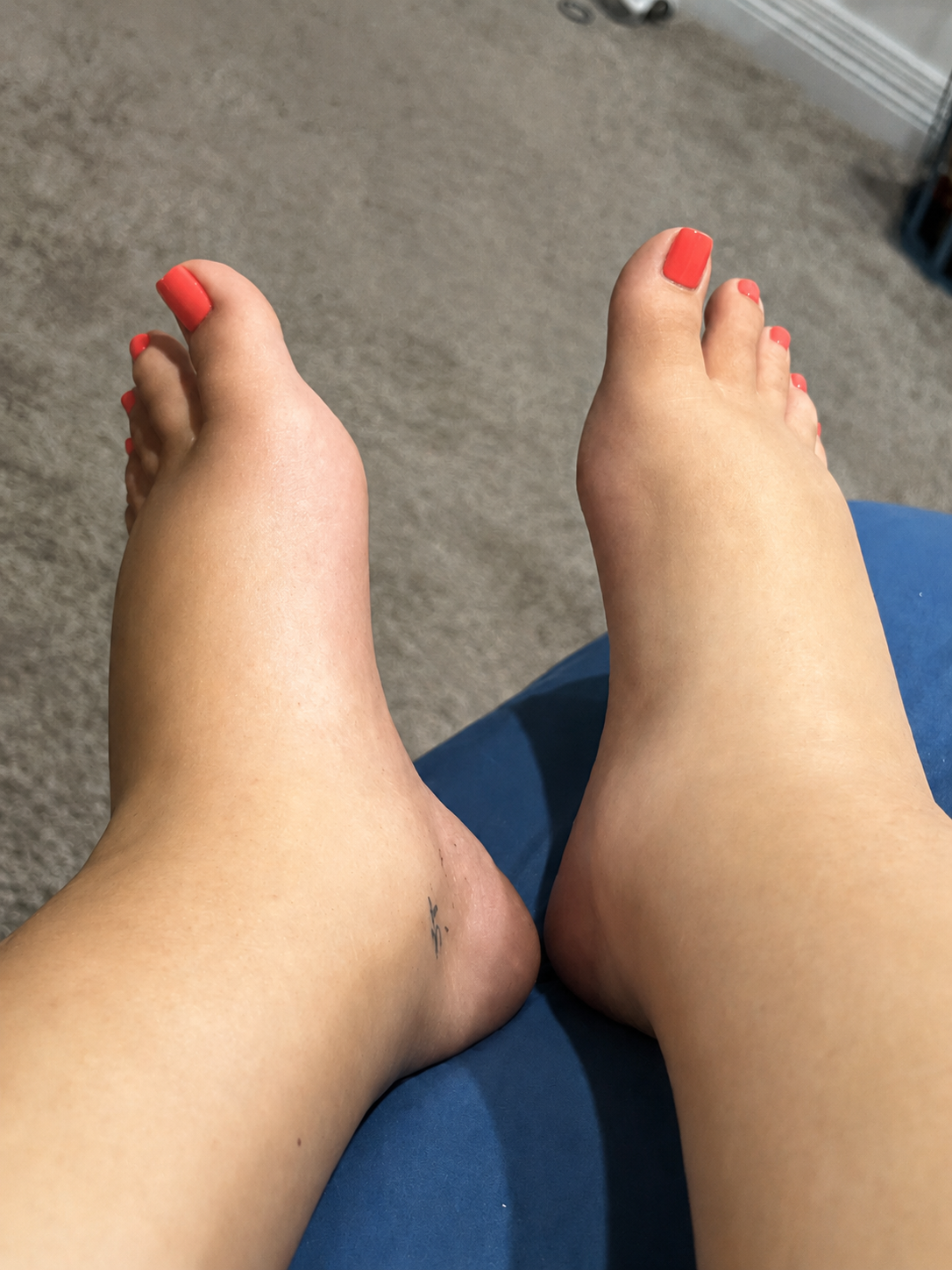
Fluid accumulates in the tissues, most commonly the legs, ankles, and feet.
Patients often notice:
🦶 Swollen feet
🦵 Tight calves
👟 Shoes no longer fitting
🧦 Sock marks that linger for hours
⬆️ Swelling that worsens throughout the day
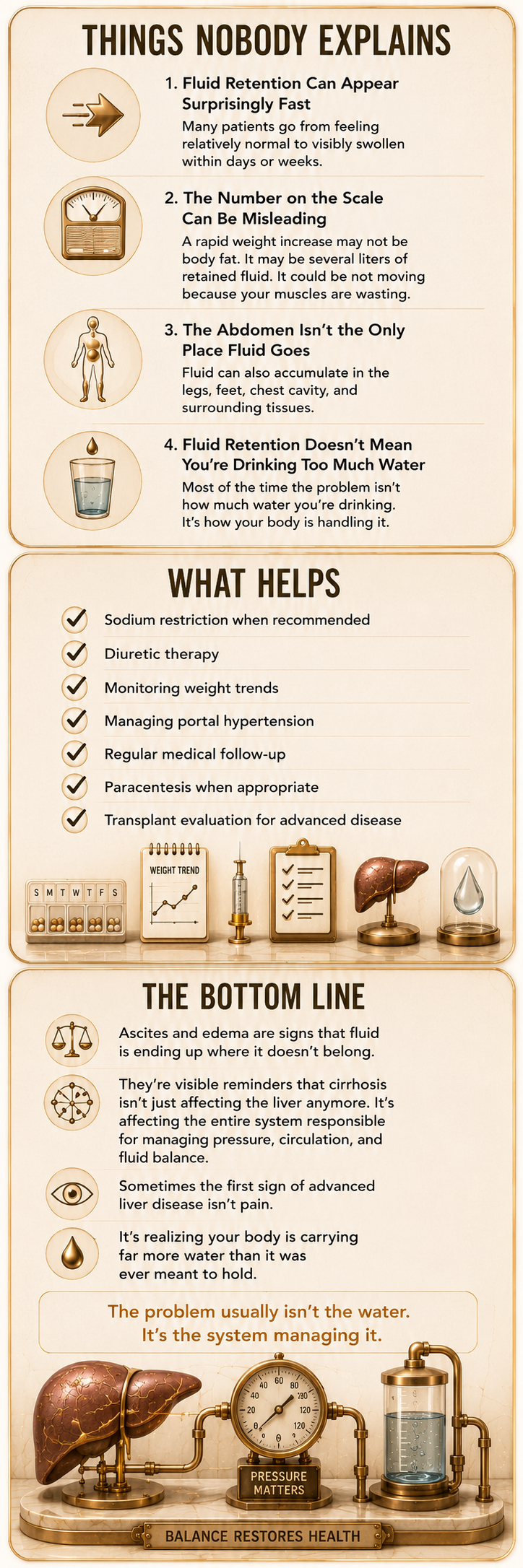
Things Nobody Explains
1. Fluid Retention Can Appear Surprisingly Fast
Many patients go from feeling relatively normal to visibly swollen within days or weeks.
2. The Number on the Scale Can Be Misleading
A rapid weight increase may not be body fat.
It may be several liters of retained fluid.
It could be not moving because your muscles are wasting.
3. The Abdomen Isn't the Only Place Fluid Goes
Fluid can also accumulate in the legs, feet, chest cavity, and surrounding tissues.
4. Fluid Retention Doesn't Mean You're Drinking Too Much Water
Most of the time the problem isn't how much water you're drinking.
It's how your body is handling it.
What Helps
✔️ Sodium restriction when recommended
✔️ Diuretic therapy
✔️ Monitoring weight trends
✔️ Managing portal hypertension
✔️ Regular medical follow-up
✔️ Paracentesis when appropriate
✔️ Transplant evaluation for advanced disease
The Bottom Line
Ascites and edema are signs that fluid is ending up where it doesn't belong.
They're visible reminders that cirrhosis isn't just affecting the liver anymore. It's affecting the entire system responsible for managing pressure, circulation, and fluid balance.
Sometimes the first sign of advanced liver disease isn't pain.
It's realizing your body is carrying far more water than it was ever meant to hold.
What It Is
Your circulatory system is designed to keep fluid inside blood vessels where it can do useful work.
A healthy liver helps regulate this balance by producing proteins like albumin, maintaining blood flow, and helping coordinate the body's fluid management systems.
As cirrhosis progresses, those systems begin to break down.
Portal Hypertension
Scarring inside the liver creates resistance to blood flow.
Pressure builds inside the portal vein, forcing fluid outward into surrounding tissues.
Albumin Decline
The liver produces albumin, a protein that helps keep fluid inside blood vessels.
When albumin levels fall, fluid escapes more easily into the abdomen, legs, and surrounding tissues.
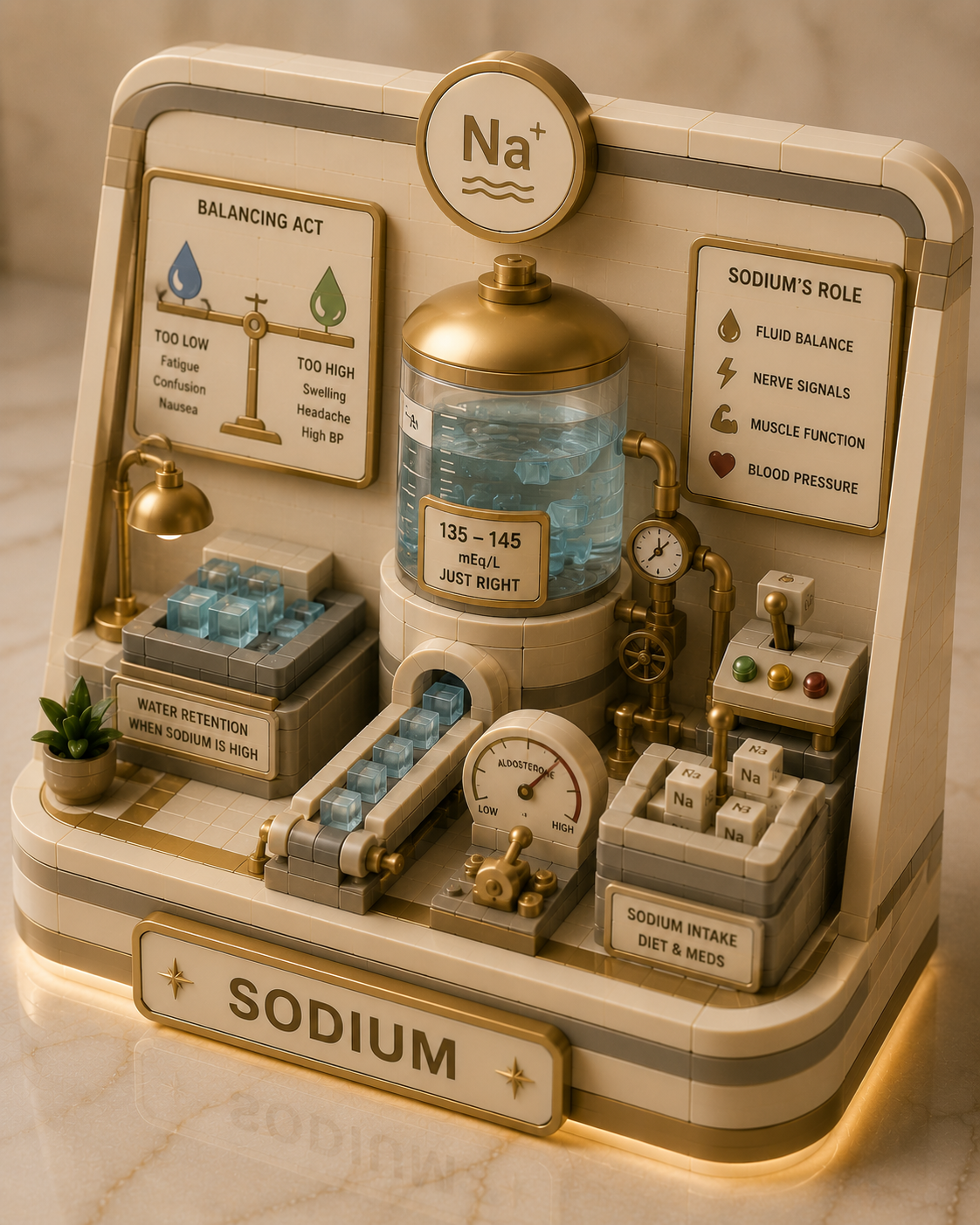
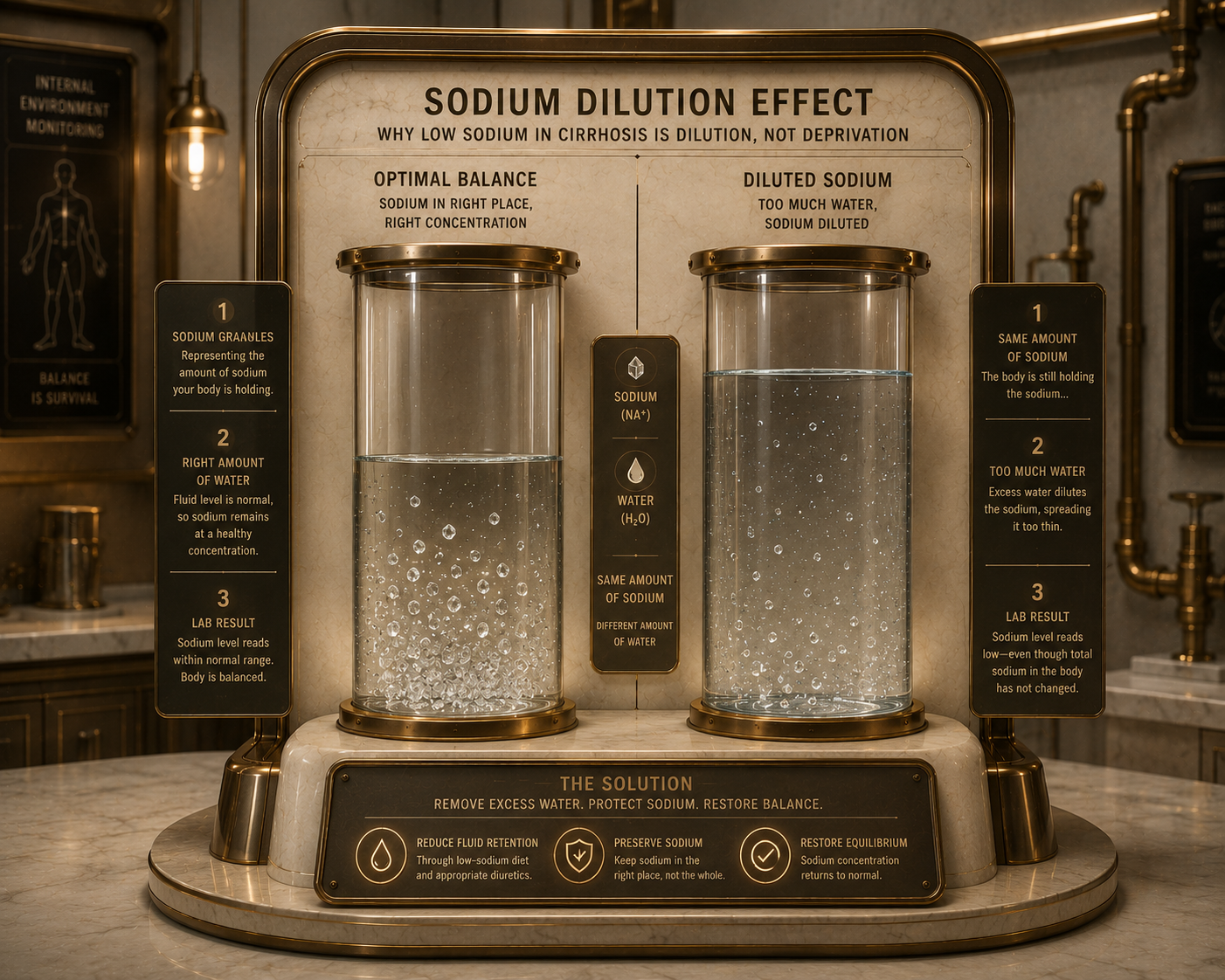
Sodium & Water Retention
The body mistakenly believes it is dehydrated.In response, hormones tell the kidneys to hold onto even more sodium and water.
Unfortunately, this often makes the swelling worse.
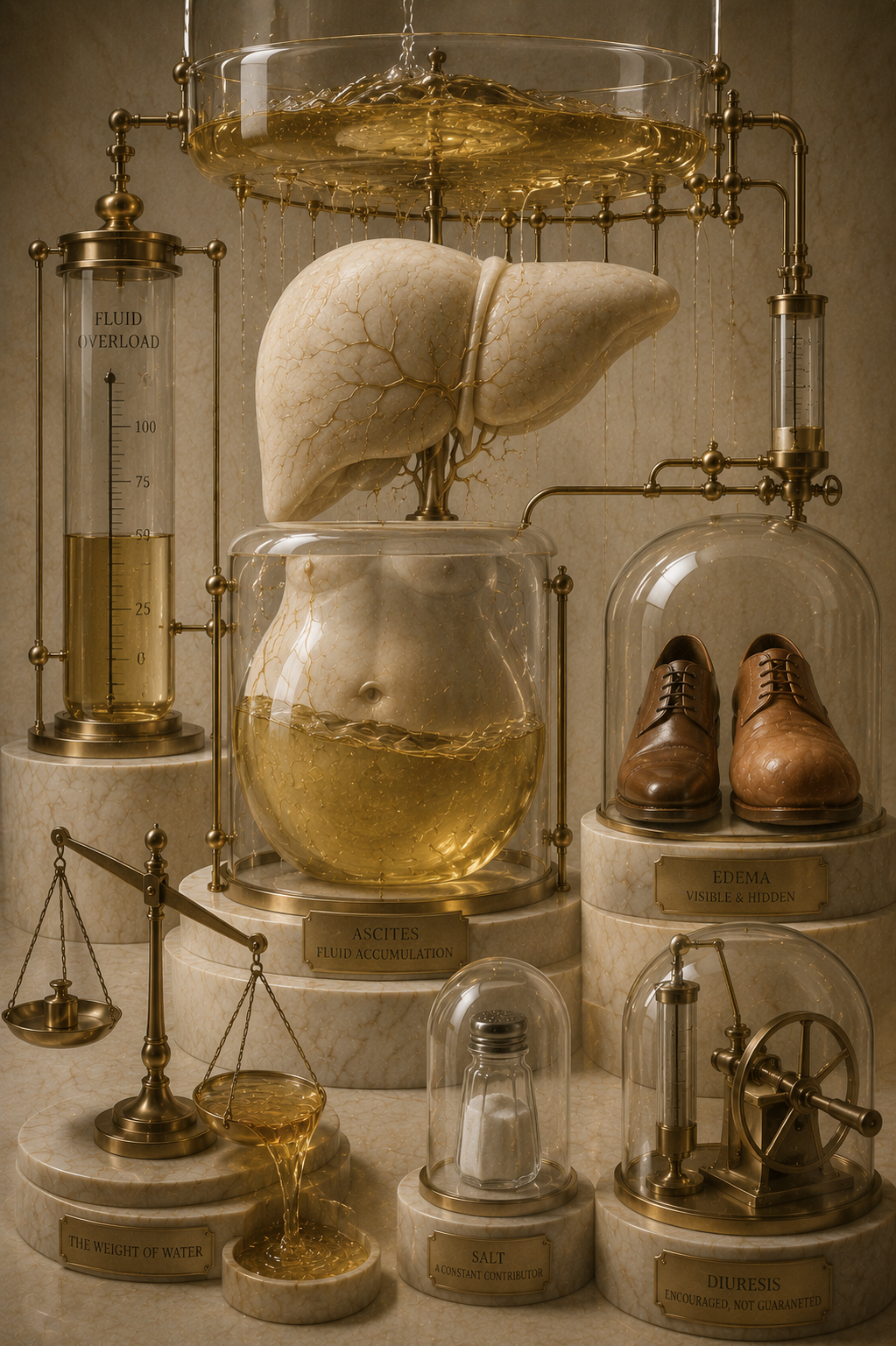
Read More
about ascites, edema, nutrition, diuretics, paracentesis & more
The Crossover Point
Think of your body like a city designed to move water through a network of pipes, reservoirs, and drainage systems.
At first, the pumps work harder.
The pressure rises.
Small leaks appear.
Everything still functions.
Then the pressure becomes too great.
The drainage system can't keep up.
Water begins collecting wherever it can find space.
Ascites and edema are often the visible signs that the system is no longer keeping up with the demand.







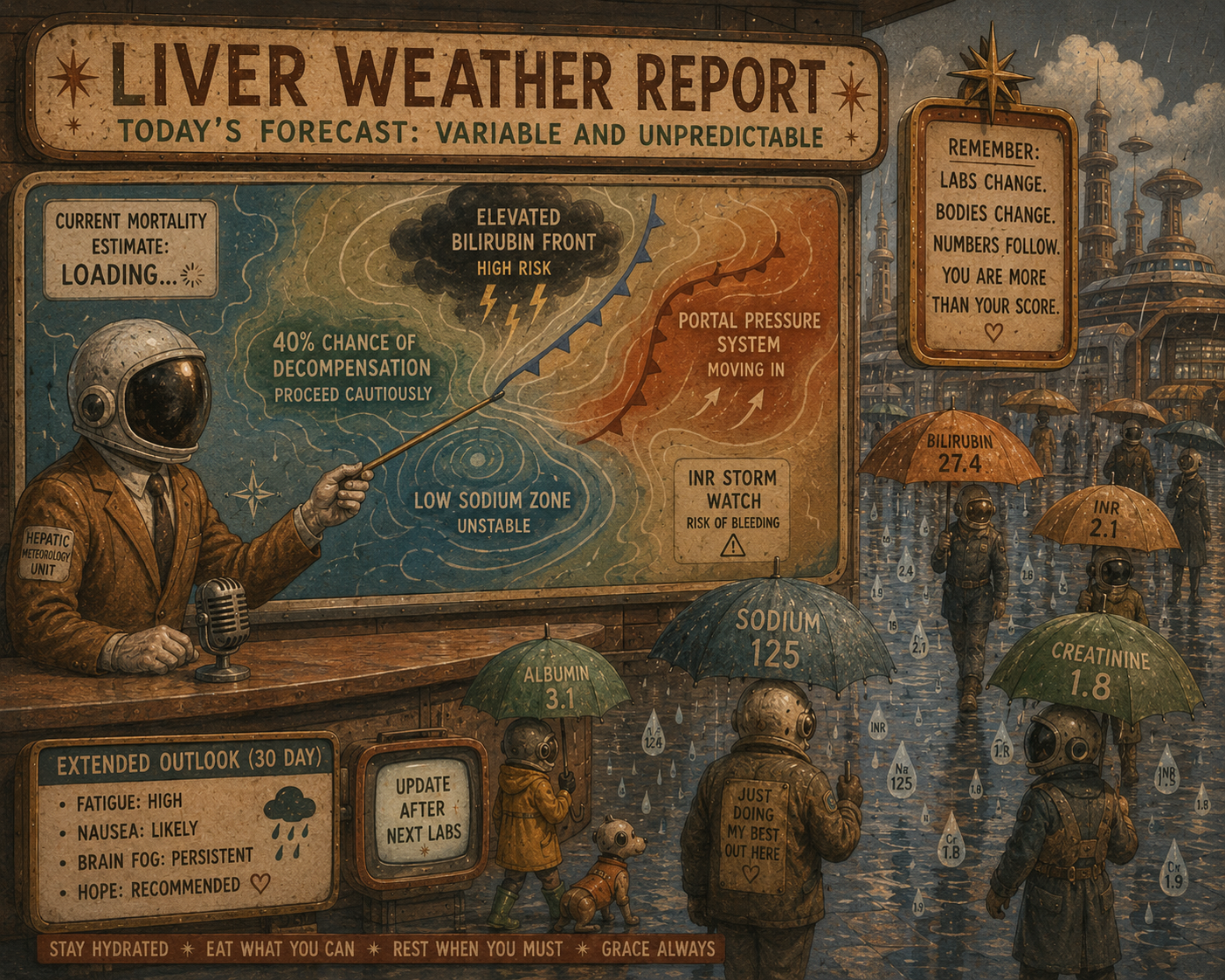








Navigating the hidden fallout of advanced fluid retention is the ultimate exercise in physical vulnerability. It strips away your structural comfort, hijacks your body's plumbing baseline, and forces you to play a high-stakes guessing game against an internal tsunami that is actively expanding behind your back.